
Pixiu
貔貅
The wealth-attracting beast with a mouth that eats fortune but never lets it escape.
Origin Story
What Is Pixiu?
Pixiu is a mythical creature that resembles a winged lion with the head of a dragon. Its most distinctive — and symbolically important — feature is that it has a mouth but no anus. This means it eats fortune and treasure but can never excrete them, making it the ultimate symbol of wealth retention in Chinese culture.
There are two types: Tianlu (male, with two horns) and [Bixi](/creatures/bixi)e (female, with one horn). Tianlu is responsible for attracting wealth; [Bi](/gods/bi-deng)xie wards off evil. Together, they form a complete system of financial protection.
Pixiu — a winged lion-dragon hybrid, the ultimate Feng Shui symbol for attracting and retaining wealth
Pixiu is a winged lion-like creature from Chinese mythology, renowned for its ability to attract and retain wealth. It is one of the most popular Feng Shui charms, placed in homes and businesses to draw in money and prevent it from leaving.
Powers & Symbols
Attributes & Artefacts
Click each card to reveal the details behind Pixiu's divine attributes.
Historical & Cultural Meaning
Beyond the Myth
Pixiu in Feng Shui
In Feng Shui practice, Pixiu statues are placed in homes and businesses to attract wealth. The most common placement is near the entrance, facing outward to draw in fortune from the street. Some practitioners place Pixiu on accounting desks or cash registers to protect money.
Pixiu jewelry — especially bracelets of obsidian or gold — has become incredibly popular. Many business people in China and Southeast Asia wear Pixiu bracelets, believing the creature's appetite for wealth will bring them prosperity.
Pixiu and the Jade Emperor
According to legend, Pixiu was originally a divine beast in the [Jade Emperor](/gods/jade-emperor)'s court. It ate only gold, silver, and jewels. One day, it broke a celestial rule by defecating in the heavenly palace. As punishment, the Jade Emperor sealed its anus — ensuring it could eat all the wealth it wanted but could never let any escape.
This origin story explains why [Pixiu](/creatures/pixiu) is both a [wealth](/gods/caishen) attractor and a wealth preserver. It doesn't just bring money in — it makes sure money stays, which is why it's especially popular among business owners and investors.
Sources & References
Primary classical texts: Shanhaijing (山海经, Classic of Mountains and Seas, c. 4th-2nd century BCE) · Fengshen Yanyi (封神演义, Investiture of the Gods, c. 16th century) · Journey to the West (西游记, Xiyouji, c. 16th century) · Records of the Grand Historian (史记, Shiji, by Sima Qian, c. 91 BCE) · Classic of Mountains and Seas commentary (郭璞注 Shanhaijing, c. 4th century) · Bamboo Annals (竹书纪年, c. 4th century BCE onwards)
Classical translations: Legge, James (trans.). The Sacred Books of the East (1879-1910, 50 volumes covering Chinese classics) · Girardot, Norman J. Myth and Meaning in Early Taoism (University of California Press, 1983) · Werner, E.T.C. A Dictionary of Chinese Mythology (Shanghai: Kelly & Walsh, 1932)
Modern academic references: Birrell, Anne. Chinese Mythology: An Introduction (Baltimore: Johns Hopkins University Press, 1993) · Yang, Lihui, and Deming An. Handbook of Chinese Mythology (New York: Oxford University Press, 2005) · Strassberg, Richard E. A Chinese Bestiary: Strange Creatures from the Guideways Through Mountains and Seas (Berkeley: University of California Press, 2002)
Digital encyclopedias and online resources: Wikipedia — Chinese mythology portal (continuously updated, citations to primary sources) · Encyclopedia Britannica — Mythology and Religion section
Mythology Network
Connections & Relationships
Pixiu is woven into a larger web of gods, creatures, and legends. Explore the connections below.
Pixiu
貔貅


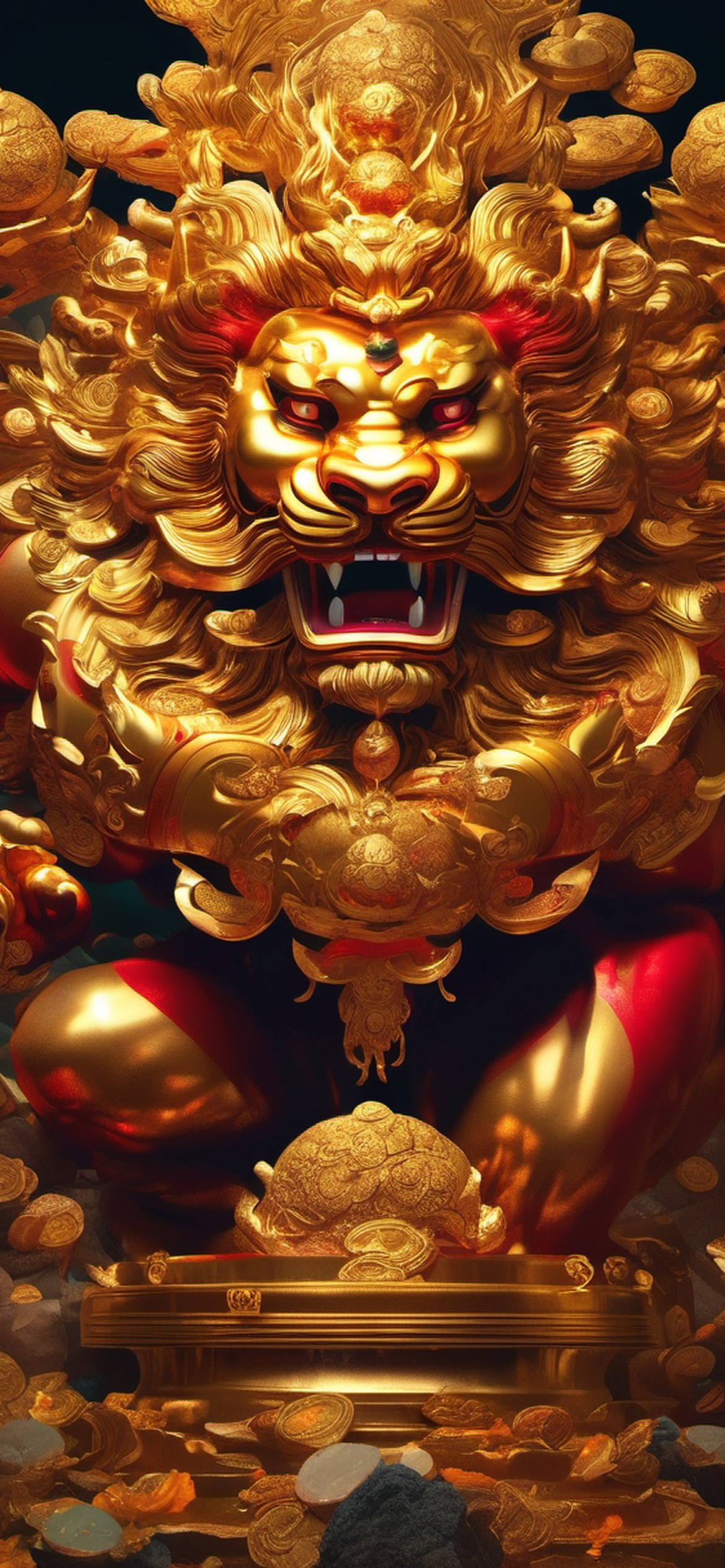
📱 Wallpaper · $2.99
Take 貔貅 with you
High-resolution phone wallpaper of Pixiu the Fortune Beast (貔貅) — iconography drawn from classical Chinese sources, painted in traditional style.
📜 Iconography sources
《史记·五帝本纪》 lists the pixiu among the fierce beasts the Yellow Emperor drove into battle against Chiyou. Over the centuries the war-beast was transfigured into the most beloved wealth talisman of all — winged lion with dragon's head, devouring gold and silver yet, having no anus, never letting any out. Hence his place at every merchant's door.
Buy & download
Explore the Topic
Pixiu in the Mythology Network
Go deeper — read the topic guides that gather every creature like Pixiu.