
Guan Yu
关羽
The god of war, loyalty, and wealth — a real general who became divine.
Origin Story
Who Is Guan Yu?
Guan Yu (160–220 CE) was a real general who served under the warlord Liu Bei during the fall of the Han Dynasty. His historical exploits, dramatically embellished in the novel Romance of the Three Kingdoms, made him the embodiment of loyalty, righteousness, and martial virtue.
Over centuries, Guan Yu was progressively deified. The Song Dynasty granted him imperial titles. The Ming Dynasty elevated him to Emperor Guan ([Guandi](/gods/guandi)). By the Qing Dynasty, he was worshipped as the god of war — a position parallel to that of the [Jade Emperor](/gods/jade-emperor) in heaven.
Guan Yu was a real historical general of the Three Kingdoms era who was deified as the god of war, loyalty, and righteous wealth. He is one of the most widely worshipped figures in Chinese religion, revered by soldiers, merchants, and police alike.
Powers & Symbols
Attributes & Artefacts
Click each card to reveal the details behind Guan Yu's divine attributes.
Magical Artifacts & Weapons
Guan Yu's Divine Arsenal
The legendary weapons and treasures wielded by Guan Yu — each with its own origin story, powers, and mythological significance.
Historical & Cultural Meaning
Beyond the Myth
Guan Yu as God of Wealth
One of the most fascinating aspects of Guan Yu's worship is his role as a [wealth](/gods/caishen) deity. This stems from a story in which Guan Yu, temporarily captive in the camp of his enemy Cao Cao, was given gold and luxuries to win his loyalty. When Guan Yu left to rejoin Liu Bei, he left all the wealth behind, untouched and accounted for to the last coin.
This unwavering financial integrity made Guan Yu the patron deity of merchants. Businesses, especially in Hong Kong and Southeast Asia, keep a Guan Yu statue in their shops — facing the door to guard against ill fortune and to bless honest commerce.
Guan Yu in Chinese Culture
Guan Yu is one of the few deities worshipped across all major Chinese religious traditions — Taoism, Buddhism, and Confucianism all claim him. He is also revered by secret societies, police forces, and martial arts schools, each interpreting his loyalty and righteousness through their own lens.
His distinctive appearance — red face, long flowing beard, green robe, and the Green [Dragon](/zodiac/zodiac-dragon) Crescent Blade — is instantly recognizable in Chinese art, temples, and popular culture. In businesses worldwide, his statue signals integrity and strength.
Sources & References
Primary classical texts: Shanhaijing (山海经, Classic of Mountains and Seas, c. 4th-2nd century BCE) · Fengshen Yanyi (封神演义, Investiture of the Gods, c. 16th century) · Journey to the West (西游记, Xiyouji, c. 16th century) · Records of the Grand Historian (史记, Shiji, by Sima Qian, c. 91 BCE) · Classic of Mountains and Seas commentary (郭璞注 Shanhaijing, c. 4th century) · Bamboo Annals (竹书纪年, c. 4th century BCE onwards)
Classical translations: Legge, James (trans.). The Sacred Books of the East (1879-1910, 50 volumes covering Chinese classics) · Girardot, Norman J. Myth and Meaning in Early Taoism (University of California Press, 1983) · Werner, E.T.C. A Dictionary of Chinese Mythology (Shanghai: Kelly & Walsh, 1932)
Modern academic references: Birrell, Anne. Chinese Mythology: An Introduction (Baltimore: Johns Hopkins University Press, 1993) · Yang, Lihui, and Deming An. Handbook of Chinese Mythology (New York: Oxford University Press, 2005) · Strassberg, Richard E. A Chinese Bestiary: Strange Creatures from the Guideways Through Mountains and Seas (Berkeley: University of California Press, 2002)
Digital encyclopedias and online resources: Wikipedia — Chinese mythology portal (continuously updated, citations to primary sources) · Encyclopedia Britannica — Mythology and Religion section
Mythology Network
Connections & Relationships
Guan Yu is woven into a larger web of gods, creatures, and legends. Explore the connections below.
Guan Yu
关羽


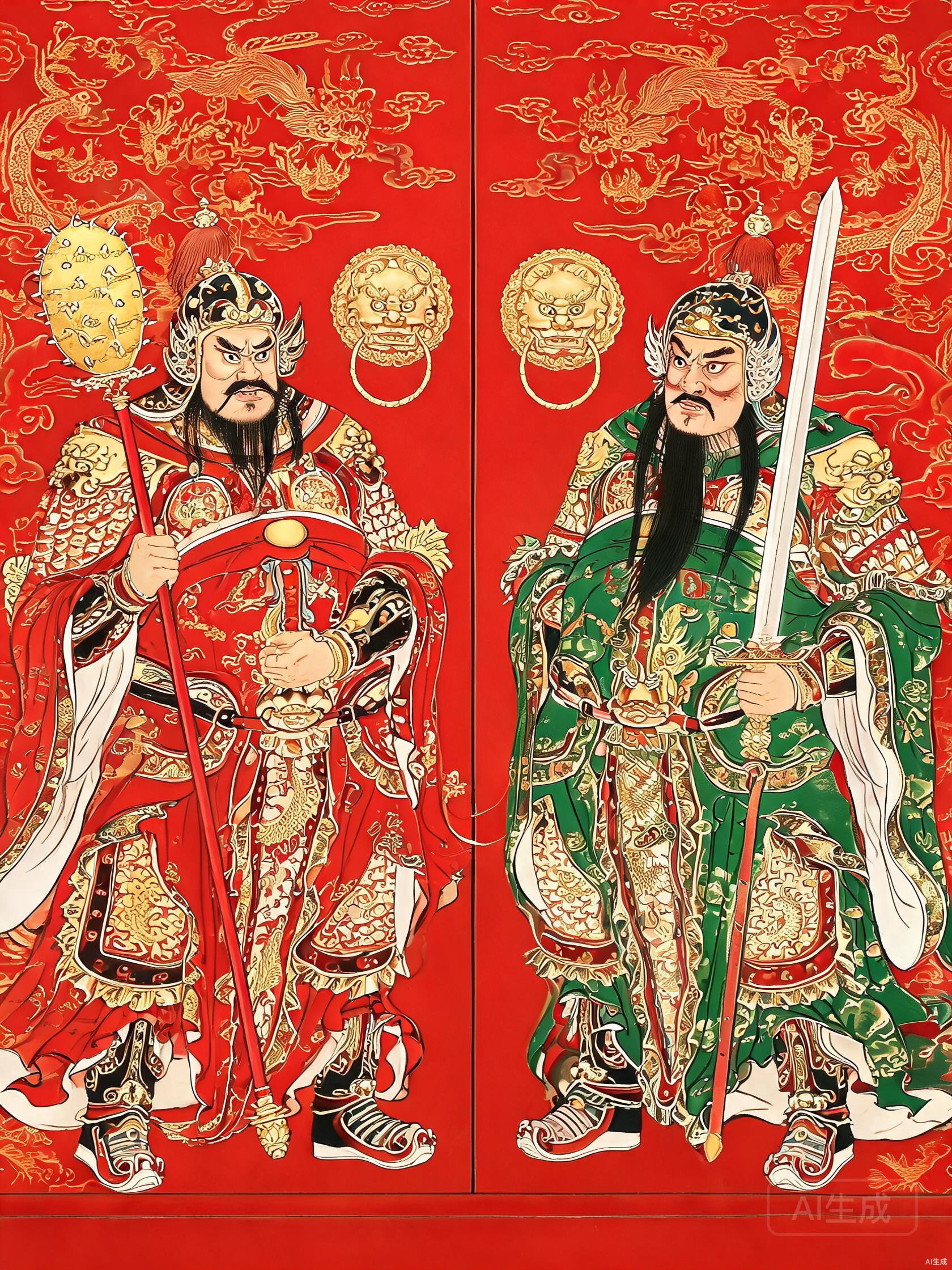
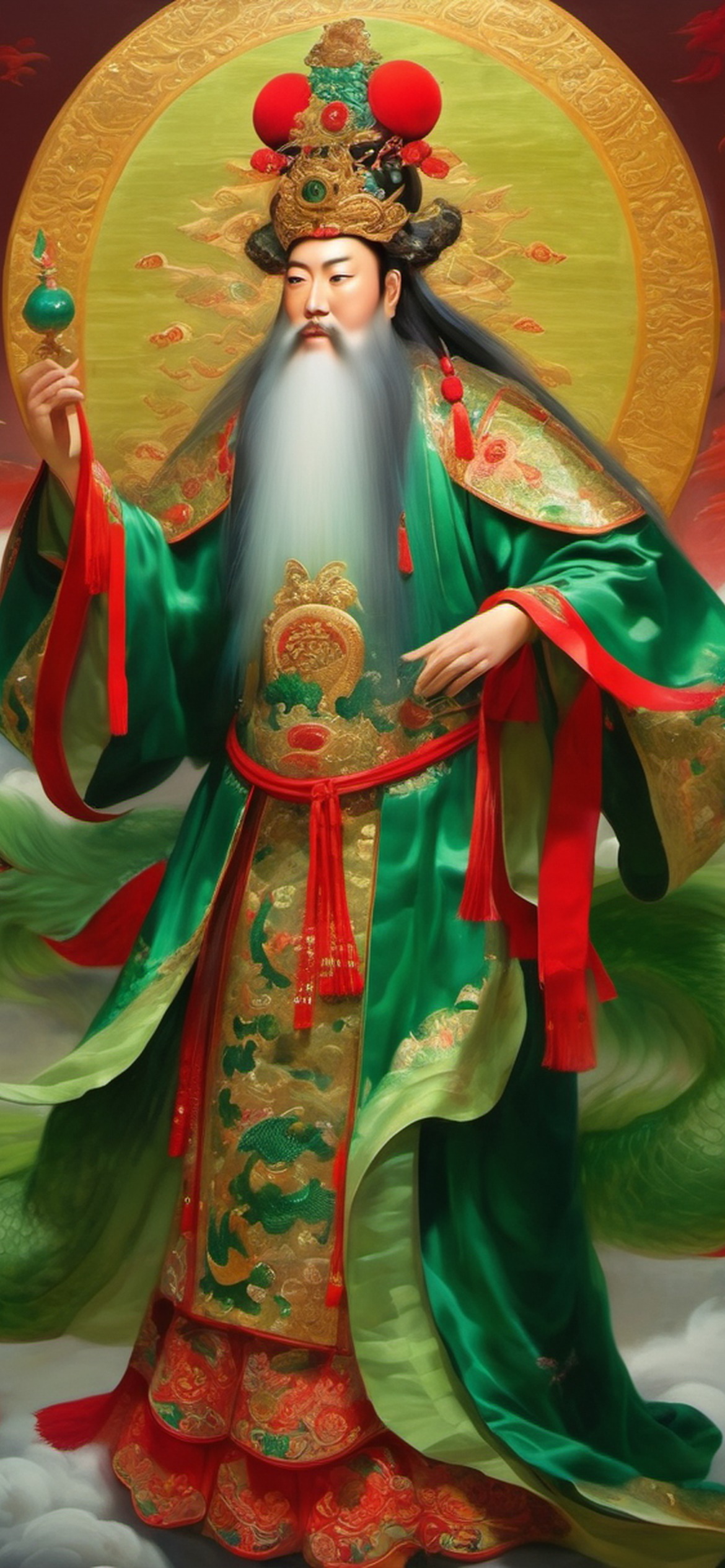
📱 Wallpaper · $2.99
Take 关公(关圣帝君) with you
High-resolution phone wallpaper of Guan Yu (关公(关圣帝君)) — iconography drawn from classical Chinese sources, painted in traditional style.
📜 Iconography sources
The historical Guan Yu of 《三国志·蜀书》 (Records of the Three Kingdoms) was deified across a millennium into Guan Di, the Martial Saint (武圣). 《三国演义》 fixed the popular image — crimson face, five-strand long beard, green robe, and the Green Dragon Crescent Blade — and Ming–Qing temples added the classic pose: seated at night, reading the Spring and Autumn Annals by lamplight.
Buy & download
Explore the Topic
Guan Yu in the Mythology Network
Go deeper — read the topic guides that gather every deity like Guan Yu.