Nezha
哪吒
The rebellious child god who defied fate and the heavens.
Origin Story
Who Is Nezha?
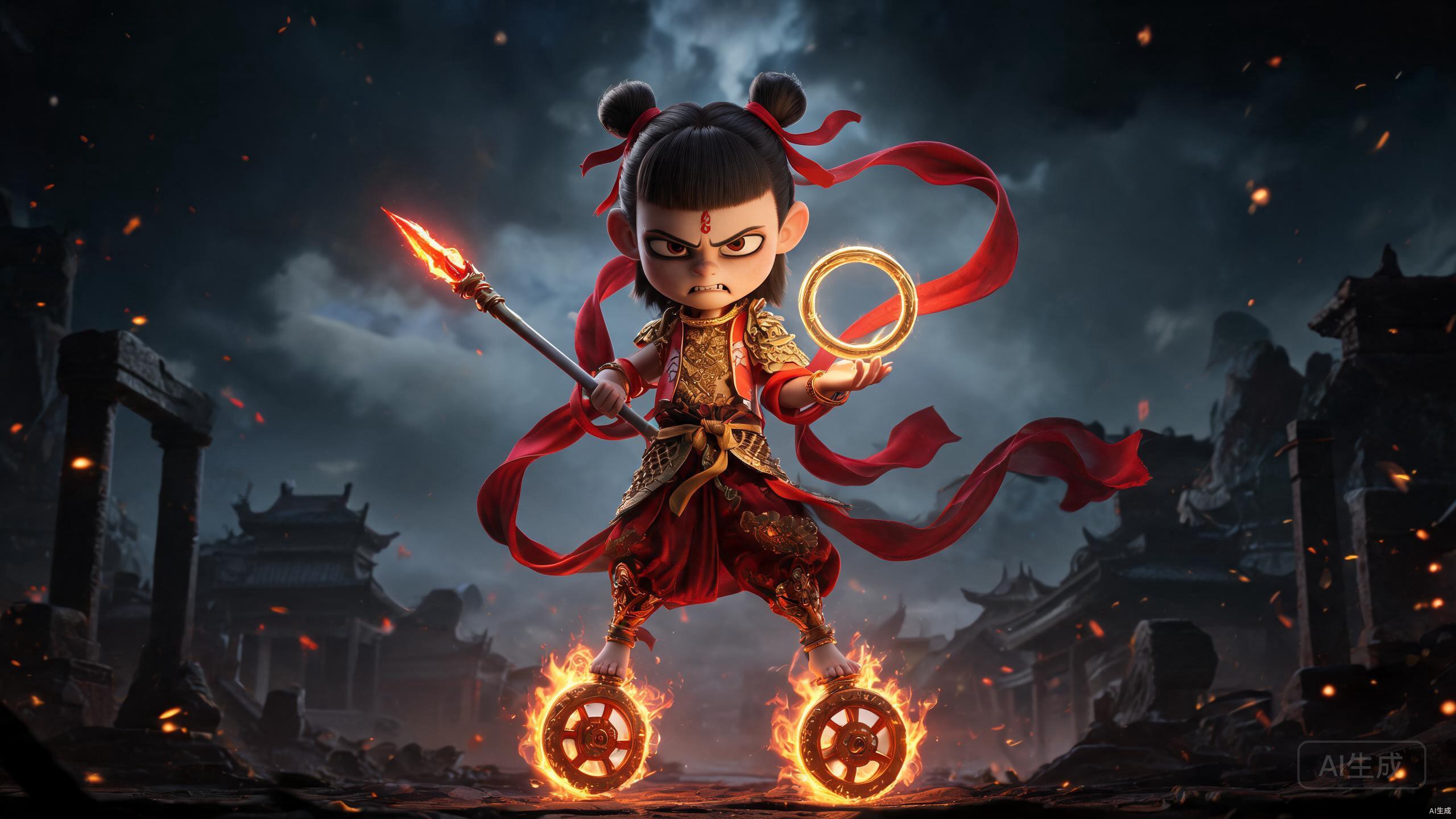
Nezha is a warrior deity in Chinese mythology, best known from the classic novel [Investiture](/myths/fengshen-yengyi) of the Gods (Fengshen Yanyi). He is typically depicted as a youth wielding a fire-tipped spear, standing on two wind-and-fire wheels, with a red armillary sash around his shoulders.
What makes Nezha compelling is his defiance. Unlike other gods who embody order and obedience, Nezha's story is about a child who refuses to accept the fate imposed on him — even when that fate comes from his own father, from the Dragon Kings, and from heaven itself.
Nezha is one of the most beloved figures in Chinese mythology — a warrior deity who began life as a rebellious child, fought dragons, and was reborn from lotus flowers. His story blends fierce independence with filial devotion.
Powers & Symbols
Attributes & Artefacts
Click each card to reveal the details behind Nezha's divine attributes.
Magical Artifacts & Weapons
Nezha's Divine Arsenal
The legendary weapons and treasures wielded by Nezha — each with its own origin story, powers, and mythological significance.
Historical & Cultural Meaning
Beyond the Myth
The Story of Nezha
Nezha was born after a three-and-a-half-year pregnancy, emerging as a fleshy ball. His father, the general [Li Jing](/gods/li-jing), slashed it open with his sword, revealing a boy already wearing the Universe Ring and the Red Armillary Sash — two heavenly treasures.
At age seven, Nezha accidentally killed the son of Ao Guang, the [Dragon](/zodiac/zodiac-dragon) King of the East Sea. When the Dragon King demanded justice and threatened to flood the region, Nezha made an extraordinary choice: he severed his own flesh and bone, returning them to his parents to settle the debt. This act of self-sacrifice freed him from filial obligation.
His master, the [immortal](/gods/buddha-shakyamuni) Taiyi Zhenren, then resurrected Nezha using lotus flowers and leaves. Reborn without a human body, Nezha became something more than mortal — a god who had chosen his own identity rather than inheriting it.
Nezha's defiance of dragon authority — a pivotal moment in Chinese mythology
Nezha's Powers and Weapons
Nezha wields several heavenly weapons, each granted by his master Taiyi Zhenren. The Fire-Tipped Spear (Huojian Qiang) can shoot flames. The Universe Ring (Qiankun Quan) is a golden bracelet of immense weight. The Wind Fire Wheels (Fenghuo Lun) allow him to fly at incredible speed.
After his lotus rebirth, Nezha gained the ability to transform — he could grow three heads and six arms, multiplying his weapons and reach. This made him one of the most formidable warriors in the heavenly pantheon.
Nezha in Chinese Culture
Nezha is worshipped as a protective deity, especially by children and young people. Temples dedicated to him can be found throughout China, and his image — a fierce youth on fire wheels — is instantly recognizable.
In modern culture, Nezha has experienced a massive revival. The 2019 animated film Nezha: Birth of the Demon Child became one of China's highest-grossing films, reimagining his story around the theme: 'My fate is decided by me, not by heaven.' This message resonated deeply with contemporary Chinese audiences.
Sources & References
Primary classical texts: Wu, Cheng'en. Journey to the West (西游记) — Nezha's secondary appearance · Xu, Zhonglin. Investiture of the Gods (封神演义) — Nezha's primary mythological source · Shanhaijing (山海经, Classic of Mountains and Seas, c. 4th-2nd century BCE) · Fengshen Yanyi (封神演义, Investiture of the Gods, c. 16th century) · Journey to the West (西游记, Xiyouji, c. 16th century) · Records of the Grand Historian (史记, Shiji, by Sima Qian, c. 91 BCE)
Classical translations: Legge, James (trans.). The Sacred Books of the East (1879-1910, 50 volumes covering Chinese classics) · Girardot, Norman J. Myth and Meaning in Early Taoism (University of California Press, 1983) · Werner, E.T.C. A Dictionary of Chinese Mythology (Shanghai: Kelly & Walsh, 1932)
Modern academic references: Birrell, Anne. Chinese Mythology: An Introduction (Baltimore: Johns Hopkins University Press, 1993) · Yang, Lihui, and Deming An. Handbook of Chinese Mythology (New York: Oxford University Press, 2005) · Strassberg, Richard E. A Chinese Bestiary: Strange Creatures from the Guideways Through Mountains and Seas (Berkeley: University of California Press, 2002)
Digital encyclopedias and online resources: Wikipedia — Chinese mythology portal (continuously updated, citations to primary sources) · Encyclopedia Britannica — Mythology and Religion section
Mythology Network
Connections & Relationships
Nezha is woven into a larger web of gods, creatures, and legends. Explore the connections below.
Nezha
哪吒


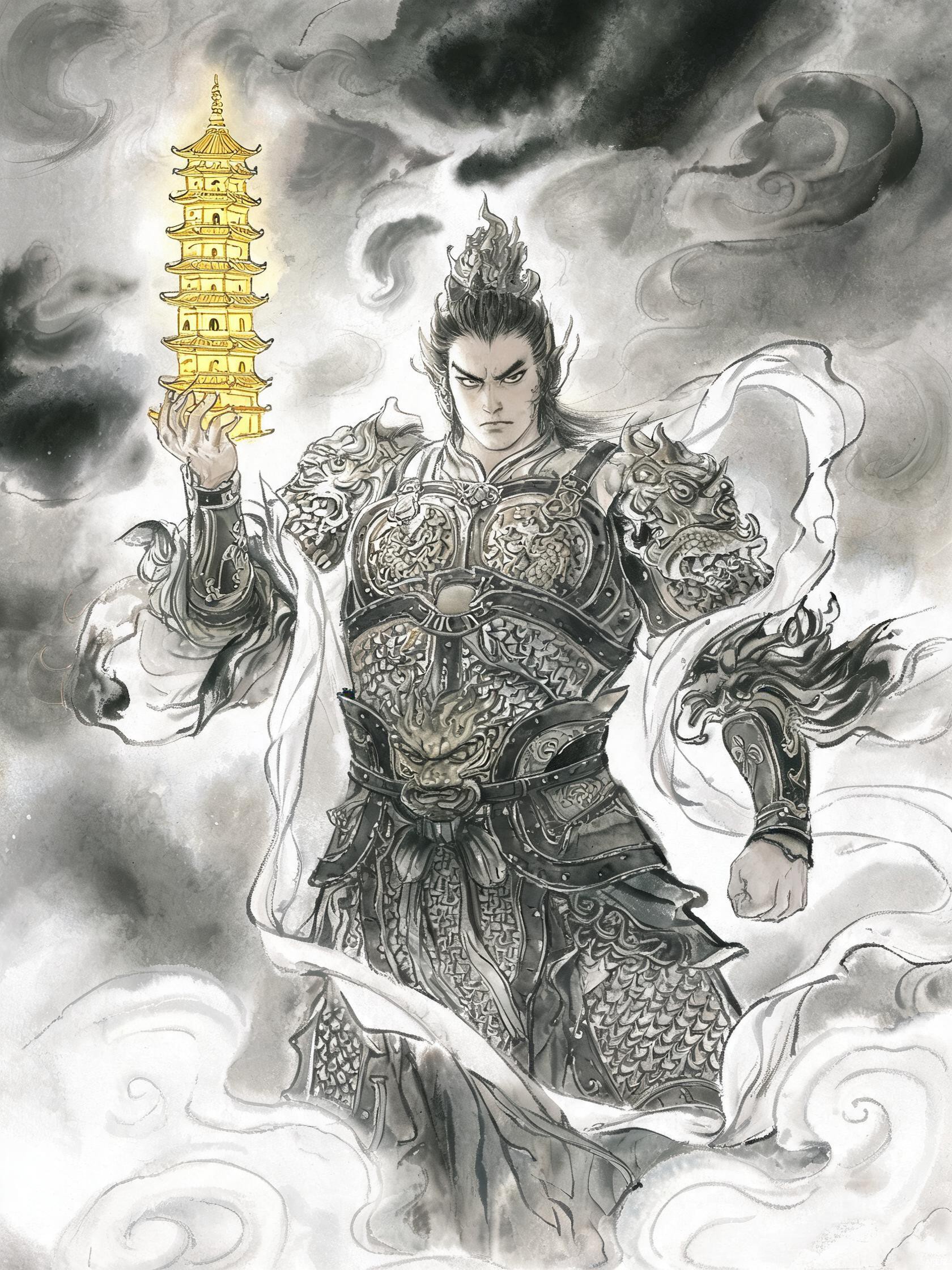
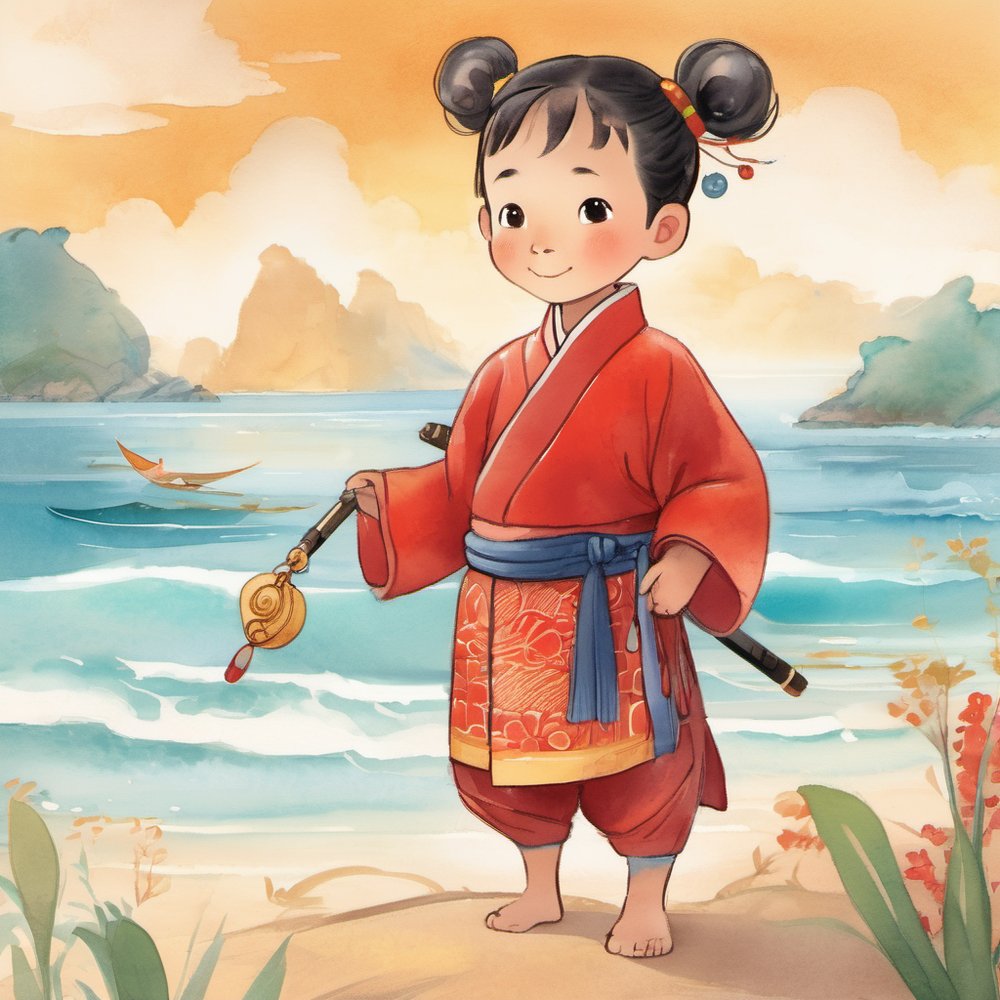
📖 Bilingual Picture Book · Ages 4-8 · 22 pages
哪吒 — read the whole story, in two languages
The full legend as a warm bilingual picture book — every page in English and Chinese, 22 pages of illustrations made for read-aloud nights.
Get the PDF — $4.99Instant download · English + 中文 · Read on any device
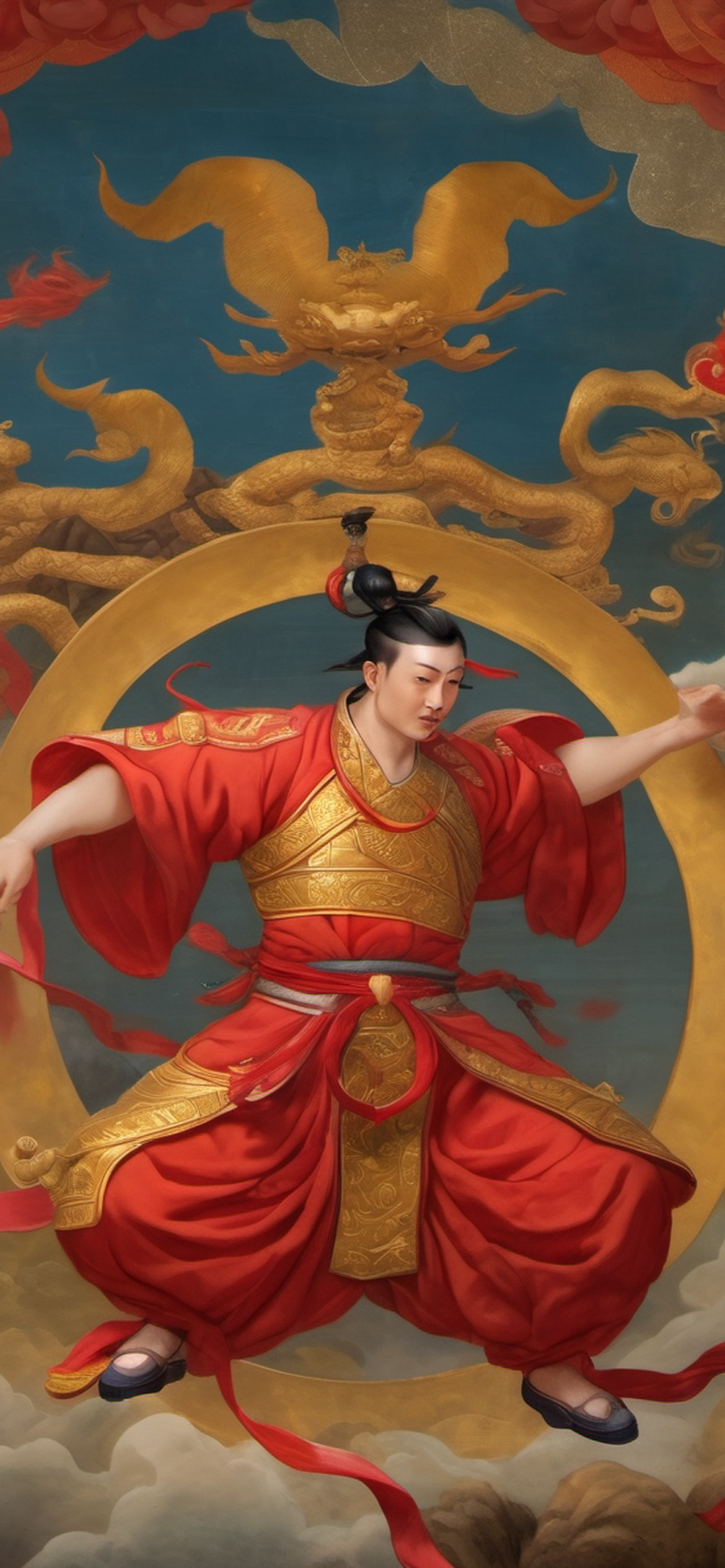
📱 Wallpaper · $2.99
Take 三太子哪吒 with you
High-resolution phone wallpaper of Third Prince Nezha (三太子哪吒) — iconography drawn from classical Chinese sources, painted in traditional style.
📜 Iconography sources
《封神演义》 (Investiture of the Gods) tells Nezha's story in full: the storm of the East Sea, his death and the lotus resurrection (莲花化身) that gave him a new body built from lotus roots and leaves. The novels fix his gear — Wind-Fire Wheels underfoot, the Universe Ring on his arm, the Red Armillary Sash — a boy-warrior icon that Ming–Qing popular prints kept vivid.
Buy & download
Explore the Topic
Nezha in the Mythology Network
Go deeper — read the topic guides that gather every deity like Nezha.