Comparison
Chinese vs Greek Mythology
Two of the world's greatest mythological traditions compared — from creation myths and pantheons to heroes, creatures, and lasting cultural influence.
Quick Facts
Creation Myths: Chaos vs. Pangu
Greek mythology begins with Chaos — a void from which emerged Gaia (Earth), Tartarus (the Abyss), and Eros (Desire). From Gaia came the Titans, who were overthrown by the Olympians led by Zeus. The Greek creation story is essentially a succession myth: each generation overthrows the previous one.
Chinese mythology begins with Pangu, a giant who emerged from a cosmic egg and separated heaven from earth by holding them apart for 18,000 years. When he died, his body became the world. This is a sacrifice myth — the world is literally built from the body of the creator, emphasizing interconnectedness rather than conflict.
Where Greek creation emphasizes power and succession, Chinese creation emphasizes sacrifice and transformation. The Greek cosmos is born from violence; the Chinese cosmos is born from self-giving.
The Pantheon: Family Tree vs. Bureaucracy
The Greek pantheon is a family. Zeus, Poseidon, and Hades are brothers. Athena, Apollo, and Artemis are Zeus's children. The gods marry, have affairs, quarrel, and scheme. The Olympian family tree is well-documented and relatively coherent.
The Chinese pantheon is a bureaucracy. The Jade Emperor is less a father figure than a celestial administrator. Below him are departments of rain, thunder, war, literature, wealth, and even the kitchen stove. Gods are promoted, demoted, and transferred — just like imperial officials. Many gods were historical figures who were deified for their virtue.
This difference reflects the cultures that produced them: Greek city-states valued individual heroism and lineage; the Chinese empire valued order, hierarchy, and merit.
Heroes: Demigods vs. Virtuous Humans
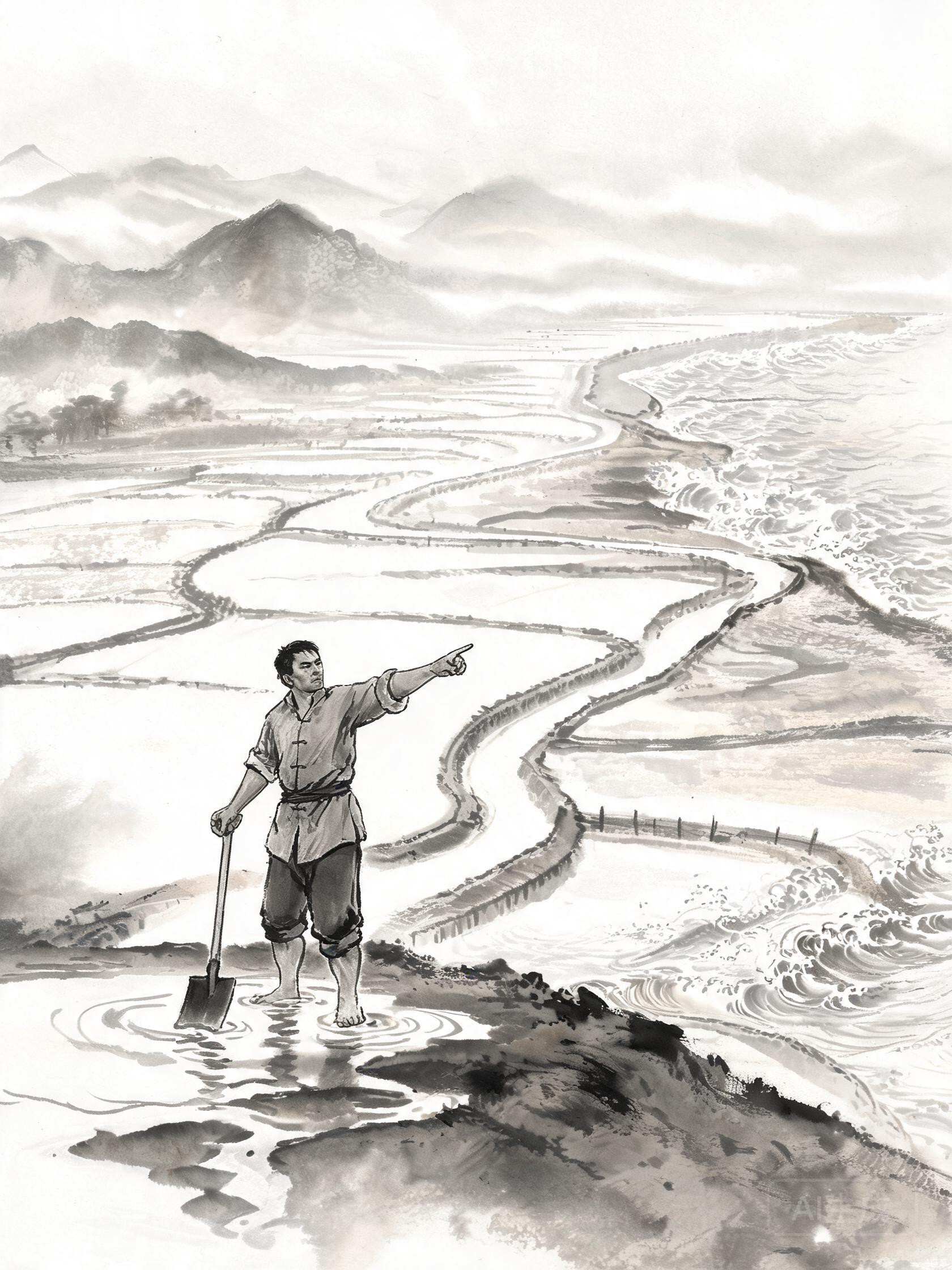
Yu the Great — a Chinese hero defined by perseverance and virtue, not divine blood
Greek heroes are typically demigods — sons of gods and mortals. Heracles (Zeus's son), Achilles (sea goddess Thetis's son), and Perseus (Zeus's son) all have divine parentage that gives them superhuman abilities. Their stories emphasize individual glory, combat prowess, and tragic flaws.
Chinese heroes are usually ordinary humans who achieve extraordinary things through virtue, perseverance, or divine favor. Hou Yi the archer, Yu the Great who tamed the floods, and Jingwei who tried to fill the sea with twigs — these are mortals whose determination moved heaven and earth. Even Sun Wukong, the Monkey King, was born from a stone but achieved his powers through cultivation and rebellion.
The Greek hero conquers; the Chinese hero endures. The Greek hero seeks glory; the Chinese hero seeks harmony.
Dragons and Creatures
The most striking difference is the dragon. In Greek (and broader Western) mythology, dragons are monsters to be slain — the Hydra, the dragon guarding the Golden Fleece, Ladon guarding the golden apples. They are associated with greed, destruction, and chaos.
In Chinese mythology, the dragon (long) is the most revered creature — a symbol of power, wisdom, and good fortune. Chinese dragons control water and rain, not fire. They are auspicious, not fearsome. This single difference perhaps best illustrates the fundamental divergence between Western and Chinese mythological worldviews.
Both traditions feature a rich menagerie of other creatures. Greek mythology has the Minotaur, Medusa, and the Sirens. Chinese mythology has the qilin, the fenghuang (phoenix), the nine-tailed fox, and hundreds of bizarre creatures catalogued in the Shanhaijing.
The Underworld: Hades vs. Diyu
The Greek underworld (Hades) is a single realm with distinct regions: Elysium for the heroic, the Asphodel Meadows for ordinary souls, and Tartarus for the wicked. It is ruled by the god Hades and is relatively static — souls arrive, are judged, and remain.
The Chinese underworld (Diyu) is far more complex. It has 18 levels, each with specific punishments for specific sins. Souls are processed through a bureaucratic system of ten kings, with the possibility of reincarnation. Meng Po administers a soup of forgetfulness before rebirth. This reflects the Buddhist influence on Chinese afterlife beliefs.
Where the Greek underworld is a permanent destination, the Chinese underworld is a temporary processing station on the cycle of rebirth.
Legacy and Cultural Impact

Journey to the West — a cornerstone of Chinese mythology's global cultural legacy
Greek mythology profoundly shaped Western civilization — its gods, heroes, and stories are embedded in art, literature, psychology (Freud's Oedipus complex, Jung's archetypes), and even NASA mission names. The Greek emphasis on individual heroism, tragic destiny, and the conflict between human and divine continues to define Western storytelling.
Chinese mythology's influence is equally deep but differently distributed. It shapes Chinese festivals (Lunar New Year, Mid-Autumn Festival), folk religion, astrology, feng shui, martial arts philosophy, and popular culture. Sun Wukong inspired Dragon Ball's Goku; the Chinese zodiac is known worldwide; and recent works like the game Black Myth: Wukong have introduced these stories to global audiences.
Both traditions continue to evolve and inspire. Understanding both gives us a richer view of how humans across cultures have made sense of the world through myth.