Topic
The Eight Immortals and Xian Culture
仙人文化 — The Taoist Pursuit of Immortality
The concept of Xian — transcendence beyond death — is the beating heart of Chinese Taoism. Explore the Eight Immortals, the philosophy of physical and spiritual immortality, the practices of inner and outer alchemy, and their enduring impact on Chinese culture.
Quick Facts
The Concept of Xian: What Is a Taoist Immortal?
The concept of Xian (仙) is one of the most distinctive features of Chinese Taoism. The character xian is composed of the radical for 'person' (人) and the radical for 'mountain' (山) — literally, a person who has retreated to the mountains to cultivate the Tao. A xian is a being who has transcended the ordinary human condition: they no longer need to eat, they are immune to disease and aging, they can fly or travel vast distances instantly, and they possess supernatural powers. But most importantly, a xian has conquered death — not by being taken to a paradise after dying, but by transforming the physical body itself into an immortal vessel.
This is a radical departure from other religious traditions. In Buddhism, the goal is to escape the cycle of rebirth by extinguishing the self entirely. In Christianity, the hope is resurrection into a heavenly afterlife. In Chinese Taoism, the goal is to become immortal — to continue existing, in a transformed body, in this very world. The xian does not leave the earth; they become so refined that they can move freely between the physical and spiritual realms, dwelling sometimes in the mountains, sometimes in the celestial palaces, and sometimes among ordinary people, unrecognized.
Taoist philosophy distinguishes several grades of immortality. The lowest is 'ghost immortality' (gui xian), where the practitioner's spirit survives death but has no physical body. Next is 'human immortality' (ren xian), where the body is healthy and long-lived but still mortal. Above that is 'earth immortality' (di xian), where the practitioner lives for centuries but is still bound to the earth. Higher still is 'spirit immortality' (shen xian), where the practitioner gains supernatural powers and freedom from physical constraints. The highest grade is 'heavenly immortality' (tian xian), where the immortal ascends to the celestial realm and joins the hierarchy of gods. This graduated system reflects the Taoist belief that immortality is not a binary state but a spectrum of spiritual attainment, achieved through progressive stages of cultivation.
The Eight Immortals: The Faces of Transcendence
The Eight Immortals — the most beloved xian in Chinese folk religion
The Eight Immortals (Ba Xian, 八仙) are the most famous and beloved xian in Chinese culture. Unlike the remote, austere immortals of formal Taoist doctrine, the Eight are approachable, flawed, and deeply human. They include men and women, old and young, rich and poor, scholar and beggar — a cross-section of society that reflects the Taoist principle that anyone, regardless of their station, can achieve transcendence. Their stories, adventures, and distinct personalities made them the most widely depicted figures in Chinese art, opera, and literature.
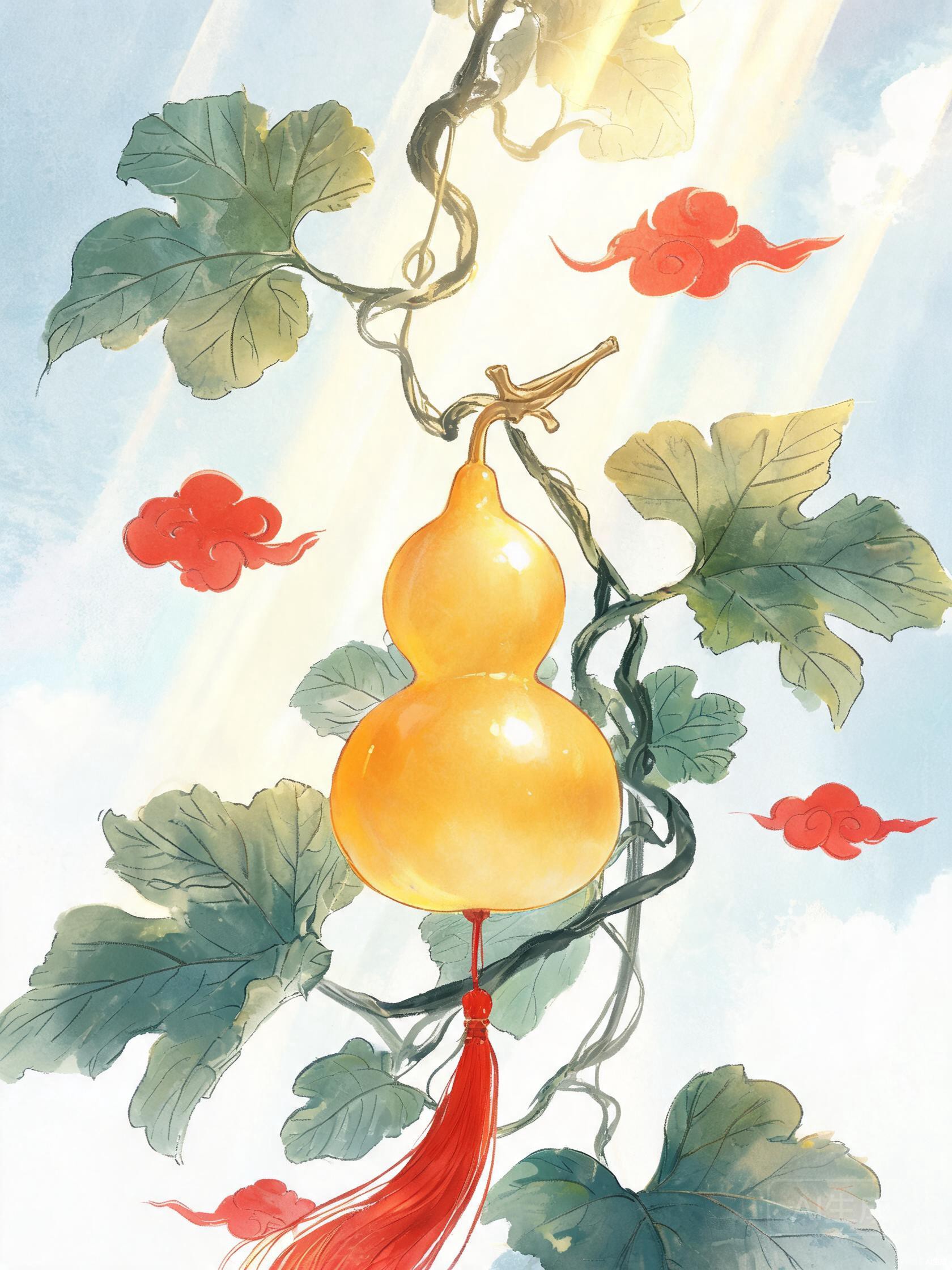
Each of the Eight represents a different path to immortality and a different aspect of human nature. Li Tieguai, the crippled beggar with a medicine gourd, shows that the greatest wisdom may hide in the humblest form. Lu Dongbin, the scholar-swordsman, represents the intellectual who must overcome his pride and lust. He Xiangu, the only woman, embodies the pursuit of spiritual independence over social convention. Zhang Guolao, the ancient man on a backwards-riding mule, teaches that the sage is not focused on where he is going but on where he has been. Together, they form a complete portrait of the Taoist vision: transcendence is not about leaving humanity behind, but about fulfilling humanity's highest potential.
Their most famous story, 'The Eight Immortals Cross the Sea' (八仙過海), encapsulates the Taoist ideal of individual attainment within a collective journey. When the Eight were invited to a banquet on the island of Penglai, they came to the Eastern Sea and decided that rather than taking a boat, each would use their unique power to cross. Li Tieguai rode his crutch, Lu Dongbin flew on his sword, He Xiangu floated on her lotus flower, and so on. When the Dragon King of the East Sea tried to stop them, the Immortals fought and won — but the conflict was ultimately resolved by Guanyin, the bodhisattva of compassion. This story gave Chinese culture one of its most famous idioms: 'Like the Eight Immortals crossing the sea, each demonstrates their special prowess' — a celebration of individuality within unity.
Outer Alchemy (Waidan): The Search for the Elixir
Outer alchemy — the literal search for the elixir of immortality in crucibles of cinnabar and gold
For over a thousand years, the primary method of pursuing immortality in Taoism was waidan (外丹) — 'outer alchemy.' Practitioners sought to create an elixir of immortality (dan, 丹) by refining minerals and metals, particularly cinnabar (mercury sulfide), gold, and jade, in crucibles heated over ritual fires. The alchemical process was both a chemical operation and a spiritual practice — each stage of refinement corresponded to a stage of cosmic transformation, and the alchemist's own spiritual purity was believed to be essential to the success of the operation.
The foundational text of outer alchemy is the Baopuzi (抱朴子), written by Ge Hong (葛洪) in the 4th century CE. Ge Hong described in detail the recipes, equipment, and rituals for creating the golden elixir (jin dan, 金丹), which he claimed could not only grant immortality but also raise the dead, turn base metals into gold, and ward off all evil. The most famous alchemical substance was the 'Nine-Cycle Golden Elixir' (jiu zhuan jin dan), which was said to require nine successive cycles of refinement, each lasting a specific number of days determined by numerological principles.
Despite its spiritual sophistication, outer alchemy was also literally practiced — and it was dangerous. Many alchemists, and even some emperors, died from mercury and lead poisoning caused by consuming elixirs. The Tang Dynasty (618-907) saw a peak of alchemical experimentation, and also a peak of alchemical deaths. This crisis eventually led to a shift away from outer alchemy and toward inner alchemy, where the 'ingredients' of the elixir were reinterpreted as the energies within the practitioner's own body. However, outer alchemy's legacy lives on — it is the ancestor of Chinese gunpowder (discovered by alchemists searching for elixirs), of Chinese traditional medicine (which retained many alchemical ingredients), and of modern chemistry.
Inner Alchemy (Neidan): The Elixir Within

Inner alchemy — the body as crucible, the breath as fire, the spirit as elixir
By the Tang and Song dynasties, the failures and dangers of outer alchemy led Taoists to develop neidan (內丹) — 'inner alchemy.' Instead of refining minerals in a crucible, the practitioner refines the three treasures (san bao, 三寶) within their own body: jing (essence, 精), qi (vital energy, 氣), and shen (spirit, 神). The body itself becomes the crucible, the breath becomes the fire, and the elixir is formed not from cinnabar but from the practitioner's own vital forces, refined and sublimated through meditation, breathing exercises, and energy circulation.
The central technique of inner alchemy is the circulation of qi along the microcosmic orbit (xiao zhou tian, 小周天) — the circuit formed by the Ren Mai (conception vessel) running down the front of the body and the Du Mai (governing vessel) running up the spine. The practitioner draws energy up the spine to the crown of the head, then lets it flow down the front of the body to the lower dantian (the energy center in the abdomen). This circulation, repeated thousands of times, is said to refine jing into qi, qi into shen, and shen into emptiness — the progressive sublimation of matter into spirit that constitutes the path to immortality.
Inner alchemy also incorporated visualization, mantra, and moral cultivation. The practitioner was required to accumulate virtue, for the elixir could not form in a heart stained with greed or hatred. This ethical dimension is crucial: the Taoist immortal is not merely a being with supernatural powers, but a being of perfected morality and wisdom. The neidan tradition produced a vast literature, including the works of the Complete Reality School (Quanzhen, 全真) founded by Wang Chongyang in the 12th century, which remains the dominant Taoist monastic order today. Through neidan, the pursuit of immortality became an internal, meditative, and ethical practice — accessible to anyone willing to devote themselves to the slow, patient work of self-transformation.
Cultural Impact: How Xian Culture Shaped Chinese Civilization

The peach of immortality — the fruit of the Queen Mother's orchard, the dream of every xian-seeker
The pursuit of immortality has profoundly shaped Chinese civilization in ways that extend far beyond formal Taoist practice. Chinese traditional medicine grew directly out of alchemical research — many of the herbs, minerals, and compounding techniques in the pharmacopeia were originally developed by alchemists seeking the elixir of life. Shennong, the divine farmer who tasted hundreds of herbs to classify their medicinal properties, is himself a figure straddling the line between medicine and immortality. The great pharmacopoeia Bencao Gangmu, compiled by Li Shizhen in the 16th century, includes numerous substances originally valued for their life-extending properties.
The concept of xian also transformed Chinese art and literature. The imagery of immortals — flying through clouds, drinking from gourds, playing the flute on mountain peaks — became one of the most beloved subjects of Chinese painting. Landscape painting itself was influenced by the Taoist vision of mountains as the dwelling-places of immortals, where mist-shrouded peaks and hidden valleys suggested the presence of transcendence. In poetry, the 'immortal-seeking' tradition produced some of the greatest works of Chinese literature, particularly in the poems of Li Bai, the Tang Dynasty poet who was himself called the 'Banished Immortal' (zhe xian, 謫仙) for his otherworldly genius.
In modern times, the legacy of xian culture persists in practices like qigong and tai chi, which are direct descendants of inner alchemy's breathing and energy-circulation techniques. The Chinese martial arts, with their emphasis on cultivating internal energy rather than mere physical strength, draw on the same theoretical framework of jing, qi, and shen. And in popular culture — from wuxia novels and films to video games and anime — the figure of the xian continues to inspire, representing the uniquely Chinese dream that through discipline, wisdom, and harmony with the Tao, a human being can become something more than human.