
Yin and Yang
阴阳
The fundamental duality that governs the Chinese understanding of the universe.
Origin Story
What Is Yin and Yang?
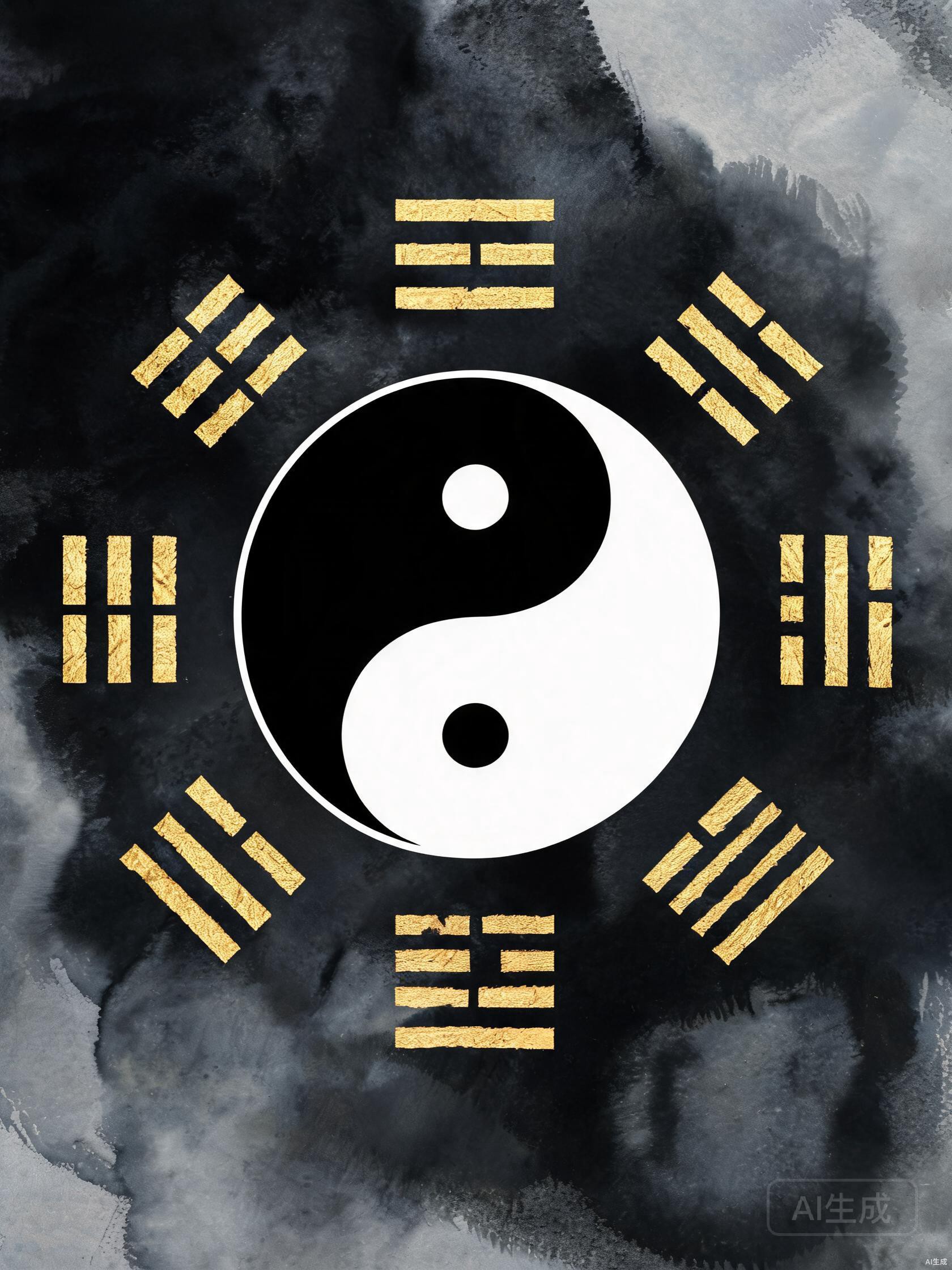
Yin and Yang is not a simple binary — it is a dynamic system of complementary opposites. Yang is the bright, active, masculine principle: the sun, heat, sky, movement, creation. Yin is the dark, passive, feminine principle: the moon, cold, earth, stillness, reception.
The key insight is that yin and yang are not enemies. They are partners. Neither can exist without the other. Day needs night; summer needs winter; life needs death. The symbol of yin-yang — the [taijitu](/symbols/taijitu) — shows this: each half contains a dot of the other, because within every yin there is the seed of yang, and within every yang, the seed of yin.
Yin and Yang — the dual forces that govern all existence in Chinese philosophy
Yin and Yang is the core concept of Chinese philosophy — the idea that all things exist as inseparable and contradictory opposites, whose interaction drives the cycles of nature, life, and the cosmos.
Powers & Symbols
Attributes & Artefacts
Click each card to reveal the details behind Yin and Yang's divine attributes.
Historical & Cultural Meaning
Beyond the Myth
Yin-Yang in Chinese Thought
The concept of yin and yang pervades every aspect of Chinese thought. In traditional Chinese medicine, health is the [balance](/symbols/bagua) of yin and yang in the body; disease is imbalance. In martial arts like [Tai Chi](/symbols/taijitu), movements flow between yin (yielding) and yang (striking). In Feng Shui, landscapes are evaluated by their yin-yang balance.
The I Ching (Book of [Change](/zodiac/change)s), one of the oldest Chinese texts (pre-1000 BCE), is built entirely on yin-yang theory. Its 64 hexagrams represent all possible combinations of yin (broken lines) and yang (solid lines), mapping the cycles of change that govern the universe.
The Deeper Meaning
[Yin-yang](/symbols/yin-yang) philosophy offers a fundamentally different worldview from Western dualism. In Western thought, opposites are often seen as in conflict — good vs. evil, light vs. dark, with one side meant to triumph. In Chinese thought, opposites are complementary and interdependent — neither can exist alone, and the goal is not victory but [balance](/symbols/bagua).
This is why the [taiji](/symbols/bagua)tu is a circle, not a battlefield. The two halves flow into each other, each containing the seed of its opposite. It is a symbol not of struggle but of harmony — the endless, dynamic, beautiful balance that keeps the universe in motion.
Sources & References
Primary classical texts: Robin, Robinet Isabelle. Les commentaires du Tao Tö King jusqu'au VIIe siècle (Paris: Collège de France, 1977) · Saso, Michael. The Gold Pavilion: Taoist Ways to Peace, Healing, and Long Life (Boston: Tuttle, 1995) · Shanhaijing (山海经, Classic of Mountains and Seas, c. 4th-2nd century BCE) · Fengshen Yanyi (封神演义, Investiture of the Gods, c. 16th century) · Journey to the West (西游记, Xiyouji, c. 16th century) · Records of the Grand Historian (史记, Shiji, by Sima Qian, c. 91 BCE)
Classical translations: Legge, James (trans.). The Sacred Books of the East (1879-1910, 50 volumes covering Chinese classics) · Girardot, Norman J. Myth and Meaning in Early Taoism (University of California Press, 1983) · Werner, E.T.C. A Dictionary of Chinese Mythology (Shanghai: Kelly & Walsh, 1932)
Modern academic references: Birrell, Anne. Chinese Mythology: An Introduction (Baltimore: Johns Hopkins University Press, 1993) · Yang, Lihui, and Deming An. Handbook of Chinese Mythology (New York: Oxford University Press, 2005) · Strassberg, Richard E. A Chinese Bestiary: Strange Creatures from the Guideways Through Mountains and Seas (Berkeley: University of California Press, 2002)
Digital encyclopedias and online resources: Wikipedia — Chinese mythology portal (continuously updated, citations to primary sources) · Encyclopedia Britannica — Mythology and Religion section
Mythology Network
Connections & Relationships
Yin and Yang is woven into a larger web of gods, creatures, and legends. Explore the connections below.
Yin and Yang
阴阳


Explore the Topic
Yin and Yang in the Mythology Network
Go deeper — read the topic guides that gather every symbol like Yin and Yang.