
Nuwa
女娲
The mother goddess who created humanity and repaired the sky.
Origin Story
Who Is Nuwa?
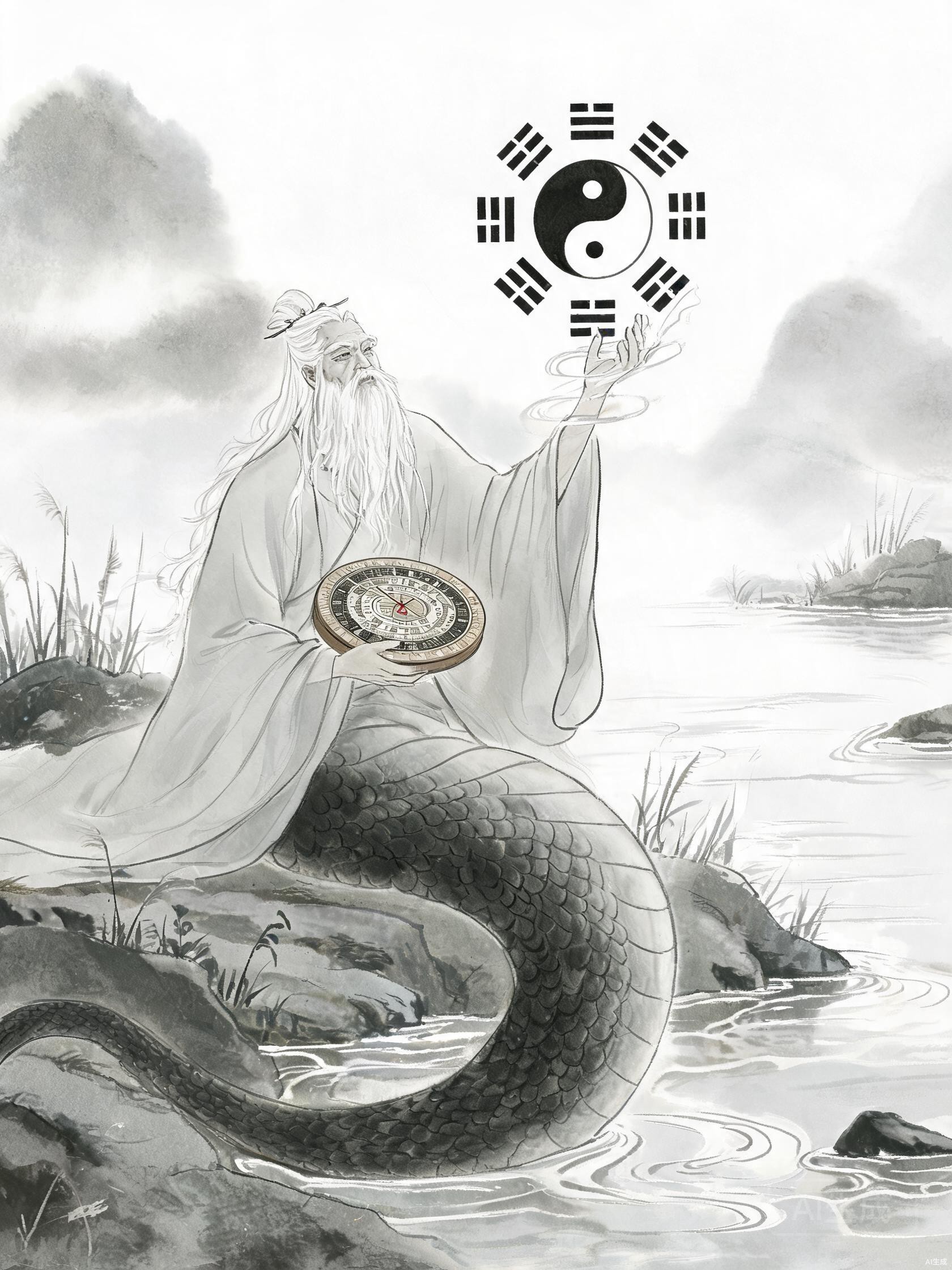
Nuwa is one of the most ancient and revered deities in Chinese mythology. She is typically depicted as a woman with a human upper body and a [serpent](/creatures/dragon)'s tail, symbolizing her connection to both the human and natural worlds.
She is credited with two monumental acts: creating humanity and saving the world from destruction. These twin deeds make her both mother and savior in the Chinese mythological tradition.
Nuwa is the creator goddess of Chinese mythology — the being who fashioned the first humans from yellow clay and saved the world by patching the broken sky with [five-colored stones](/myths/nuwa-repairs-sky).
Powers & Symbols
Attributes & Artefacts
Click each card to reveal the details behind Nuwa's divine attributes.
Historical & Cultural Meaning
Beyond the Myth
Nuwa Creates Humanity
According to the myth, the world was beautiful but empty. Nuwa felt lonely watching the animals and landscapes she had created. So she knelt by a riverbank, scooped up yellow clay, and carefully sculpted the first human beings.
When sculpting one by one became too slow, Nuwa dragged a rope through the mud and flicked it. Each droplet that fell became a person. This detail in the myth was historically used to explain social hierarchy — the hand-crafted figures became nobles, while the rope-flicked drops became commoners.
Nuwa Repairs the Sky
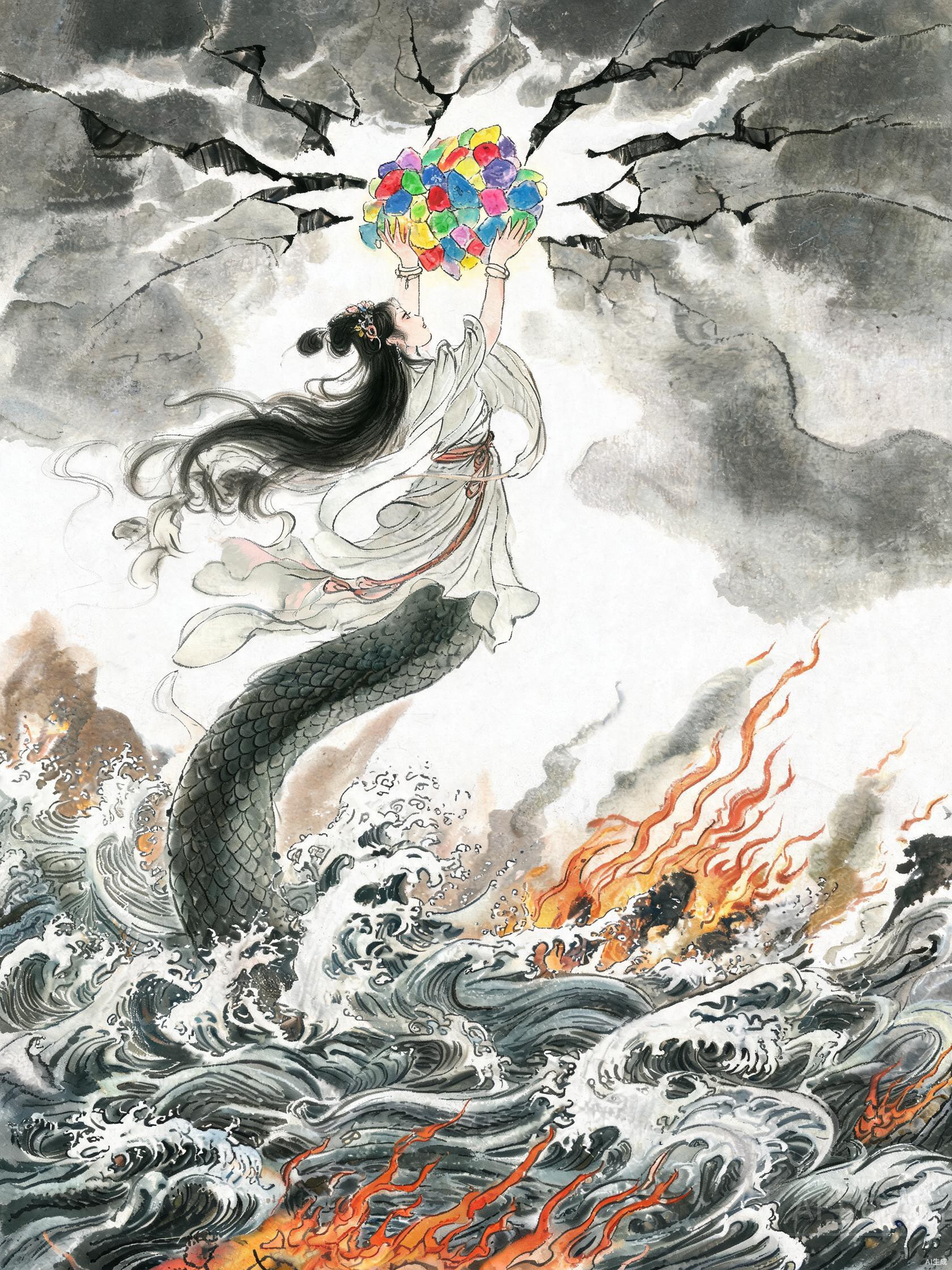
In one of the most dramatic myths in Chinese tradition, the water god [Gonggong](/myths/gonggong) smashed his head against [Mount Buzhou](/myths/mount-buzhou) in a fit of rage after losing a battle. Mount Buzhou was one of the pillars holding up the sky. When it collapsed, the sky tore open, floods poured down, and fires spread across the earth.
Nuwa gathered [five-col](/myths/gonggong)ored stones, melted them together, and used the molten mass to patch the sky. She then severed the legs of a giant [cosmic turtle](/creatures/ao) and used them as new pillars to prop up heaven. The world was saved, though it was never quite the same — the sky tilted slightly to the northwest, which is why rivers in China flow eastward.
Nuwa mending the sky — one of the most dramatic scenes in Chinese mythology
Nuwa in Chinese Culture
Nuwa represents the creative and nurturing power of the feminine in Chinese cosmology. She is associated with fertility, marriage, and the preservation of life. In some traditions, she and her brother-husband [Fuxi](/gods/fuxi) are the ancestors of all civilization, credited with teaching humans marriage and music.
[Nuwa](/gods/nuwa)'s myth of repairing the sky remains one of the most powerful metaphors in Chinese culture — the idea that even when the world breaks, it can be mended through determination and sacrifice.
Sources & References
Primary classical texts: Shanhaijing (山海经, Classic of Mountains and Seas, c. 4th-2nd century BCE) · Fengshen Yanyi (封神演义, Investiture of the Gods, c. 16th century) · Journey to the West (西游记, Xiyouji, c. 16th century) · Records of the Grand Historian (史记, Shiji, by Sima Qian, c. 91 BCE) · Classic of Mountains and Seas commentary (郭璞注 Shanhaijing, c. 4th century) · Bamboo Annals (竹书纪年, c. 4th century BCE onwards)
Classical translations: Legge, James (trans.). The Sacred Books of the East (1879-1910, 50 volumes covering Chinese classics) · Girardot, Norman J. Myth and Meaning in Early Taoism (University of California Press, 1983) · Werner, E.T.C. A Dictionary of Chinese Mythology (Shanghai: Kelly & Walsh, 1932)
Modern academic references: Birrell, Anne. Chinese Mythology: An Introduction (Baltimore: Johns Hopkins University Press, 1993) · Yang, Lihui, and Deming An. Handbook of Chinese Mythology (New York: Oxford University Press, 2005) · Strassberg, Richard E. A Chinese Bestiary: Strange Creatures from the Guideways Through Mountains and Seas (Berkeley: University of California Press, 2002)
Digital encyclopedias and online resources: Wikipedia — Chinese mythology portal (continuously updated, citations to primary sources) · Encyclopedia Britannica — Mythology and Religion section
Mythology Network
Connections & Relationships
Nuwa is woven into a larger web of gods, creatures, and legends. Explore the connections below.
Nuwa
女娲




Explore the Topic
Nuwa in the Mythology Network
Go deeper — read the topic guides that gather every deity like Nuwa.