
Nuwa Creates Humanity
女娲造人
How the mother goddess sculpted the first humans from yellow clay.
Origin Story
A Lonely World
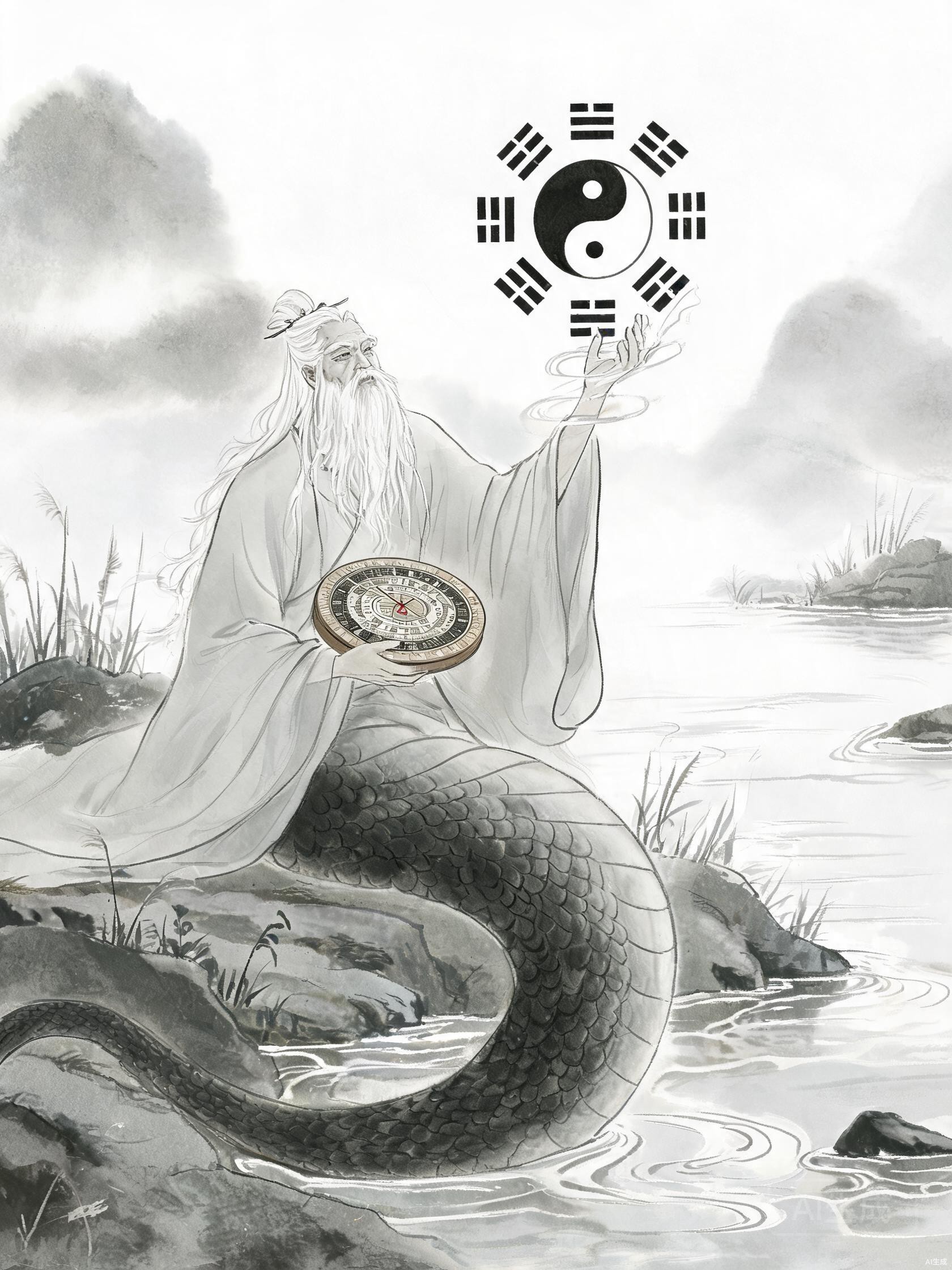
After [Pangu](/gods/pangu)'s death created the world, the earth had mountains, rivers, plants, and animals — but no humans. Nuwa, the goddess with a human upper body and a serpent's tail, walked the earth alone. Despite the beauty around her, she felt a profound loneliness. The animals could not speak or understand her; the landscape was magnificent but empty of beings who could appreciate it.
This loneliness drove her to create companions — not from divine mandate, but from emotional need. This detail makes the Chinese creation story uniquely human: humanity was born not from a god's command, but from a goddess's loneliness.
The myth of Nuwa creating humanity tells how the goddess sculpted the first humans from [clay](/gods/nuwa) by a riverbank, first carefully by hand and then in bulk with a rope, giving life to the world.
Powers & Symbols
Attributes & Artefacts
Click each card to reveal the details behind Nuwa Creates Humanity's divine attributes.
Historical & Cultural Meaning
Beyond the Myth
Sculpting from Clay
Nuwa knelt by the edge of a river, scooped up handfuls of yellow [clay,](/folklore/renri) and began to sculpt. She carefully shaped each figure — a head, a body, arms, and legs. When she set the clay figure on the ground, it came alive, dancing and laughing. These were the first humans.
She sculpted one after another, each unique, each alive. But the process was slow — she could only make one at a time, and the world was vast. So Nuwa took a [rope](/symbols/red-envelopes), dragged it through the muddy riverbank, and flicked it into the air. Each droplet of mud that landed on the ground became a person.
The Origin of Social Classes
The myth includes a detail that was historically used to explain social hierarchy. The humans [Nuwa](/symbols/nuwa) sculpted by hand — carefully, with attention — became the nobility. The humans flicked from the rope — quickly, in bulk — became the common people.
While this detail was used to justify social inequality in ancient times, the myth's deeper message is different: regardless of how they were made, all humans were created by the same goddess from the same [clay. T](/creatures/dragon)he material is the same; only the method differs.
The Seventh Day of the New Year
According to tradition, [Nuwa](/gods/nuwa) created different creatures on different days of the first week of the new year: chickens on the first day, dogs on the second, pigs on the third, sheep on the fourth, cows on the fifth, and horses on the sixth. Humans were created on the seventh day.
This is why the seventh day of the Chinese New Year is called Renri (人日) — 'Human Day.' In some regions of China, families still celebrate this day with special meals and customs honoring the anniversary of humanity's creation.
Sources & References
Primary classical texts: Shanhaijing (山海经, Classic of Mountains and Seas, c. 4th-2nd century BCE) · Fengshen Yanyi (封神演义, Investiture of the Gods, c. 16th century) · Journey to the West (西游记, Xiyouji, c. 16th century) · Records of the Grand Historian (史记, Shiji, by Sima Qian, c. 91 BCE) · Classic of Mountains and Seas commentary (郭璞注 Shanhaijing, c. 4th century) · Bamboo Annals (竹书纪年, c. 4th century BCE onwards)
Classical translations: Legge, James (trans.). The Sacred Books of the East (1879-1910, 50 volumes covering Chinese classics) · Girardot, Norman J. Myth and Meaning in Early Taoism (University of California Press, 1983) · Werner, E.T.C. A Dictionary of Chinese Mythology (Shanghai: Kelly & Walsh, 1932)
Modern academic references: Birrell, Anne. Chinese Mythology: An Introduction (Baltimore: Johns Hopkins University Press, 1993) · Yang, Lihui, and Deming An. Handbook of Chinese Mythology (New York: Oxford University Press, 2005) · Strassberg, Richard E. A Chinese Bestiary: Strange Creatures from the Guideways Through Mountains and Seas (Berkeley: University of California Press, 2002)
Digital encyclopedias and online resources: Wikipedia — Chinese mythology portal (continuously updated, citations to primary sources) · Encyclopedia Britannica — Mythology and Religion section
Mythology Network
Connections & Relationships
Nuwa Creates Humanity is woven into a larger web of gods, creatures, and legends. Explore the connections below.
Nuwa Creates Humanity
女娲造人


Explore the Topic
Nuwa Creates Humanity in the Mythology Network
Go deeper — read the topic guides that gather every legend like Nuwa Creates Humanity.