Topic
The Chinese Underworld (Diyu)
地獄 — The 18 Levels of Hell
Explore Diyu, the Chinese underworld — a vast bureaucratic realm of 18 levels where souls are judged, punished, and eventually reincarnated. A fusion of Taoist, Buddhist, and folk beliefs about the afterlife.
Quick Facts
What Is Diyu?
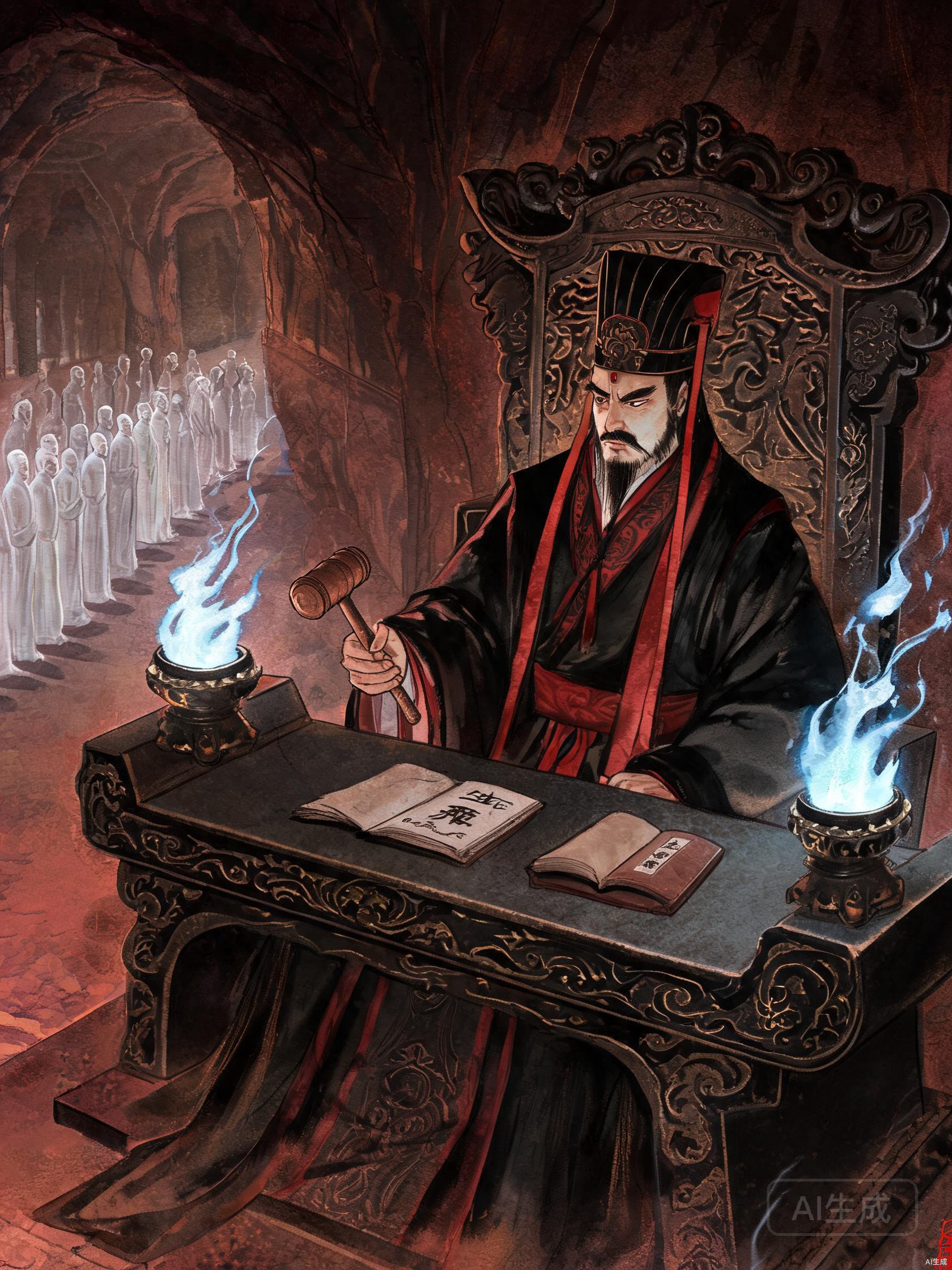
Yanluo Wang — the judge who rules the Chinese underworld (Diyu)
Diyu (地獄, literally 'Earth Prison') is the realm of the dead in Chinese mythology. It is not a permanent hell in the Western sense — rather, it is a complex processing system where souls are judged, punished for their sins, purified, and eventually sent back to be reincarnated.
The concept of Diyu is a fusion of the Buddhist Naraka (hell realms), Taoist afterlife beliefs, and Chinese folk religion. Over centuries, these traditions merged into a uniquely Chinese vision of the afterlife — one that is bureaucratic, systematic, and ultimately temporary.
Diyu is often described as a vast underground network of chambers, courts, and punishment halls, staffed by demons and overseen by a hierarchy of judges. It mirrors the imperial Chinese bureaucracy — with forms, procedures, and officials who process souls with administrative precision.
Yanluo Wang and the Ten Kings
The most famous ruler of Diyu is Yanluo Wang (閻羅王), derived from the Hindu god Yama. In Chinese tradition, Yanluo Wang is the fifth of Ten Kings of Hell (十殿閻王), each of whom presides over a different court in the underworld.
When a soul arrives in Diyu, it must pass through ten courts over 49 days (the traditional mourning period in Chinese culture). Each king examines the soul's deeds and assigns punishments accordingly. The first king, Qin Guang Wang, reviews the soul's life record. The tenth king, Zhuan Lun Wang, determines the form of reincarnation.
This bureaucratic process reflects the Chinese cultural belief that the afterlife, like life, is governed by rules, procedures, and officials. There is no single judge — there is a system.
The 18 Levels of Punishment
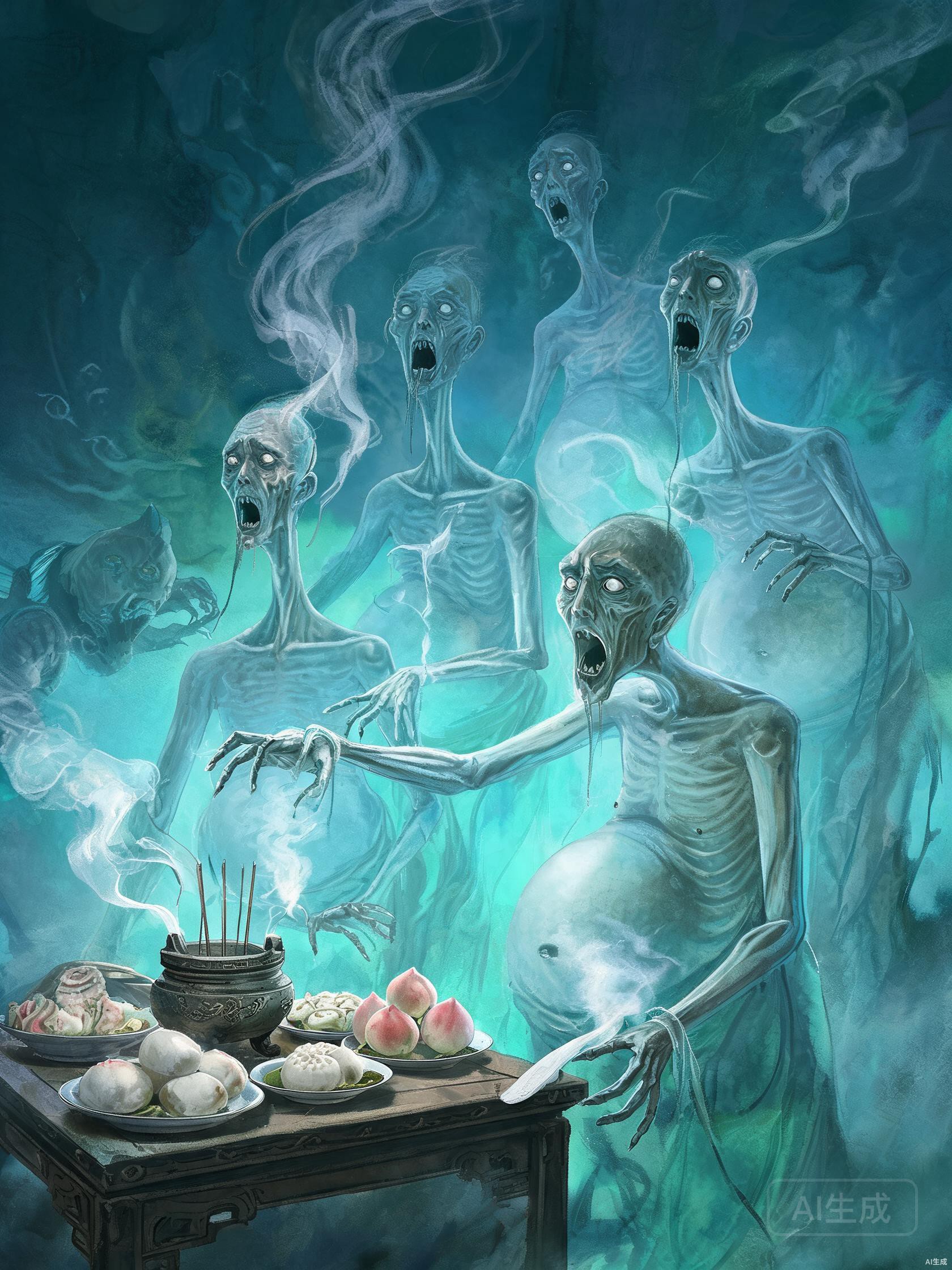
Hungry Ghosts — souls being punished in the levels of Diyu
Diyu is often described as having 18 levels of punishment, each designated for specific sins. The punishments are vividly imaginative and often ironic — sinners experience punishments that mirror their earthly transgressions.
The levels include: the Mountain of Knives (for those who killed), the Cauldron of Boiling Oil (for traitors), the Forest of Swords (for the deceitful), the Ice World (for the lustful), the Pool of Blood (for murderers), and the Chamber of Avici — the deepest level, reserved for the most terrible crimes, where suffering is said to be endless.
Other notable punishments include being ground by millstones, dismembered by demonic beasts, forced to climb mountains of sharp blades, and trapped in chambers of fire or ice. These graphic descriptions served as moral warnings in Chinese folk culture.
Importantly, most punishments are temporary. Once a soul has paid for its sins, it moves on to the next stage — judgment and reincarnation. Only the very worst sinners face truly endless torment. Below, we walk through the complete hierarchy of all 18 chambers, level by level.
The Complete List: All 18 Levels of Hell
Traditional Chinese Buddhist-folk descriptions assign each of the 18 levels a specific category of sin, and the first three chambers punish crimes of the tongue. Level 1, the Chamber of Tongue-Ripping (拔舌地狱), is reserved for gossips and liars, whose tongues are ripped out with iron hooks. Level 2, the Scissors Chamber (剪刀地狱), punishes those who broke apart marriages and friendships — most famously, women who drove widows to remarry or instigated conflict between others — by cutting off their fingers with scissors. Level 3, the Iron Tree Chamber (铁树地狱), receives those who sowed discord within families, whose bodies are hung from iron trees by hooks. That speech crimes occupy the very first chambers reflects a deep Chinese moral conviction: words can wound as surely as blades, and the tongue that deceives can destroy a life as thoroughly as any weapon.
Levels 4 through 8 address violence and the betrayal of trust. Level 4, the Mirror of Retribution Chamber (孽镜地狱), is for criminals who escaped earthly justice; standing before a great karmic mirror, they are forced to watch their true crimes replayed, stripped of every excuse and self-deception. Level 5, the Steamer Chamber (蒸笼地狱), punishes slanderers and rumormongers, who are steamed alive in bamboo steamers like buns. Level 6, the Copper Pillar Chamber (铜柱地狱), receives arsonists, who are forced to embrace red-hot copper pillars. Level 7, the Mountain of Knives Chamber (刀山地狱), is for those who killed for pleasure or treated life with contempt, forcing them to climb mountains of razor-sharp blades. Level 8, the Ice Chamber (寒冰地狱), punishes those who harmed others cold-bloodedly and betrayed the trust of friends and kin — fittingly, they are frozen fast in ice as cold as their own hearts.
Levels 9 through 14 turn to greed and cruelty toward those unable to defend themselves. Level 9, the Cauldron Chamber (油锅地狱), boils robbers, extortionists, and the corrupt in great vats of oil. Level 10, the Chamber of the Cow of Retribution (牛坑地狱), tramples animal abusers and butchers who slaughtered cruelly beneath the horns of enraged oxen. Level 11, the Stone Chamber (石压地狱), crushes beneath giant stones those who abandoned or killed infants. Level 12, the Chamber of Mortars (舂臼地狱), pounds in great mortars those who deliberately wasted food while others went hungry. Level 13, the Pool of Blood (血池地狱), drowns in pools of blood those who disrespected their parents and elders — in Confucian ethics, among the gravest of sins. Level 14, the Chamber of Dismemberment (枉死地狱), receives suicides, who wasted the lifespan allotted to them by heaven and are torn apart for having thrown away a life that was never theirs to discard.
Levels 15 through 17 are reserved for exploiters — those who fed on the suffering of others. Level 15, the Burning Chamber (火烧地狱), burns thieves, corrupt officials, and bribe-takers in unquenchable fire. Level 16, the Stone Mill Chamber (石磨地狱), grinds between giant millstones those who 'ground people down' — officials and landlords who oppressed the poor and squeezed their tenants dry. Level 17, the Chamber of Saws (锯解地狱), saws in half those who exploited others and deliberately divided families, partnerships, and businesses for their own gain; having split others apart in life, they are split apart themselves.
At the very bottom lies Level 18, the Avici Chamber (无间地狱, also known as 阿鼻地狱) — the deepest and most feared of all. 'Avici' is Sanskrit for 'without interval': the suffering here is continuous, without pause, rest, or interruption of any kind. It is reserved for the unforgivable — those who murdered their own parents, killed holy monks, or destroyed the dharma itself. Whereas souls in the other levels serve out their punishment and move on to judgment and rebirth, the Avici Chamber holds its prisoners for kalpas — eons measured in cycles of cosmic creation and destruction — making it the one level of Diyu whose torment approaches the Western idea of eternal damnation.
Meng Po and the Soup of Forgetfulness
Before a soul can be reincarnated, it must drink the Soup of Forgetfulness (孟婆湯, Meng Po Tang), brewed by Meng Po (孟婆), an old woman who waits at the gate of rebirth. This soup erases all memories of past lives and of the underworld, allowing the soul to start fresh.
This explains why no one remembers their past lives — the memories have been washed away by Meng Po's soup. It also provides a narrative of renewal: each life is a clean slate, and the deeds of past lives shape one's starting point but do not determine one's destiny.
Meng Po is one of the most poetically resonant figures in Chinese mythology. She represents the mercy of forgetting — the idea that we are spared the burden of carrying all our past experiences into each new life.
The Bridge of Helplessness and the Three Paths
After drinking Meng Po's soup, souls cross the Bridge of Helplessness (奈何橋, Naihe Qiao) — a bridge over a river that separates the underworld from the world of the living. The bridge has three paths: the golden path for the virtuous, the silver path for ordinary souls, and the wooden (or sometimes thorny) path for sinners.
Below the bridge flows the River of Forgetfulness (Wang Chuan). Souls who fall off the bridge are trapped in the river, unable to move on — a fate reserved for those whose sins were not fully punished.
Once across the bridge, souls are assigned their next life based on their karma. Those who were virtuous may be reborn into wealthy or noble families; those who sinned may be reborn as animals or into suffering. This cycle continues until the soul achieves liberation (in Buddhist tradition) or fulfills its cosmic destiny.
Diyu in Chinese Culture Today
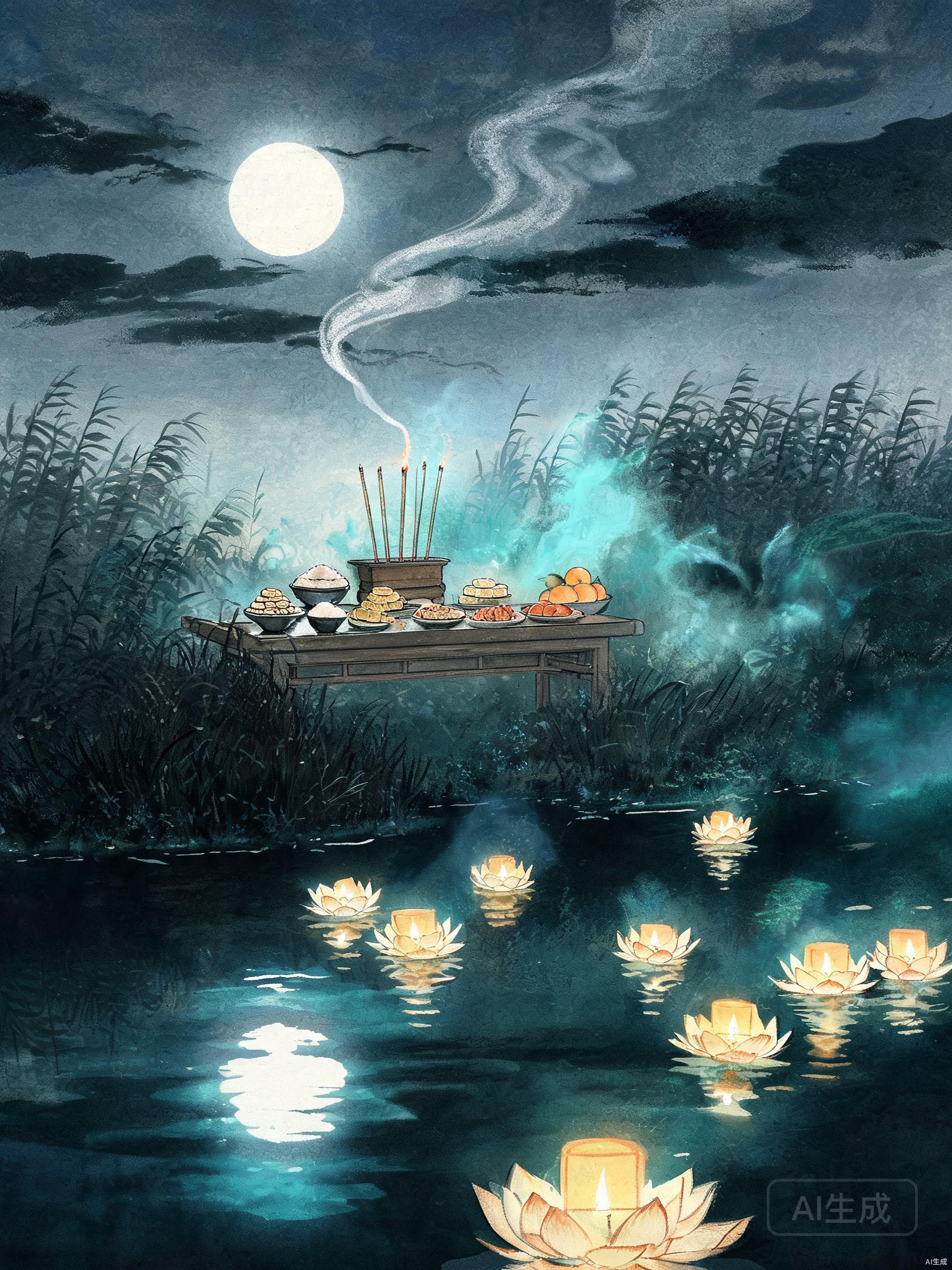
The Ghost Festival — when the gates of Diyu open and spirits walk the earth
Beliefs about Diyu continue to influence Chinese culture. During the Ghost Festival (Zhongyuan Festival, 中元節), the gates of Diyu are said to open, allowing spirits to visit the living world. Families burn paper money and offer food to appease wandering spirits.
The concept of Diyu also appears in literature, film, and gaming. The Underworld courts feature prominently in Journey to the West, where Sun Wukong crosses out the names of himself and his monkey subjects from the Book of Life and Death. Modern Chinese fantasy novels and games regularly incorporate the 18 levels as settings.
While literal belief in Diyu has declined, its cultural resonance remains powerful. The idea that actions have consequences — that there is a cosmic accounting system for good and evil — continues to shape Chinese moral thinking.