Ghost Festival (Zhongyuan)
中元节
The month when the gates of the underworld open and spirits roam the earth.
Origin Story
When the Gates of Hell Open
In Chinese folk belief, the entire seventh lunar month is 'Ghost Month' (gui yue). On the first day, the gates of the underworld swing open, releasing spirits to roam the world of the living. The gates remain open until the last day of the month, when the spirits must return.
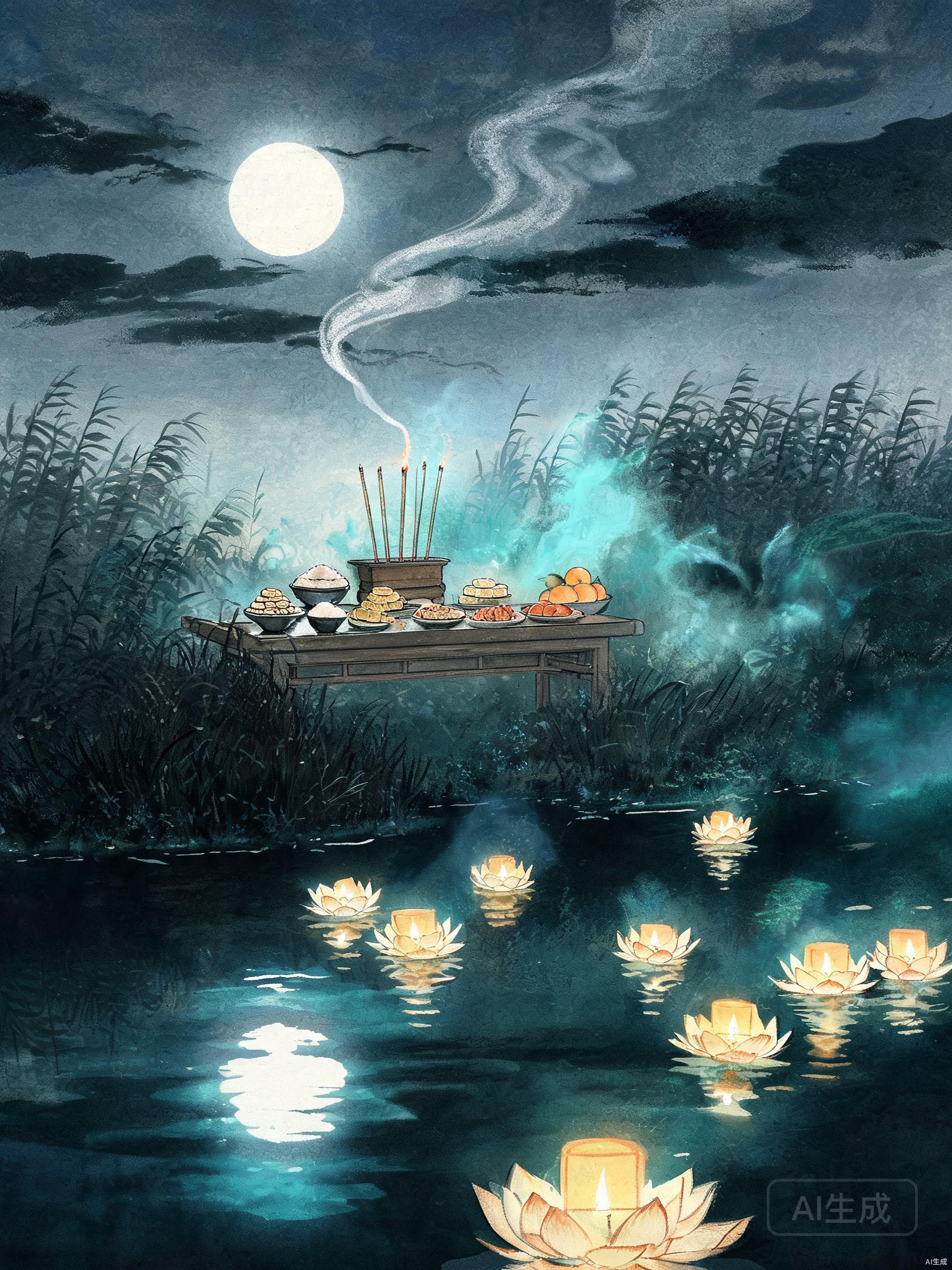
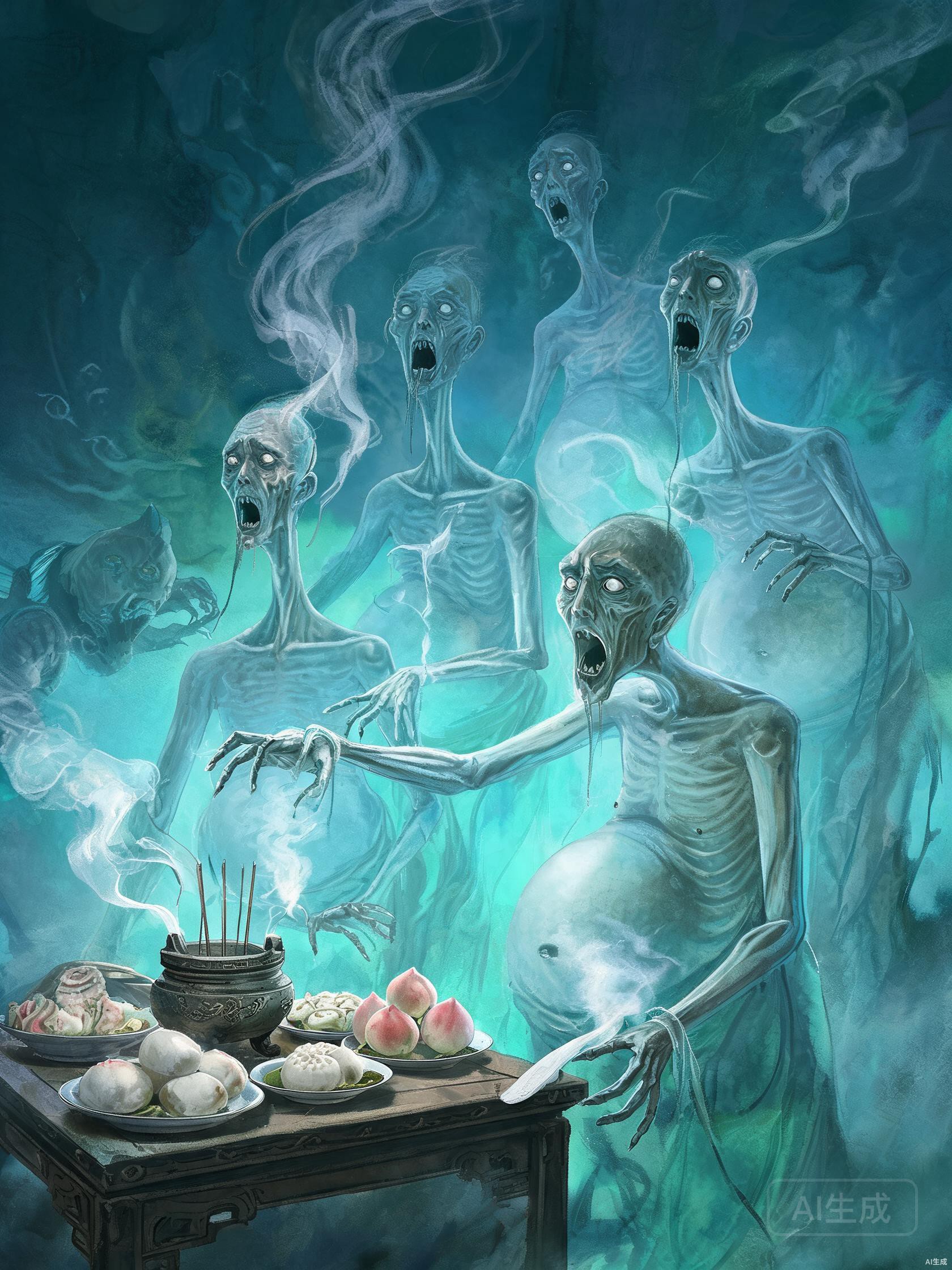
The 15th day — the Ghost Festival proper — is the peak of this period, when spirits are most active. Families prepare elaborate feasts for their ancestors and set out additional offerings for '[hungry ghosts](/folklore/hungry-ghosts)' — spirits who have no living descendants to care for them, or who died unjustly and cannot rest.
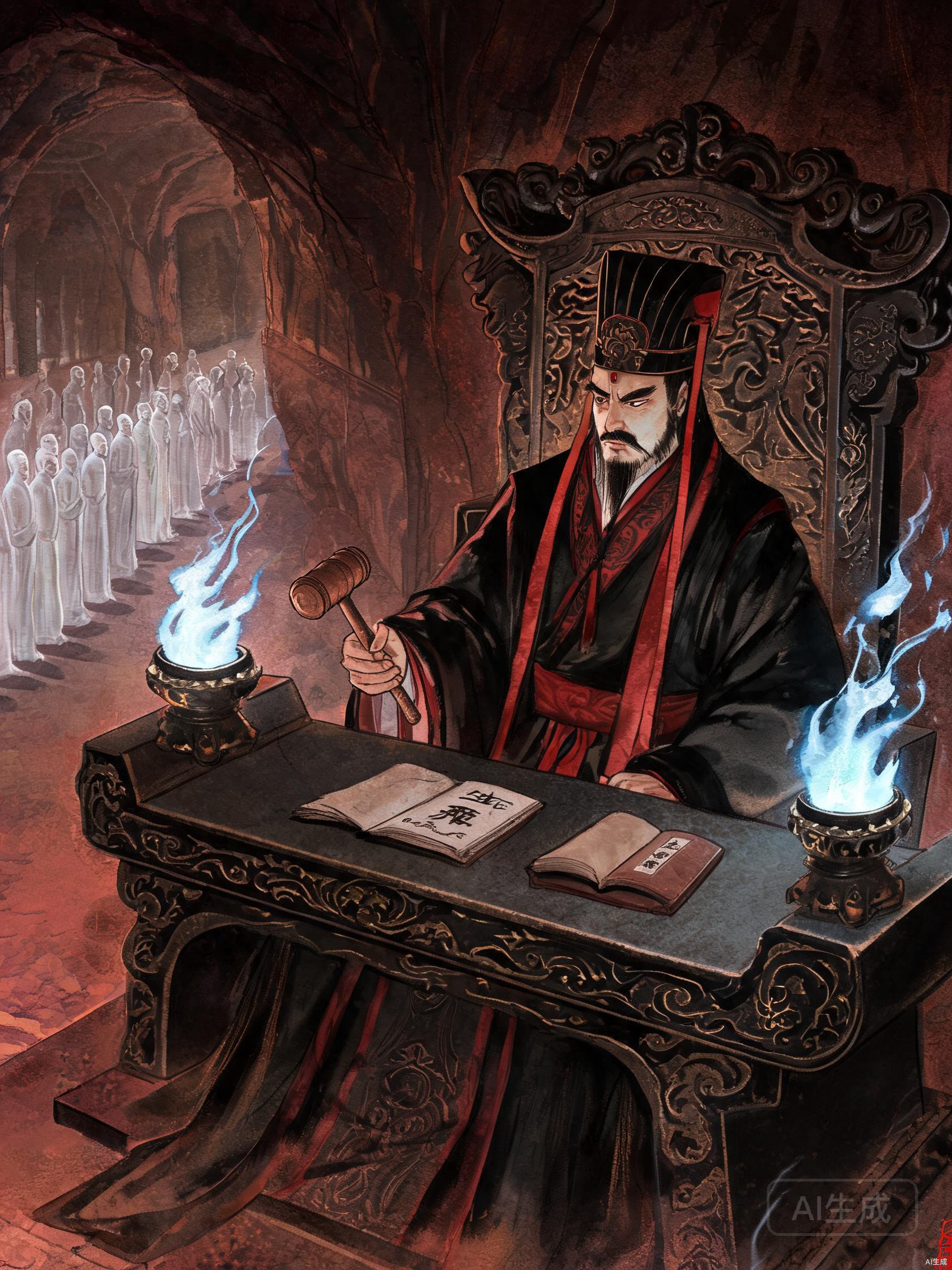
This belief reflects the Chinese understanding of the afterlife as a parallel world that intersects with the living. The underworld (Diyu) is not a place of eternal punishment but a bureaucratic system where souls are processed, judged, and eventually reincarnated. During Ghost Month, the boundaries between these worlds temporarily dissolve.
The Ghost Festival, celebrated on the 15th day of the 7th lunar month, is when Chinese believe the gates of the underworld open, releasing hungry ghosts to roam the earth. Families offer food, burn incense and spirit money, and perform rituals to appease the spirits and honor their own ancestors.
Powers & Symbols
Attributes & Artefacts
Click each card to reveal the details behind Ghost Festival (Zhongyuan)'s divine attributes.
Historical & Cultural Meaning
Beyond the Myth
The Buddhist Connection: Mulian Saves His Mother
The Ghost Festival has deep roots in both Taoist and Buddhist tradition. The Buddhist origin story is the tale of [Mulian](/myths/mulian) (Maudgalyayana), a disciple of the Buddha who possessed the power to see across realms. He discovered that his deceased mother had been reborn as a hungry ghost, suffering from insatiable hunger and unbearable thirst.
[Mulian](/myths/mulian-rescues-mother) tried to feed her, but every morsel of food turned to fire before she could eat it. Desperate, he sought the [Buddha](/gods/buddha-shakyamuni)'s help. The Buddha instructed him to make offerings to the sangha (monastic community) on the 15th day of the 7th month, when monks emerged from their summer retreat. The collective merit of this offering freed [Mulian](/myths/mulian)'s mother from her torment.
This story, known as the Yulanpen Sutra, became the foundation for the [Ghost Festival](/folklore/ghost-festival)'s emphasis on filial piety — the duty of the living to care for the dead. It also gave the festival its Buddhist name, Yulanpen, which means 'vessel of deliverance.'
Rituals and Taboos
During Ghost Month, families burn paper money and paper replicas of houses, cars, clothing, and other goods for their ancestors to use in the afterlife. Temples hold elaborate ceremonies where Taoist priests chant sutras to guide lost souls. Some communities release small paper boats on rivers at dusk, symbolizing the guiding of spirits back to the underworld.
Numerous taboos surround Ghost Month: avoid swimming (water spirits may pull you under), avoid staying out late at night, avoid picking up coins or offerings on the street (they belong to the dead), avoid getting married or moving house, and avoid whistling at night (it attracts spirits). These taboos reveal a deep cultural respect for the unseen world.
On the last day of the month, families burn more paper offerings to send the spirits off, and temples hold closing ceremonies. The gates of the underworld close once more, and the world of the living returns to its normal order until the next Ghost Month.
Sources & References
Primary classical texts: Shanhaijing (山海经, Classic of Mountains and Seas, c. 4th-2nd century BCE) · Fengshen Yanyi (封神演义, Investiture of the Gods, c. 16th century) · Journey to the West (西游记, Xiyouji, c. 16th century) · Records of the Grand Historian (史记, Shiji, by Sima Qian, c. 91 BCE) · Classic of Mountains and Seas commentary (郭璞注 Shanhaijing, c. 4th century) · Bamboo Annals (竹书纪年, c. 4th century BCE onwards)
Classical translations: Legge, James (trans.). The Sacred Books of the East (1879-1910, 50 volumes covering Chinese classics) · Girardot, Norman J. Myth and Meaning in Early Taoism (University of California Press, 1983) · Werner, E.T.C. A Dictionary of Chinese Mythology (Shanghai: Kelly & Walsh, 1932)
Modern academic references: Birrell, Anne. Chinese Mythology: An Introduction (Baltimore: Johns Hopkins University Press, 1993) · Yang, Lihui, and Deming An. Handbook of Chinese Mythology (New York: Oxford University Press, 2005) · Strassberg, Richard E. A Chinese Bestiary: Strange Creatures from the Guideways Through Mountains and Seas (Berkeley: University of California Press, 2002)
Digital encyclopedias and online resources: Wikipedia — Chinese mythology portal (continuously updated, citations to primary sources) · Encyclopedia Britannica — Mythology and Religion section
Mythology Network
Connections & Relationships
Ghost Festival (Zhongyuan) is woven into a larger web of gods, creatures, and legends. Explore the connections below.
Ghost Festival (Zhongyuan)
中元节
Explore the Topic
Ghost Festival (Zhongyuan) in the Mythology Network
Go deeper — read the topic guides that gather every folk tradition like Ghost Festival (Zhongyuan).