
Sun Wukong
孙悟空
The Monkey King — the most famous trickster in Chinese mythology.
Origin Story
Who Is Sun Wukong?
Sun Wukong — the Monkey King — is the protagonist of Journey to the West, one of the Four Great Classical Novels of Chinese literature. He is a stone-born monkey who achieved godlike powers through Taoist cultivation, then wreaked havoc in heaven before being redeemed by accompanying the monk Xuanzang on a journey to India to retrieve Buddhist scriptures.
Sun Wukong is the ultimate rebel of Chinese mythology. He refuses to accept any authority above himself — not the Jade Emperor, not the Buddha, not fate. Yet his story is ultimately one of transformation: from chaos to purpose, from defiance to devotion.
Sun Wukong — the most beloved rebel in Chinese mythology
Sun Wukong, the Monkey King, is the legendary trickster-hero of Journey to the West. Born from stone, he mastered immortality, stole the peaches of heaven, and fought every god in the celestial army before being imprisoned under a mountain for 500 years.
Powers & Symbols
Attributes & Artefacts
Click each card to reveal the details behind Sun Wukong's divine attributes.
Magical Artifacts & Weapons
Sun Wukong's Divine Arsenal
The legendary weapons and treasures wielded by Sun Wukong — each with its own origin story, powers, and mythological significance.
Historical & Cultural Meaning
Beyond the Myth
The Monkey King's Origins
Sun Wukong was born from a magic stone on the Mountain of Flowers and Fruit. The stone had been nourished by heaven and earth since the beginning of time, and when it cracked open, a stone egg hatched into a monkey with golden eyes.
He became king of the monkeys, then sought immortality. He studied under the Taoist sage Subhuti, who named him Sun Wukong ('Awakened to Emptiness'). He learned the 72 transformations and the cloud-somersault — a leap that could cover 108,000 li (about 33,000 miles) in a single bound.
Havoc in Heaven
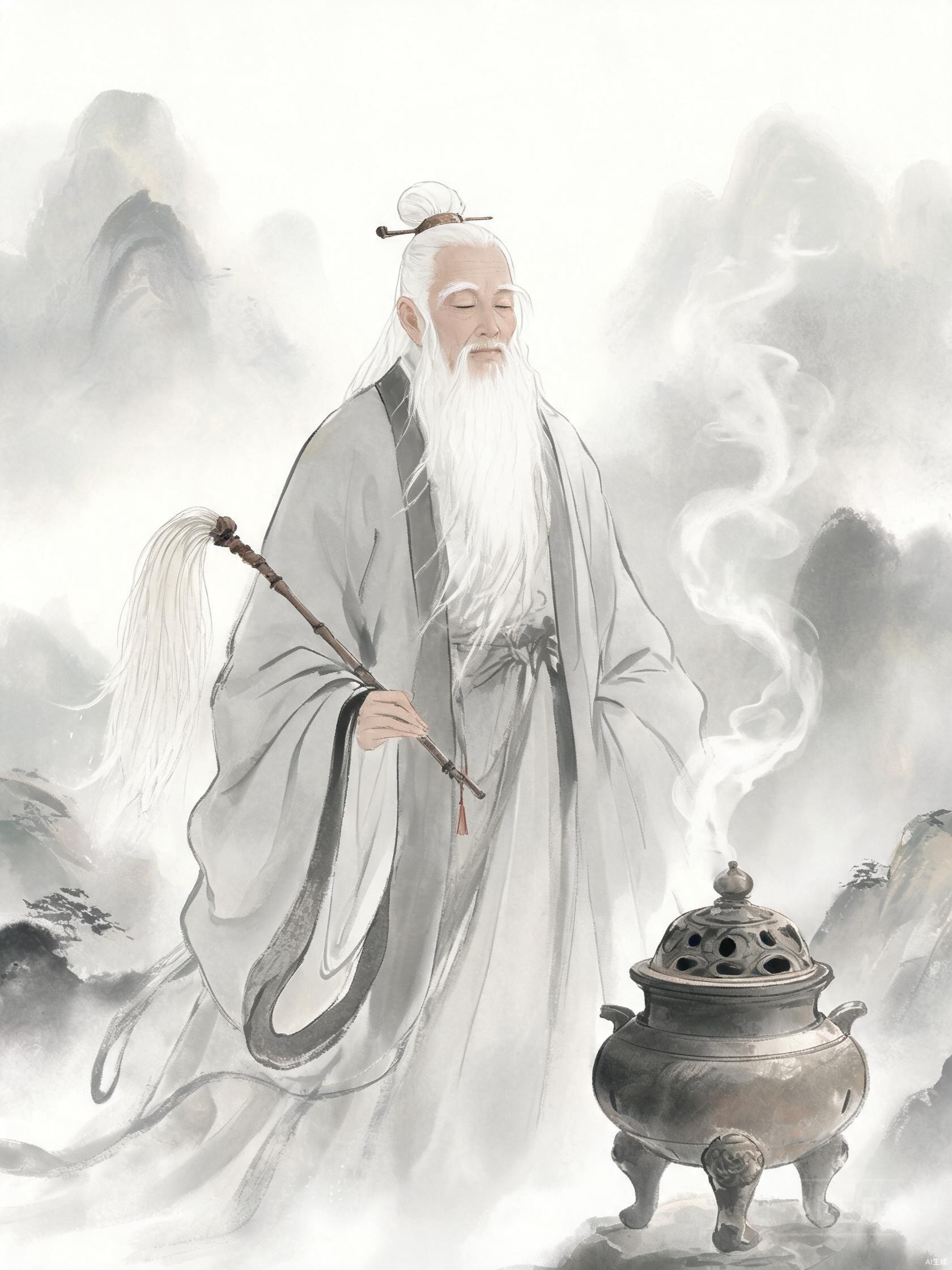
Sun Wukong's most famous episode is his assault on heaven. After being given a minor post in the celestial bureaucracy (Keeper of Horses), he realized he'd been snubbed and rebelled. He declared himself 'Great Sage Equal to Heaven,' stole the Peaches of Immortality, drank the [Jade Emperor](/gods/jade-emperor)'s divine wine, and consumed Laozi's pills of immortality.
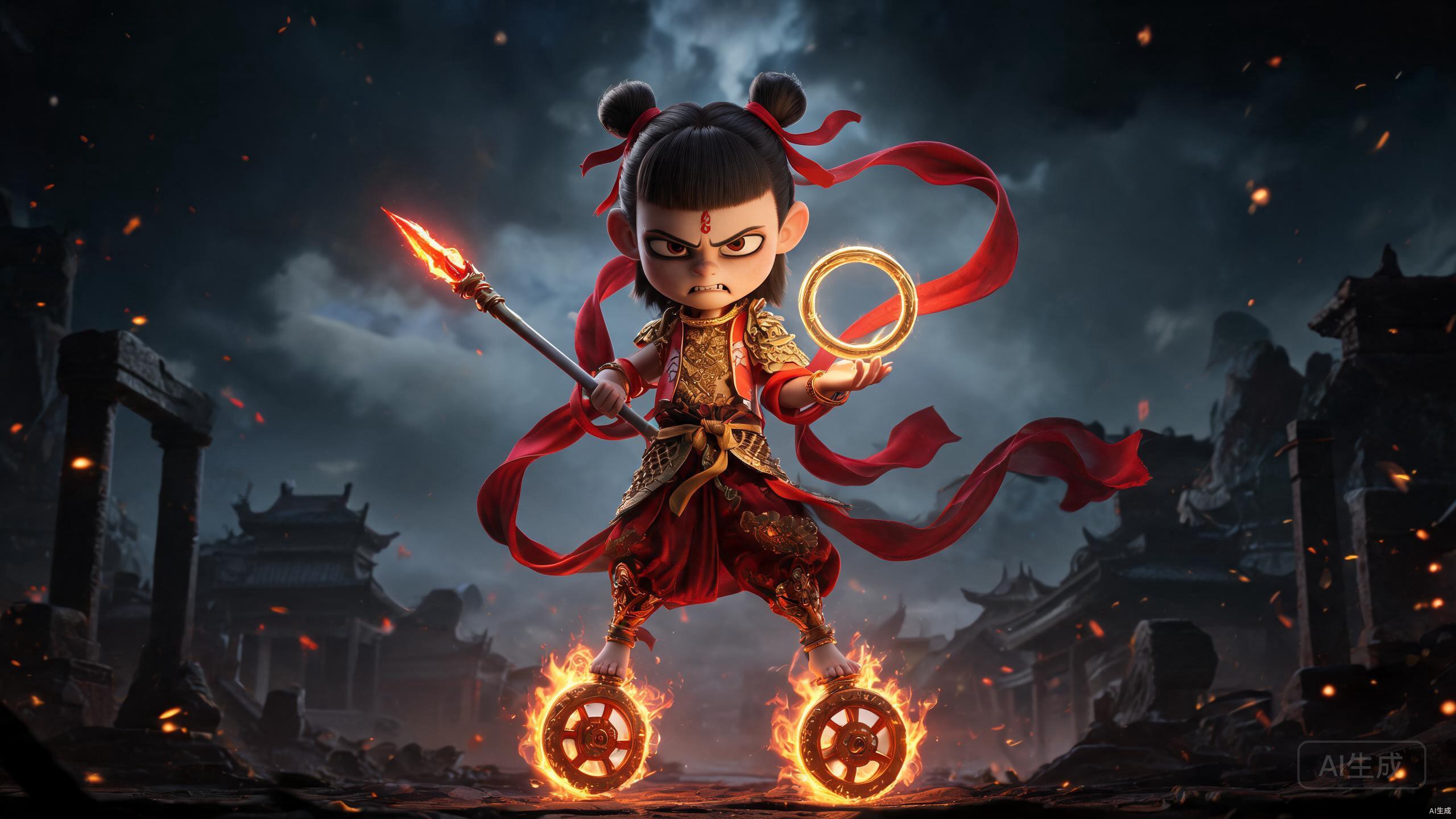
When the heavenly army tried to stop him, he defeated every general sent against him — including [Nezha](/gods/nezha) and Erlang Shen. It took the Buddha himself to finally stop the Monkey King, trapping him under [Five Elements](/symbols/five-elements) Mountain for 500 years.
The Journey to the West
After 500 years of imprisonment, Sun Wukong was freed by the monk Xuanzang (Tang Sanzang), who needed protection on his pilgrimage to India to retrieve Buddhist scriptures. [Guanyin](/gods/guanyin) had arranged this as Sun Wukong's path to redemption.
The journey — 81 trials over 14 years — transformed Sun Wukong from a chaotic rebel into a disciplined protector. He fought demons, outsmarted monsters, and saved his master countless times. At the journey's end, he was granted [Buddha](/gods/buddha-shakyamuni)hood and given the title 'Victorious Fighting Buddha.'
This arc — from defiance to discipline, from chaos to enlightenment — is what makes Sun Wukong one of the most enduring and beloved characters in all of world mythology.
Sun Wukong in Modern Culture
Sun Wukong's influence extends far beyond classical literature. The 2024 game Black Myth: Wukong, based on Journey to the West, became a global phenomenon — selling over 10 million copies in three days and introducing Sun Wukong to audiences worldwide.
From Dragon Ball's Goku (directly inspired by Sun Wukong) to countless films, games, and animations, the Monkey King remains one of the most recognizable figures in global pop culture — a trickster-hero whose appeal transcends cultural boundaries.
Sources & References
Primary classical texts: Wu, Cheng'en (c. 1500). Journey to the West (西游记) — Sun Wukong's primary source text · Yu, Anthony C., translator. The Journey to the West (Chicago: University of Chicago Press, 2012, 4 vols.) · Luo, Guanzhong. Romance of the Three Kingdoms (三国演义) — secondary appearances · Shanhaijing (山海经, Classic of Mountains and Seas, c. 4th-2nd century BCE) · Fengshen Yanyi (封神演义, Investiture of the Gods, c. 16th century) · Journey to the West (西游记, Xiyouji, c. 16th century)
Classical translations: Legge, James (trans.). The Sacred Books of the East (1879-1910, 50 volumes covering Chinese classics) · Girardot, Norman J. Myth and Meaning in Early Taoism (University of California Press, 1983) · Werner, E.T.C. A Dictionary of Chinese Mythology (Shanghai: Kelly & Walsh, 1932)
Modern academic references: Birrell, Anne. Chinese Mythology: An Introduction (Baltimore: Johns Hopkins University Press, 1993) · Yang, Lihui, and Deming An. Handbook of Chinese Mythology (New York: Oxford University Press, 2005) · Strassberg, Richard E. A Chinese Bestiary: Strange Creatures from the Guideways Through Mountains and Seas (Berkeley: University of California Press, 2002)
Digital encyclopedias and online resources: Wikipedia — Chinese mythology portal (continuously updated, citations to primary sources) · Encyclopedia Britannica — Mythology and Religion section
Mythology Network
Connections & Relationships
Sun Wukong is woven into a larger web of gods, creatures, and legends. Explore the connections below.
Sun Wukong
孙悟空



📱 Wallpaper · $2.99
Take 齐天大圣孙悟空 with you
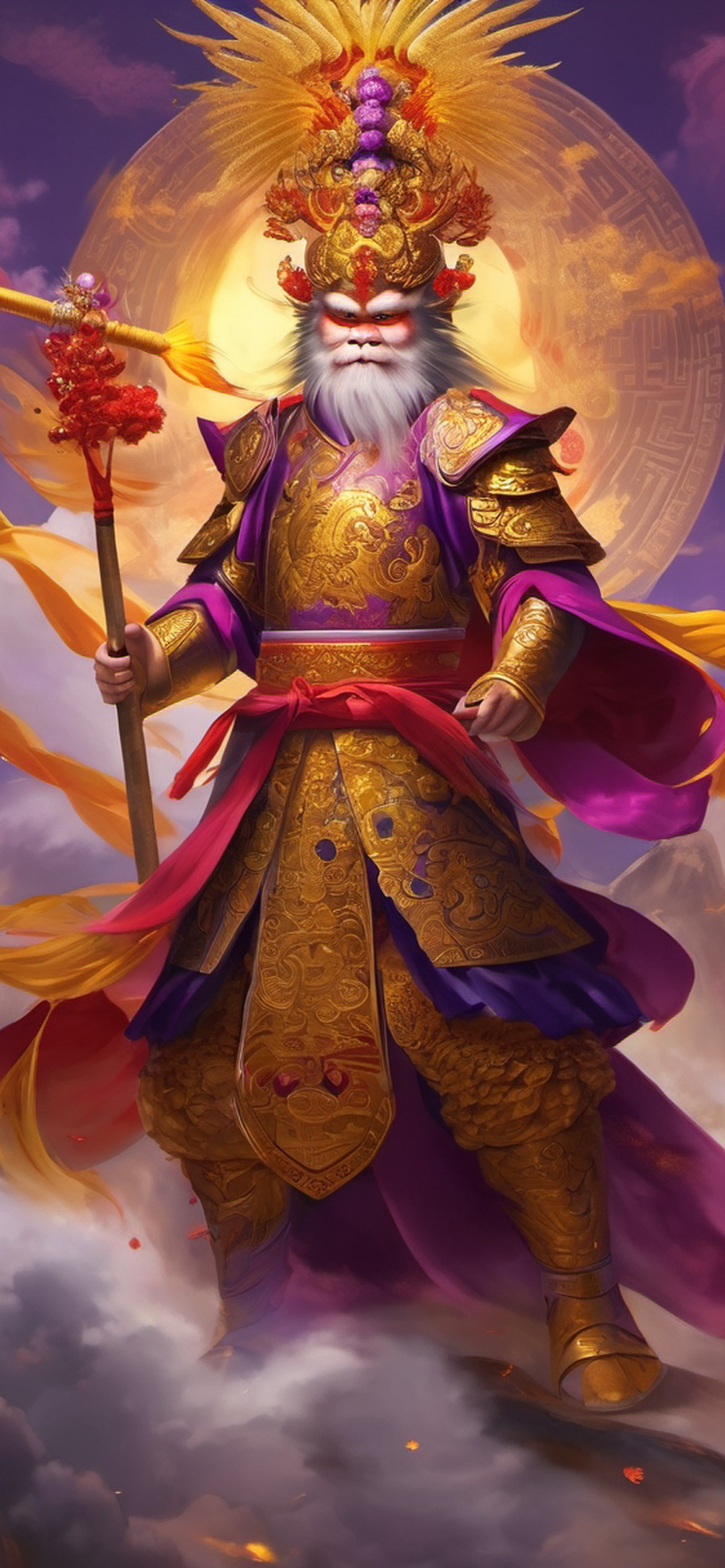
High-resolution phone wallpaper of Great Sage Sun Wukong (齐天大圣孙悟空) — iconography drawn from classical Chinese sources, painted in traditional style.
📜 Iconography sources
《西游记》 gives the Great Sage his unforgettable equipment: the Ruyi Jingu Bang staff from the dragon treasury, the golden chainmail, phoenix-feather cap and cloud-treading shoes, and the Fiery Eyes, Diamond Pupils forged in Laozi's furnace. Every temple mural and New Year print of the Monkey King descends from these chapters — feather-crowned, staff in hand, defying heaven itself.
Buy & download
Explore the Topic
Sun Wukong in the Mythology Network
Go deeper — read the topic guides that gather every deity like Sun Wukong.