
Jingwei the Sea-Filling Bird
精卫
The little bird that fills the sea — a child’s revenge against the ocean that drowned her.
Origin Story
The Drowning
According to the Shanhaijing, Yandi (the Flame Emperor) loved his youngest daughter. She went out one day to play along the shore of the Eastern Sea and was swept away by a wave. Her father searched the coastline in vain. The story is told in three lines, with the pathos of a child’s sudden end concentrated into brevity.
In some versions the girl’s name is Núwa, but the more common account distinguishes her from the creator Núwa: she was a child of the Flame Emperor named ‘little girl,’ later given the honorific Jingwei after her apotheosis. Her tragedy is the founding tragedy of Chinese children’s literature.
Jingwei is the shape taken by Yandi’s daughter, a girl named Nuwa or Núwa’s younger sister in different traditions, after she drowned in the Eastern Sea. She returns as a small bird, beak and claws made for carrying pebbles and twigs, who drops them one by one into the sea — insisting she will fill it.
Powers & Symbols
Attributes & Artefacts
Click each card to reveal the details behind Jingwei the Sea-Filling Bird's divine attributes.
Magical Artifacts & Weapons
Jingwei the Sea-Filling Bird's Divine Arsenal
The legendary weapons and treasures wielded by Jingwei the Sea-Filling Bird — each with its own origin story, powers, and mythological significance.
Historical & Cultural Meaning
Beyond the Myth
The Bird Is Born
After her death, the child’s spirit transformed into a small bird, the size of a magpie, with markings on her head, a white beak, and red feet. Her cry resembles her own name: jingwei, jingwei. She lived on Mount Fajiu (发鸠山), and spent her days flying back and forth to the sea, dropping pebbles and twigs and chips of wood into the waves.
This is one of the earliest “unsuccessful but irrepressible” stories in world myth. The sea does not shrink; the bird’s beak and talons wear; nothing visible changes. The whole point is the unchanging persistence.
Imitation of the Impossible
Yú the Great, in a later chapter of the Shanhaijing, laments the very same cosmic impertinence: he is trying to drain the Great Flood, and Jingwei is trying to fill the Eastern Sea. They are working against each other, but Yú recognizes the bird’s persistence and refuses to harm her.
Later Chinese writers, including Tao Yuanming and Guo Pu, treat Jingwei as a paragon of ‘small but unyielding’ determination. The story is recited to schoolchildren to teach that effort matters more than success.
Cultural Use
Jingwei is a popular motif in Chinese idioms (‘Jingwei fills the sea’) and a frequent subject of poetic imagery. The phrase is also used in modern contexts — from student slogans to software engineering — to celebrate patient, repeated effort against a large task.
In art, Jingwei is drawn as a small but determined bird, with a single twig or pebble in her beak, flying against a vast blue or stormy ocean. The image is the canonical Chinese emblem of perseverance.
Mythology Network
Connections & Relationships
Jingwei the Sea-Filling Bird is woven into a larger web of gods, creatures, and legends. Explore the connections below.
Jingwei the Sea-Filling Bird
精卫

Fenghuang
The Chinese phoenix — a symbol of virtue, grace, and imperial harmony.

Chinese Dragon
The most powerful and beloved symbol in Chinese culture.
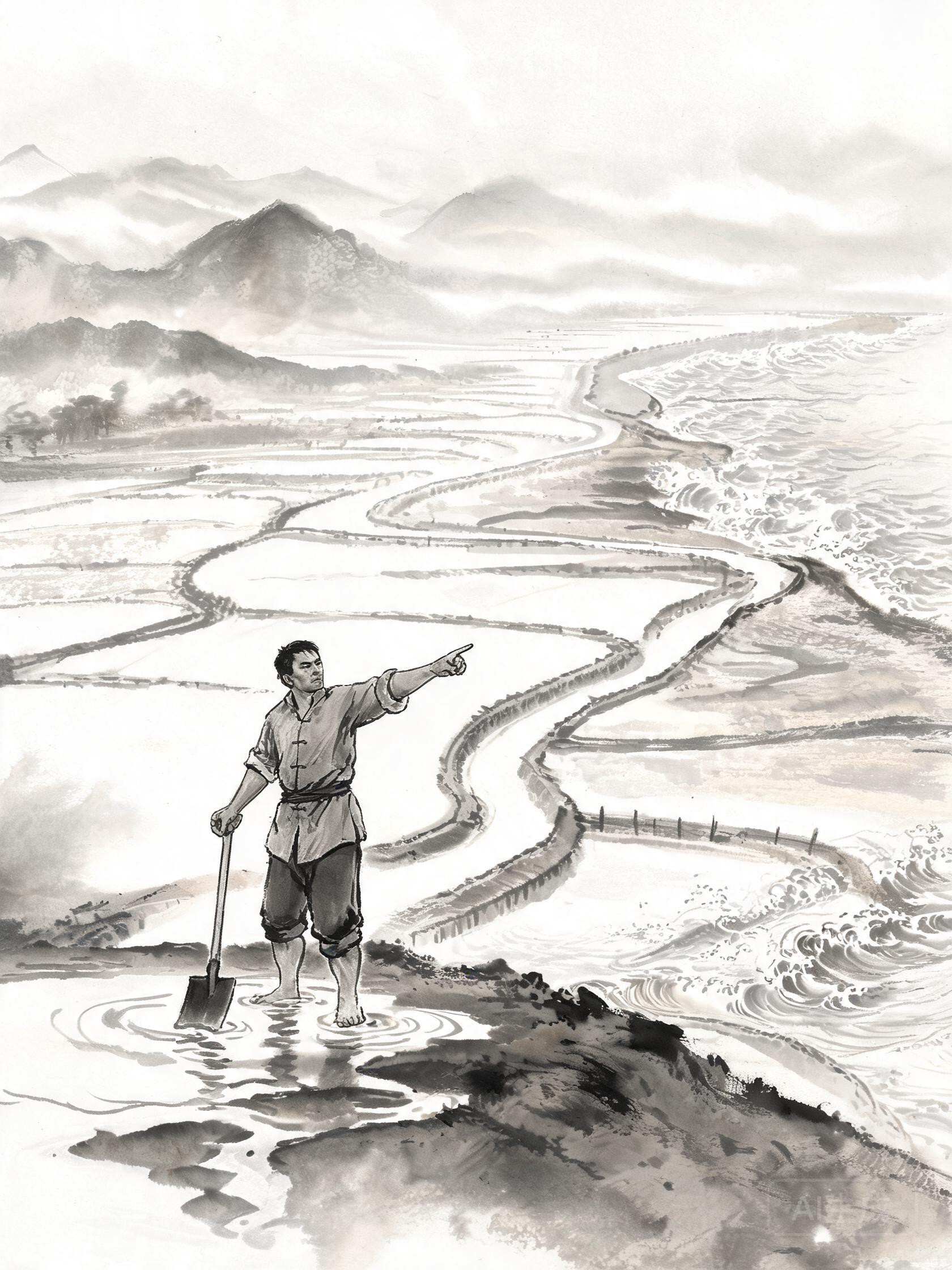
Yu the Great Tames the Flood
The hero who spent thirteen years taming a world-drowning flood — and passed his own door without entering.
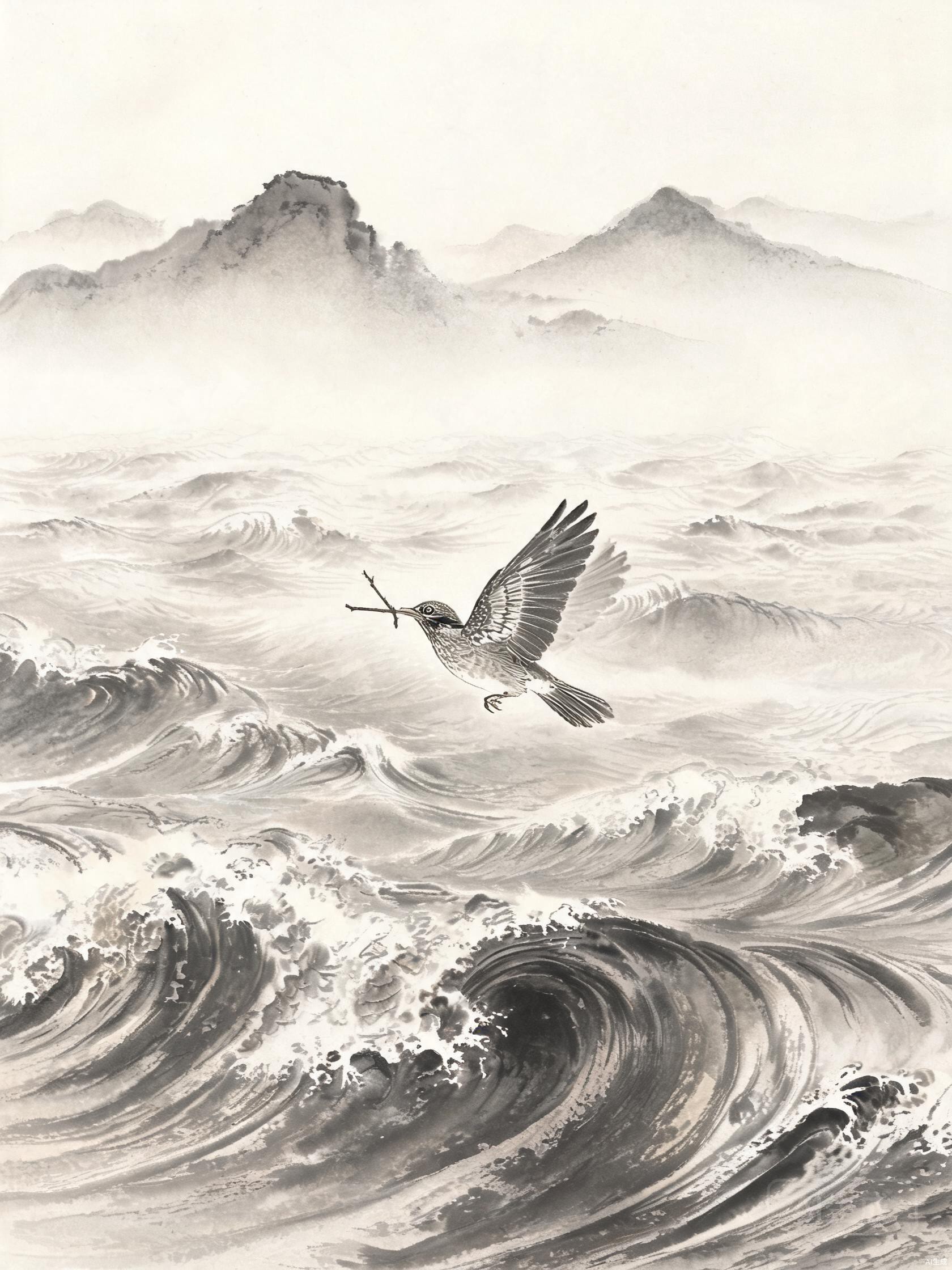
Jingwei Fills the Sea
A bird born from a drowned princess, determined to fill the vast ocean one twig at a time.