
Gun and Yu Tame the Flood
鲧禹治水
Father and son who stopped the Great Flood — one through theft, the other through order.
Origin Story
Gun and the Theft of Xirang
When the Great Flood descended upon the prehistoric world, Emperor Yao appointed Gun — sometimes called the “minister of works” — to stop it. Gun worked for nine years building dikes and dams, but the waters kept rising. In desperation, he stole from the divine treasury a substance called Xirang (û-rejuvenating soil that grows without limit) and used it to plug the flood.
For this breach of heavenly order, the divine tribunal executed Gun at Yu Mountain. Some versions say he was cut open; others say he was shown mercy and returned to the world in a different form. What remains beyond debate is that the Xirang had an unintended consequence — in his body, his unborn son Yú was preserved.
Gun (鲧), the great minister of Emperor Yao, stole the magical Xirang (‘breath-earth’) from the divine treasury to dam the Great Flood and was executed for the crime. His son Yú inherited the task and succeeded by channeling the waters rather than blocking them — founding the Xia Dynasty in the process.
Powers & Symbols
Attributes & Artefacts
Click each card to reveal the details behind Gun and Yu Tame the Flood's divine attributes.
Magical Artifacts & Weapons
Gun and Yu Tame the Flood's Divine Arsenal
The legendary weapons and treasures wielded by Gun and Yu Tame the Flood — each with its own origin story, powers, and mythological significance.
Historical & Cultural Meaning
Beyond the Myth
Yú the Great Is Born
After three years in his father’s corpse, Yú emerged as a lion-bodied, dragon-faced demigod. Some accounts describe Yú as having walked on the chest of a divine turtle and used the sacred Jiu He Ruler (a stone marked with nine divisions to measure land). He inherited both the unfinished task and the stolen Xirang still lodged in his body.
Yú’s legend is the hinge between myth and dynastic history: his success against the flood earns him the throne as the first sovereign of the Xia Dynasty. He is, in effect, the first king of human civilization in the received account.
Channeling Instead of Blocking
Where his father’s strategy was to dam, Yú’s was to guide. He divided the land into nine provinces, organized the population to cut channels, dredge rivers, and open the floodplain into the sea. He convened the lords of the realm at Tushan (Mount Tu), and famously visited the Queen Mother of the West to obtain the Jiu He Ruler, the cosmological nine-part compasses that could measure both geography and time.
This is the doctrinal heart of the myth: brute force against nature fails; disciplined analysis, working with the grain of the world, succeeds. Yú’s victory becomes the founding charter of Chinese hydraulic civilization.
Gun’s Legacy
Gun’s theft, death, and posthumous preservation is one of the great tragic arcs of Chinese myth. Posthumously rehabilitated — sometimes called Prince of Yú, sometimes made into a river god — he is the patron of all who must break unjust laws to save lives. Wudang Mountain in Hubei still claims his spirit as part of its sacred geography.
Together, father and son became the mythic founding pair of hydraulic engineering. The Grand Canal, the Yellow River dikes, and the many water temples of China all reference their combined efforts. The flood myth’s central message is not ‘humans vs. nature’ but ‘the right kind of human work vs. the wrong.’
Mythology Network
Connections & Relationships
Gun and Yu Tame the Flood is woven into a larger web of gods, creatures, and legends. Explore the connections below.
Gun and Yu Tame the Flood
鲧禹治水
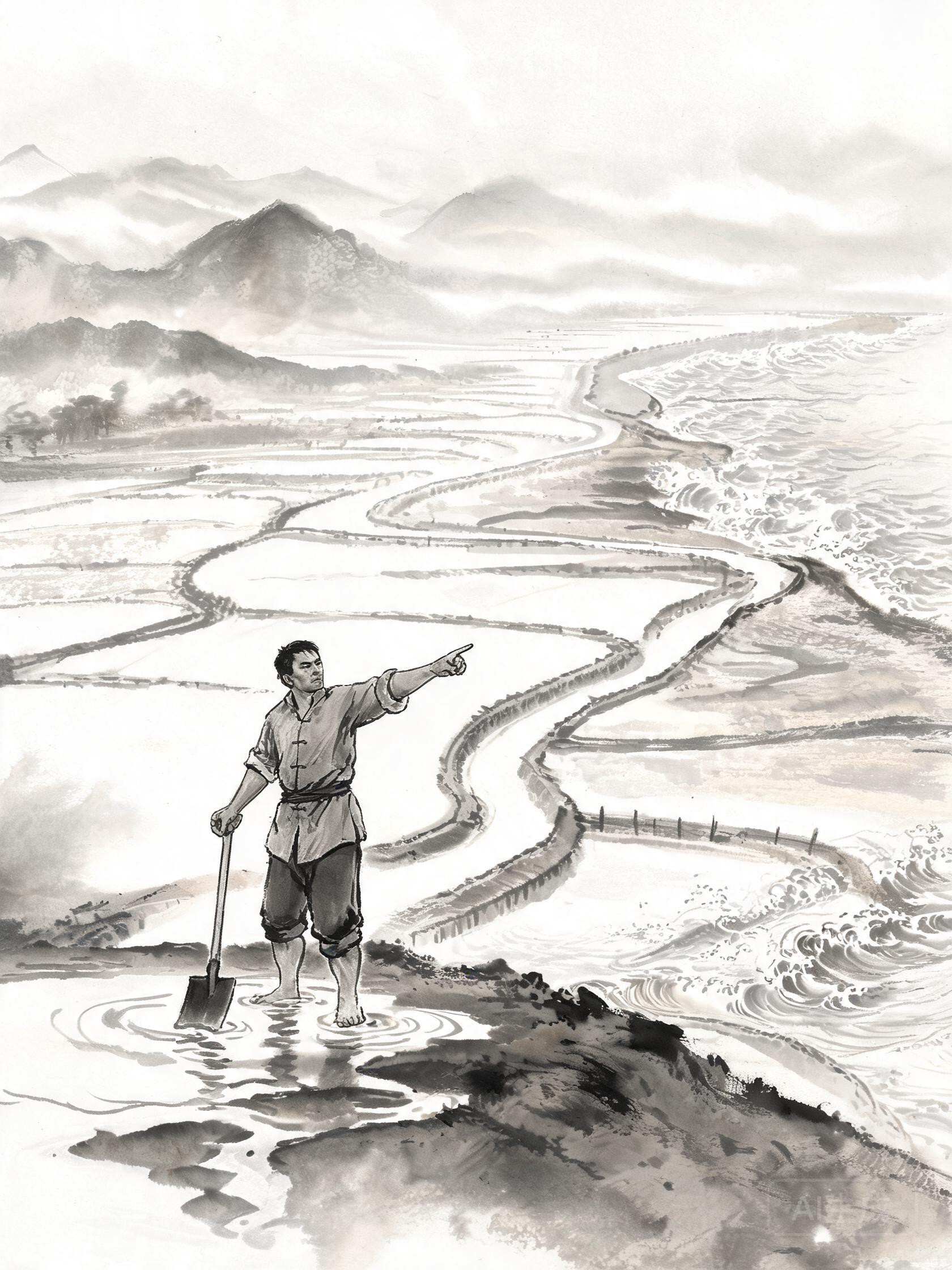
Yu the Great Tames the Flood
The hero who spent thirteen years taming a world-drowning flood — and passed his own door without entering.

Gonggong Crashes the Pillar of Heaven
The angry water god whose fall broke the sky — and set the stage for Núwa’s repair.

Xing Tian Wu Gan Qi
The headless giant who fights on — using his eyes as nipples and his mouth as navel, wielding axe and shield.