
Abacus Symbolism
算盘
The calculating frame that became a symbol of wealth and merchant acumen.
Origin Story
Wealth Made Visible
The abacus is, first, a working tool: in the hands of a skilled operator it computes faster than most pocket calculators. In folk art, however, it is a symbol. Placed next to a gold ingot, it summons wealth. Drawn as a hanging ornament, it signals a household that takes its accounts seriously.
The folkloric equation ‘abacus + ingot = prosperity’ appears on countless New Year prints and shop signs. Junior merchants are sometimes given a small abacus at New Year as a blessing for the coming year’s business.
The Chinese abacus (suanpan) is the wooden-framed calculating device with sliding beads that became, in folk culture, the symbol of wealth and merchant skill. Images of the abacus — often with the character for wealth — appear in shops, on New Year pictures, and in designs meant to invite prosperity.
Powers & Symbols
Attributes & Artefacts
Click each card to reveal the details behind Abacus Symbolism's divine attributes.
Magical Artifacts & Weapons
Abacus Symbolism's Divine Arsenal
The legendary weapons and treasures wielded by Abacus Symbolism — each with its own origin story, powers, and mythological significance.
Historical & Cultural Meaning
Beyond the Myth
The Suanpan Form
The traditional Chinese suanpan has two beads above the divider (each worth five) and five beads below (each worth one). This 2/5 configuration predates the Japanese soroban (1/4) by centuries; both function identically at runtime.
Mastery of the suanpan is a long apprenticeship. Skilled operators see columns of beads as numbers directly; they perform addition, subtraction, multiplication, division, and even square roots at remarkable speed. The abacus is still taught as a math aid in some Chinese primary schools, where it promotes mental arithmetic.
Symbolic Powers
The abacus is not only a wealth symbol; it is a wisdom symbol. The Chinese saying ‘knows the abacus, knows the road’ identifies calculation as the foundation of all commercial success. Pictures of the abacus often appear alongside books and scrolls, suggesting a fuller set of merchant virtues.
In some folk pictures, the abacus is depicted alongside the scales of justice; both tools — one to count, one to weigh — represent honest dealing. Placed together in a shop, the pair signals fair dealing to customers and a clean conscience to the merchant.
Modern Echoes
The abacus survives in modern China as a cultural icon even when calculators dominate. Chinese tech companies sometimes adopt the abacus as a logo or mascot; financial apps use it as the symbol of calculation. Children’s toys include miniature abacuses for early math learning.
In the New Year decoration market, abacus ornaments — in gold wire, jade, or even small crystals — are sold alongside red envelopes and spring couplets. The abacus of 2026 is the same abacus of 1626 in form; only the meaning has been polished by centuries of commercial blessing.
Mythology Network
Connections & Relationships
Abacus Symbolism is woven into a larger web of gods, creatures, and legends. Explore the connections below.
Abacus Symbolism
算盘
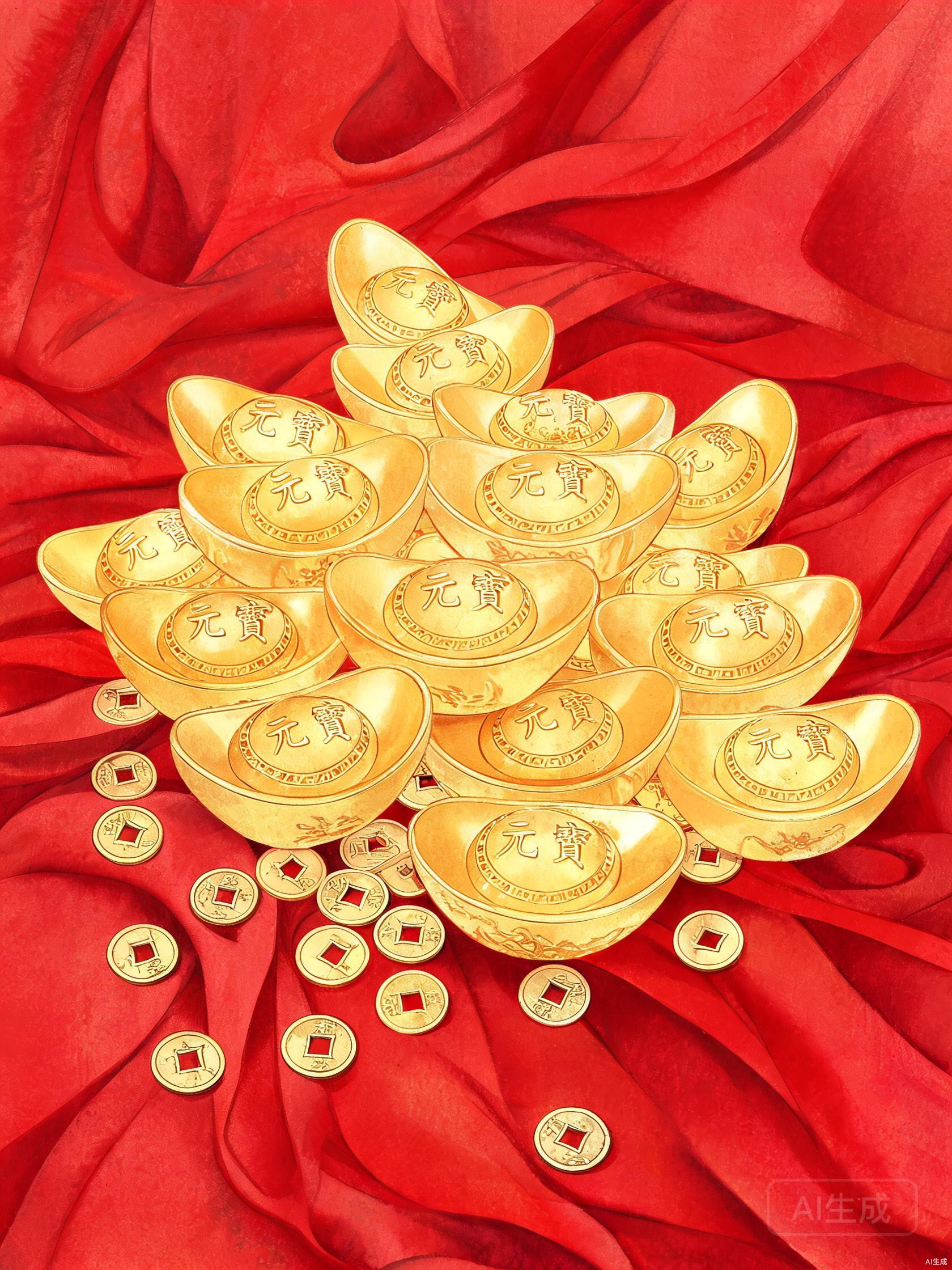
Yuanbao (Gold Ingot) Symbolism
The boat-shaped gold ingot of imperial China — the very shape of wealth and prosperity.

Coin Pattern (Qian Wen)
The round-with-square-hole pattern that ties all wealth symbols together.

Auspicious Clouds
The curling cloud motif that brings heaven’s blessing — the most ubiquitous decoration in Chinese art.