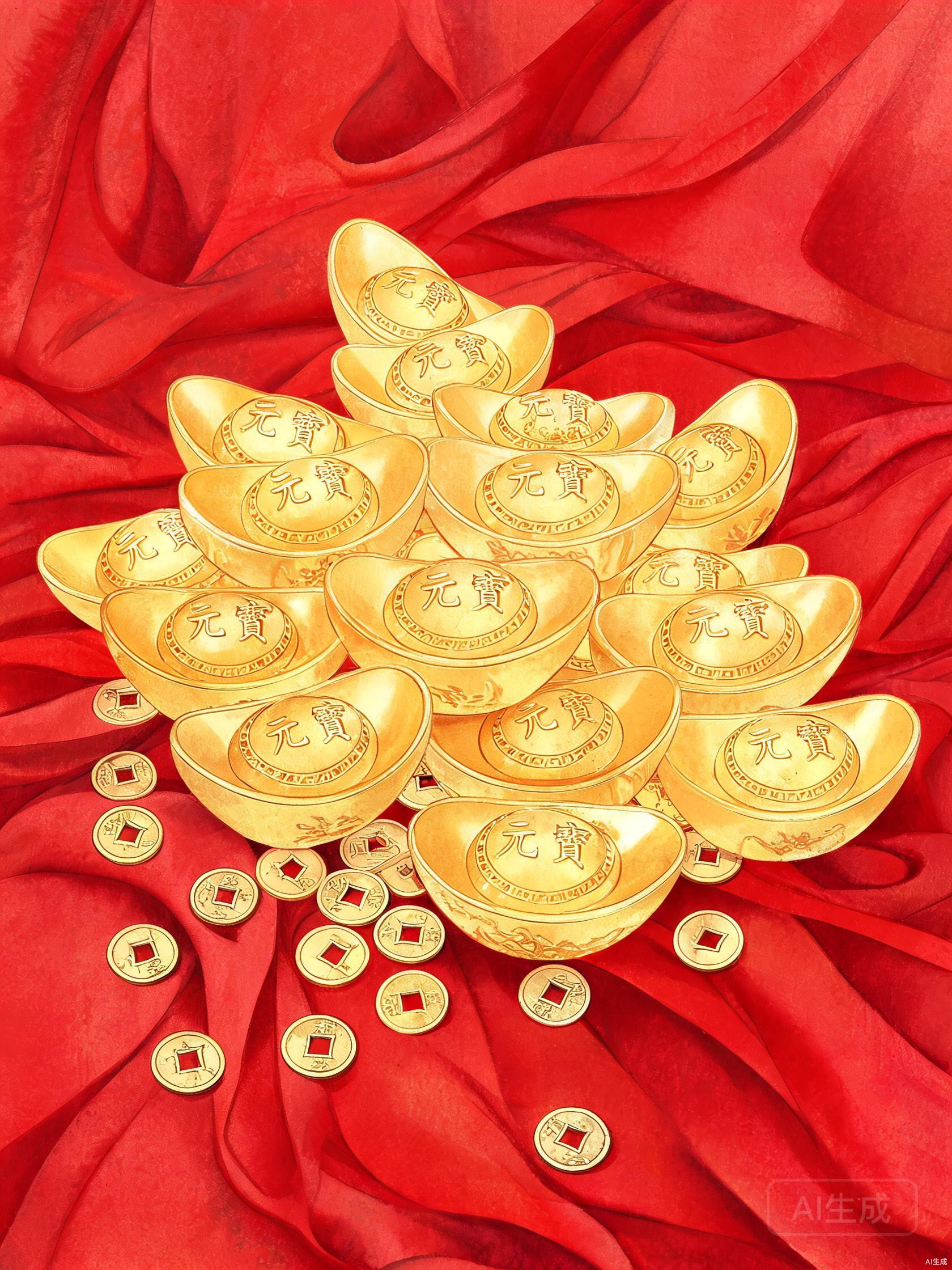
Yuanbao (Gold Ingot) Symbolism
元宝
The boat-shaped gold ingot of imperial China — the very shape of wealth and prosperity.
Origin Story
What Is the Yuanbao?
The Yuanbao (元宝) is a type of currency ingot used in imperial China from the Tang Dynasty (7th century) through the early 20th century. The name literally means 'primordial treasure' or 'inaugural treasure.' Each ingot was cast from gold or silver in a distinctive shape — a smooth oval body with two ends that curve upward like the prow of a boat or the toes of a shoe. The form is so iconic that it has become a universal shorthand for money and prosperity across Chinese culture.
The shape was not accidental. The upturned ends were believed to 'catch' fortune, holding wealth rather than letting it flow away. The smooth, rounded body suggested fullness and abundance, like a bowl brimming with rice. Together, the form of the Yuanbao itself communicates the idea that prosperity is something to be gathered and held — not something that flows out as easily as it flows in. This is why the Yuanbao is the chosen vessel in so many wealth-attracting rituals: it is a vessel built, by design, to keep what it gathers.
While the historical Yuanbao was a real and valuable object — a single large ingot could represent a year's wages for a laborer — its modern symbolic descendants are typically miniature and made of inexpensive materials. The meaning has detached from the medium. A pile of gold-painted plastic Yuanbao on a shop counter carries the same symbolic weight as a single silver ingot once did, because the power lies in the shape and what it represents, not in the metal.
The Yuanbao is a boat-shaped gold or silver ingot used as currency during the imperial era. Its distinctive curved shape and gleaming surface have made it the enduring visual symbol of wealth in Chinese culture, seen everywhere from New Year decorations to the mouth of the three-legged toad of prosperity.
Powers & Symbols
Attributes & Artefacts
Click each card to reveal the details behind Yuanbao (Gold Ingot) Symbolism's divine attributes.
Historical & Cultural Meaning
Beyond the Myth
Historical Origins
The Yuanbao originated during the Tang Dynasty (618–907 CE), when silver ingots began to be used for large transactions alongside the more common copper coins. Silver was lighter and more valuable than copper, making it practical for the long-distance trade that defined the cosmopolitan Tang empire. The earliest ingots were relatively flat, but the form gradually evolved toward the high-curved shape we recognize today.
The familiar 'shoe-shaped' Yuanbao became standard during the Yuan Dynasty (1271–1368). The Yuan emperors, who were Mongol, named the ingots 'Yuanbao' as a pun on their dynasty name (Yuan) and 'treasure' (bao) — literally 'Yuan treasure' or 'treasure of the Yuan.' The ingots were stamped with the weight, the mint, and the name of the responsible official, to guarantee their purity and weight. The standard unit was the tael (liang), roughly 37 grams of silver.
During the Ming (1368–1644) and Qing (1644–1912) dynasties, Yuanbao became the standard form for large-denomination silver currency. They were cast in various sizes — from small pieces of a few taels to massive ingots of 50 taels used for imperial tax payments. Provincial mints each produced slightly different shapes, and connoisseurs today can identify a Yuanbao's origin by its curves and stamps. When modern paper currency and coins replaced the Yuanbao in the early 20th century, the object did not disappear. Instead, it was elevated from practical currency to symbolic object — a shape too auspicious to retire.
Symbolism and Meaning
The Yuanbao is the most direct symbol of wealth in Chinese culture. Its gleaming gold surface and boat shape make it instantly recognizable — no other shape says 'money' as clearly. In Feng Shui, Yuanbao are used to activate the wealth sector of a home or business. A pile of three or eight Yuanbao (eight being the luckiest number, associated with the Eight Immortals and the word for 'prosper' 发, fā) is placed in the southeast corner — the traditional wealth direction — to attract and multiply fortune. The number three is chosen because it sounds like 'growth' (生, shēng), while six sounds like 'smooth' (顺, shùn).
The Yuanbao is also closely associated with other symbols of prosperity. The three-legged toad (Jin Chan, 金蟾) — a popular Feng Shui symbol — is often depicted sitting on a pile of Yuanbao, with a coin in its mouth. The god of wealth ([Caishen](/gods/caishen)) is shown surrounded by Yuanbao, sometimes holding one in each hand. The [Pixiu](/creatures/pixiu), a mythical wealth-attracting creature, is often carved holding a Yuanbao in its paws or resting its foot on one. In each case, the Yuanbao serves as the universal marker of financial abundance — the standard by which wealth is visually measured.
Beyond attracting wealth, the Yuanbao also symbolizes the preservation of what one has earned. Because the ingot's shape holds rather than spills, it represents the wisdom of saving and the value of keeping fortune close. A Yuanbao displayed in a business is not just a magnet for new money — it is a reminder to the owner to hold onto what comes in, to reinvest wisely, and to build wealth that lasts across generations.
Yuanbao in Daily Life
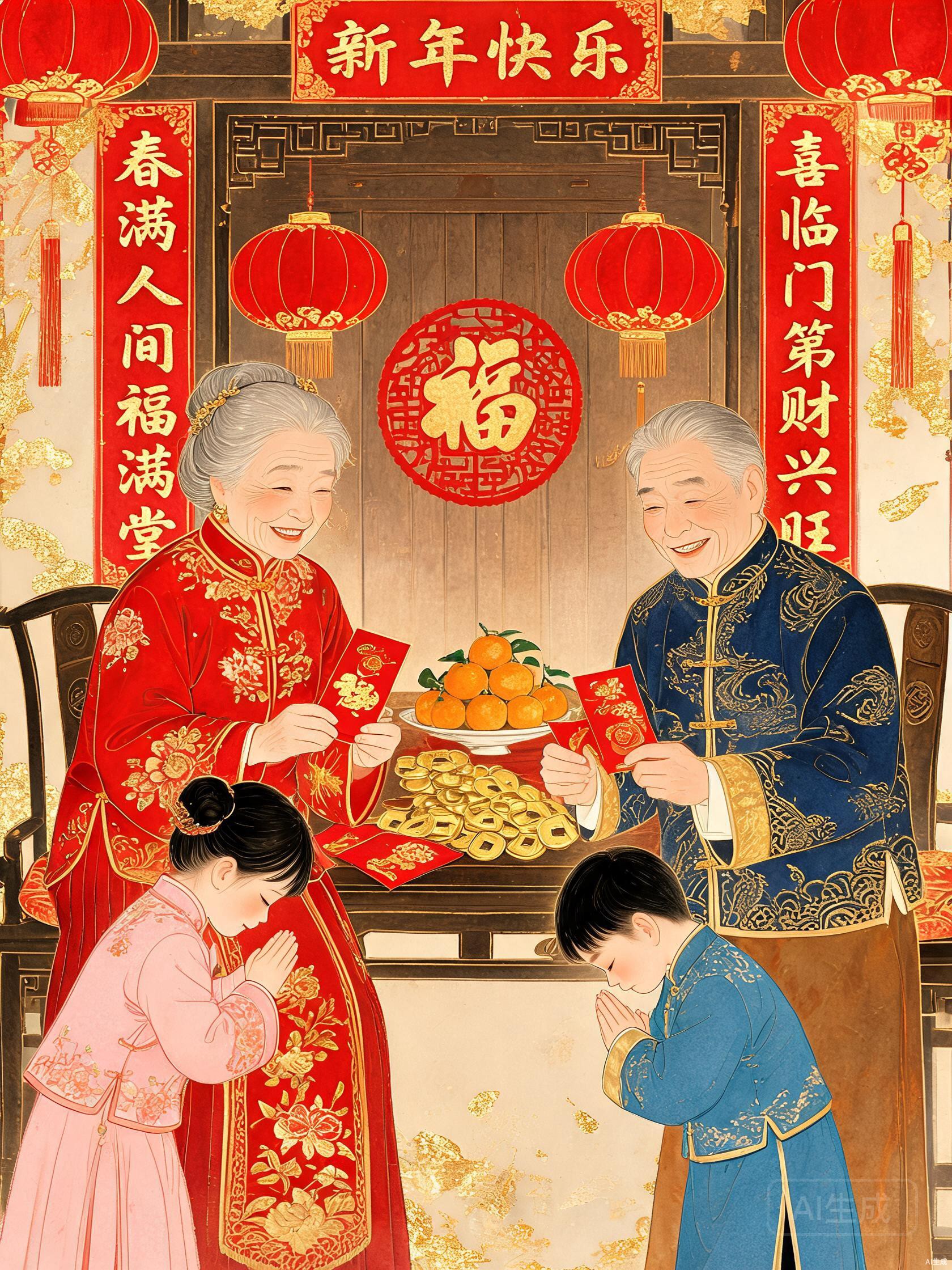
During Chinese New Year, Yuanbao decorations appear everywhere. [Red](/symbols/red-envelopes) paper cutouts shaped like Yuanbao are pasted on windows and doors. Gold-foil Yuanbao ornaments hang from fruit trees and door frames. Families may display a bowl of gold-colored Yuanbao (real metal or plastic) on their altars to attract wealth in the coming year. The traditional New Year's greeting '恭喜发财' (gōngxǐ fācái, 'may you become rich') is essentially a wish for a bowl overflowing with Yuanbao. Even the red envelopes (hongbao) given during New Year can be seen as a modern paper form of the Yuanbao — a vessel that holds and delivers wealth.
In business, [Yuanbao](/symbols/yuanbao) are placed on the desks of owners and managers, near cash registers, and on the altars to [Caishen](/gods/caishen), the god of wealth. The number placed is often symbolic — three for 'growth' (the word for three sounds like 'growth'), six for 'smooth progress,' and eight for 'prosperity.' Some business owners keep a single large Yuanbao as a centerpiece, while others prefer a pile of smaller ones, each contributing its symbolic charge to the whole. During the opening of a new shop, Yuanbao-shaped objects are often given as gifts by well-wishers.
The [Yuanbao](/symbols/yuanbao-symbolism)'s enduring presence in Chinese life, from imperial currency to modern desk ornament, is a testament to the enduring human hope for abundance — and to a culture that has made that hope visible in a single, gleaming, boat-shaped form. It is one of the few symbols that needs no explanation: show a [Yuanbao](/symbols/yuanbao) to anyone in the Chinese cultural world, and the meaning is immediate. Wealth. Prosperity. Enough. And perhaps, just a little more.
Sources & References
Primary classical texts: Shanhaijing (山海经, Classic of Mountains and Seas, c. 4th-2nd century BCE) · Fengshen Yanyi (封神演义, Investiture of the Gods, c. 16th century) · Journey to the West (西游记, Xiyouji, c. 16th century) · Records of the Grand Historian (史记, Shiji, by Sima Qian, c. 91 BCE) · Classic of Mountains and Seas commentary (郭璞注 Shanhaijing, c. 4th century) · Bamboo Annals (竹书纪年, c. 4th century BCE onwards)
Classical translations: Legge, James (trans.). The Sacred Books of the East (1879-1910, 50 volumes covering Chinese classics) · Girardot, Norman J. Myth and Meaning in Early Taoism (University of California Press, 1983) · Werner, E.T.C. A Dictionary of Chinese Mythology (Shanghai: Kelly & Walsh, 1932)
Modern academic references: Birrell, Anne. Chinese Mythology: An Introduction (Baltimore: Johns Hopkins University Press, 1993) · Yang, Lihui, and Deming An. Handbook of Chinese Mythology (New York: Oxford University Press, 2005) · Strassberg, Richard E. A Chinese Bestiary: Strange Creatures from the Guideways Through Mountains and Seas (Berkeley: University of California Press, 2002)
Digital encyclopedias and online resources: Wikipedia — Chinese mythology portal (continuously updated, citations to primary sources) · Encyclopedia Britannica — Mythology and Religion section
Mythology Network
Connections & Relationships
Yuanbao (Gold Ingot) Symbolism is woven into a larger web of gods, creatures, and legends. Explore the connections below.
Yuanbao (Gold Ingot) Symbolism
元宝


Explore the Topic
Yuanbao (Gold Ingot) Symbolism in the Mythology Network
Go deeper — read the topic guides that gather every symbol like Yuanbao (Gold Ingot) Symbolism.