
Coin Pattern (Qian Wen)
铜钱纹
The round-with-square-hole pattern that ties all wealth symbols together.
Origin Story
Origin in Ancient Coinage
The Chinese round-with-square-hole coin is one of the longest-lived currency forms in human history. From the Warring States period (5th century BCE) almost continuously to the early Republic (early 20th century), the cash coin carried the fundamental Chinese cosmological image — round heaven, square earth.
When the cash coin ceased to be currency, its image survived as decoration. Modern decorative coins are porcelain or jade, but the form is unmistakably the same: a round disk with a square hole. The shape is so iconic that even foreign currencies called it — Japanese mon, Korean mun, Vietnamese van.
The coin pattern (qian wen) is the stylized reproduction of the ancient copper cash coin — round outside, square hole inside. The pattern is one of the foundational motifs of Chinese decorative art, signifying wealth, and is paired with everything from dragons to ingots to children’s bibs.
Powers & Symbols
Attributes & Artefacts
Click each card to reveal the details behind Coin Pattern (Qian Wen)'s divine attributes.
Magical Artifacts & Weapons
Coin Pattern (Qian Wen)'s Divine Arsenal
The legendary weapons and treasures wielded by Coin Pattern (Qian Wen) — each with its own origin story, powers, and mythological significance.
Historical & Cultural Meaning
Beyond the Myth
The Form Itself
Round heaven, square earth. The cash coin is the most literal expression of traditional Chinese cosmology: the circle represents the dome of the heavens, the square represents the flat plane of the earth. The square hole in the middle is the axle of the world — the point around which everything spins.
This cosmology is older than the coins themselves, but the coins kept it on the tongues of every merchant for over two thousand years. Even today, when the cash coin is replaced by abstract digital currencies, the image persists — because the cosmology is still alive in the head of every Chinese merchant.
As a Decorative Motif
Coin patterns appear on fabric, painted ceramics, embroidered children’s clothes, jewelry, packaging, building facades, and floor tiles. They are sometimes paired with bats (‘fu’, homophonous with ‘fortune’) and ingots (‘yuan bao’) to spell out loud metaphors for prosperity.
Two coins tied with red string are a frequent New Year motif, hung near doorways or in cash registers. The string is the silk that unites the two halves of the world; the coins are the world itself. The image has been a major decorative motif for at least a thousand years.
Jewelry and Modern Use
Coin-pattern jewelry is one of the oldest and most persistent lines of Chinese adornment. Jade coins hung on red string are amulets against evil; gold coins on red string are invitations to wealth. Modern designers in the national-wind (‘guofeng’) movement translate the form into contemporary necklaces and earrings without losing the symbolic weight.
In branding, the coin pattern has been borrowed by everything from tea houses to traditional medicine shops. It carries a high recognition factor; consumers immediately register it as traditional and trustworthy. Even tech companies with no tradition of cash coins sometimes adopt the motif in their heritage lines.
Mythology Network
Connections & Relationships
Coin Pattern (Qian Wen) is woven into a larger web of gods, creatures, and legends. Explore the connections below.
Coin Pattern (Qian Wen)
铜钱纹
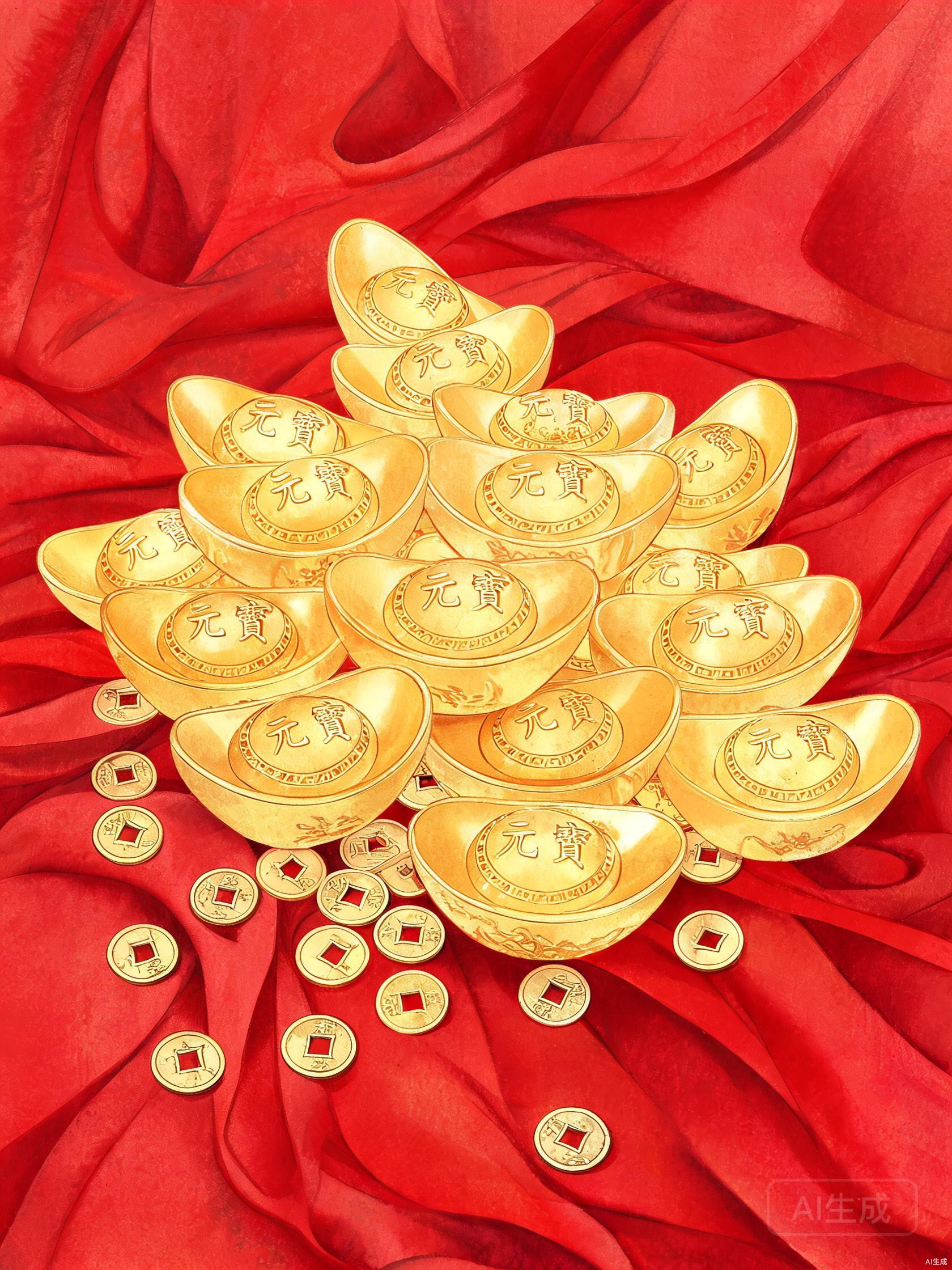
Yuanbao (Gold Ingot) Symbolism
The boat-shaped gold ingot of imperial China — the very shape of wealth and prosperity.

Abacus Symbolism
The calculating frame that became a symbol of wealth and merchant acumen.

Auspicious Clouds
The curling cloud motif that brings heaven’s blessing — the most ubiquitous decoration in Chinese art.