
Bagua Mirror
八卦镜
The eight-trigram mirror that reflects and resolves negative energy.
Origin Story
Mirror and Map Combined
The Bagua Mirror is a hybrid object: it is a mirror that reflects what it sees, and it is a map of the cosmos. Together, the two make a single object that fuses perception and structure. Where it hangs, the space is monitored (the mirror part) and structured (the bagua part) at once.
The mirror itself is usually convex, allowing it to ‘swallow’ what it reflects rather than merely bouncing it back. The bagua image around the rim or on the back clarifies what kind of qi is being processed. The combined object is the most popular feng shui device in modern China.
The Bagua Mirror is a convex or concave mirror engraved with the eight trigrams (bagua). It is one of the central objects of Chinese feng shui — hung above front doors to reflect away evil spirits, deflect hostile qi from neighboring buildings, and balance the energy of the household.
Powers & Symbols
Attributes & Artefacts
Click each card to reveal the details behind Bagua Mirror's divine attributes.
Magical Artifacts & Weapons
Bagua Mirror's Divine Arsenal
The legendary weapons and treasures wielded by Bagua Mirror — each with its own origin story, powers, and mythological significance.
Historical & Cultural Meaning
Beyond the Myth
Which Side Faces Out?
Feng shui masters distinguish the Early Heaven arrangement (Fuxi) from the Later Heaven arrangement (King Wen). The Early Heaven is read when the bagua mirror hangs in a quiet, peaceful household — it stabilizes. The Later Heaven is read when the bagua mirror faces hostile qi (a T-junction, a sharp roof corner, a cemetery) — it deflects.
Mistakes here are common. Many people hang a bagua mirror facing inward because they imagine it should attract, when in fact outward-facing is the usual way. The exact placement depends on what the household needs. Local masters can be consulted; many templates are also published.
Stories Behind the Mirror
Modern superstition says neighbors fight over bagua mirrors — if you hang one to deflect a sharp roof corner, the family in the corner’s house feels bad-luck reflected and may demand you take it down. Modern feng shui masters caution against weaponizing the mirror.
So far, the history is shorter than the cosmological depth. The bagua mirror is essentially a Qing-dynasty and modern invention; its popularization is recent. Yet the cosmologies behind it are very old — the bagua itself goes back to the Zhou. The combined object is new; the philosophy is older.
Caring for the Mirror
Once hung, the bagua mirror is typically left in place for several years. Some masters recommend cleaning it quarterly — with a soft cloth and clear water, never chemicals. Some recommend not moving it once hung; some say it can be moved during renovations. Local customs vary.
Modern interpretations read the mirror as a kind of behavioral artifact: it reminds the household to monitor incoming and outgoing energy. Even if one is skeptical of the supernatural, the mirror remains a useful architectural prompt — a way to say ‘I take this threshold seriously.’
Mythology Network
Connections & Relationships
Bagua Mirror is woven into a larger web of gods, creatures, and legends. Explore the connections below.
Bagua Mirror
八卦镜
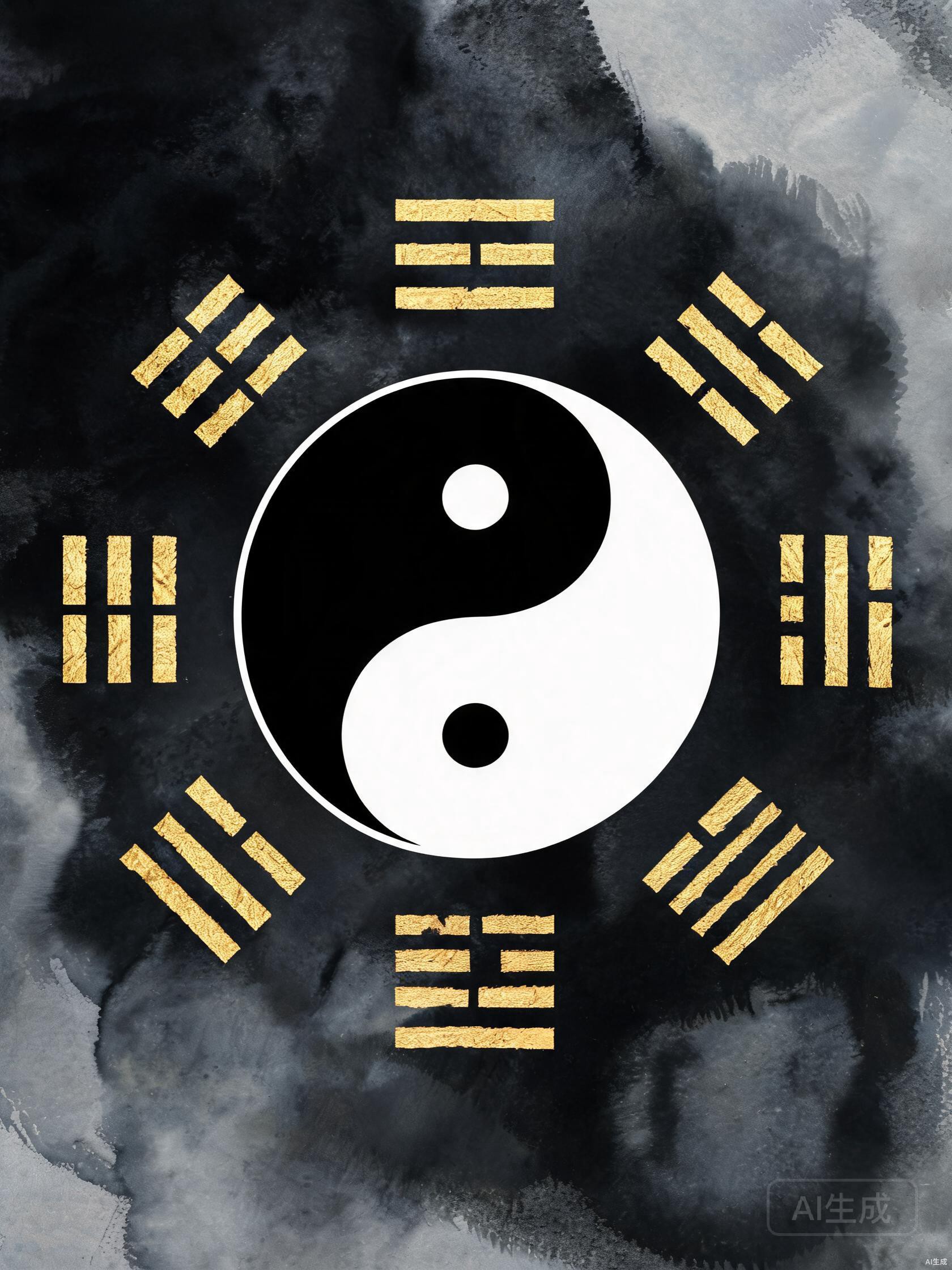
Bagua (Eight Trigrams)
The eight trigrams that encode the fundamental patterns of reality — the universe in eight symbols.

Five Elements
Wood, Fire, Earth, Metal, Water — the five forces that compose all reality.

Yin and Yang
The fundamental duality that governs the Chinese understanding of the universe.

Auspicious Clouds
The curling cloud motif that brings heaven’s blessing — the most ubiquitous decoration in Chinese art.