Traditional Wedding
传统婚俗
The Six Rites of Chinese marriage — from matchmaker to bridal sedan, the most elaborate ceremony in Chinese life.
Origin Story
The Six Rites
The traditional Chinese wedding process is structured around the Six Rites (六礼, Liù Lǐ), codified in the Book of Rites (礼记, Lǐjì) during the Zhou Dynasty (1046–256 BCE) and followed, in principle if not always in every detail, for over three millennia. The Six Rites represent a process of negotiation, commitment, and celebration that involves not just the bride and groom but their entire extended families — because in Chinese culture, marriage is not the union of two individuals but the alliance of two lineages.
The first rite is Nacai (纳采, 'Accepting the Proposal'): the groom's family sends a matchmaker to the bride's family with a formal proposal, accompanied by a gift (traditionally a live goose, symbolizing fidelity). If the bride's family accepts, the second rite follows: Wenming (问名, 'Asking the Name'), in which the groom's family requests the bride's full name and birth date. These are taken to a diviner, who checks the compatibility of the couple's birth dates (bazi, 八字) — if the stars are favorable, the process continues; if not, the match is abandoned.
The third rite is Naji (纳吉, 'Presenting Auspicious Omens'): the groom's family informs the bride's family that the divination was favorable, and presents betrothal gifts. The fourth is Nazheng (纳征, 'Presenting Betrothal Gifts'): the formal exchange of gifts — including money, jewelry, fabric, and food — from the groom's family to the bride's, as a token of the alliance. The fifth is Qingqi (请期, 'Requesting the Date'): the groom's family proposes a wedding date, traditionally chosen by an astrologer. The sixth and final rite is Qinying (亲迎, 'Personally Welcoming the Bride'): the groom goes to the bride's home, receives her from her parents, and escorts her to his own home — the wedding ceremony itself.

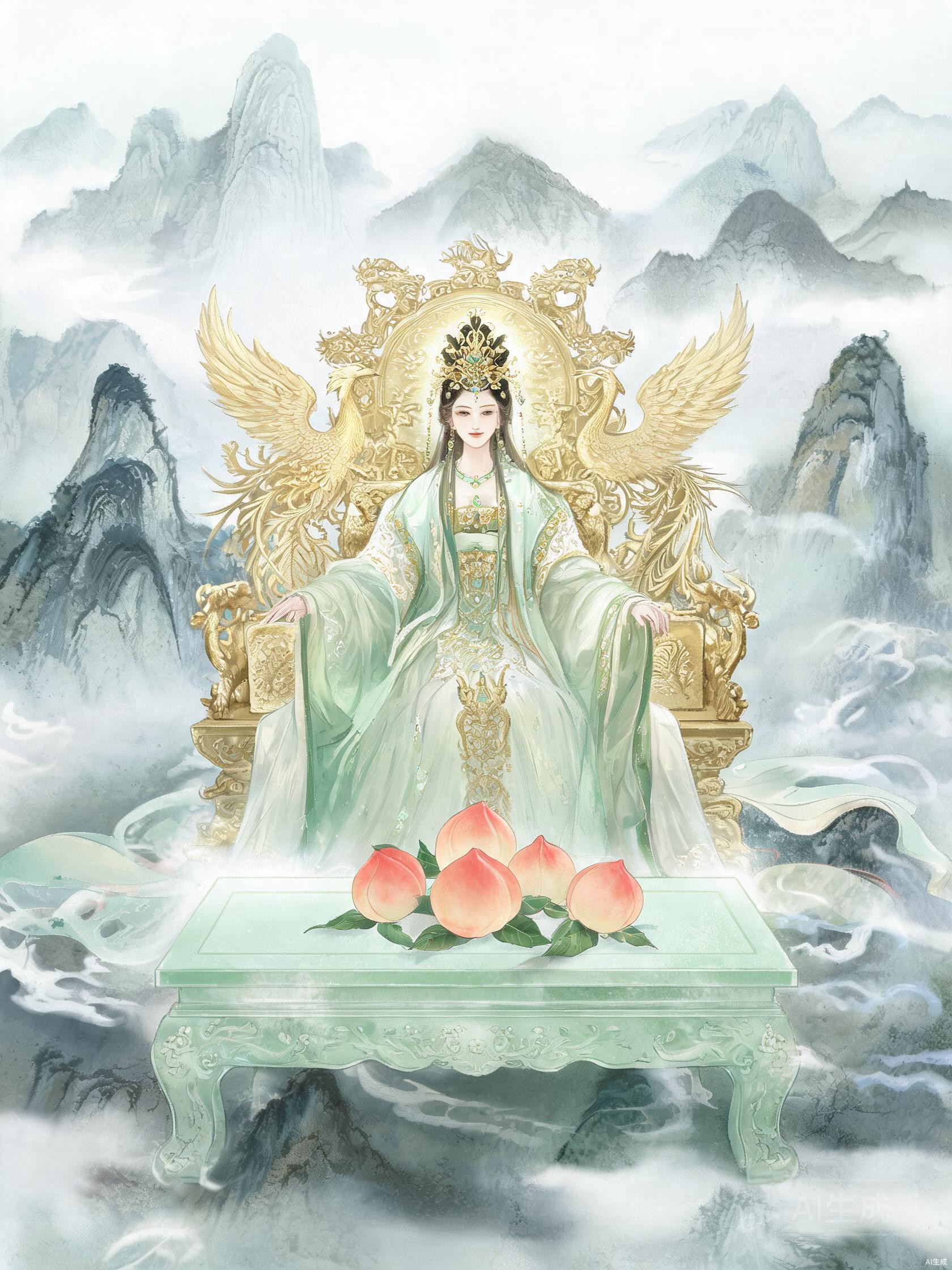
Yue Lao — the divine matchmaker whose red thread connects destined couples
Traditional Chinese wedding customs (传统婚俗) follow the Six Rites (六礼, Liù Lǐ), a set of ceremonial steps codified in the Zhou Dynasty's Book of Rites and followed, with regional variations, for over three thousand years. The process begins with a matchmaker's proposal, proceeds through the exchange of birth dates and betrothal gifts, and culminates in the bridal procession — the bride carried to the groom's home in a red sedan chair, where the couple bows to heaven and earth, to their parents, and to each other. The wedding is the most elaborate ritual in Chinese life, marking the joining of two families, not merely two individuals.
Powers & Symbols
Attributes & Artefacts
Click each card to reveal the details behind Traditional Wedding's divine attributes.
Historical & Cultural Meaning
Beyond the Myth
The Bridal Sedan and the Red Veil
The wedding day itself, the culmination of the Six Rites, is the most visually spectacular event in Chinese ceremonial life. The bride is dressed in red — the color of joy, fortune, and celebration — wearing elaborate embroidered robes, a phoenix crown (凤冠, fèngguān), and a red veil (盖头, gàitou) that covers her face. The groom, also in red, arrives at the bride's home with a procession: musicians, banner-bearers, and the bridal sedan chair (花轿, huājiào), an ornate red palanquin decorated with phoenixes, dragons, and flowers.
The bridal procession from the bride's home to the groom's is a public event — the community's witness to the alliance of two families. Firecrackers announce the procession, music fills the air, and neighbors gather to watch the red sedan chair pass through the streets. The bride, veiled and seated in the sedan, is carried by four or eight bearers, her face hidden from the world. This concealment is symbolic: the bride is in transition, no longer the daughter of her natal family but not yet the wife of her new one. The veil marks this liminal state — she is between identities, and the veil protects her during the passage.
At the groom's home, the central ritual of the wedding takes place: the bowing (拜堂, bàitáng). The couple bows first to heaven and earth (一拜天地) — acknowledging the cosmic dimension of their union, the fact that their marriage is not merely a human contract but an event that participates in the order of the universe. Then they bow to the groom's parents (二拜高堂) — acknowledging the filial obligation that remains even after marriage, and the bride's new role as a daughter-in-law in the groom's family. Finally, the couple bows to each other (夫妻对拜) — the moment when two individuals, in the presence of heaven, earth, and family, commit to each other as equals. After the bows, the bride is escorted to the bridal chamber (洞房, dòngfáng), where the groom lifts her veil — the first time he sees her face, the first moment of their shared life.
The Cowherd and Weaver Girl — the mythological model of separated lovers reunited
The Wedding in Chinese Culture
The traditional Chinese wedding is, above all, a family event. Unlike Western weddings, which center on the couple as individuals, the Chinese wedding centers on the families — the bride's family giving away a daughter, the groom's family receiving a new member. The bride's departure from her natal home is marked by tears: she weeps for the family she is leaving, and her mother weeps for the daughter she is losing. This 'crying marriage' (哭嫁, kūjià) was, in some regions, a formalized ritual — the bride was expected to weep for days before the wedding, not from unhappiness but as an expression of filial gratitude, a public acknowledgment of the debt she owes to the parents who raised her.
The role of the matchmaker (媒人, méirén) is essential throughout the process. In a culture where direct contact between unmarried men and women was traditionally limited, the matchmaker served as the intermediary — the go-between who carried proposals, negotiated terms, and managed the delicate diplomacy between two families who might become allies or enemies. The matchmaker's skill in reading social situations, mediating disagreements, and finding compatible matches was considered a professional art, and a good matchmaker was held in high regard. The saying 'a matchmaker's words are worth a thousand gold' (媒妁之言, 值千金) reflects the trust placed in this intermediary.
In modern China, the elaborate Six Rites have been simplified — most couples choose a civil registration followed by a banquet — but elements of the tradition persist. Many brides still wear red, the bridal sedan has been replaced by a decorated car, and the bowing to parents remains a universal feature. The wedding banquet (喜宴, xǐyàn), where the couple hosts family and friends, is still the centerpiece of the celebration — a feast that can last for hours, with toasts, games, and the sharing of food that binds the two families together. The red envelopes (红包, hóngbāo) given by guests to the newlyweds are a practical expression of the communal nature of the event: the community contributes to the new family's start, just as the new family contributes to the continuation of the community.
Mythology Network
Connections & Relationships
Traditional Wedding is woven into a larger web of gods, creatures, and legends. Explore the connections below.
Traditional Wedding
传统婚俗