Spring Festival (Lunar New Year)
春节
The most important festival in Chinese culture, celebrating the turning of the lunar year.
Origin Story
The Legend of Nian
According to Chinese mythology, the Spring Festival originated from the battle against Nian, a fearsome beast that lived beneath the sea or in the mountains. Once a year, on the eve of the lunar new year, Nian would emerge to devour livestock, crops, and even children.
The people discovered that Nian feared three things: the color red, loud noises, and bright lights. So they began pasting red paper couplets on their doors, lighting lanterns through the night, and setting off firecrackers to drive the beast away. When Nian was defeated, the people celebrated with feasts and greetings of 'Guo Nian' — which literally means 'passing the Nian.'
This ancient myth lives on in every modern Spring Festival tradition: the red decorations, the midnight firecrackers, the lion and dragon dances, and the staying up late on New Year's Eve (shousui) all trace back to the vigilance kept against Nian.
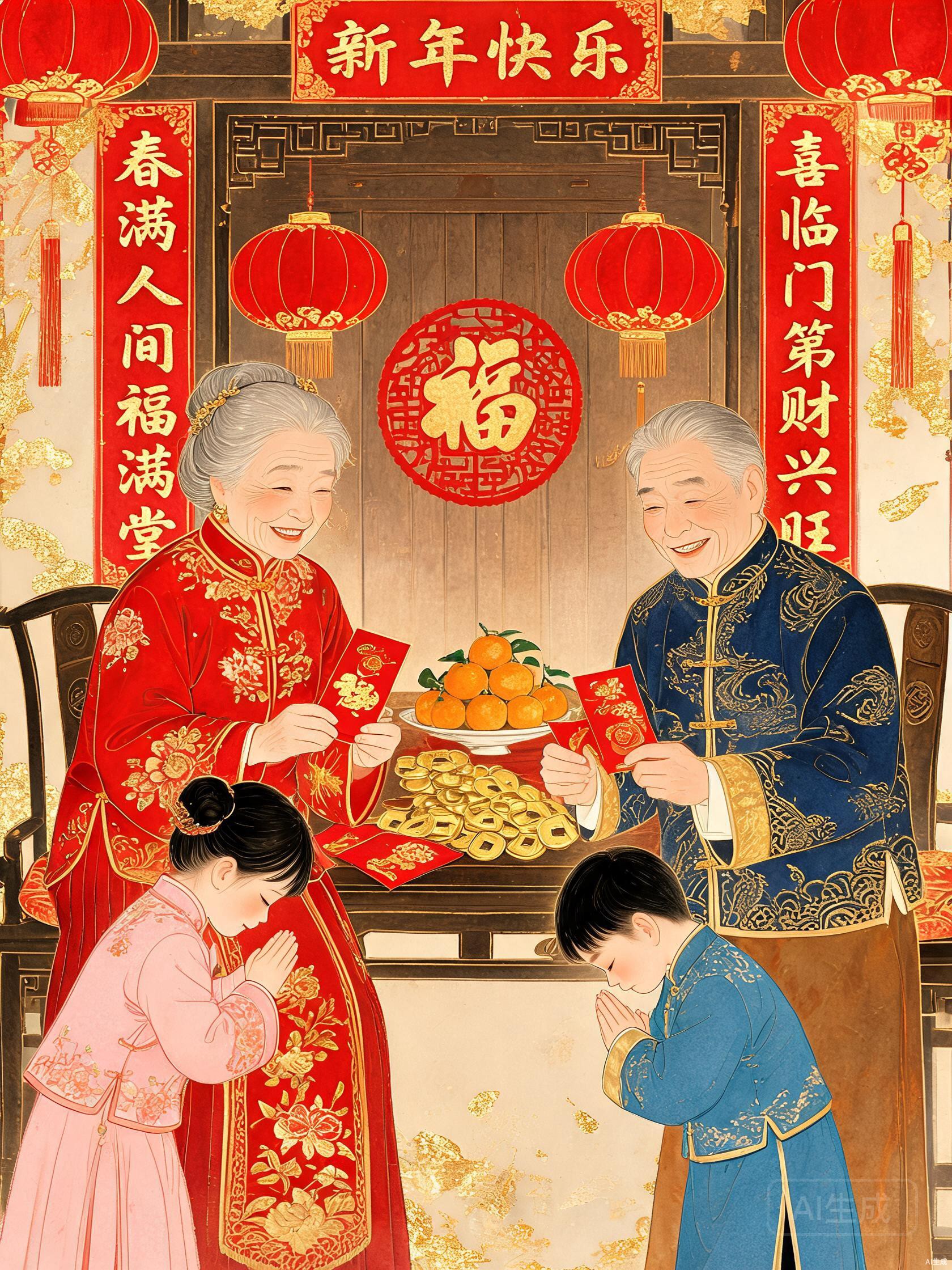
Spring Festival — the most important celebration in Chinese culture
The Spring Festival, known in China as Chunjie and globally as Lunar New Year, is the grandest and most significant festival in Chinese culture. It marks the beginning of the lunar calendar and is a time for family reunion, ancestor veneration, and driving away evil spirits to welcome good fortune.
Powers & Symbols
Attributes & Artefacts
Click each card to reveal the details behind Spring Festival (Lunar New Year)'s divine attributes.
Historical & Cultural Meaning
Beyond the Myth
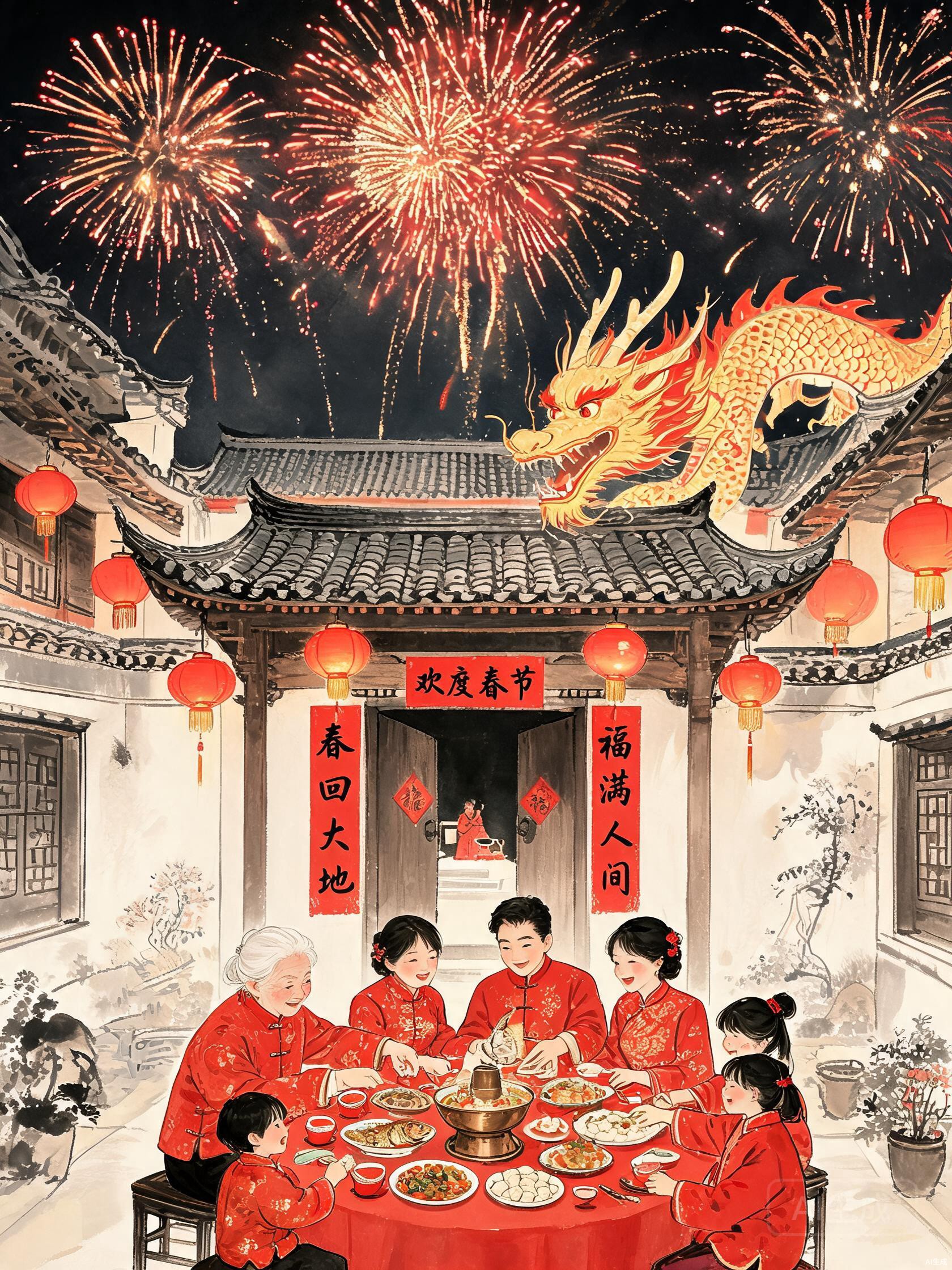
The Reunion Dinner
The centerpiece of the Spring Festival is the New Year's Eve reunion dinner (nian ye fan). No matter how far away family members have traveled for work or study, they make every effort to return home for this single meal. It is the most important gathering of the year.
Every dish carries symbolic meaning. Fish (yu) is served whole because the word sounds like 'surplus' — may you have abundance year after year. Dumplings (jiaozi) are shaped like ancient gold ingots and symbolize [wealth](/gods/caishen). Glutinous rice balls (tangyuan) represent family unity and completeness. Long noodles are eaten unbroken for longevity.
In northern China, families gather to make dumplings together on New Year's Eve, hiding a coin inside one for good luck. In the south, sticky rice cake (nian gao) is essential, as 'nian gao' sounds like 'higher each year' — a wish for continuous improvement.
Red Envelopes and Spring Couplets
Red envelopes (hongbao) filled with money are given to children and elders during the Spring Festival. The tradition stems from the belief that the red color and the money (ya sui qian, 'money to suppress evil') would protect the recipient from harm. Today, digital red envelopes sent through WeChat have become a modern twist on this ancient custom.
[Spring couplet](/folklore/spring-couplets)s (chunlian) are pairs of poetic lines written on red paper and pasted on either side of doorways. They express wishes for the coming year — prosperity, health, harmony, and success. The tradition of pasting red couplets also echoes the ancient defense against [Nian](/creatures/nian).
Other essential decorations include the character 'Fu' (fortune) pasted upside down on doors — because 'upside down' (dao) sounds like 'arrive,' meaning fortune has arrived. [Paper cutting](/symbols/paper-cutting)s of zodiac animals and the character 'Xi' (double happiness) adorn windows and walls.
The Fifteen Days
The Spring Festival spans fifteen days, each with its own customs. Day 1 is for visiting elders and exchanging New Year greetings. Day 2 is for married daughters visiting their parents. Day 5 is 'Po Wu,' when people welcome the God of Wealth by setting off firecrackers. Day 7 is 'Renri,' the birthday of all human beings.
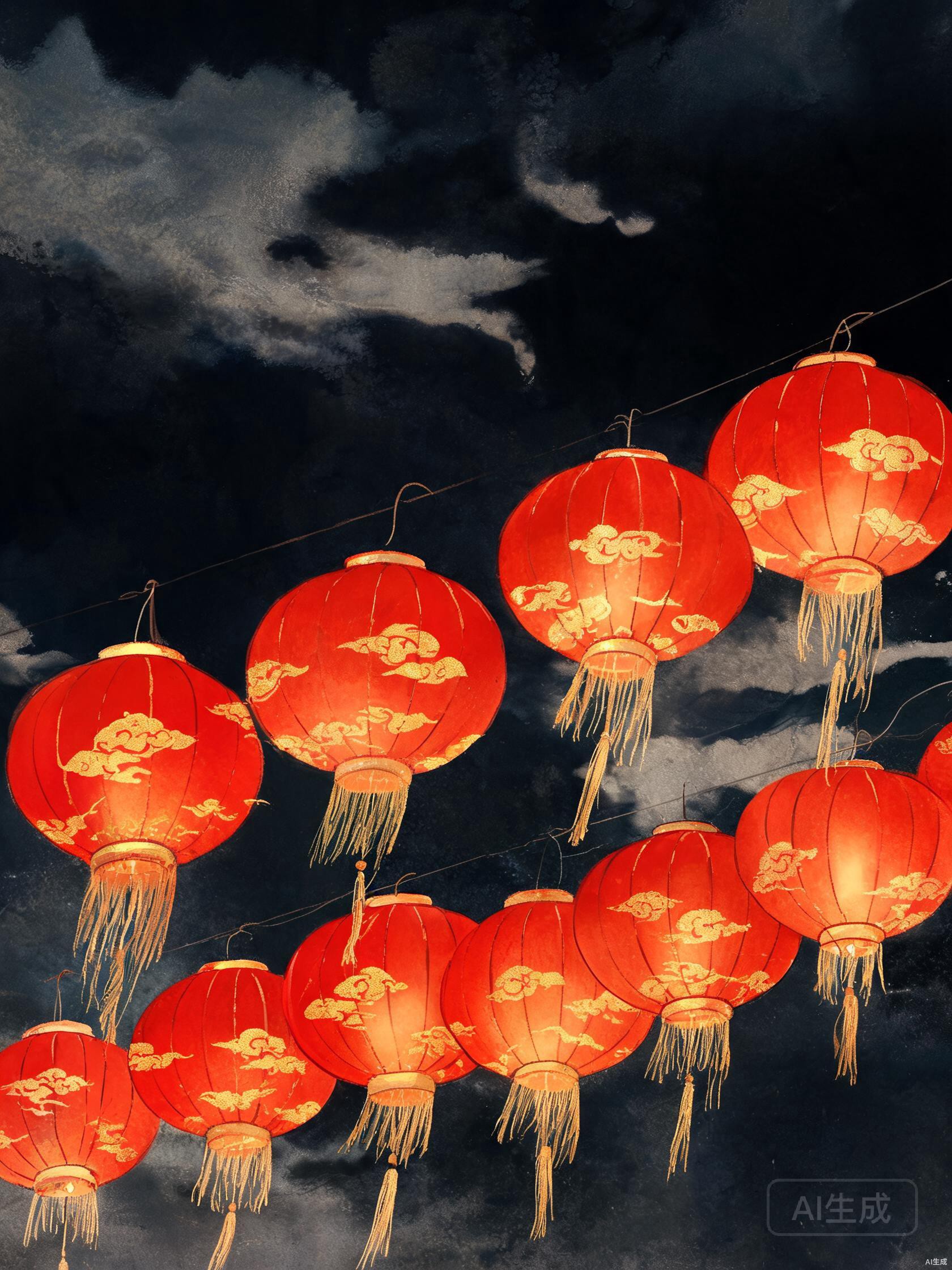
The festival culminates on Day 15 with the Lantern Festival (Yuanxiao Jie), when families light and display colorful lanterns, eat glutinous rice balls, and solve lantern riddles. This night of celebration marks the official end of the [Spring Festival](/folklore/spring-festival) season.
Throughout the fifteen days, taboos are observed: no sweeping (lest you sweep away good fortune), no crying or arguing, no breaking dishes, and no hair-cutting during the first month — all practices rooted in centuries of folk belief.
Sources & References
Primary classical texts: Eberhard, Wolfram. The Local Cultures of South and East China (Brill, 1968) — Spring Festival customs · McCoy, John, and Susan McCoy. The Chinese Calendar (San Francisco: China Books, 1990) · Shanhaijing (山海经, Classic of Mountains and Seas, c. 4th-2nd century BCE) · Fengshen Yanyi (封神演义, Investiture of the Gods, c. 16th century) · Journey to the West (西游记, Xiyouji, c. 16th century) · Records of the Grand Historian (史记, Shiji, by Sima Qian, c. 91 BCE)
Classical translations: Legge, James (trans.). The Sacred Books of the East (1879-1910, 50 volumes covering Chinese classics) · Girardot, Norman J. Myth and Meaning in Early Taoism (University of California Press, 1983) · Werner, E.T.C. A Dictionary of Chinese Mythology (Shanghai: Kelly & Walsh, 1932)
Modern academic references: Birrell, Anne. Chinese Mythology: An Introduction (Baltimore: Johns Hopkins University Press, 1993) · Yang, Lihui, and Deming An. Handbook of Chinese Mythology (New York: Oxford University Press, 2005) · Strassberg, Richard E. A Chinese Bestiary: Strange Creatures from the Guideways Through Mountains and Seas (Berkeley: University of California Press, 2002)
Digital encyclopedias and online resources: Wikipedia — Chinese mythology portal (continuously updated, citations to primary sources) · Encyclopedia Britannica — Mythology and Religion section
Mythology Network
Connections & Relationships
Spring Festival (Lunar New Year) is woven into a larger web of gods, creatures, and legends. Explore the connections below.
Spring Festival (Lunar New Year)
春节


Explore the Topic
Spring Festival (Lunar New Year) in the Mythology Network
Go deeper — read the topic guides that gather every folk tradition like Spring Festival (Lunar New Year).