Lantern Symbolism
灯笼
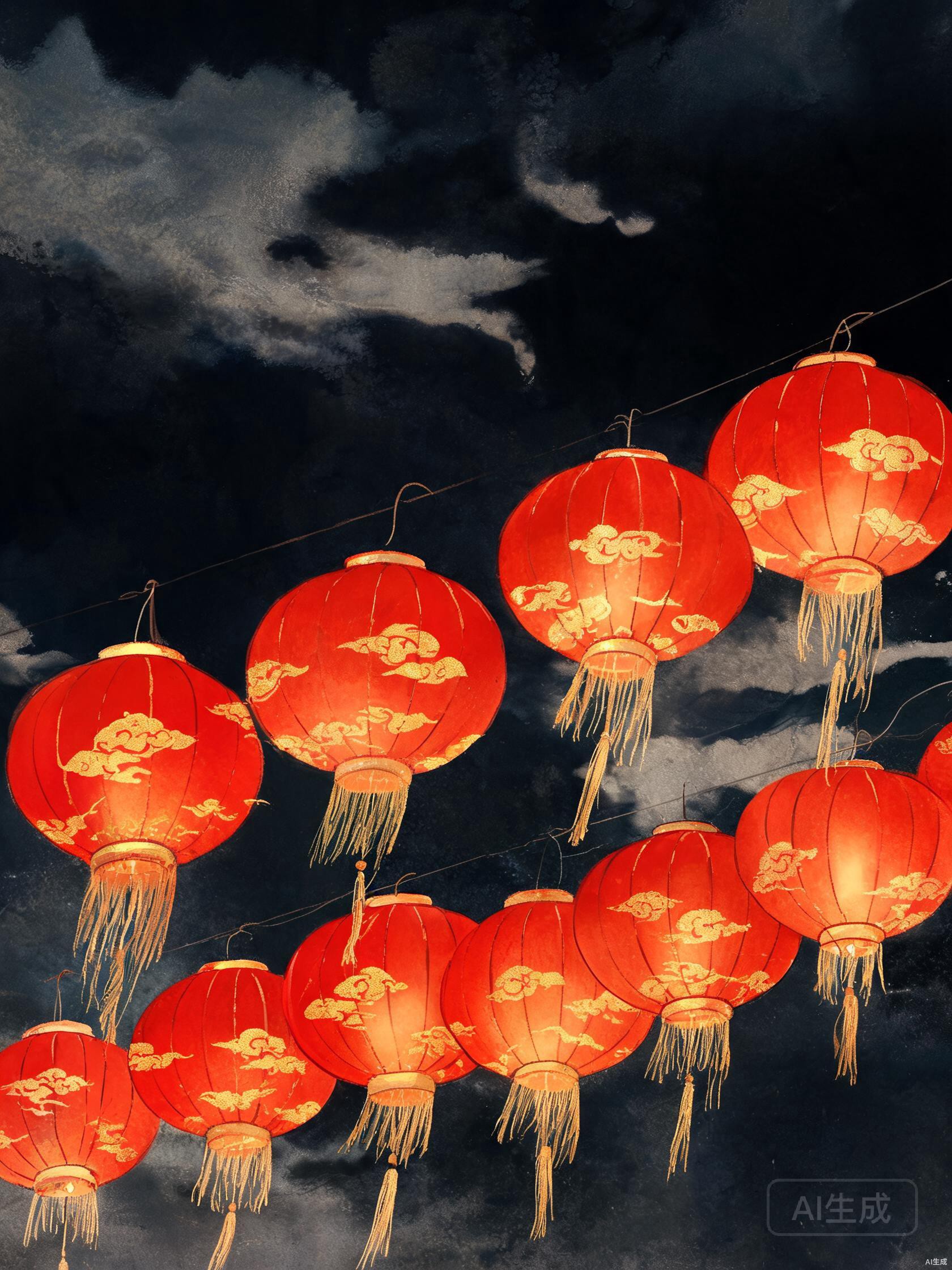
The red lantern that lights the way home — a symbol of reunion, joy, and the triumph of light over darkness.
Origin Story
What Is the Lantern Symbol?
The Chinese lantern (灯笼, dēnglóng) is a collapsible frame of bamboo or wire covered with paper or silk, most traditionally red. When lit from within, it glows with a warm, auspicious light. The lantern is far more than a light source — it is a carrier of meaning, used in festivals, weddings, and home decoration to symbolize joy, reunion, and the presence of good fortune. From the smallest paper lantern carried by a child to the massive sculptural lanterns of the great festivals, the form speaks a single language of celebration.
The lantern's color is significant. Red lanterns represent good fortune, joy, and the warding off of evil; they are the default for festivals and celebrations. [Gold](/gods/caishen) lanterns attract wealth and are favored by businesses. Multi-colored lanterns are used for the great festivals, each color contributing its own auspicious charge. White lanterns, by contrast, are used in funerals and mourning — a reminder that the same form can carry opposite meanings depending on context. The most iconic red lanterns, seen in Chinatowns and Chinese films worldwide, are the visual signature of celebration itself.
The lantern's glow is also symbolically distinct from ordinary light. A lantern is not a lamp — it does not simply illuminate a space. It glows softly, warmly, from within, suggesting not just visibility but presence. To light a lantern is to announce that someone is home, that there is life within, that a space is inhabited by people who have reason to celebrate. This is why the lantern is so closely tied to reunion — its light is the light of welcome, the light that calls the family together.
The Chinese lantern is one of the most recognizable symbols of Chinese culture worldwide. More than just a light source, it represents family reunion, prosperity, and the victory of light over darkness. From the Lantern Festival that ends the lunar new year celebrations to the Mid-Autumn Festival, lanterns are the visual language of Chinese joy and hope.
Powers & Symbols
Attributes & Artefacts
Click each card to reveal the details behind Lantern Symbolism's divine attributes.
Historical & Cultural Meaning
Beyond the Myth
Historical Origins
Lanterns have been used in China since at least the Han Dynasty (206 BCE – 220 CE), when they were employed in Buddhist ceremonies. Monks would light lanterns on the fifteenth day of the first lunar month to honor the [Buddha](/gods/buddha-shakyamuni) and to seek divine favor for the new year. Emperor Ming of Han, a devout Buddhist, ordered that all households and palaces light lanterns on this date, establishing the tradition that became the Lantern Festival (元宵节, Yuánxiāo Jié). What began as a religious observance became, over centuries, the most joyful popular festival in the Chinese calendar.
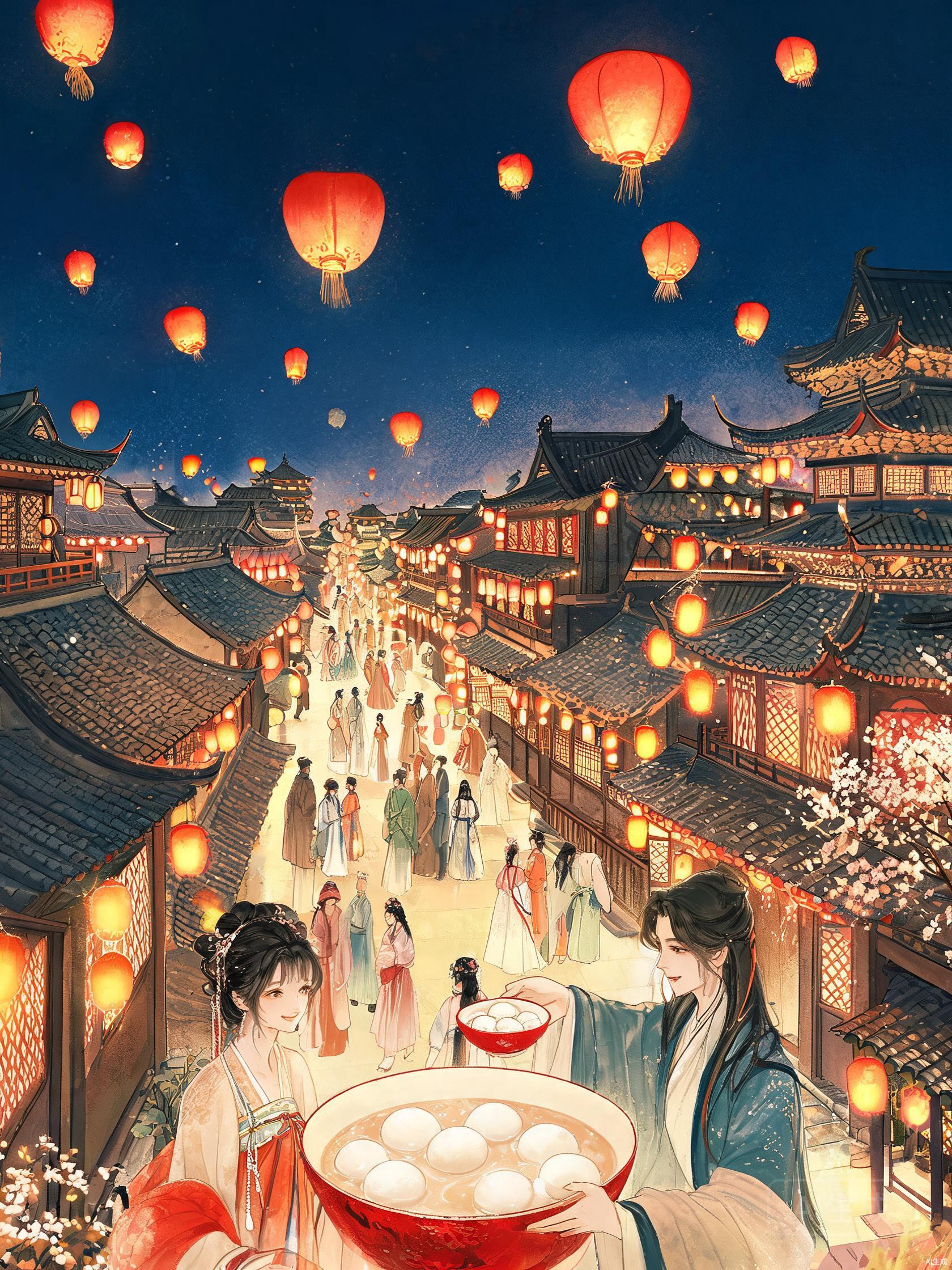
By the Tang Dynasty (618–907 CE), the Lantern Festival had become one of the most extravagant celebrations in the empire. The emperor lifted the usual curfew for three nights, and citizens filled the streets to view elaborate lantern displays — some stories high, shaped like dragons, pagodas, and heavenly beings. Poets of the era wrote vividly of the spectacle, and the festival became associated with romance, as young men and women could mingle in the lantern-lit streets — a rare freedom in a society with strict gender norms. Many classical love poems are set at the Lantern Festival, the glow of the lanterns mirrored by the warmth of new attraction.
The craft of lantern-making developed into a fine art. Cities like Foshan in Guangdong and Zigong in Sichuan became famous for their lantern traditions, with artisans creating mechanical lanterns that moved, lanterns with puzzles written on them for viewers to solve, and massive display pieces that took months to build. The Zigong Lantern Festival, dating back to the Tang Dynasty, is still held today and is considered one of the most spectacular lantern events in the world, drawing millions of visitors to see displays that fill entire hillsides with light.
Symbolism and Meaning
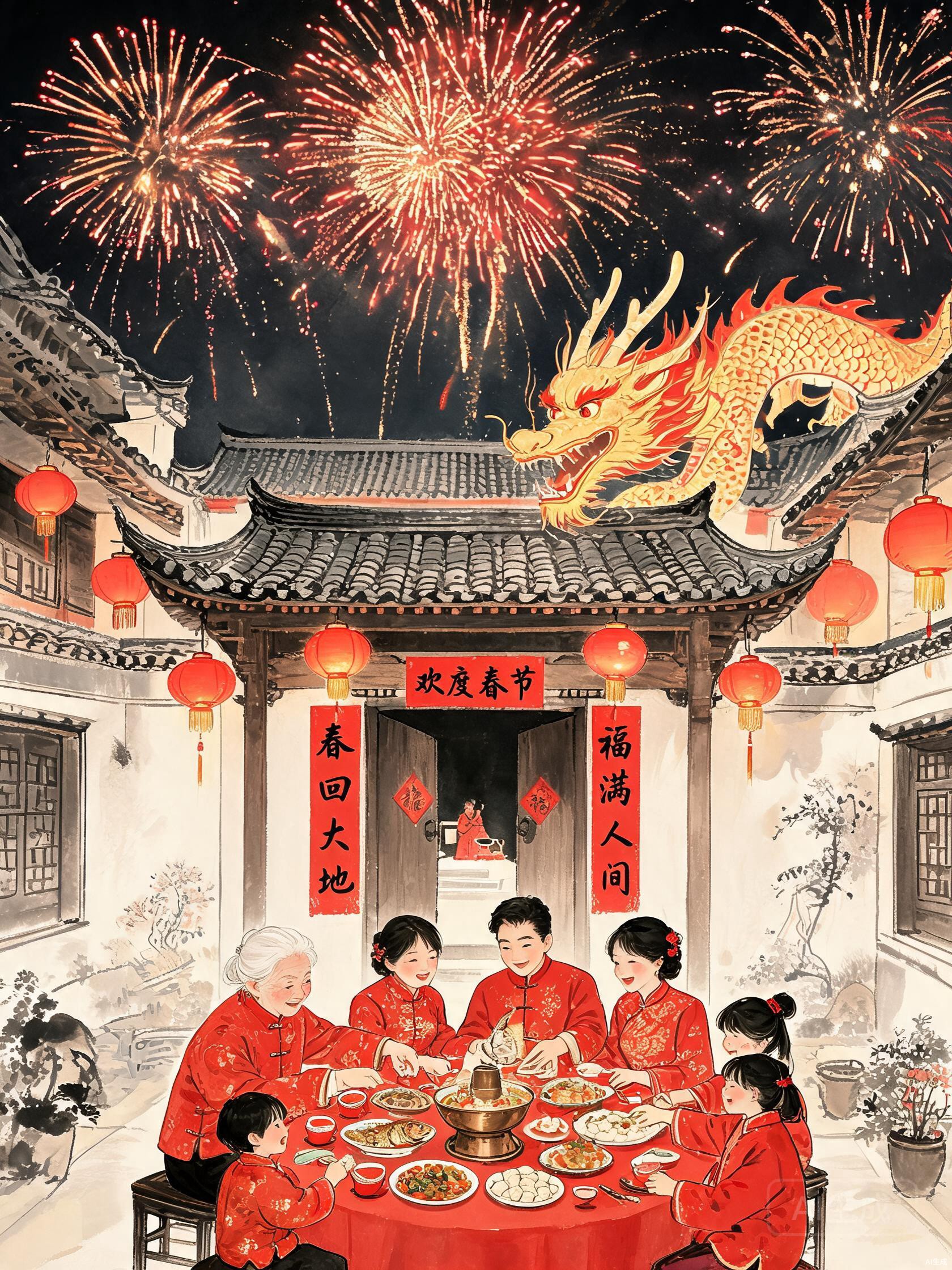
The lantern's most powerful symbolism is reunion. The Lantern Festival falls on the first full moon of the lunar new year — the moment when the moon is fullest, just as a family is most complete when all its members gather. Tangyuan (glutinous rice balls) are eaten on this day, their round shape echoing both the full moon and the lantern, reinforcing the theme of wholeness and togetherness. To light a lantern on this night is to declare that the family is whole, that no one is missing, that the new year begins with the deepest blessing of all — being together.
The lantern also symbolizes the triumph of light over darkness — both literal and spiritual. In ancient times, the deep of winter was a time of fear, when cold and darkness seemed to hold the world. The lighting of lanterns at the turn of spring was a ritual of defiance — a declaration that light had returned and the dark had been conquered. This is why the [Lantern Festival](/folklore/lantern-festival) was also associated with driving away disease and evil spirits, who were believed to flee from the glow of thousands of lanterns. The legend of the [Nian](/creatures/nian) beast, driven away by noise and red light, is closely tied to this tradition — the lantern's red glow is part of the same arsenal that defends the household.
A third layer of symbolism is the wish for descendants. In Chinese, the word for lantern (dēng, 灯) sounds similar to the word for 'male heir' (丁, dīng). Displaying lanterns, especially during New Year, was a way to pray for the birth of sons, who would carry on the family line. This pun is also why lanterns are lit at weddings, to bless the new couple with fertility and the continuation of their family. Even today, the phrase '添丁' (tiān dīng, 'to add a son') is invoked during lantern-lighting ceremonies in some regions, weaving together the light of the lantern with the hope for the next generation.
Lanterns in Daily Life and Culture
In modern China, lanterns are everywhere. [Red](/symbols/red-envelopes) lanterns hang in front of businesses and homes during the New Year period, lasting from the eve of the new year through the [Lantern Festival](/folklore/lantern-festival) fifteen days later. They are released into the sky at festivals, floated on rivers, and carried in dragon and lion dance processions. The [Mid-Autumn](/folklore/mid-autumn-festival) Festival, the other great lantern holiday, sees children carrying rabbit-shaped lanterns and families displaying lanterns under the harvest moon. Even ordinary storefronts in Chinatowns worldwide hang red lanterns year-round, marking the presence of Chinese culture in a single glowing symbol.
Lantern riddles (灯谜, dēngmí) are a beloved tradition. Riddles are written on paper and attached to lanterns for festival-goers to solve, with small prizes for the correct answers. This turns the lantern from a passive symbol into an interactive game, keeping the tradition alive across generations. The riddles range from simple wordplay for children to literary puzzles that reward knowledge of classical poetry and history. The craft of lantern-making has been recognized as intangible cultural heritage, with master artisans preserving techniques that have been refined for over two thousand years.
In an age of electric light, the soft glow of a paper lantern still carries meaning that no bulb can replace — the warmth of home, the promise of spring, and the light that brings us together. Whether it is a child carrying a small lantern through a festival crowd, a family hanging a red lantern above their door, or a city illuminating a whole park with sculptural light, the lantern remains one of the most emotionally resonant symbols in Chinese culture. It is, at its heart, a simple object — a frame, a cover, a flame — but through two millennia of use it has gathered to itself every meaning that light can carry: joy, reunion, hope, guidance, and the quiet, persistent triumph of brightness over dark.
Sources & References
Primary classical texts: Shanhaijing (山海经, Classic of Mountains and Seas, c. 4th-2nd century BCE) · Fengshen Yanyi (封神演义, Investiture of the Gods, c. 16th century) · Journey to the West (西游记, Xiyouji, c. 16th century) · Records of the Grand Historian (史记, Shiji, by Sima Qian, c. 91 BCE) · Classic of Mountains and Seas commentary (郭璞注 Shanhaijing, c. 4th century) · Bamboo Annals (竹书纪年, c. 4th century BCE onwards)
Classical translations: Legge, James (trans.). The Sacred Books of the East (1879-1910, 50 volumes covering Chinese classics) · Girardot, Norman J. Myth and Meaning in Early Taoism (University of California Press, 1983) · Werner, E.T.C. A Dictionary of Chinese Mythology (Shanghai: Kelly & Walsh, 1932)
Modern academic references: Birrell, Anne. Chinese Mythology: An Introduction (Baltimore: Johns Hopkins University Press, 1993) · Yang, Lihui, and Deming An. Handbook of Chinese Mythology (New York: Oxford University Press, 2005) · Strassberg, Richard E. A Chinese Bestiary: Strange Creatures from the Guideways Through Mountains and Seas (Berkeley: University of California Press, 2002)
Digital encyclopedias and online resources: Wikipedia — Chinese mythology portal (continuously updated, citations to primary sources) · Encyclopedia Britannica — Mythology and Religion section
Mythology Network
Connections & Relationships
Lantern Symbolism is woven into a larger web of gods, creatures, and legends. Explore the connections below.
Lantern Symbolism
灯笼

Explore the Topic
Lantern Symbolism in the Mythology Network
Go deeper — read the topic guides that gather every symbol like Lantern Symbolism.