
Nian
年兽
The beast that gave birth to Chinese New Year.
Origin Story
What Is Nian?
Nian (which also means 'year' in Chinese) is a beast that lives under the sea or in the [mountain](/symbols/three-peaks)s for most of the year. On the eve of the lunar new year, it emerges to attack villages, devouring crops, livestock, and sometimes children.
The word 'Nian' (年) in Chinese means 'year' — which is why the new year celebration is called 'Guo Nian' (过年), literally 'passing the Nian.' The entire Chinese New Year tradition began as a survival ritual against this creature.
The Nian beast — whose terror gave birth to the Spring Festival and the color red
Nian is a fearsome beast from Chinese mythology that emerges once a year to terrorize villages. The traditions of Chinese New Year — red decorations, firecrackers, and loud celebrations — originated as methods to scare it away.
Powers & Symbols
Attributes & Artefacts
Click each card to reveal the details behind Nian's divine attributes.
Historical & Cultural Meaning
Beyond the Myth
How Nian Was Defeated
According to legend, an old [beggar](/folklore/old-man-under-the-moon) arrived in a village on the eve of the new year. The villagers were fleeing to the [mou](/creatures/ao)ntains to escape Nian, but the old man said he could drive the beast away. An old woman offered him shelter, and that night, when Nian approached the village, it stopped in terror.
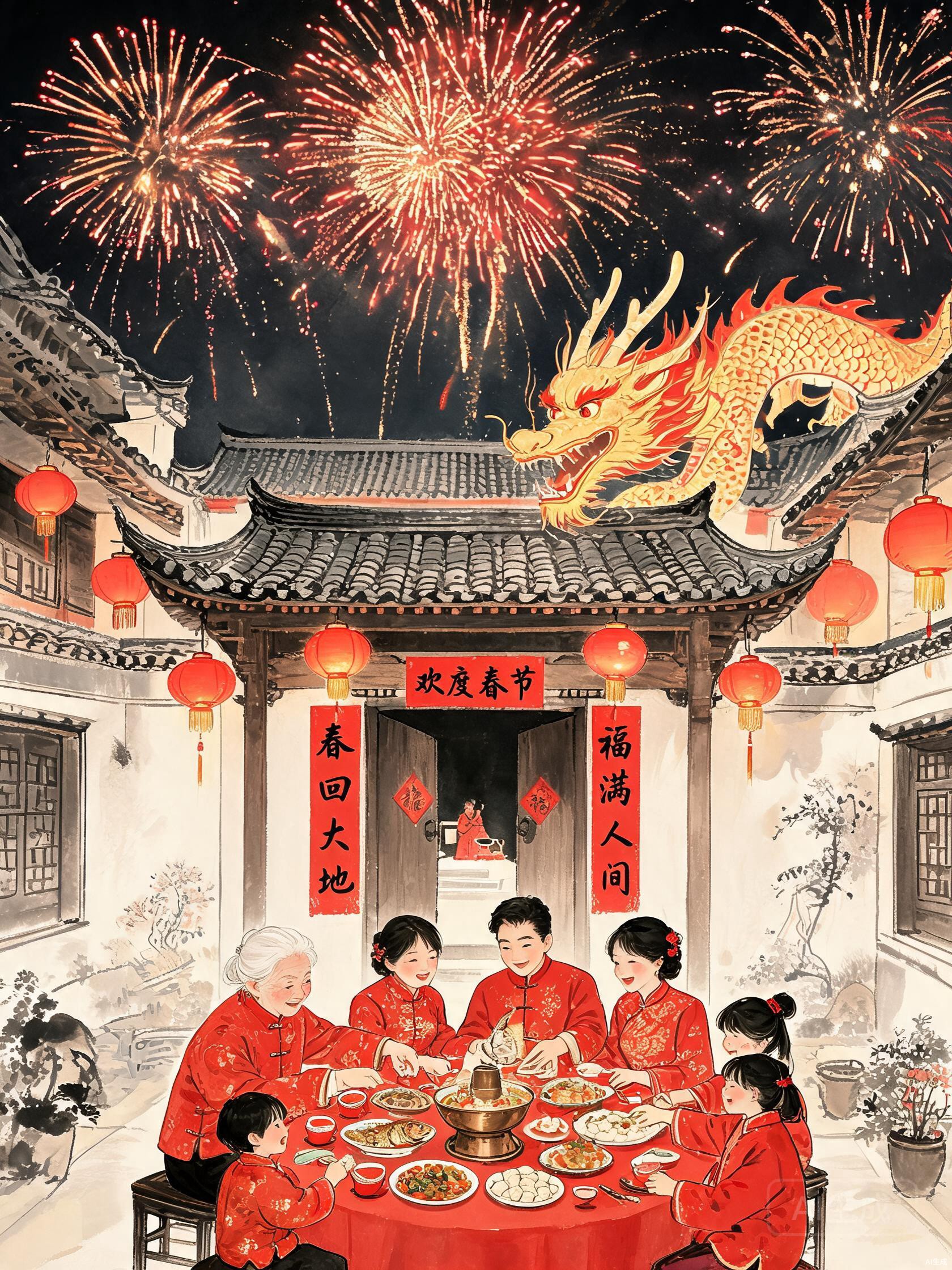
The old man had dressed the house in red — red paper on the doors, red candles burning inside. When Nian approached, he set off [fire](/symbols/fire)crackers. The beast, terrified by the red color and the explosive noise, fled and never returned.
The old man was later revealed to be a [deity](/gods/shangdi). Before he left, he taught the villagers three things Nian feared: the color red, loud noises, and bright lights. These three elements became the foundation of every Chinese New Year celebration for the next 4,000 years.
Nian and Chinese New Year
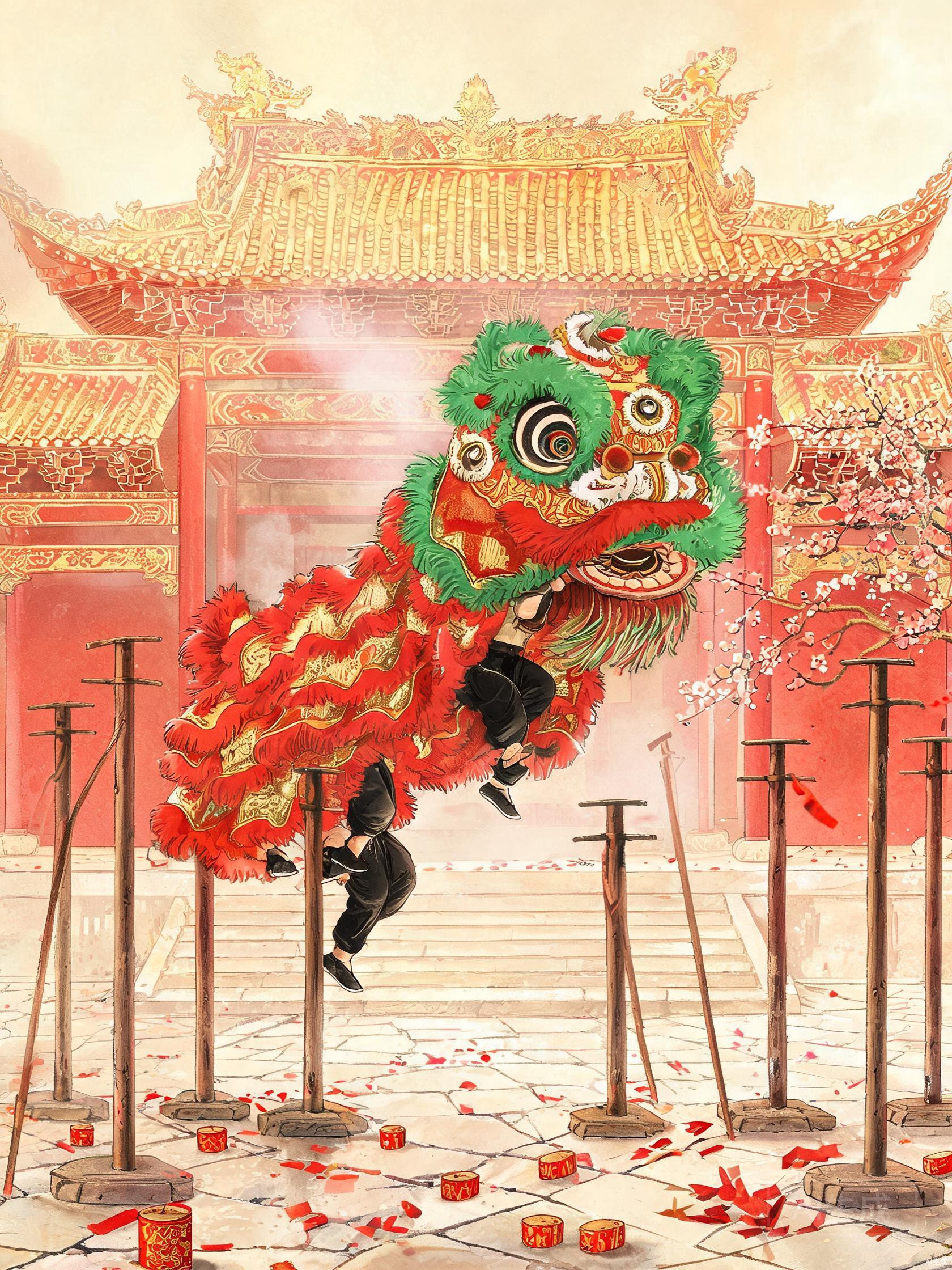
Every Chinese New Year tradition traces back to Nian. [Red](/symbols/red-envelopes) couplets on doorways? To scare Nian. Firecrackers at midnight? To scare Nian. Red lanterns hanging in streets? To scare Nian. The [lion dance](/folklore/lion-dance) performed during the new year? It reenacts the driving away of Nian.
The myth of [Nian](/creatures/nian) embodies a universal theme: the new year is a threshold between the old and the new, and the monsters of the past must be driven away before the new year can begin. It is a story of courage, community, and renewal — the collective act of facing fear together and emerging into a brighter year.
Sources & References
Primary classical texts: Shanhaijing (山海经, Classic of Mountains and Seas, c. 4th-2nd century BCE) · Fengshen Yanyi (封神演义, Investiture of the Gods, c. 16th century) · Journey to the West (西游记, Xiyouji, c. 16th century) · Records of the Grand Historian (史记, Shiji, by Sima Qian, c. 91 BCE) · Classic of Mountains and Seas commentary (郭璞注 Shanhaijing, c. 4th century) · Bamboo Annals (竹书纪年, c. 4th century BCE onwards)
Classical translations: Legge, James (trans.). The Sacred Books of the East (1879-1910, 50 volumes covering Chinese classics) · Girardot, Norman J. Myth and Meaning in Early Taoism (University of California Press, 1983) · Werner, E.T.C. A Dictionary of Chinese Mythology (Shanghai: Kelly & Walsh, 1932)
Modern academic references: Birrell, Anne. Chinese Mythology: An Introduction (Baltimore: Johns Hopkins University Press, 1993) · Yang, Lihui, and Deming An. Handbook of Chinese Mythology (New York: Oxford University Press, 2005) · Strassberg, Richard E. A Chinese Bestiary: Strange Creatures from the Guideways Through Mountains and Seas (Berkeley: University of California Press, 2002)
Digital encyclopedias and online resources: Wikipedia — Chinese mythology portal (continuously updated, citations to primary sources) · Encyclopedia Britannica — Mythology and Religion section
Mythology Network
Connections & Relationships
Nian is woven into a larger web of gods, creatures, and legends. Explore the connections below.
Nian
年兽


Explore the Topic
Nian in the Mythology Network
Go deeper — read the topic guides that gather every creature like Nian.