Kitchen God
灶神
The hearth deity who watches over every household and reports to heaven.
Origin Story
Who Is the Kitchen God?
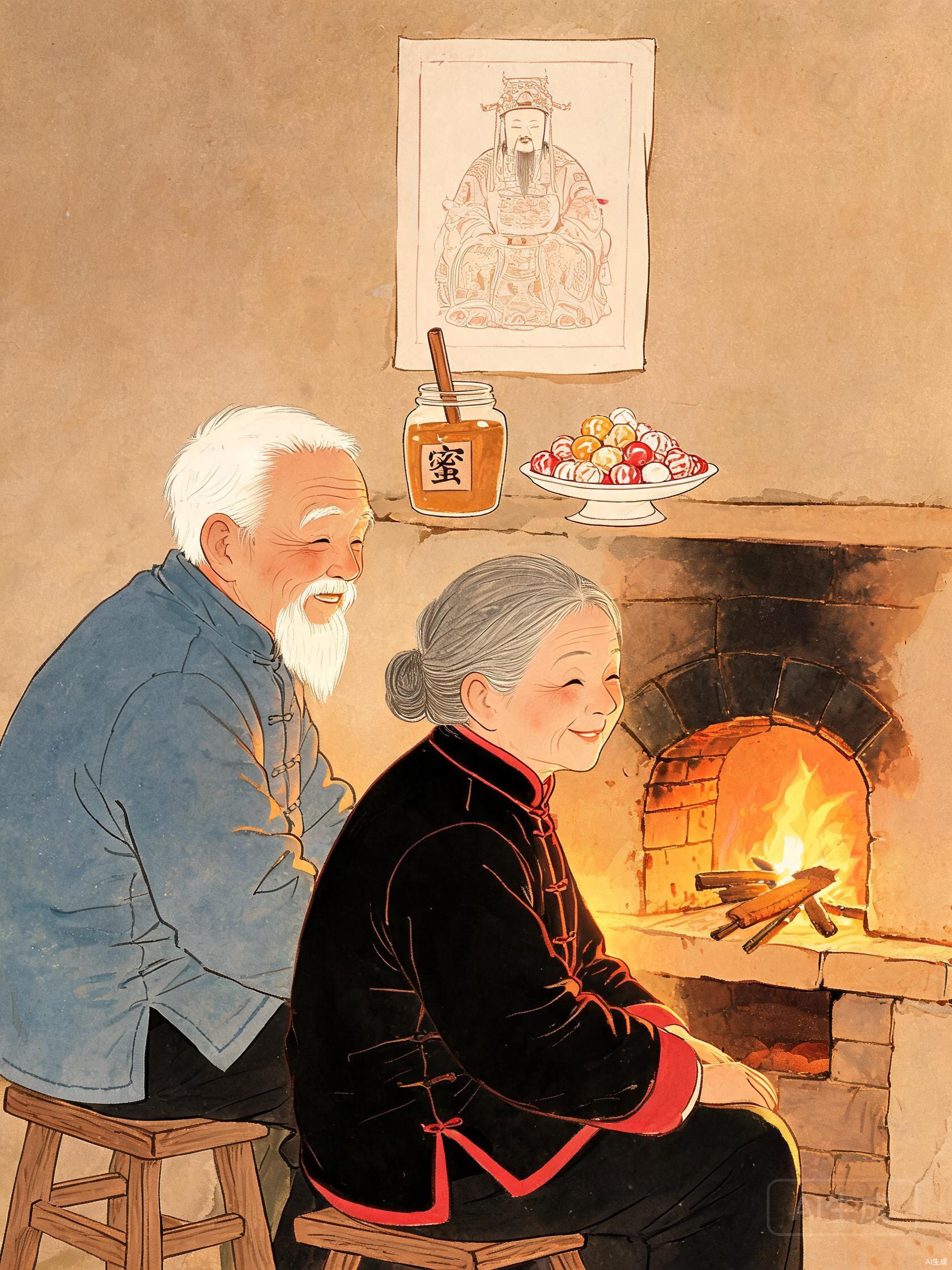
The Kitchen God, known as Zaoshen or more respectfully as Zaowangye (Lord of the Stove), is the most ubiquitous and most personal deity in Chinese folk religion. Every household has one. His paper image is pasted above the cooking stove — the heart of the home — where he silently observes the family's behavior throughout the year.
Unlike the great gods who reside in temples and receive formal worship, the Kitchen God lives among the people. He sees every meal cooked, every argument had, every kindness shown and cruelty committed within the walls of the home. He is the divine witness to ordinary life.
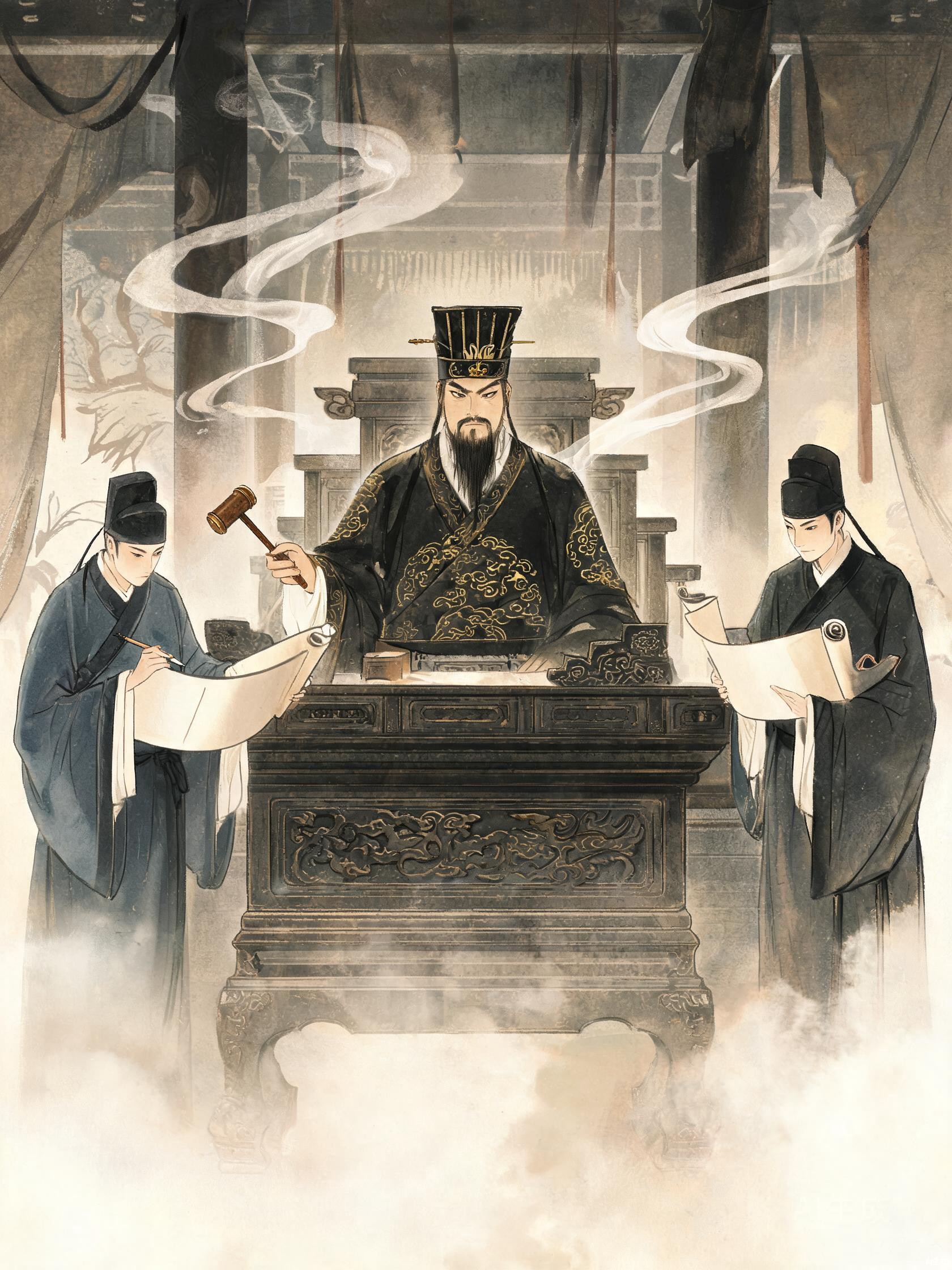
His role is not merely observational. On the twenty-third day of the twelfth lunar month — a festival called Xiao[nian](/symbols/nian), or Little New Year — the Kitchen God ascends to heaven to deliver his annual report to the [Jade Emperor](/gods/jade-emperor). The Jade Emperor, in turn, uses this report to determine the family's fortune for the coming year: health, prosperity, children, and harmony.
The Kitchen God (Zaoshen, or Zaowangye — Lord of the Stove) is the most intimate deity in Chinese folk religion. Stationed above every cooking stove, he watches the family's conduct all year and ascends to heaven to report to the Jade Emperor.
Powers & Symbols
Attributes & Artefacts
Click each card to reveal the details behind Kitchen God's divine attributes.
Historical & Cultural Meaning
Beyond the Myth
The Kitchen God's Story
In one of the most popular origin stories, the Kitchen God was originally a mortal named Zhang Sheng (or Zhang Dan in some versions). He married a virtuous woman named Guo Dingxiang, but abandoned her to pursue a [wealth](/gods/caishen)y mistress. After his fortune was lost, Zhang was reduced to begging in the streets.
One day, while begging, he came to the house of a woman who took pity on him and offered him food. It was his abandoned wife, Guo Dingxiang. When Zhang realized who his benefactor was, he was overcome with shame and hid under the stove. His wife, not knowing he was there, lit the fire to cook for him. Zhang, too ashamed to reveal himself, burned to death in the stove.
In some versions, the [Jade Emperor](/gods/jade-emperor), seeing this act of deep shame and repentance, appointed Zhang as the Kitchen God — giving him a second chance through divine service. The tragic, redemptive story humanizes a deity who is otherwise an agent of divine surveillance.
The Ritual of Sending the Kitchen God
On the twenty-third (or twenty-fourth) of the twelfth lunar month, families perform the ritual of sending the Kitchen God to heaven. The old paper image of the god is taken down and burned — often along with a paper horse or sedan chair to carry him skyward. Offerings of sweets, especially sticky rice balls (tangyuan) and malt sugar candy (tanggua), are placed before him.
The purpose of the sweets is delightfully pragmatic: to sweeten the Kitchen God's mouth so that he will speak favorably of the family, or — in a more mischievous interpretation — to stick his mouth shut so he cannot report their misdeeds. Families also smear honey on the paper image's lips before burning it, a ritual that perfectly captures the Chinese practical approach to divine bureaucracy.
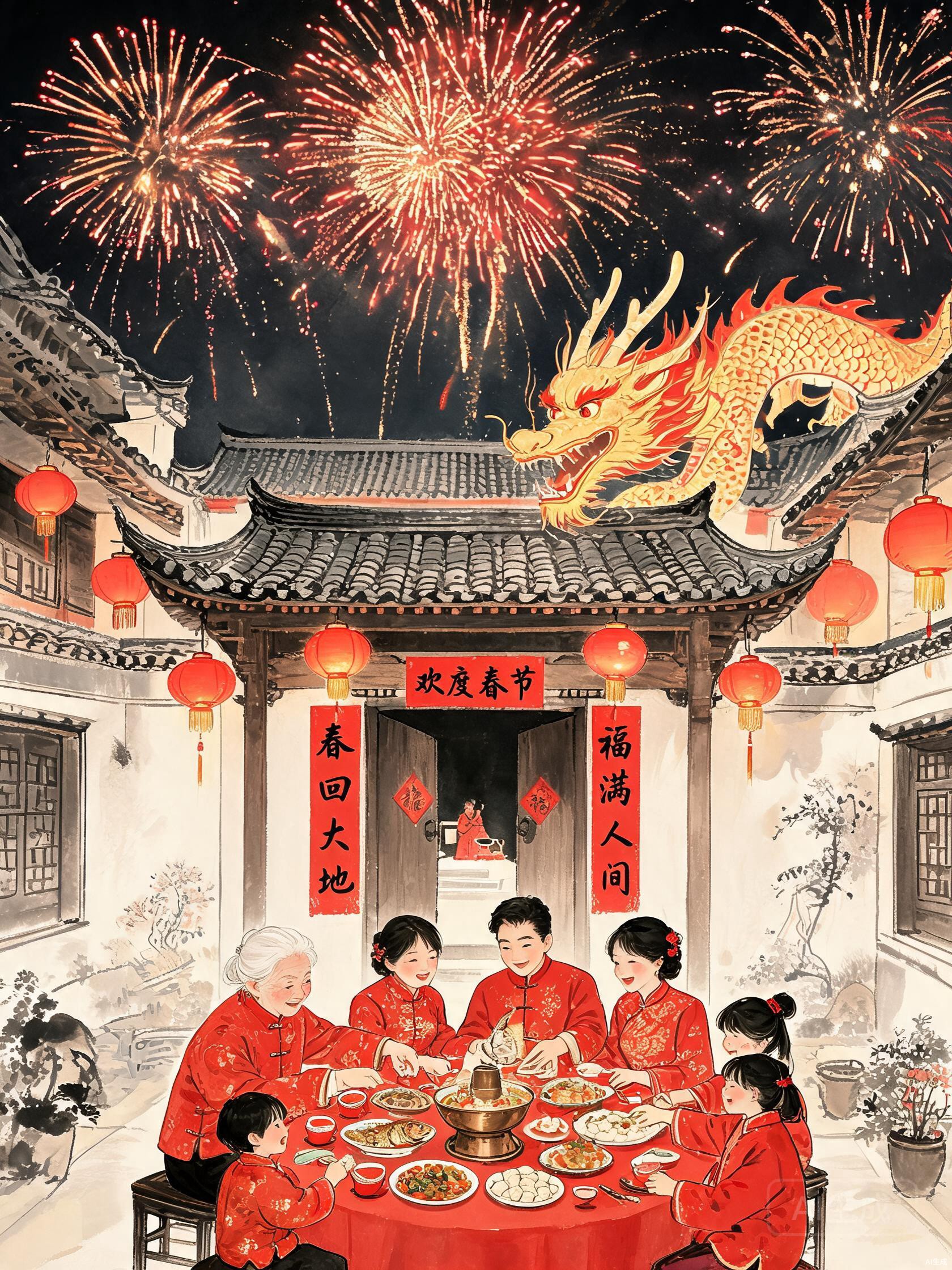
On New Year's Eve, a new paper image of the Kitchen God is pasted above the stove, welcoming him back from heaven. The cycle of observation, report, and renewal begins again — a rhythm that ties the most intimate family life to the cosmic order of heaven.
The Kitchen God in Popular Culture
The [Kitchen God](/folklore/kitchen-god) appears in countless folk tales, children's stories, and [Lunar New Year](/folklore/spring-festival) traditions. He is a figure of warmth and humor — the god who is bribed with candy, the bureaucrat who can be sweet-talked. In Chinese cinema and literature, the ritual of sending the Kitchen God is often used to evoke the atmosphere of a traditional Chinese New Year celebration.
Sources & References
Primary classical texts: Shanhaijing (山海经, Classic of Mountains and Seas, c. 4th-2nd century BCE) · Fengshen Yanyi (封神演义, Investiture of the Gods, c. 16th century) · Journey to the West (西游记, Xiyouji, c. 16th century) · Records of the Grand Historian (史记, Shiji, by Sima Qian, c. 91 BCE) · Classic of Mountains and Seas commentary (郭璞注 Shanhaijing, c. 4th century) · Bamboo Annals (竹书纪年, c. 4th century BCE onwards)
Classical translations: Legge, James (trans.). The Sacred Books of the East (1879-1910, 50 volumes covering Chinese classics) · Girardot, Norman J. Myth and Meaning in Early Taoism (University of California Press, 1983) · Werner, E.T.C. A Dictionary of Chinese Mythology (Shanghai: Kelly & Walsh, 1932)
Modern academic references: Birrell, Anne. Chinese Mythology: An Introduction (Baltimore: Johns Hopkins University Press, 1993) · Yang, Lihui, and Deming An. Handbook of Chinese Mythology (New York: Oxford University Press, 2005) · Strassberg, Richard E. A Chinese Bestiary: Strange Creatures from the Guideways Through Mountains and Seas (Berkeley: University of California Press, 2002)
Digital encyclopedias and online resources: Wikipedia — Chinese mythology portal (continuously updated, citations to primary sources) · Encyclopedia Britannica — Mythology and Religion section
Mythology Network
Connections & Relationships
Kitchen God is woven into a larger web of gods, creatures, and legends. Explore the connections below.
Kitchen God
灶神


📱 Wallpaper · $2.99
Take 灶君(灶王爷) with you
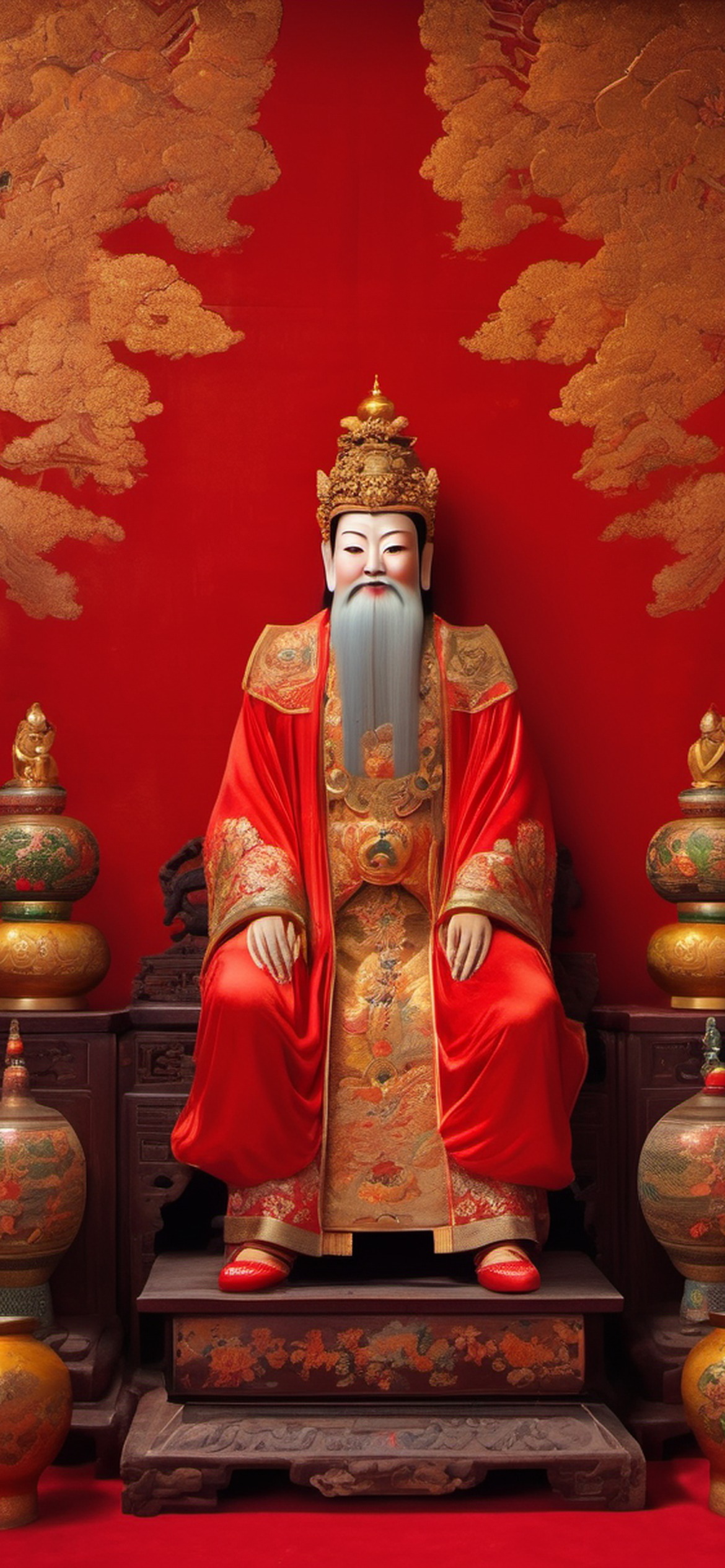
High-resolution phone wallpaper of Kitchen God (灶君(灶王爷)) — iconography drawn from classical Chinese sources, painted in traditional style.
📜 Iconography sources
Kitchen sacrifice is ancient: 《礼记》 (Book of Rites) prescribes worship of the stove, and 《淮南子》 (Huainanzi) says the Flame Emperor, having taught men to use fire, became the Kitchen God himself. Folk tradition settled his form: the kindly white-bearded old man in red beside the stove, holding sweet sugar-melons — on the 23rd of the twelfth month he rides his stove-horse to report each family's deeds to Heaven.
Buy & download
Explore the Topic
Kitchen God in the Mythology Network
Go deeper — read the topic guides that gather every deity like Kitchen God.