City God
城隍
The divine magistrate who protects every city and judges its dead.
Origin Story
Who Is the City God?
The City God, or [Chenghuang](/folklore/chenghuang), is the divine counterpart to the earthly magistrate of a Chinese city. The name itself refers to the city wall (cheng) and the moat (huang) — the physical defenses that protected the community. Over time, the protective spirit of these fortifications was personified as a deity, and by the Tang and Song dynasties, the City God had become one of the most important figures in Chinese folk religion.
Crucially, there is not one City God but many. Every city and town has its own, and the deities are ranked according to the importance of the city. The City God of a provincial capital outranks that of a county town, mirroring the exact hierarchy of the imperial bureaucracy. When a new city was founded, a new City God was appointed.
In most cases, the City God of a given city was identified with a real historical figure — usually a virtuous official, a loyal general, or a local hero who had served the community in life. By deifying them as City God, the community ensured that their virtue would continue to protect the city after death.
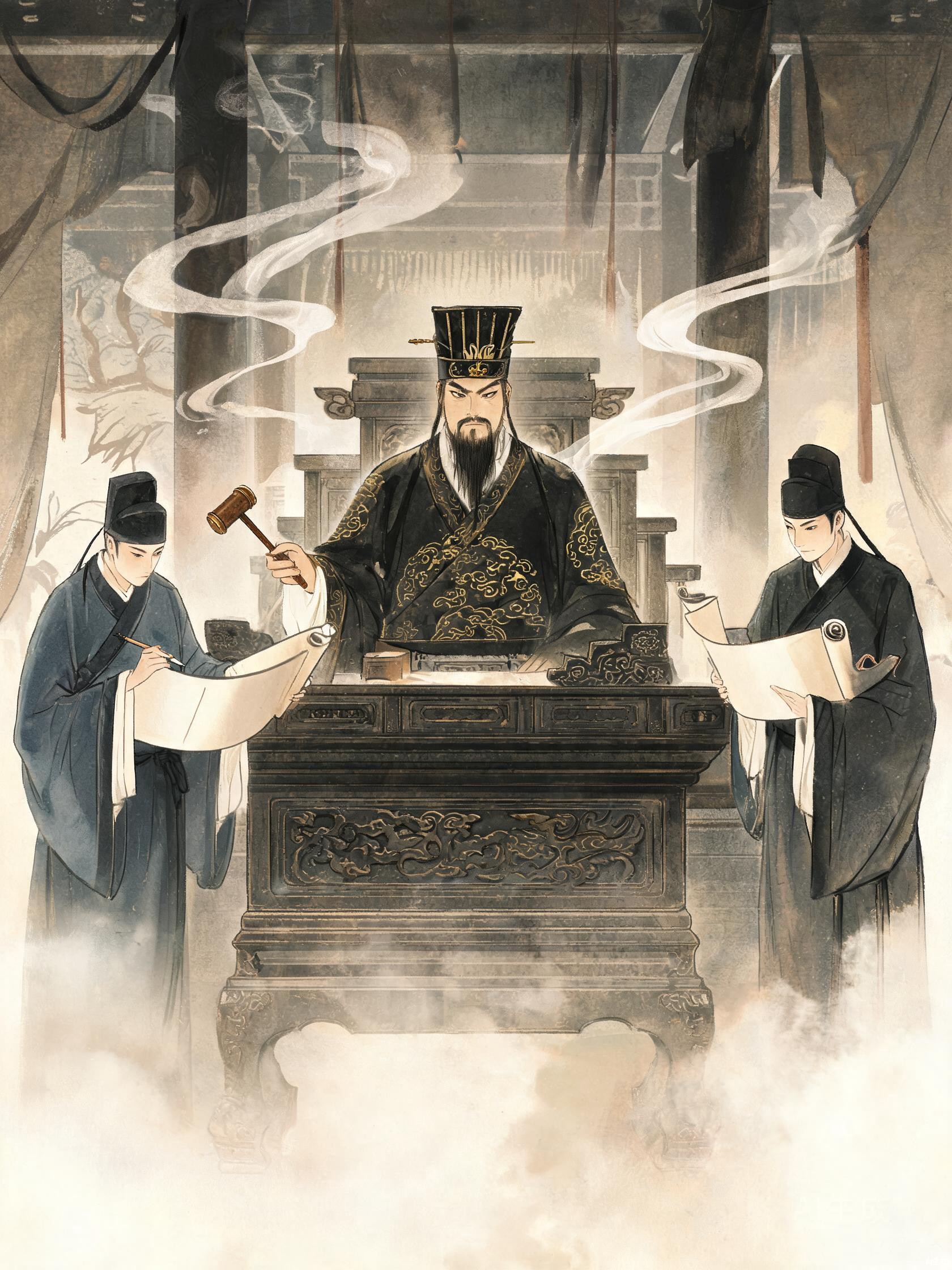
The City God (Chenghuang) is the divine protector and magistrate of every Chinese city. Mirroring the earthly bureaucracy, each city has its own City God who guards the walls, maintains order, and serves as judge in the local underworld court.
Powers & Symbols
Attributes & Artefacts
Click each card to reveal the details behind City God's divine attributes.
Historical & Cultural Meaning
Beyond the Myth
The City God in Mythology
The City God serves two primary functions. In the living world, he protects the city from invasion, plague, fire, and natural disaster. His temple, usually located near the city gate, served as a rallying point during crises, and his image was paraded through the streets during epidemics to dispel disease.
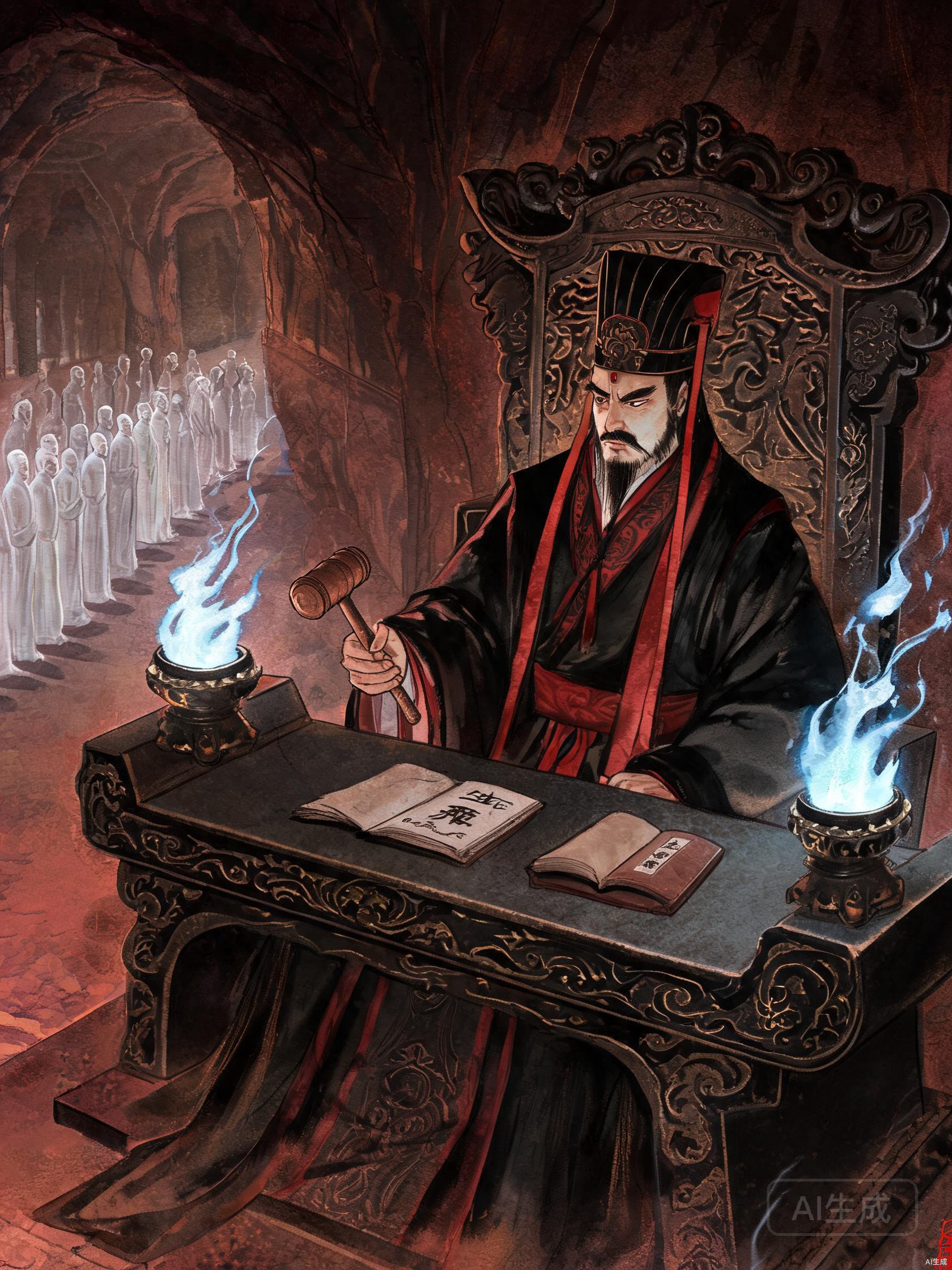
In the underworld, the City God serves as the first judge of the local dead. When a person dies, their spirit is brought before the City God's court, where their deeds in life are reviewed. Minor sins are punished locally, while serious cases are referred upward to [Yanluo Wang](/folklore/yanluo-wang), the king of hell. This judicial function made the City God's temple a place of both awe and dread.
The City God's court mirrors the earthly magistrate's yamen. He has clerks, runners, and constables — all spirits of the dead who serve as his officials. During the Qing Dynasty, it was common for new magistrates to report to the City God's temple upon taking office, acknowledging that their earthly authority was paralleled by a divine authority they could not ignore.
Worship and Cultural Significance
City God temples ([Chenghuang](/folklore/chenghuang) Miao) were among the most important religious sites in pre-modern China. They served not only as places of worship but as centers of community life — hosting fairs, operas, and festivals. The City God's birthday, which varied from city to city, was the occasion for the year's largest local celebration.
The most famous City God temple today is in Shanghai — the City God Temple of Shanghai (Shanghai [Chenghuang](/folklore/chenghuang) Miao), which has become a major tourist destination and cultural landmark. Similar temples survive in cities across China, though many were destroyed or repurposed during the Cultural Revolution.
The City God represents a distinctly Chinese theological principle: the divine world is structured like the human world. Just as every city has a magistrate, every city has a City God. The spiritual and temporal orders are parallel, interdependent, and mutually accountable — a vision of cosmic bureaucracy that is uniquely Chinese.
The City God in Popular Culture
The City God and his underworld court appear frequently in Chinese ghost stories and supernatural fiction, from Pu Songling's Liaozhai Zhiyi (Strange Tales from a Chinese Studio) to modern horror films. In these stories, the City God's temple is often a liminal space where the living and the dead intersect, where justice is sought, and where the boundaries of mortality are tested.
In the popular ghost-comedy film genre, [City God](/folklore/city-god) temples are frequently used as settings for encounters between humans and spirits, often with the City God himself appearing as a stern but ultimately fair judge who resolves supernatural disputes.
Sources & References
Primary classical texts: Shanhaijing (山海经, Classic of Mountains and Seas, c. 4th-2nd century BCE) · Fengshen Yanyi (封神演义, Investiture of the Gods, c. 16th century) · Journey to the West (西游记, Xiyouji, c. 16th century) · Records of the Grand Historian (史记, Shiji, by Sima Qian, c. 91 BCE) · Classic of Mountains and Seas commentary (郭璞注 Shanhaijing, c. 4th century) · Bamboo Annals (竹书纪年, c. 4th century BCE onwards)
Classical translations: Legge, James (trans.). The Sacred Books of the East (1879-1910, 50 volumes covering Chinese classics) · Girardot, Norman J. Myth and Meaning in Early Taoism (University of California Press, 1983) · Werner, E.T.C. A Dictionary of Chinese Mythology (Shanghai: Kelly & Walsh, 1932)
Modern academic references: Birrell, Anne. Chinese Mythology: An Introduction (Baltimore: Johns Hopkins University Press, 1993) · Yang, Lihui, and Deming An. Handbook of Chinese Mythology (New York: Oxford University Press, 2005) · Strassberg, Richard E. A Chinese Bestiary: Strange Creatures from the Guideways Through Mountains and Seas (Berkeley: University of California Press, 2002)
Digital encyclopedias and online resources: Wikipedia — Chinese mythology portal (continuously updated, citations to primary sources) · Encyclopedia Britannica — Mythology and Religion section
Mythology Network
Connections & Relationships
City God is woven into a larger web of gods, creatures, and legends. Explore the connections below.
City God
城隍


📱 Wallpaper · $2.99
Take 城隍爷 with you
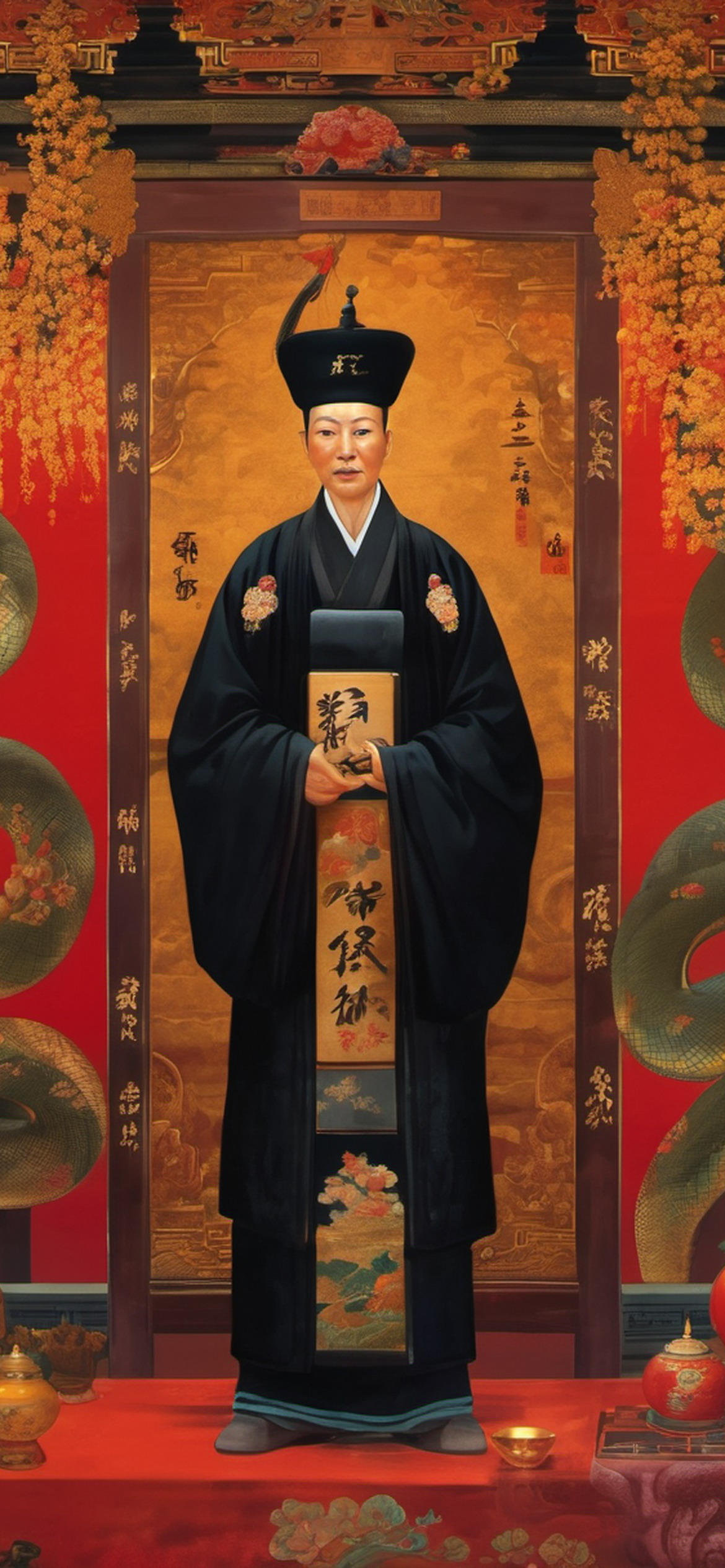
High-resolution phone wallpaper of City God Chenghuang (城隍爷) — iconography drawn from classical Chinese sources, painted in traditional style.
📜 Iconography sources
The City God began as the moat-and-wall sacrifice (水庸) in the eight seasonal rites of 《礼记》, matured into the tutelary of walled cities, and entered the state ritual canon in the Ming — every prefecture and county had its own Chenghuang, a divine magistrate matching his earthly counterpart. Iconography mirrors the county court: black-and-red official robes, judge's hat, scroll of records in hand, city gate and lanterns behind.
Buy & download
Explore the Topic
City God in the Mythology Network
Go deeper — read the topic guides that gather every deity like City God.