
Cowherd and Weaver Girl
牛郎织女
Star-crossed lovers separated by the Milky Way, reunited once a year.
Origin Story
The Mortal and the Goddess
Niulang was a poor but kind-hearted cowherd who lived alone with an old ox. The ox, secretly a fallen deity, told Niulang that the celestial weaver girl Zhinü would bathe in a nearby lake. If he took her clothes, she would have to stay and become his wife.
Niulang did as the ox suggested, and when Zhinü emerged from the water, they met. Unlike the trickery the plan implied, the two fell genuinely in love. They married, had two children, and lived happily — a mortal man and a celestial goddess, bridging the gap between heaven and earth.
The [Cowherd](/myths/cowherd-and-weaver-girl) and the [Weaver Girl](/folklore/weaver-girl) is one of China's Four Folk Legends — a love story between a mortal and a goddess, separated by the Queen Mother of Heaven and reunited only once a year on the seventh day of the seventh lunar month.
Powers & Symbols
Attributes & Artefacts
Click each card to reveal the details behind Cowherd and Weaver Girl's divine attributes.
Historical & Cultural Meaning
Beyond the Myth
Separation by the Milky Way
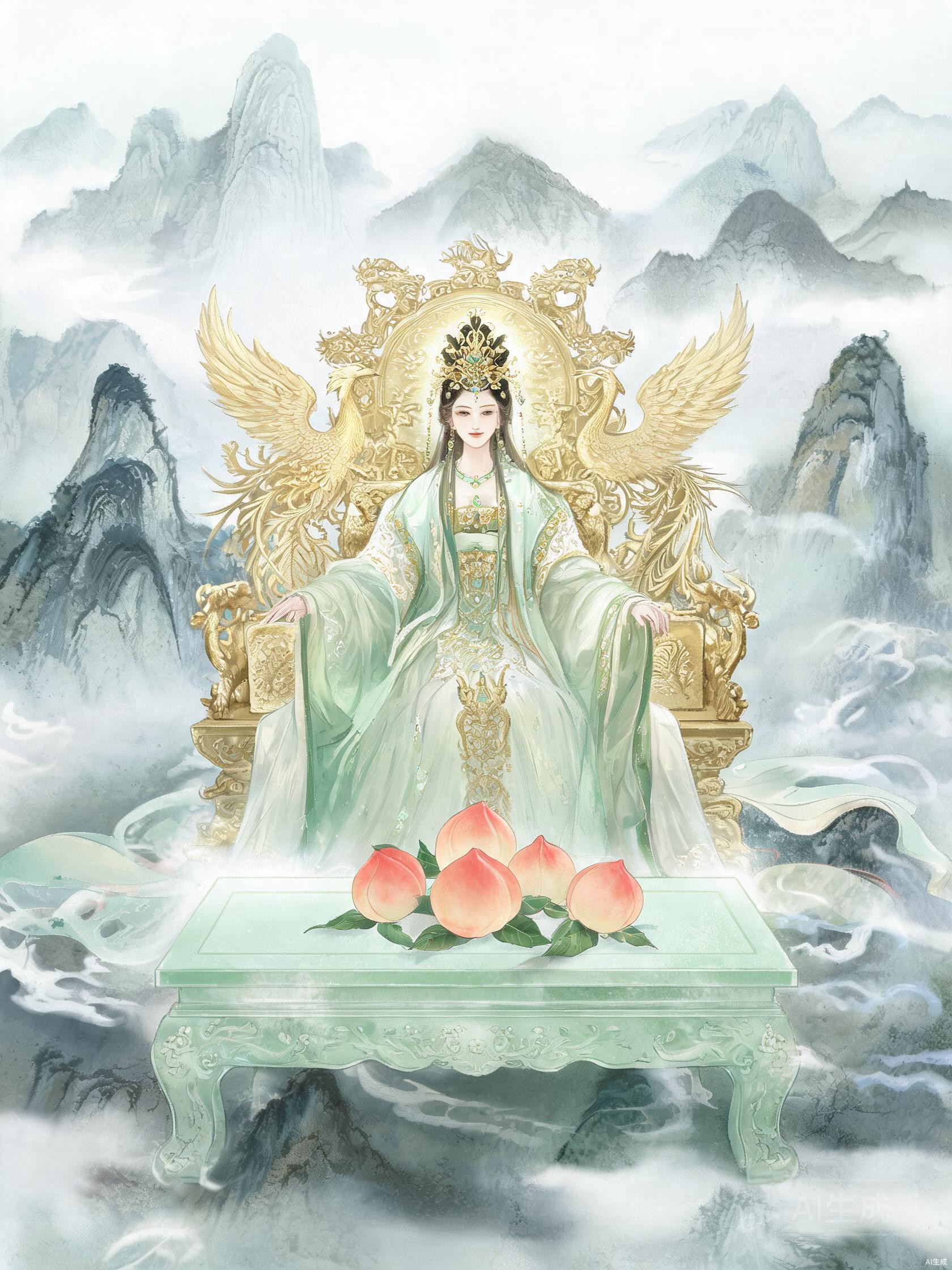
When the Queen Mother of Heaven (Wangmu [Nian](/creatures/nian)g[nian](/symbols/nian)g) discovered that a celestial being had married a mortal, she was furious. She descended to earth, seized Zhinü, and carried her back to heaven. Niulang, carrying their two children in baskets on a shoulder pole, chased after her.
Just as Niulang was about to reach heaven, the Queen Mother drew her hairpin and slashed across the sky. A great river of stars — the Milky Way — appeared between them, impossible to cross. Niulang stood on one shore, Zhinü on the other, separated by the entire galaxy.
The Magpie Bridge
Their love moved the magpies of the world. On the seventh day of the seventh lunar month, tens of thousands of magpies fly up and form a living bridge across the Milky Way. On this one night each year, Niulang and Zhinü walk across the magpie bridge and reunite beneath the stars.
If it rains on Qixi, tradition says the drops are the tears of Niulang and Zhinü — tears of joy at their reunion and grief at knowing they must part again in the morning.
Qixi Festival
The [Qixi](/folklore/qixi) Festival (七夕节), on the seventh day of the seventh lunar month, is often called Chinese Valentine's Day. For centuries, young women would pray to Zhinü for skill in weaving and a good marriage, while young couples looked up at the stars Altair (Niulang) and Vega (Zhinü) on either side of the Milky Way.
The legend has been told for over 2,600 years — it appears in the Shijing (Book of Songs), China's oldest poetry collection. It remains one of the most beloved love stories in Chinese culture, a tale of love that transcends the boundaries between mortal and divine, and that endures even when separated by the stars themselves.
Sources & References
Primary classical texts: Shanhaijing (山海经, Classic of Mountains and Seas, c. 4th-2nd century BCE) · Fengshen Yanyi (封神演义, Investiture of the Gods, c. 16th century) · Journey to the West (西游记, Xiyouji, c. 16th century) · Records of the Grand Historian (史记, Shiji, by Sima Qian, c. 91 BCE) · Classic of Mountains and Seas commentary (郭璞注 Shanhaijing, c. 4th century) · Bamboo Annals (竹书纪年, c. 4th century BCE onwards)
Classical translations: Legge, James (trans.). The Sacred Books of the East (1879-1910, 50 volumes covering Chinese classics) · Girardot, Norman J. Myth and Meaning in Early Taoism (University of California Press, 1983) · Werner, E.T.C. A Dictionary of Chinese Mythology (Shanghai: Kelly & Walsh, 1932)
Modern academic references: Birrell, Anne. Chinese Mythology: An Introduction (Baltimore: Johns Hopkins University Press, 1993) · Yang, Lihui, and Deming An. Handbook of Chinese Mythology (New York: Oxford University Press, 2005) · Strassberg, Richard E. A Chinese Bestiary: Strange Creatures from the Guideways Through Mountains and Seas (Berkeley: University of California Press, 2002)
Digital encyclopedias and online resources: Wikipedia — Chinese mythology portal (continuously updated, citations to primary sources) · Encyclopedia Britannica — Mythology and Religion section
Mythology Network
Connections & Relationships
Cowherd and Weaver Girl is woven into a larger web of gods, creatures, and legends. Explore the connections below.
Cowherd and Weaver Girl
牛郎织女


Explore the Topic
Cowherd and Weaver Girl in the Mythology Network
Go deeper — read the topic guides that gather every legend like Cowherd and Weaver Girl.