
Mulian Rescues His Mother
目连救母
The disciple who descended into hell to feed his starving mother — and founded the Ghost Festival.
Origin Story
The Tale of Mulian
Mulian was a Buddhist monk whose mother, Lady Qingti, had been ungenerous in life and was condemned after death to be reborn as a hungry ghost in the depths of hell. Mulian used his spiritual powers, achieved through deep meditation, to descend through the eighteen levels of hell, suffering great torments himself, until he found his mother.
When he tried to feed her, every mouthful of food turned to flame the moment it touched her lips. Only the merit of his monastic discipline was powerful enough to break the curse — and even that was a temporary reprieve. The Buddha advised that only by living monastics offering merit to ancestors on the fifteenth day of the seventh lunar month could her release be made permanent.
Mulian (also Maudgalyayana in Sanskrit), a disciple of the Buddha, descended into the eighteen levels of hell to rescue his mother, who had been reborn as a hungry ghost for her sins. The Buddha instituted the Ullambana Festival (盂兰盆节, Chinese Ghost Festival) to commemorate Mulian’s devotion, allowing ancestors to be released by the merit of their descendants.
Powers & Symbols
Attributes & Artefacts
Click each card to reveal the details behind Mulian Rescues His Mother's divine attributes.
Magical Artifacts & Weapons
Mulian Rescues His Mother's Divine Arsenal
The legendary weapons and treasures wielded by Mulian Rescues His Mother — each with its own origin story, powers, and mythological significance.
Historical & Cultural Meaning
Beyond the Myth
The Founding of the Ghost Festival
The Ghost Festival (盂兰盆节, also called Zhongyuan Jie 中元节) commemorates Mulian’s filial devotion. On the full moon of the seventh lunar month, monks chant the Ullambana Sutta in monasteries, and families offer food, incense, and paper money to wandering ghosts. The doors of hell are believed to open, allowing ancestors and homeless spirits to roam the world for one night.
In practice, the Ghost Festival is one of the most widely observed Chinese folk-religious holidays. Offerings of rice, fruit, and lotus flowers float on rivers; lanterns are released into the sky; monks chant for the dead. In some regions, operas about Mulian are staged to teach children the magnitude of filial debt.
Hell and the Cosmic Bureaucracy
Mulian’s descent is the Chinese mythic model for the structure of hell. The eighteen levels (十八层地狱), each with its specific punishment and its specific demon warden, become for the first time a “physical” geography that a hero can navigate. The text reads as a tour of an infernal civil service: clerks, scribes, judges, and executioners, all working a cosmic case file.
The myth also canonizes the powers and limits of filial devotion. Mulian’s devotion is great enough to find his mother; it is not great enough to save her permanently without institutional grace. The lesson is that personal piety needs institutional roots (the monastic sangha) and a regular cycle (the festival) to do its work.
Cultural Endurance
In temple opera (muju), the Mulian play cycle is one of the longest survivals of Chinese Buddhist drama. Performances last up to seven nights and trace Mulian’s full journey. They are still performed in ritual contexts at temples such as Fengguo in Dali and Kaifeng’s Xiangguo Si.
Modern readers should not miss how thoroughly the Mulian tale integrates three Asian religions: Buddhism supplies the metaphysics of merit, Daoism supplies the geography of hell, and Confucianism supplies the filial son. The result is one of the great syncretic myths in Chinese tradition.
Mythology Network
Connections & Relationships
Mulian Rescues His Mother is woven into a larger web of gods, creatures, and legends. Explore the connections below.
Mulian Rescues His Mother
目连救母

Bridge of Helplessness
The bridge that every soul must cross — where Lady Meng begins her forgetting.
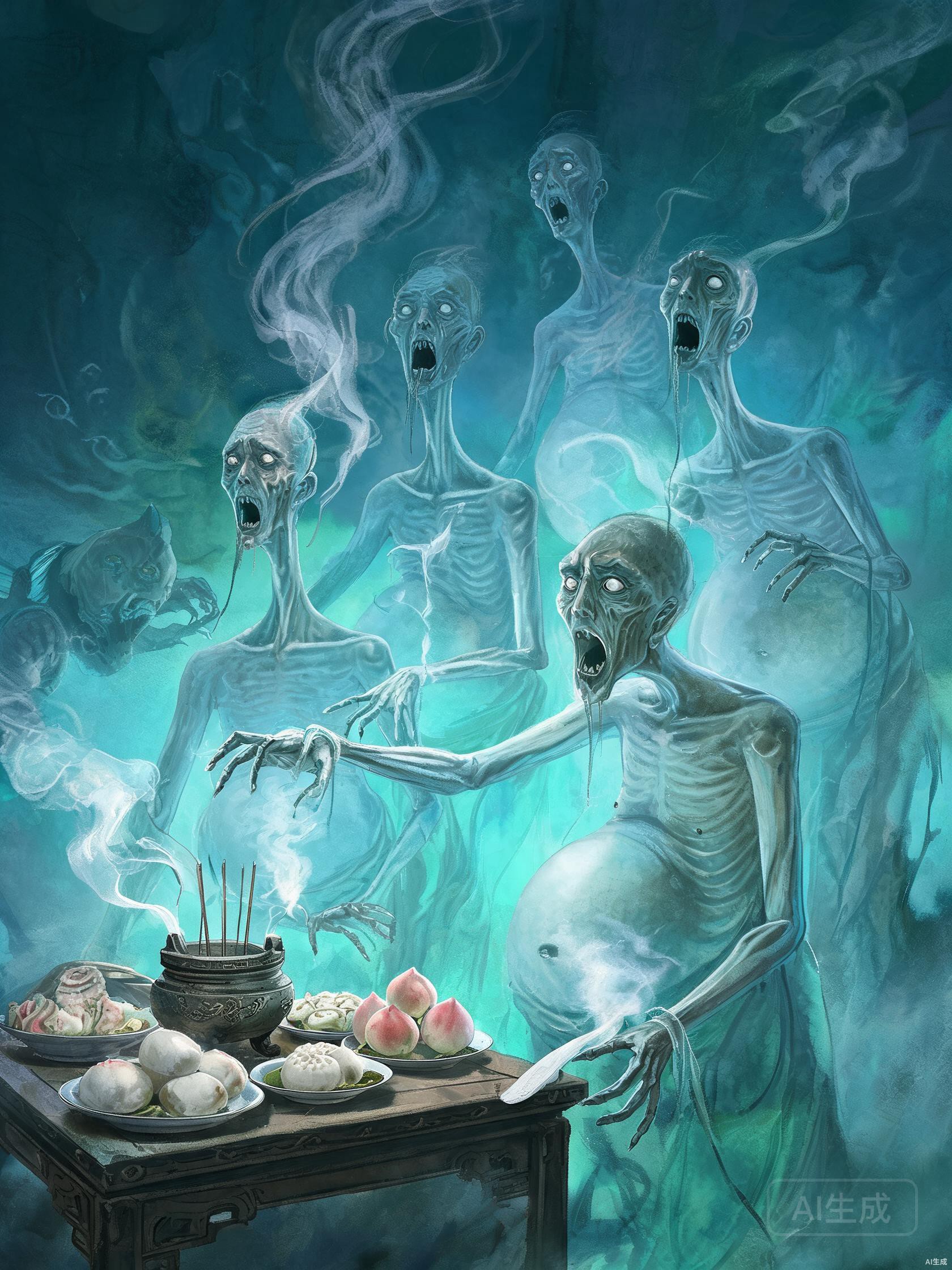
Hungry Ghosts
Restless spirits cursed with insatiable hunger and impossible thirst.
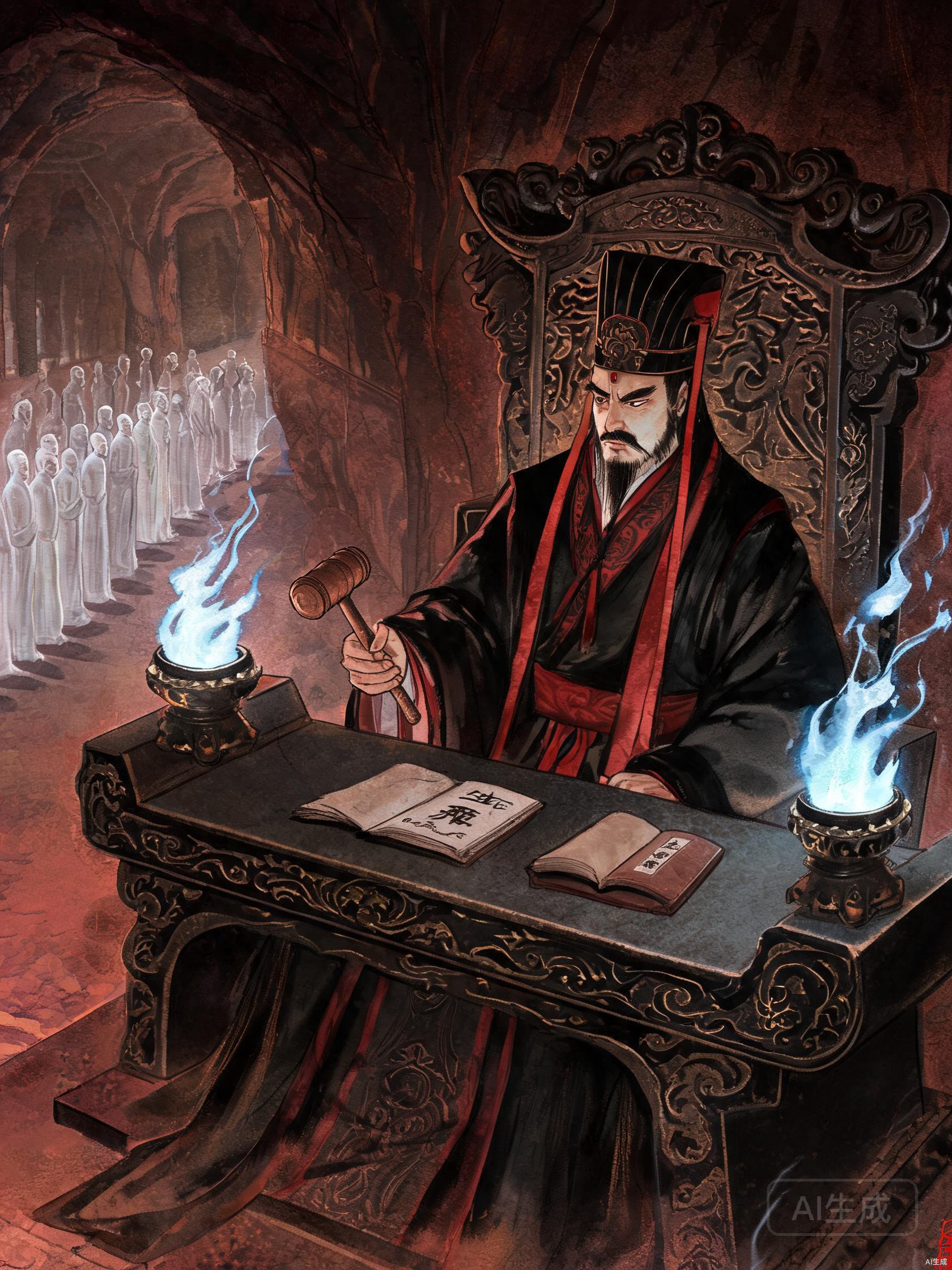
King Yan (Yanluo Wang)
The judge of the dead who presides over the Chinese underworld.
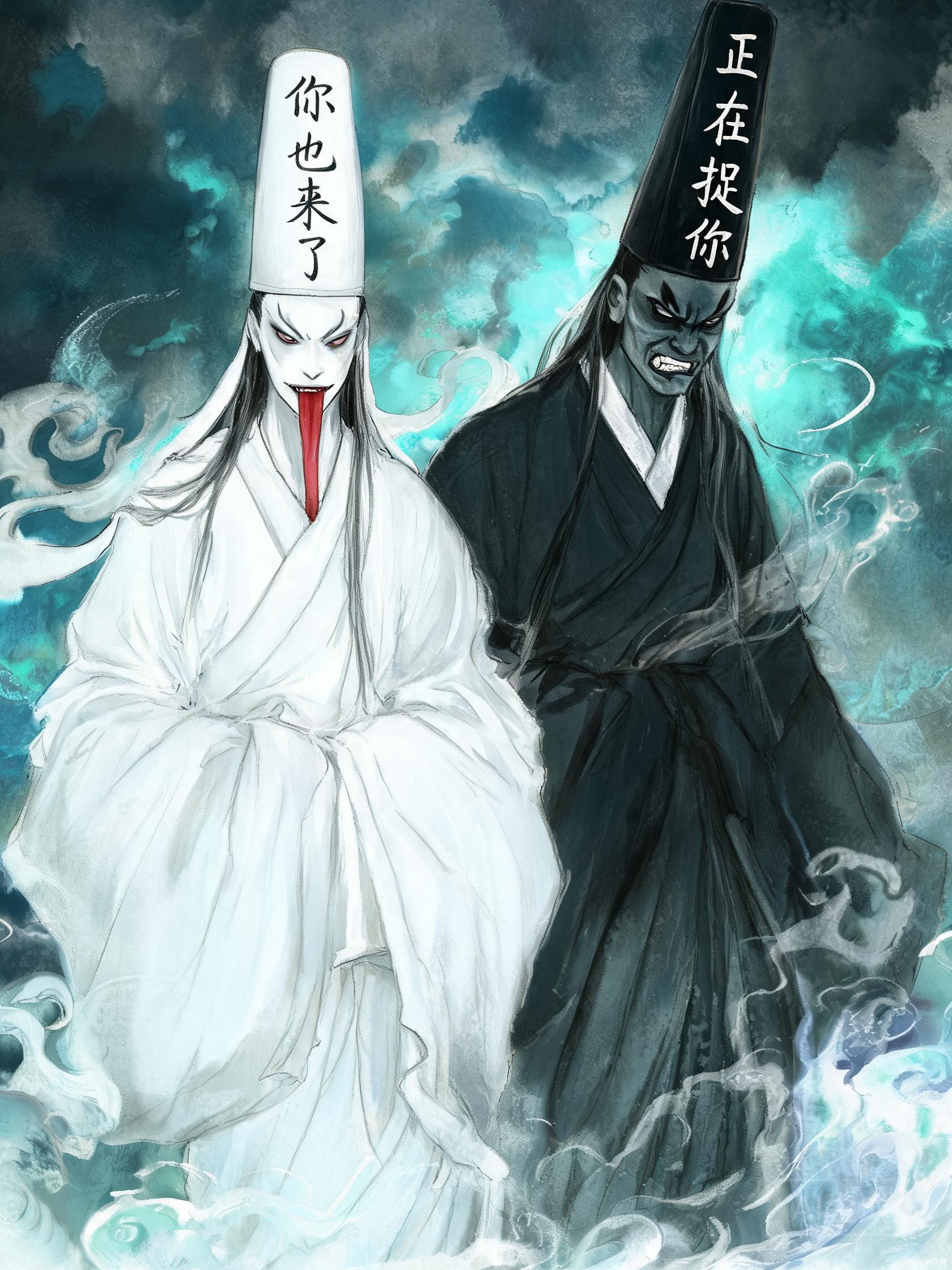
Black and White Impermanence
The two underworld officers who escort the souls of the dead to the afterlife.