
Bridge of Helplessness
奈何桥
The bridge that every soul must cross — where Lady Meng begins her forgetting.
Origin Story
The Crossing
Once a soul has been judged by King Yan and the ten infernal magistrates, it is brought to the long bridge spanning the river of forgetfulness. Some texts describe the bridge as having three lanes — a golden lane for the virtuous, a silver lane for the mixed, and a black-iron lane for the wicked, with the wicked forced to crawl across with broken tiles beneath their knees.
Crossing the bridge is the last rite of mortal individuation. Once on the other side, Meng Po (Lady Meng) hands each new spirit a bowl of her five-flavor broth, and the soul forgets everything: parents, lovers, deeds, even its own name. This is the precondition for rebirth as a clean slate.
The Bridge of Helplessness is the famous bridge that the spirits of the dead must cross before entering the underworld. Below it runs the river of forgetfulness; upon it stand the judges of the dead; at its head sits Lady Meng (Meng Po) with her broth of forgetting. Souls cross it for the last time in their existence as individuals.
Powers & Symbols
Attributes & Artefacts
Click each card to reveal the details behind Bridge of Helplessness's divine attributes.
Magical Artifacts & Weapons
Bridge of Helplessness's Divine Arsenal
The legendary weapons and treasures wielded by Bridge of Helplessness — each with its own origin story, powers, and mythological significance.
Historical & Cultural Meaning
Beyond the Myth
Three Trials
The journey includes three famous trials: first, the path across the **Bridge of Helplessness** itself; second, drinking Meng Po’s **Broth of Forgetfulness** at the foot of the bridge; third, looking back from the bridge into the world of the living — a gaze forbidden but constantly attempted.
Many folk opera cycles and ghost stories dramatize the third trial: a daughter whose mother has just died refuses to drink, returns to the upper world, and is forced to wander as an unmoored ghost. The lesson embedded in the trials is the same: the dead must not cling.
Meng Po and the Broth
Meng Po, Lady Meng, stands at the head of the bridge with her cauldron of broth. The broth is brewed from herbs of forgetfulness; one taste erases all memory of the previous life. By forgetting, the soul is reborn with a fresh heart and the chance to balance its karmic account.
The image of Meng Po handing a steaming bowl to a trembling new ghost is one of the most frequently painted scenes of Chinese folk art. Vendors sell small Meng Po figurines during the Ghost Festival, and temple tablets often depict her in the form of an old matron with a ladle.
Cultural Heritage
The bridge features in Chinese opera, fiction, and cinema; it is one of the most adaptable mythic images in the entire afterlife corpus. Films, ghost stories, and video games all use the bridge as a thematic threshold. Many Chinese couples still give each other red string bracelets with three knots, as a folk-magical reference to the three trials at the bridge.
Annual ghost festivals in temples across China reenact the crossing. In Buddhist services on the fifteenth of the seventh month, monks and laypeople together symbolically walk the bridge, led by Meng Po, who presides symbolically over the ritual. The bridge has become less a place of fear than a place of mending.
Mythology Network
Connections & Relationships
Bridge of Helplessness is woven into a larger web of gods, creatures, and legends. Explore the connections below.
Bridge of Helplessness
奈何桥
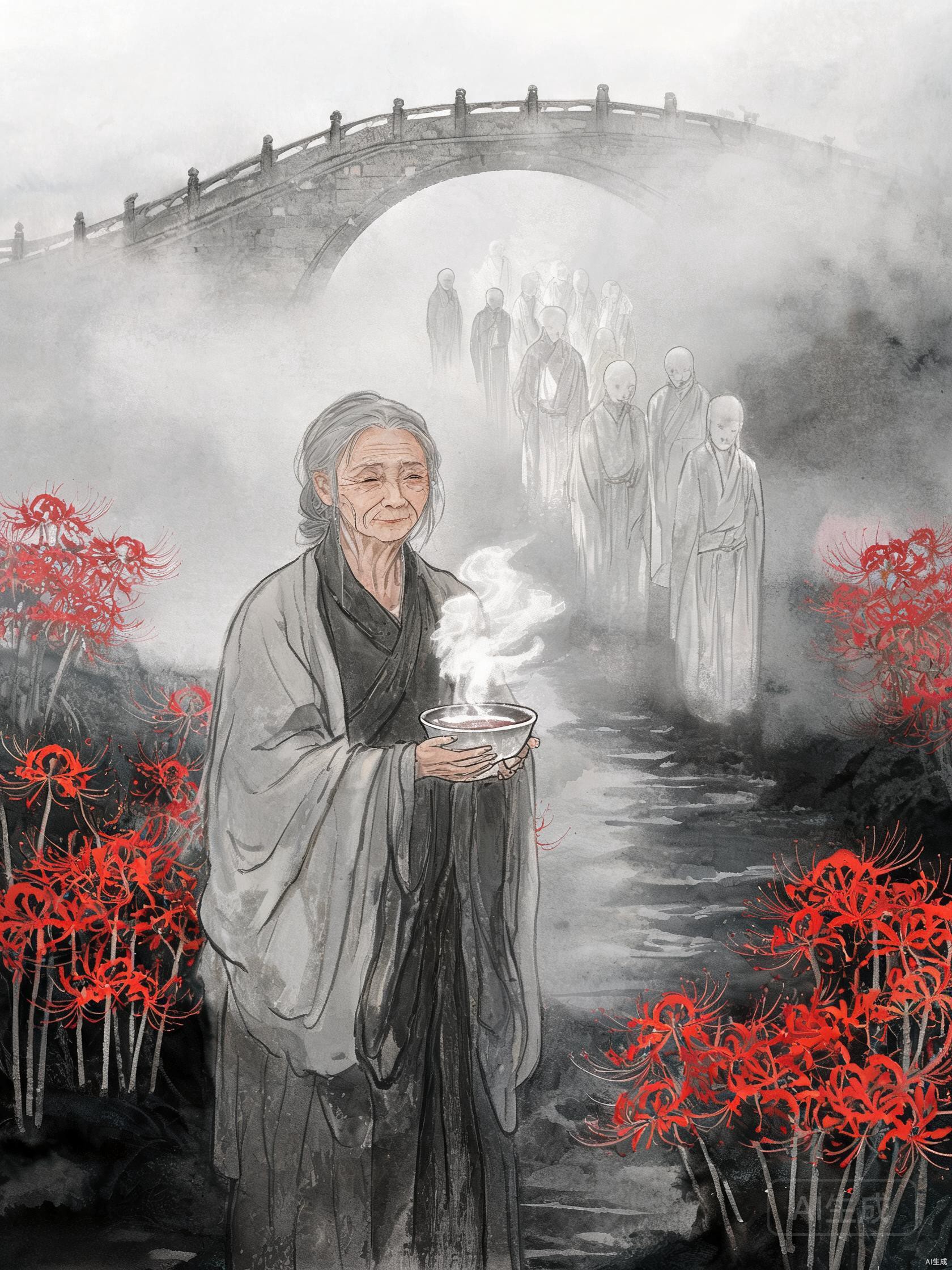
Lady Meng (Meng Po)
The old woman of the underworld who brews the Soup of Forgetfulness.
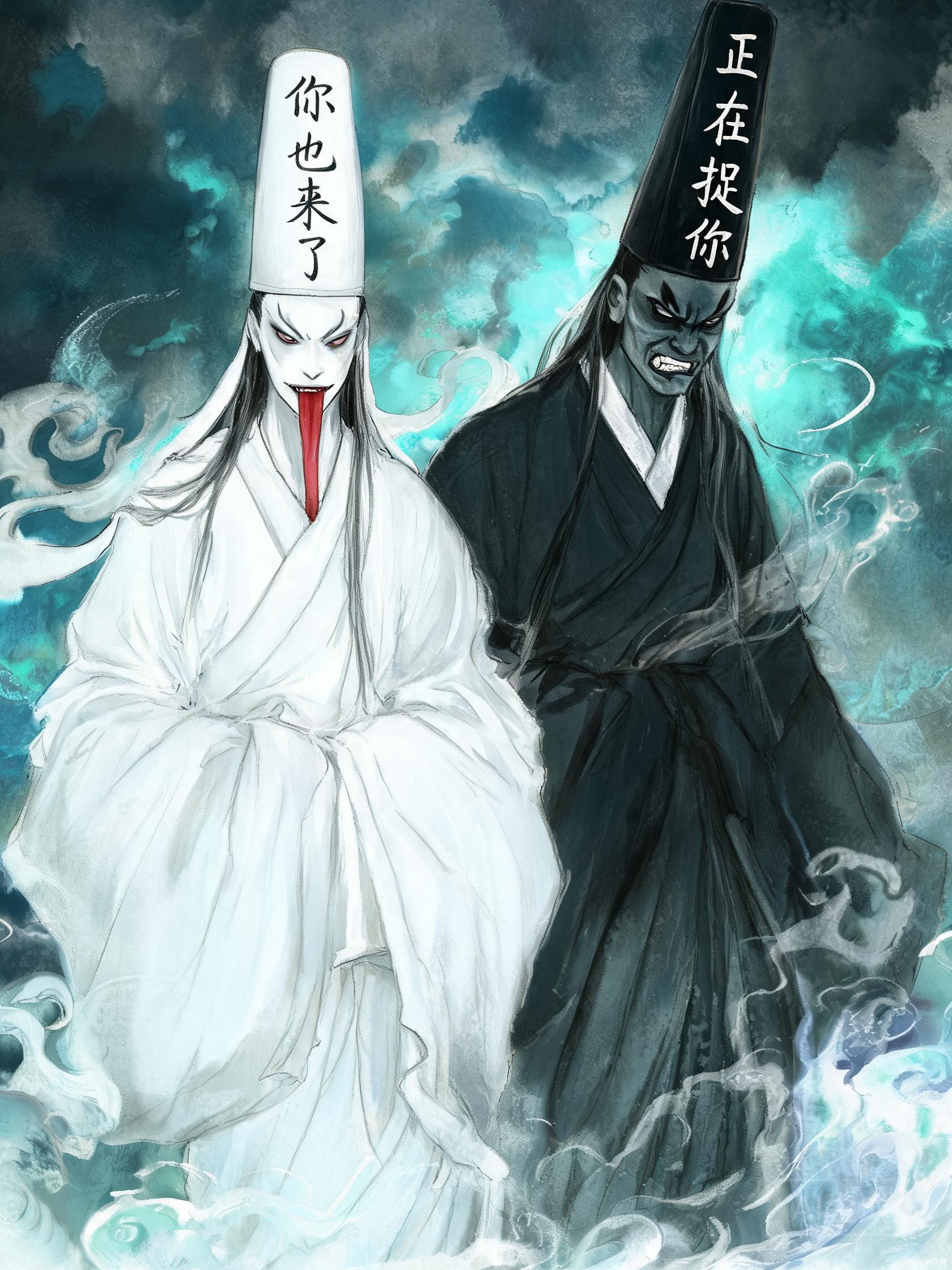
Black and White Impermanence
The two underworld officers who escort the souls of the dead to the afterlife.
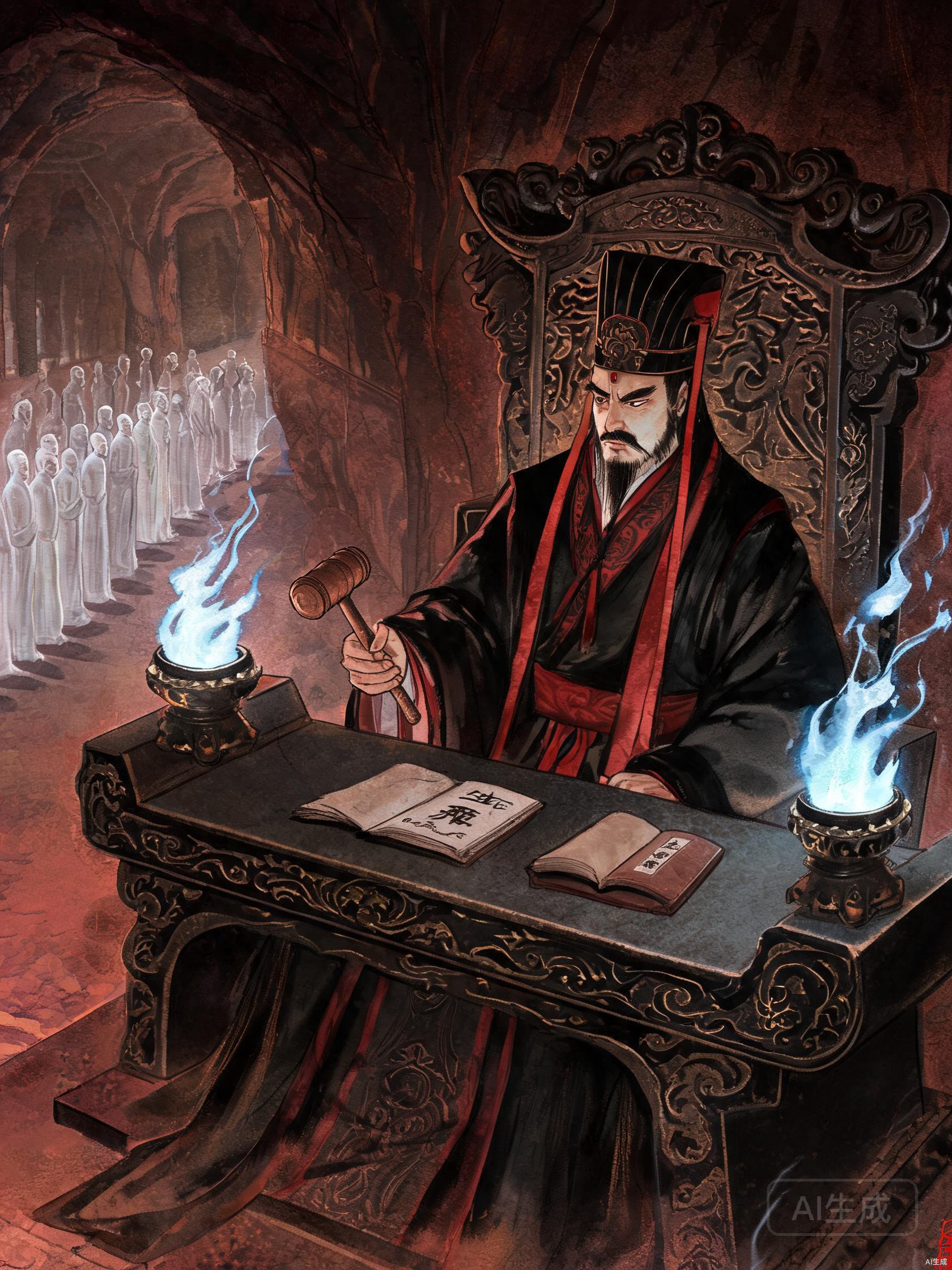
King Yan (Yanluo Wang)
The judge of the dead who presides over the Chinese underworld.
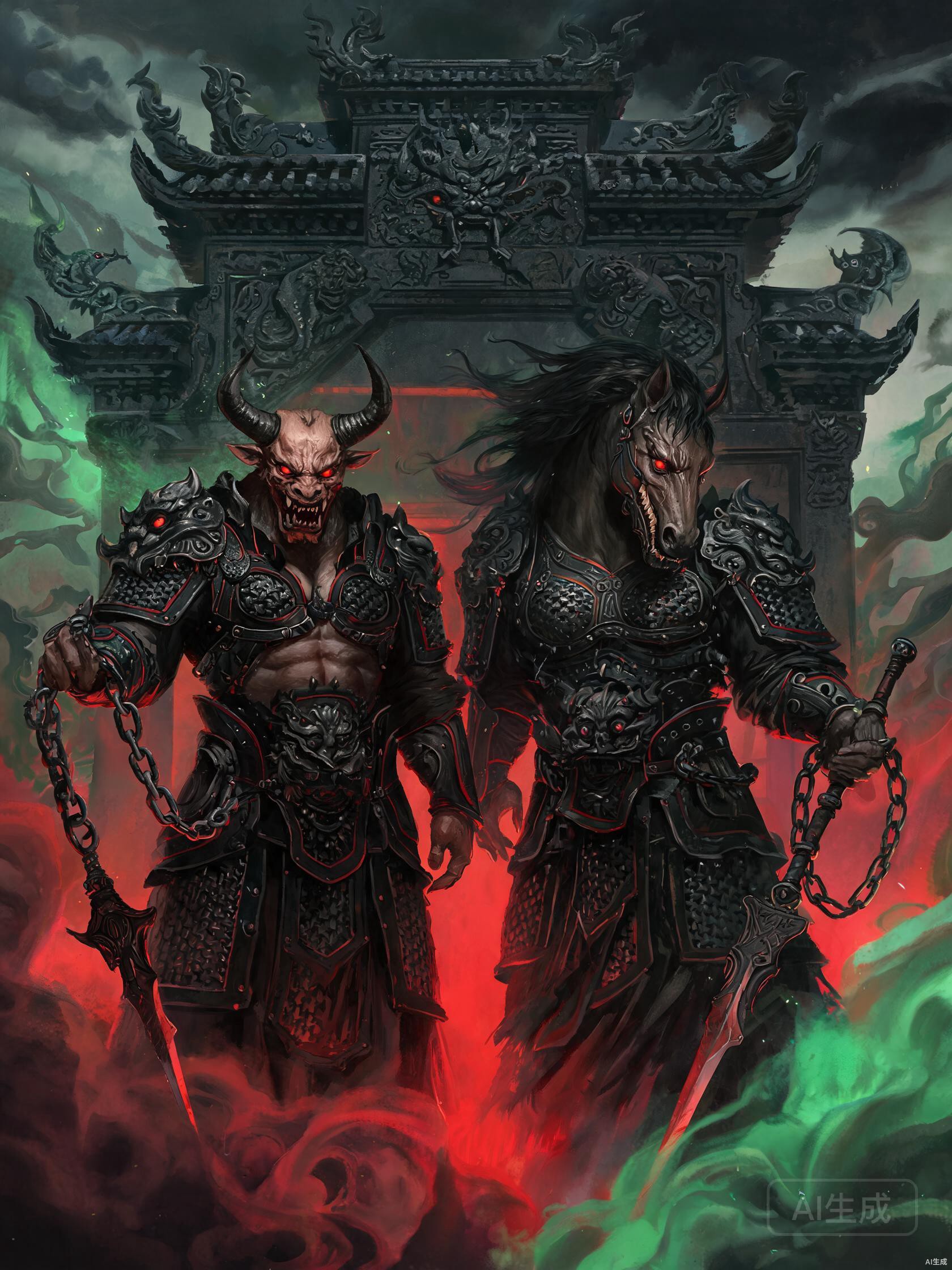
Ox-Head and Horse-Face
The fearsome guardians of the underworld who capture and drag souls to judgment.