Crane Symbolism
鹤
The crane — sovereign of longevity, messenger of immortals, and emblem of noble virtue.
Origin Story
The Bird of the Immortals
The crane's association with immortality begins with its extraordinary lifespan. Chinese natural history, blending observation with mythology, held that cranes lived for a thousand years. The Classic of Mountains and Seas (山海经) describes cranes that dwell in the gardens of the Queen Mother of the West, the goddess who commands immortality. These celestial cranes were said to announce the arrival of transcendent beings with their resonant calls.
In Daoist tradition, the crane is the preferred mount of immortals (仙, xiān) — beings who have transcended mortal limitations through spiritual cultivation. Paintings of immortals frequently show them riding cranes through clouds, or standing beside cranes on mountain peaks. The crane's ability to fly high and its long life made it the perfect symbol of the Daoist goal: to transcend the human condition and become one with the cosmos.
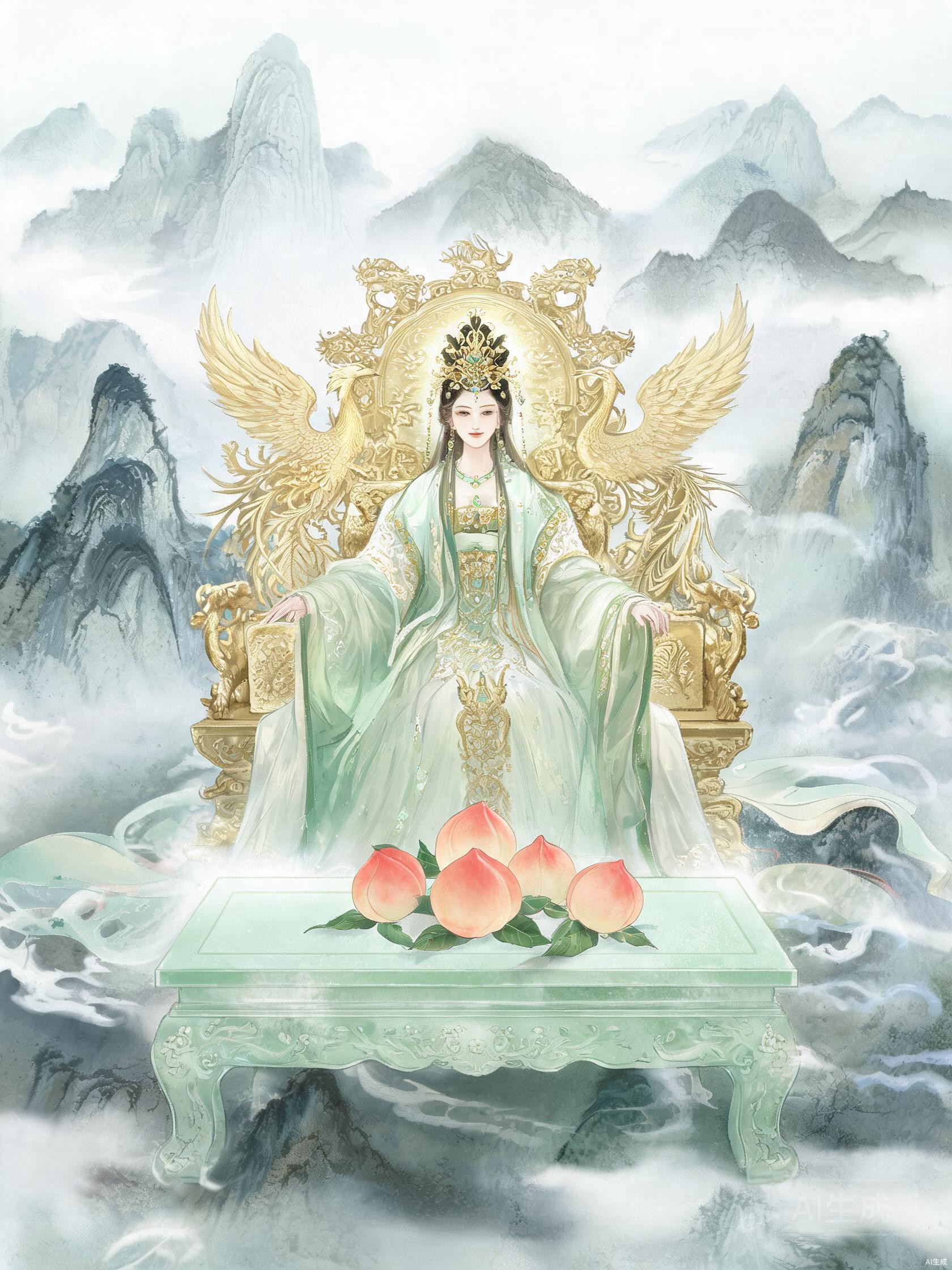
The Queen Mother of the West (西王母, Xīwángmǔ), one of the most powerful deities in Chinese mythology, is closely associated with cranes. Her paradise on Mount Kunlun is described as a garden where cranes roost in the branches of the immortal peach tree. When the peaches ripen every three thousand years, cranes carry the news to the celestial court. This connection links the crane to both immortality and divine communication.

The immortal crane beside the evergreen pine — two symbols of longevity intertwined
In Chinese culture, the crane (鹤, hè) is the preeminent symbol of longevity, immortality, and wisdom. Known as the 'bird of the immortals' (仙鹤, xiānhè), the crane was believed to live for hundreds of years and to serve as the mount of transcendent beings. Its elegant form appears in painting, embroidery, architecture, and philosophy as a symbol of the highest aspirations of the human spirit.
Powers & Symbols
Attributes & Artefacts
Click each card to reveal the details behind Crane Symbolism's divine attributes.
Historical & Cultural Meaning
Beyond the Myth
Crane and Pine: The Emblem of Evergreen Longevity
The pairing of crane and pine (松鹤, sōng hè) is one of the most recognizable longevity motifs in Chinese art. The pine tree, an evergreen that survives the harshest winters without losing its needles, symbolizes endurance and the refusal to yield to death. The crane, with its legendary lifespan, symbolizes the extension of life beyond ordinary limits. Together, they form the complete emblem of longevity — both the endurance of the body and the extension of the spirit.
This motif appears on birthday paintings, congratulatory scrolls, and embroidered hangings. At a Chinese elder's birthday celebration, a painting of cranes and pines is a standard gift, conveying the wish 'May your years be as numerous as the pine's needles and as long as the crane's life.' The red-crowned crane (丹顶鹤, dāndǐnghè), with its striking red cap, is the most revered species. The red crown is associated with vitality and the cinnabar elixir of immortality in Daoist alchemy.
The Crane in Imperial Culture
In the imperial court, the crane held the highest rank among birds. The first-rank civil official's robe was embroidered with a crane, making the bird a symbol of scholarly achievement and moral integrity. The crane's deliberate, dignified gait was compared to the measured deportment of a gentleman, and its white plumage represented purity of character. An official who wore the crane insignia was expected to embody these qualities.
Bronze crane figures flanked the emperor's throne in the Hall of Supreme Harmony in the Forbidden City. These incense burners, shaped as cranes with hollow bodies, would release fragrant smoke from the crane's beak during court ceremonies, symbolizing the connection between the earthly court and the celestial realm. The crane was not merely decorative — it was a bridge between the human and the divine.
The phrase 'a crane among chickens' (鹤立鸡群, hè lì jī qún) describes a person of outstanding talent or virtue who stands out from ordinary people, much as a crane towers above chickens. This idiom, originating from the Jin Dynasty, captures the crane's role as the standard of excellence and distinction.
The Crane in Art and Philosophy
In Chinese ink painting, the crane is a beloved subject. A lone crane standing in a marsh, a pair of cranes dancing under the moon, or a flock of cranes ascending into clouds — each composition evokes a different aspect of the crane's symbolism. The minimalist style of ink painting suits the crane's elegant lines: its long neck, slender legs, and spread wings require only a few masterful strokes to capture.
In philosophy, the crane represents the ideal of the junzi (君子), the Confucian gentleman. Its habits are orderly and dignified; it does not squabble with lesser birds; it stands tall and moves with grace. Confucian texts compare the crane's behavior to the moral conduct expected of a scholar-official: restraint, dignity, and incorruptibility. In Daoist philosophy, the crane embodies wuwei (non-action) — it does not force its movements but flows naturally with the wind.
Mythology Network
Connections & Relationships
Crane Symbolism is woven into a larger web of gods, creatures, and legends. Explore the connections below.
Crane Symbolism
鹤