Fish Symbolism
鱼
The fish — emblem of abundance, surplus, and the transformative power of persistence.
Origin Story
The Word That Made the Fish Auspicious
The fish's symbolic power in Chinese culture, like that of the bat, derives from a linguistic pun. The Chinese word for fish (鱼, yú) is a homophone of the word for surplus, abundance, or having more than enough (余, yú). This phonetic coincidence made the fish the ultimate symbol of prosperity — not just having enough, but having a surplus, which is the definition of wealth in an agrarian society.
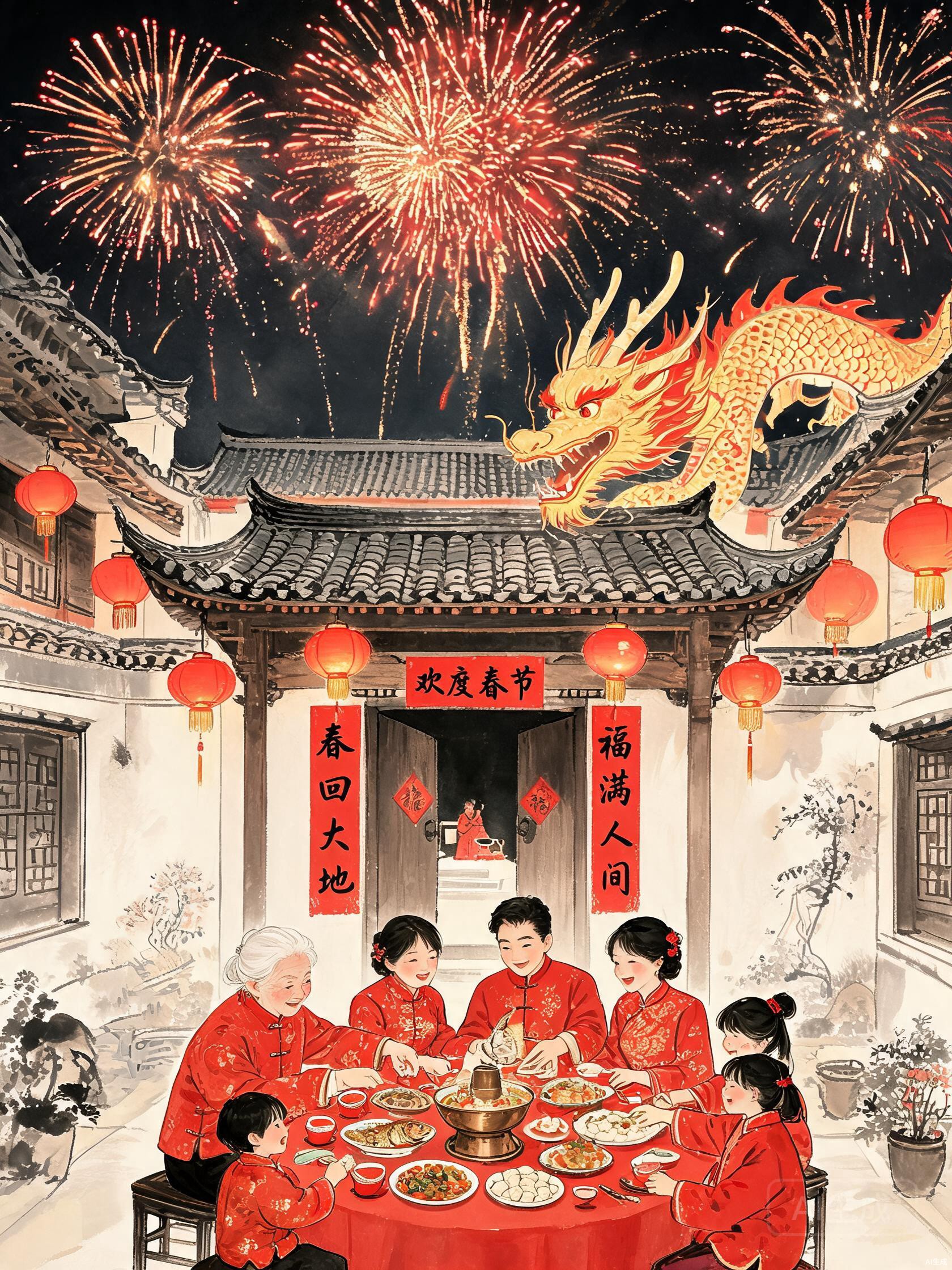
The most famous expression of this symbolism is the New Year greeting 年年有余 (nián nián yǒu yú), meaning 'May every year end with surplus.' The character 余 (surplus) is pronounced identically to 鱼 (fish), so the phrase can be read as both 'May every year have surplus' and 'May every year have fish.' During Spring Festival, fish dishes are served at the reunion dinner — but traditionally, the fish is not fully eaten. The leftover portion symbolizes the surplus that carries into the new year, a physical enactment of the idiom.

The carp among lotus — surplus (鱼/余) and continuity (莲/连) combined in a single image
In Chinese symbolism, the fish (鱼, yú) is one of the most pervasive and beloved motifs, representing abundance, wealth, and surplus. Its name is a homophone for 'surplus' or 'abundance' (余, yú), making it a central symbol in New Year celebrations, business blessings, and decorative arts. The fish also carries deeper meanings of transformation, freedom, and academic success.
Powers & Symbols
Attributes & Artefacts
Click each card to reveal the details behind Fish Symbolism's divine attributes.
Historical & Cultural Meaning
Beyond the Myth
The Carp and the Dragon Gate
The carp (鲤鱼, lǐyú) is the most symbolically charged fish in Chinese culture. Unlike ordinary fish, the carp carries the added meaning of the character 利 (lì, 'profit, advantage'), because 鲤 (lǐ) sounds like 利 (lì). A carp therefore means both 'surplus' and 'profit' — a double blessing of wealth.
The carp's greatest symbolic story is the Legend of the Dragon Gate (鲤鱼跳龙门, Lǐyú Tiào Lóngmén). According to this myth, carp that swim upstream against the Yellow River's current and leap over the Dragon Gate waterfall are transformed into dragons. This story became the central metaphor for passing the imperial examinations — the grueling civil service tests that determined a scholar's entire future. A successful candidate was said to have 'leapt the Dragon Gate,' transforming from an ordinary fish (a commoner) into a dragon (an official).
This association made carp paintings a traditional gift for students preparing for examinations, and for merchants hoping to achieve success through perseverance. The carp's upstream struggle against the current became a metaphor for hard work, determination, and the transformative power of effort. Even today, Chinese parents display carp artwork in their children's study rooms as a blessing for academic success.
Fish in Feng Shui and Daily Life
In Feng Shui, fish — especially in aquariums — are powerful wealth attractors. The logic is simple: water represents money flowing in, and fish represent the accumulation of that wealth. A well-placed aquarium in the southeast sector of a home or business (the wealth corner) is believed to activate prosperity. Goldfish (金鱼, jīnyú) are particularly favored because their name literally means 'gold fish,' combining two wealth symbols in one.
The number of fish also carries meaning. Eight goldfish plus one black fish is the most auspicious combination: eight is the number of prosperity (八, bā, sounds like 发, fā, 'to prosper'), and the black fish absorbs negative energy and bad luck. If a fish dies, it is said to have absorbed misfortune meant for the household, and should be replaced promptly.
Fish motifs appear on Chinese currency, business logos, and restaurant signage. A pair of fish (双鱼, shuāng yú) symbolizes marital harmony and fertility, and is a common wedding motif. The twin fish appear in the Eight Auspicious Symbols of Buddhism, representing harmony and conjugal fidelity.
The Fish in Chinese Philosophy
Beyond wealth and luck, the fish carries philosophical depth in Chinese thought. In Daoism, the happiest being in the universe is said to be a fish, because it lives in perfect accord with the Dao (the natural way). Zhuangzi, the great Daoist philosopher, famously debated whether he knew the joy of fish swimming in a river — a parable about the limits of knowledge and the nature of subjective experience.
The fish also represents freedom and escape. The idiom 'like a fish returning to water' (如鱼得水, rú yú dé shuǐ) describes a person who has found their natural element — a state of effortless existence. In Chinese ink painting, a single fish in empty space, with no water depicted, evokes the vastness of freedom and the Daoist ideal of wuwei (non-action, effortless action). The blank paper IS the water; the viewer's imagination fills the void.
Mythology Network
Connections & Relationships
Fish Symbolism is woven into a larger web of gods, creatures, and legends. Explore the connections below.
Fish Symbolism
鱼