
Nianhua - New Year Pictures
年画
The woodblock-printed pictures that brought luck to every door at New Year.
Origin Story
How Nianhua Are Made
Traditional nianhua is made by a six-step process: the artist draws the design; the carver cuts it into a woodblock; the printer inks the block and prints it on paper; the colorist hand-colors each printed sheet; the finisher mounts it on backing; and the picture is sold at New Year markets.
Each step may be done by a different artisan. In the great schools — Yangliuqing near Tianjin, Taohuawu near Suzhou, Mianzhu in Sichuan, Weifang in Shandong — distinct families pass their skills down through generations. The finished pictures are extraordinarily vibrant; an art lover can recognize a school by color palette and figure type.
Nianhua (‘New Year pictures’) are woodblock-printed colored pictures pasted on walls and doors at the Chinese New Year. They depict door gods, kitchen gods, the god of wealth, plump babies, mythological scenes, and folk legends. The tradition spans from the Tang dynasty to today.
Powers & Symbols
Attributes & Artefacts
Click each card to reveal the details behind Nianhua - New Year Pictures's divine attributes.
Magical Artifacts & Weapons
Nianhua - New Year Pictures's Divine Arsenal
The legendary weapons and treasures wielded by Nianhua - New Year Pictures — each with its own origin story, powers, and mythological significance.
Historical & Cultural Meaning
Beyond the Myth
Door Gods and Family Guardians
The most common subject is the door god: the two warrior-generals Qin Shubao and Yuchi Gong, who guarded the Tang emperor and were later invited onto the doors of every Chinese household. They are usually shown facing each other in bright red and gold — one frowning fierce, one smiling fierce.
Kitchen gods, the gods of wealth, and the long-lived immortals also appear. Plump babies — chubby children holding fish, peaches, or lotus — are common, expressing family hopes for fertility and prosperity. The most prized pieces are scenes from famous stories, drawn with elaborate detail.
Regional Styles
Each of the four major schools has its own colorway, figure style, and cultural references. Yangliuqing is the most refined — dense with detail, almost miniature in its painting, with strong red and gold palettes. Taohuawu is the most delicate — almost botanically drawn, with pastels and atmospheric textures.
Mianzhu nianhua are the boldest: black outlines filled with primary colors, often depicting fierce guardian figures and mythological beasts. Weifang nianhua bridge these — bright colors and clear figures, neither too dense nor too delicate. Each school has its collectors and its master artists.
New Year, New Pictures
Central to the tradition is the practice of replacing the pictures every year. The old pictures are pulled down on New Year’s Eve; the new pictures go up at the same time. The replacement is partly decor (faded pictures make a house look unloved) and partly ritual (new pictures renew the protective energy of the door).
Today, mass-produced nianhua — printed in factories and printed on vinyl — have largely replaced the hand-printed versions at New Year. The traditional schools survive mainly as cultural heritage sites and as art-collecting markets. But every Chinese person still knows the door-god picture, even if they have not seen a hand-printed one in years.
Mythology Network
Connections & Relationships
Nianhua - New Year Pictures is woven into a larger web of gods, creatures, and legends. Explore the connections below.
Nianhua - New Year Pictures
年画
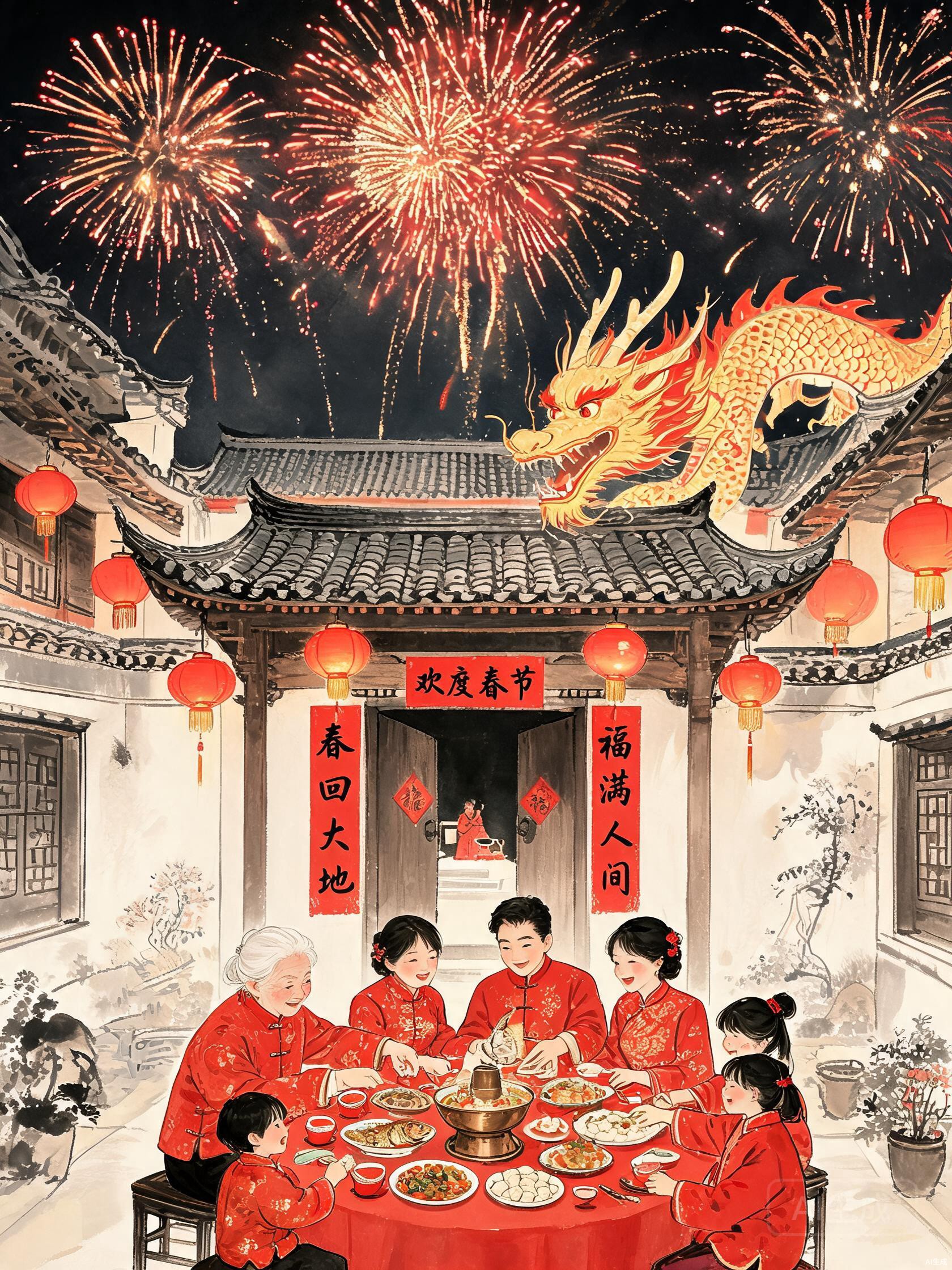
Spring Festival (Lunar New Year)
The most important festival in Chinese culture, celebrating the turning of the lunar year.
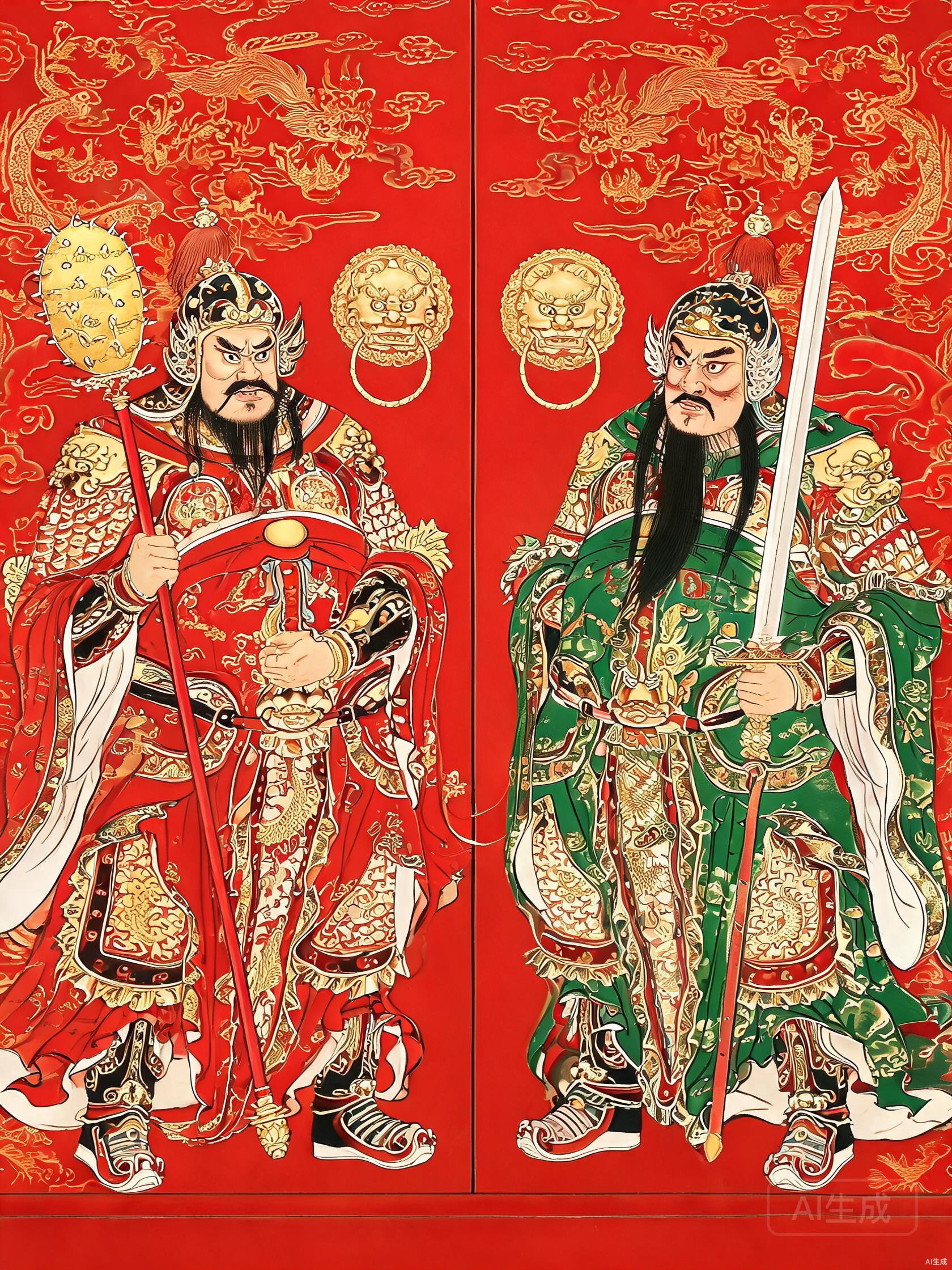
Door Gods (Menshen)
The divine guardians pasted on doorways to protect the household from evil.

Chinese Paper Cutting
The folk art whose red paper carries blessings — the visible heart of Chinese New Year.

Auspicious Clouds
The curling cloud motif that brings heaven’s blessing — the most ubiquitous decoration in Chinese art.