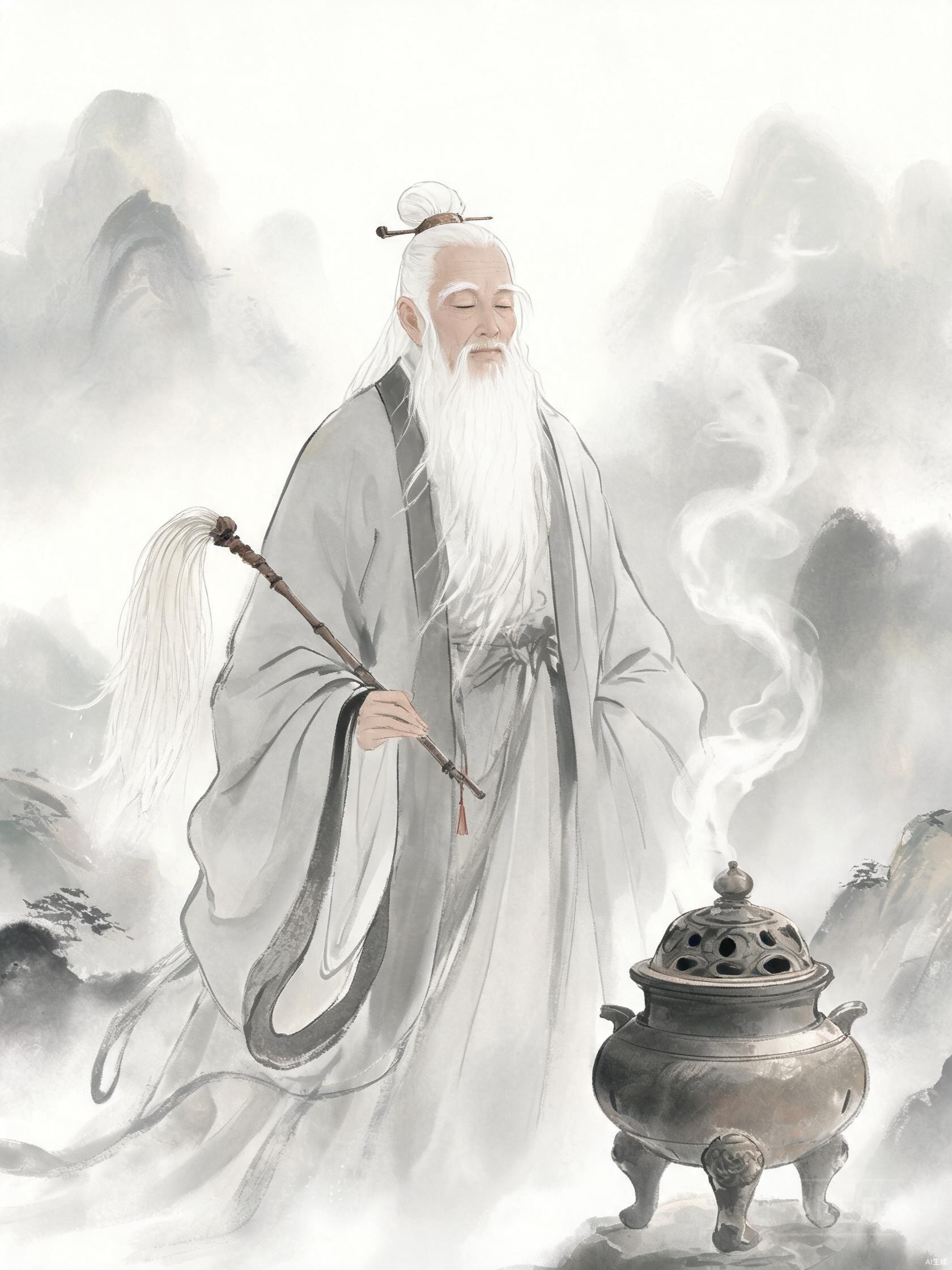
Han Xiangzi
韩湘子
The jade-flute immortal who could make flowers bloom in winter, nephew of the great poet Han Yu.
Origin Story
Who Is Han Xiangzi?
Han Xiangzi, also known as Han Xiang (韩湘), lived during the Tang Dynasty and was the grand-nephew of Han Yu (韩愈, 768–824 CE), one of the greatest prose writers and scholars in Chinese history, and a key figure in the Confucian revival. The historical Han Xiang was a minor figure — a young man who showed no interest in the examinations and official career that his illustrious uncle wanted for him. But in the hands of legend, he became something far greater: an immortal whose music could command the natural world.
According to the tales, Han Yu was deeply concerned about his nephew's lack of ambition. He had arranged for Han Xiangzi to study the classics, hoping the young man would follow in his footsteps as a scholar and official. Instead, Han Xiangzi spent his time wandering in the mountains, playing his flute, and talking to birds and flowers. When Han Yu demanded to know what the boy intended to do with his life, Han Xiangzi replied that he had a different kind of ambition — one that could not be measured by examinations or rank.
To prove his point, Han Xiangzi performed an extraordinary feat. He planted a peony in the ground, played his jade flute, and watched as the plant grew, budded, and bloomed in a matter of moments — in the dead of winter. Not only did the flower bloom, but words appeared on its petals, forming a poem that predicted Han Yu's future: his exile to the distant south, his suffering, and his eventual return. Han Yu was stunned. The prophecy, as history would prove, came true — he was indeed exiled to Chaozhou, where he wrote some of his most famous works.

Han Xiangzi — like Chang'e, a figure who chose the heavens over the earth
Han Xiangzi is the musical immortal among the Eight Immortals, a Tang Dynasty figure who was the grand-nephew of the great scholar-statesman Han Yu. He carries a jade flute whose music can summon birds, calm storms, and make flowers bloom out of season. His story embodies the Taoist ideal that art and nature, not worldly ambition, are the true paths to the divine.
Powers & Symbols
Attributes & Artefacts
Click each card to reveal the details behind Han Xiangzi's divine attributes.
Historical & Cultural Meaning
Beyond the Myth
The Jade Flute
Han Xiangzi's jade flute (玉笛, yùdí) is his signature treasure and one of the most evocative symbols among the Eight Immortals' artifacts. When he plays, birds gather to listen, flowers turn their faces toward the sound, rivers slow their flow, and clouds pause in the sky. The music does not merely please — it commands. Nature itself bends to the will of the immortal who has mastered the art of sound.
In Chinese philosophy, music is not merely entertainment but a fundamental cosmic principle. The ancient Book of Rites (礼记) describes music as the harmony of heaven and earth, the audible expression of the Tao itself. When Han Xiangzi plays his flute, he is not performing; he is participating in the music of the cosmos, aligning himself with the fundamental vibration that sustains all existence. This is why his music can make flowers bloom in winter — he is not overriding nature but restoring it to its proper rhythm, reminding the frozen earth of the spring that lives within it.
The peonies that bloom at Han Xiangzi's command carry their own symbolism. The peony (牡丹, mǔdān) is the king of flowers in Chinese culture, associated with wealth, nobility, and splendor. But when Han Xiangzi makes them bloom out of season, the peony becomes something else: a sign that the immortal's art transcends the ordinary cycles of nature, that beauty can appear in the bleakest season, and that the Taoist sage carries spring within himself, regardless of the winter around him.
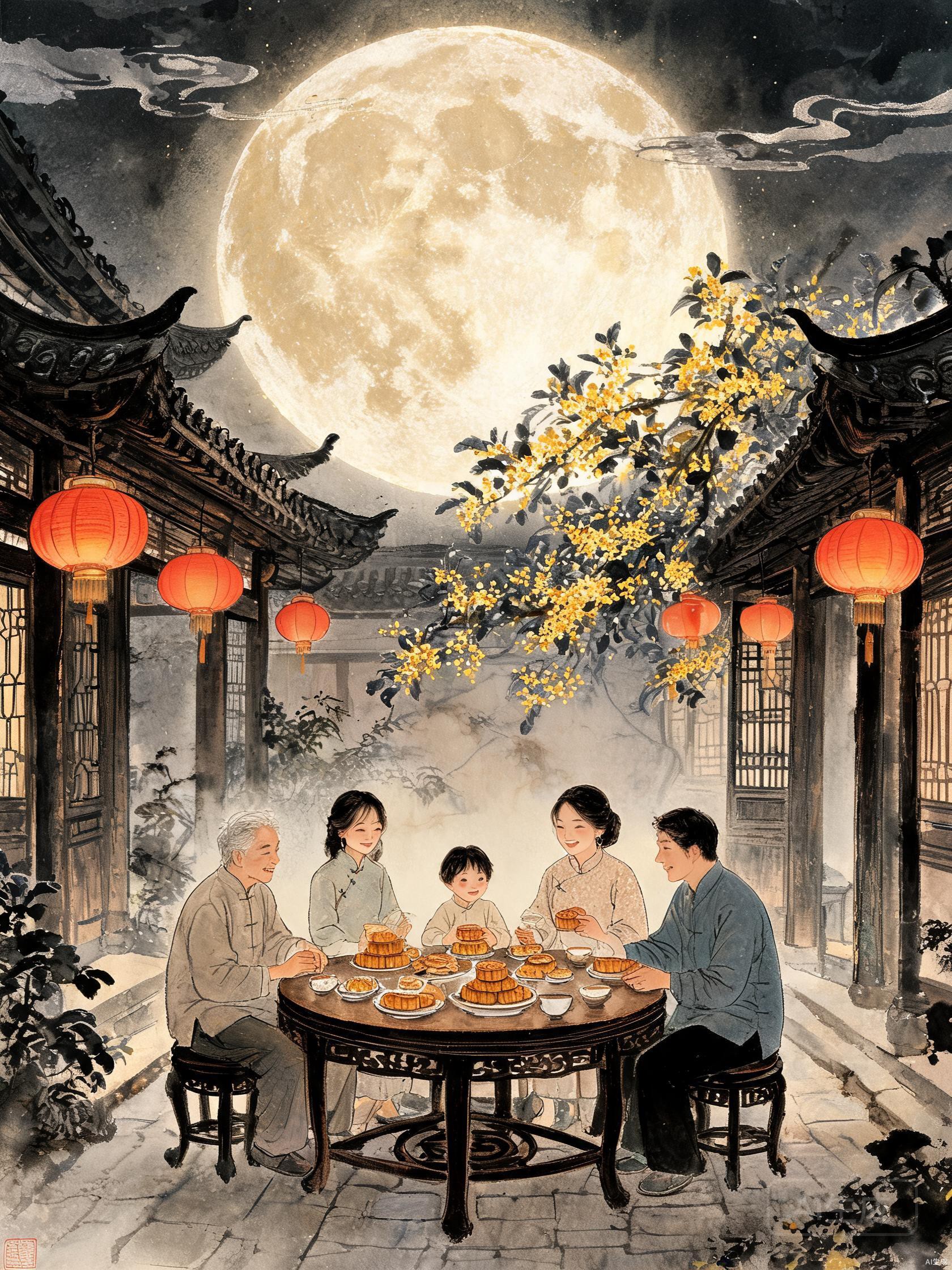
Han Xiangzi's flute music echoes under the harvest moon
Han Xiangzi and Han Yu
The relationship between Han Xiangzi and his uncle Han Yu is one of the most philosophically rich pairings in Chinese mythology. Han Yu was the champion of Confucianism — a man who believed in duty, learning, public service, and the moral obligation to improve the world through governance. Han Xiangzi represented the Taoist alternative — art, nature, spontaneity, and the pursuit of personal liberation. Their encounter is not just a family drama but a meeting of two of China's great philosophical traditions.
In the end, the legend suggests that both were right in their way. Han Yu's Confucian duty led him to exile, suffering, and ultimately literary immortality — his writings shaped Chinese prose for a thousand years. Han Xiangzi's Taoist art led him to literal immortality — he joined the Eight Immortals and plays his flute in the heavens. The peony that bloomed from Han Xiangzi's music foretold Han Yu's future, suggesting that the Taoist and Confucian paths are not enemies but two faces of the same truth: one seeks to transform the world, the other to transcend it, and both require mastery, devotion, and an understanding that goes beyond the surface of things.
In folk worship, Han Xiangzi is the patron of musicians, especially flute players, and of all who pursue art as a spiritual path. His image — a youthful, elegant figure with a jade flute — reminds worshippers that the highest art is not performance but communion: the artist who disappears into the music, and the music that becomes indistinguishable from the sound of the world itself.
Mythology Network
Connections & Relationships
Han Xiangzi is woven into a larger web of gods, creatures, and legends. Explore the connections below.
Han Xiangzi
韩湘子