
Lü Dongbin
吕洞宾
The most famous of the Eight Immortals, a scholar-turned-immortal who wields the sword of pure yang.
Origin Story
Who Is Lü Dongbin?
Lü Dongbin, born Lü Yan (吕岩) during the Tang Dynasty, is the most renowned of the Eight Immortals (八仙, Bāxiān). A scholar by training, he sat for the imperial examinations but failed — a setback that would prove fateful. Disheartened and wandering, he stopped at a tavern in the capital Chang'an, where he met a strange bearded man. This was Zhongli Quan, already an immortal, who prepared a pot of yellow millet porridge and invited Lü to share it.
Before the porridge was ready, Lü fell asleep. In his dream, he lived an entire lifetime: he passed the examinations, rose to high office, married, had children, achieved glory, suffered disgrace, was exiled, and finally died in poverty and old age. When he awoke, the millet was still cooking. The entire arc of a human life — its ambitions, its triumphs, its inevitable decline — had lasted only the time it takes to boil a pot of grain. This famous episode, known as the Yellow Millet Dream (黄粱梦, Huángliáng Mèng), shattered Lü's attachment to worldly success.
Recognizing the vanity of ambition, Lü became the disciple of Zhongli Quan, who taught him the secrets of immortality and the Taoist arts. Lü's courtesy name, Dongbin (洞宾), means 'guest of the cave' — a reference to his life of retreat and cultivation. His Taoist title is Chunyang Zi (纯阳子), the Master of Pure Yang, reflecting his mastery of the yang principle in its most refined and luminous form.
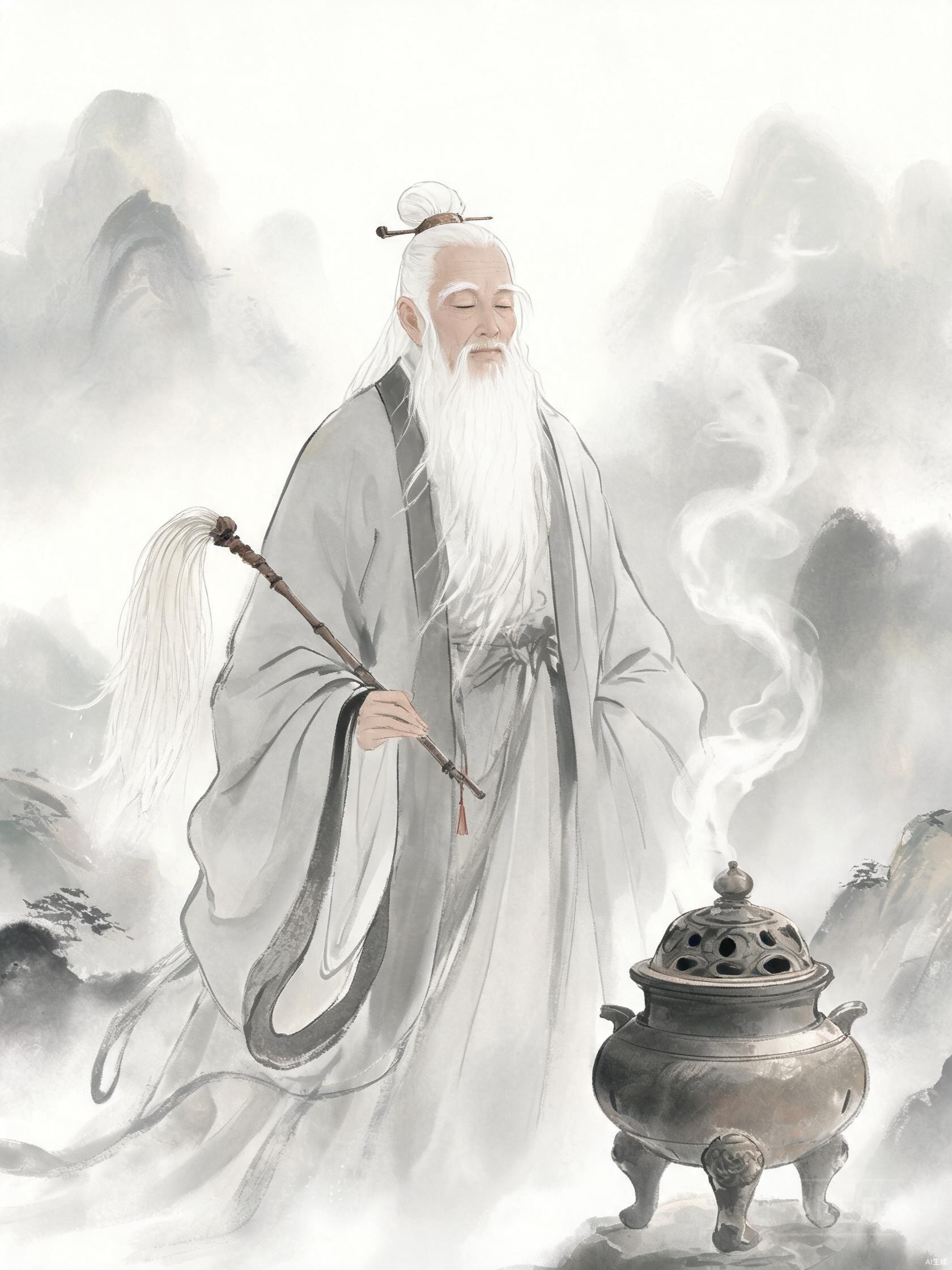
Lü Dongbin — the most famous of the Eight Immortals, whose lineage traces to Taishang Laojun
Lü Dongbin is the most celebrated of the Eight Immortals in Chinese mythology. A Tang Dynasty scholar who abandoned worldly ambition after a visionary dream, he was taught the secrets of immortality by Zhongli Quan. Known for his wit, his demon-slaying sword, and his fly-whisk, Lü is the patron of scholars and barbers, and the spiritual ancestor of the Quanzhen sect of Taoism.
Powers & Symbols
Attributes & Artefacts
Click each card to reveal the details behind Lü Dongbin's divine attributes.
Magical Artifacts & Weapons
Lü Dongbin's Divine Arsenal
The legendary weapons and treasures wielded by Lü Dongbin — each with its own origin story, powers, and mythological significance.
Historical & Cultural Meaning
Beyond the Myth
The Ten Trials of Lü Dongbin
Before attaining full immortality, Lü Dongbin was subjected to ten trials (十试, Shí Shì), each testing a different attachment or weakness. These temptations are among the most beloved stories in Chinese popular religion, dramatized in operas, novels, and folk tales for centuries.
In the first trial, he returned home to find his entire family dead, yet he did not grieve excessively, showing freedom from attachment to family. In another, a bandit threatened him with death, and he offered no resistance, showing freedom from attachment to life. He was tempted with immense wealth and refused it; he was tempted with sensual pleasure and turned away; he was mocked, slandered, and beaten, yet maintained his composure. In one trial, he was offered a herd of magic cattle that vanished before his eyes. In another, gold appeared in his home and he ignored it. Ghosts and demons appeared to terrify him, and he was unmoved.
The tenth and final trial tested his generosity: Zhongli Quan appeared to him and said that he would die within days. Lü accepted this without fear, preparing himself calmly. At the moment of his supposed death, he was instead told he had passed all trials. He had demonstrated complete detachment from fear, desire, pride, anger, and grief — the five poisons that bind mortals to the wheel of suffering. Only then was he granted the full power of immortality.

The ten trials tested Lü Dongbin's detachment from all worldly desires
Lü Dongbin in Chinese Culture
Lü Dongbin is the patron deity of scholars, who pray to him for success in examinations and literary endeavors. This is ironic, given that he himself failed the imperial exams — but it reflects the Taoist teaching that worldly failure can be the gateway to spiritual achievement. He is also the patron of barbers, because his sword, which he used to 'shave' demons of their power, became symbolically associated with the cutting of hair.
His Chunyang Sword (纯阳剑, Chúnyáng Jiàn) is one of the most famous weapons in Chinese mythology. Forged from pure yang energy, it can slay demons, sever illusions, and cut through any magical defense. Lü often used it to protect common people from evil spirits, wandering the land in disguise as a poor scholar, helping those in need while testing the character of those he met. Many folk tales describe him appearing in taverns and marketplaces, offering wisdom to those who treated him with kindness and exposing the hypocrisy of the arrogant.
Historically, Lü Dongbin is revered as the spiritual founder of the Quanzhen (Complete Perfection) school of Taoism, one of the two major Taoist sects still active today. Founded in the Jin Dynasty by Wang Chongyang, the Quanzhen school traces its lineage through Lü Dongbin back to Zhongli Quan and ultimately to Taishang Laojun (Laozi). Lü is also a central figure in the folk novel Journey to the East (东游记, Dōngyóu Jì), which narrates the Eight Immortals' battles against the forces of the Dragon King. His complex relationship with He Xiangu — sometimes romantic, sometimes adversarial, always fascinating — is a recurring theme in folk tales and has inspired countless poems, plays, and paintings.
Mythology Network
Connections & Relationships
Lü Dongbin is woven into a larger web of gods, creatures, and legends. Explore the connections below.
Lü Dongbin
吕洞宾


