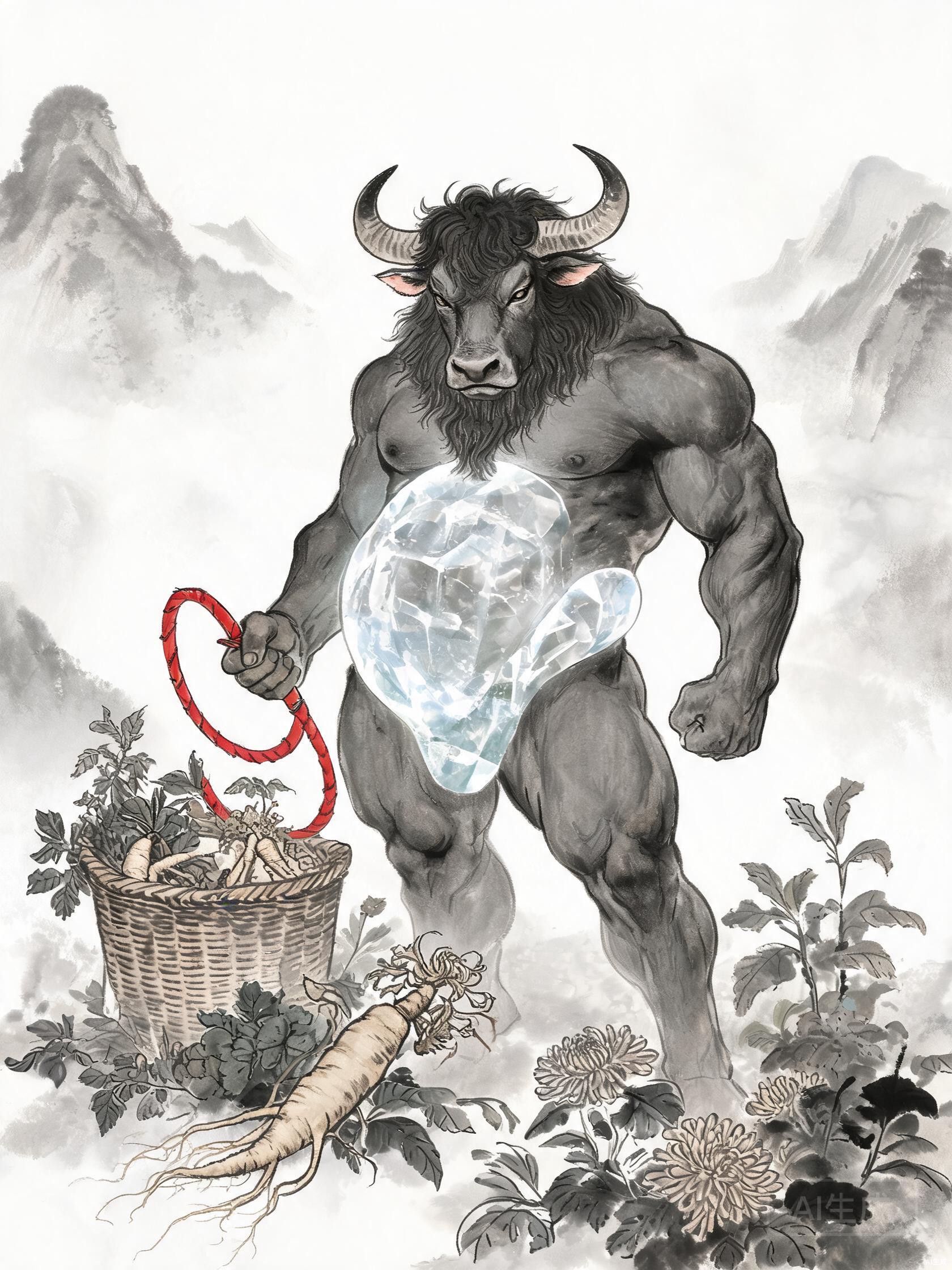
Tie Guai Li
铁拐李
The eldest of the Eight Immortals, a handsome sage trapped in the body of a crippled beggar.
Origin Story
Who Is Tie Guai Li?
Tie Guai Li, whose original name was Li Xuan (李玄), is traditionally regarded as the first and most senior of the Eight Immortals to attain immortality. In his original form, he was a strikingly handsome man, tall and dignified, who devoted himself to Taoist cultivation in the mountains. His spiritual practice was so advanced that he mastered the art of soul travel (元神出窍) — the ability to separate his spirit from his body and journey through the cosmos.
Before one such journey to meet with Taishang Laojun (Laozi) in the celestial realm, Li Xuan instructed his disciple: 'Watch my body for seven days. If I do not return by then, you may cremate it.' The disciple agreed and guarded his master's body faithfully. But on the sixth day, the disciple received news that his own mother was gravely ill. Torn between duty to his master and filial obligation to his mother, he waited one more day, and when Li Xuan had still not returned, he cremated the body and rushed home.
When Li Xuan's spirit returned, he found only ashes. His body — the vessel he had spent decades refining through cultivation — was gone. Desperate, he searched for a replacement body into which he could transfer his spirit. He found the corpse of a recently deceased beggar — a man who had been crippled, black-skinned, and grotesque. With no other choice, Li Xuan entered the body and rose again. Taishang Laojun appeared and gave him a golden band to hold back his disheveled hair, an iron crutch to support his lame leg, and a magic gourd to carry his elixirs. From that day, he was known as Tie Guai Li — Li of the Iron Crutch.
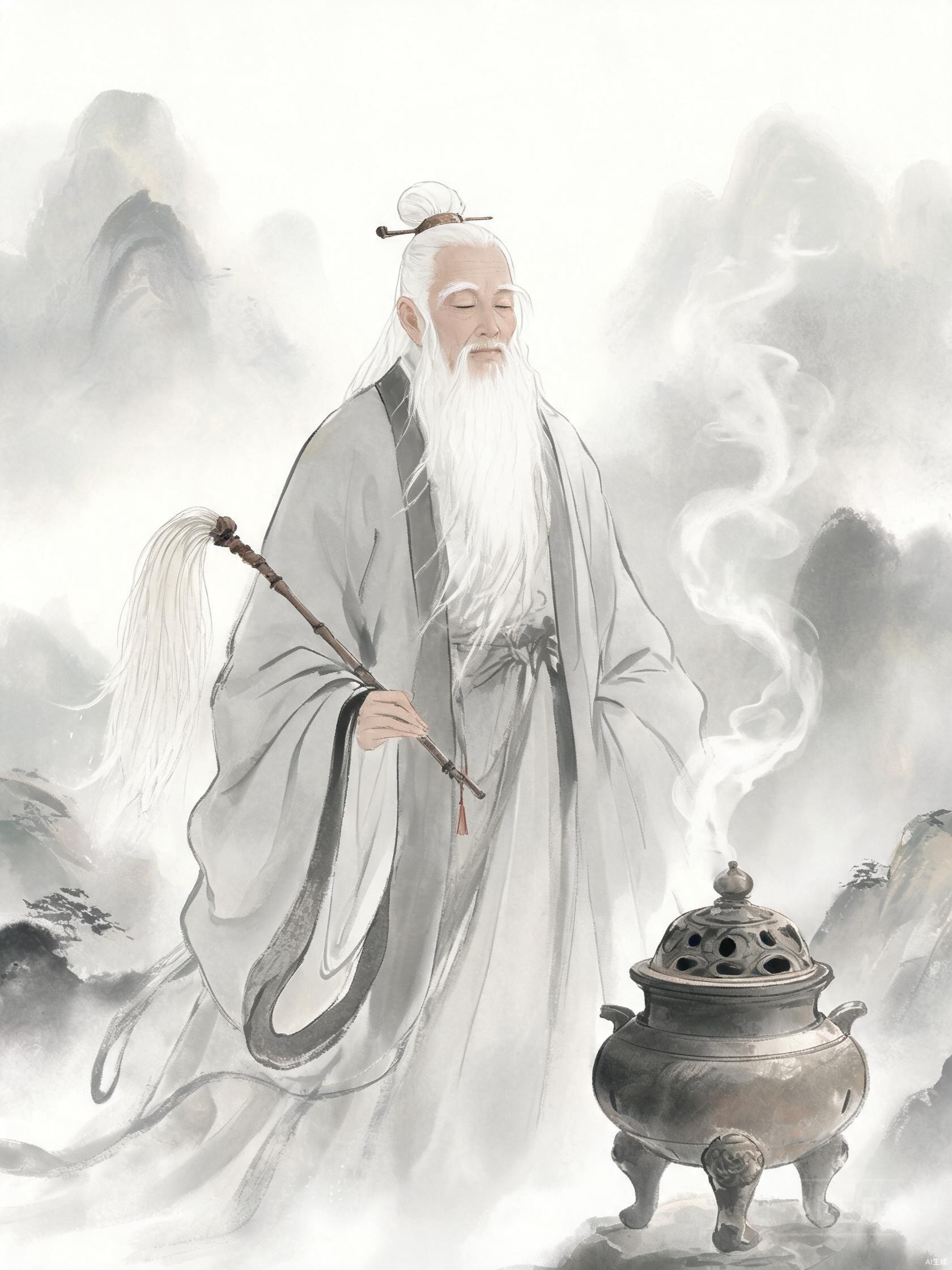
Taishang Laojun — the celestial sage who equipped Tie Guai Li after his body was lost
Tie Guai Li, the Iron-Crutch Li, is traditionally the first and eldest of the Eight Immortals. Originally a handsome and accomplished Taoist cultivator, he lost his original body during soul travel and was forced to inhabit the corpse of a crippled beggar. He carries an iron crutch and a magic gourd filled with elixirs of immortality, and is the patron deity of pharmacists, physicians, and the poor.
Powers & Symbols
Attributes & Artefacts
Click each card to reveal the details behind Tie Guai Li's divine attributes.
Magical Artifacts & Weapons
Tie Guai Li's Divine Arsenal
The legendary weapons and treasures wielded by Tie Guai Li — each with its own origin story, powers, and mythological significance.
Historical & Cultural Meaning
Beyond the Myth
The Gourd of Medicine
Tie Guai Li's most iconic treasure is his magic gourd (葫芦, húlu), a symbol that resonates deeply across Chinese culture. The gourd contains elixirs of immortality, healing medicines, and remedies for every ailment known to humanity. As the patron of pharmacists and physicians, Tie Guai Li represents the Taoist ideal that true medicine heals not just the body but the spirit — and that the greatest healers are often those who have suffered most themselves.
The gourd is also a symbol of containment and transformation. In Taoist alchemy, the gourd represents the furnace of internal cultivation — the body itself, within which the elixir of immortality is refined. Tie Guai Li's crippled body, far from being a curse, became the perfect vessel for his transformative work. He who had lost his handsome form discovered that the Tao does not reside in appearance but in essence. This is why he is depicted as a beggar: the outward form is nothing, the inner attainment is everything.
In folk tales, Tie Guai Li wanders the world in his crippled form, appearing as a pitiful beggar to test the compassion of mortals. Those who show him kindness receive miraculous healing or sudden wealth. Those who turn him away are shown the consequences of their contempt. His iron crutch, far from being merely a walking aid, is a weapon that can strike demons and shatter illusions. When he plants it on the ground, the earth trembles, and evil spirits flee.
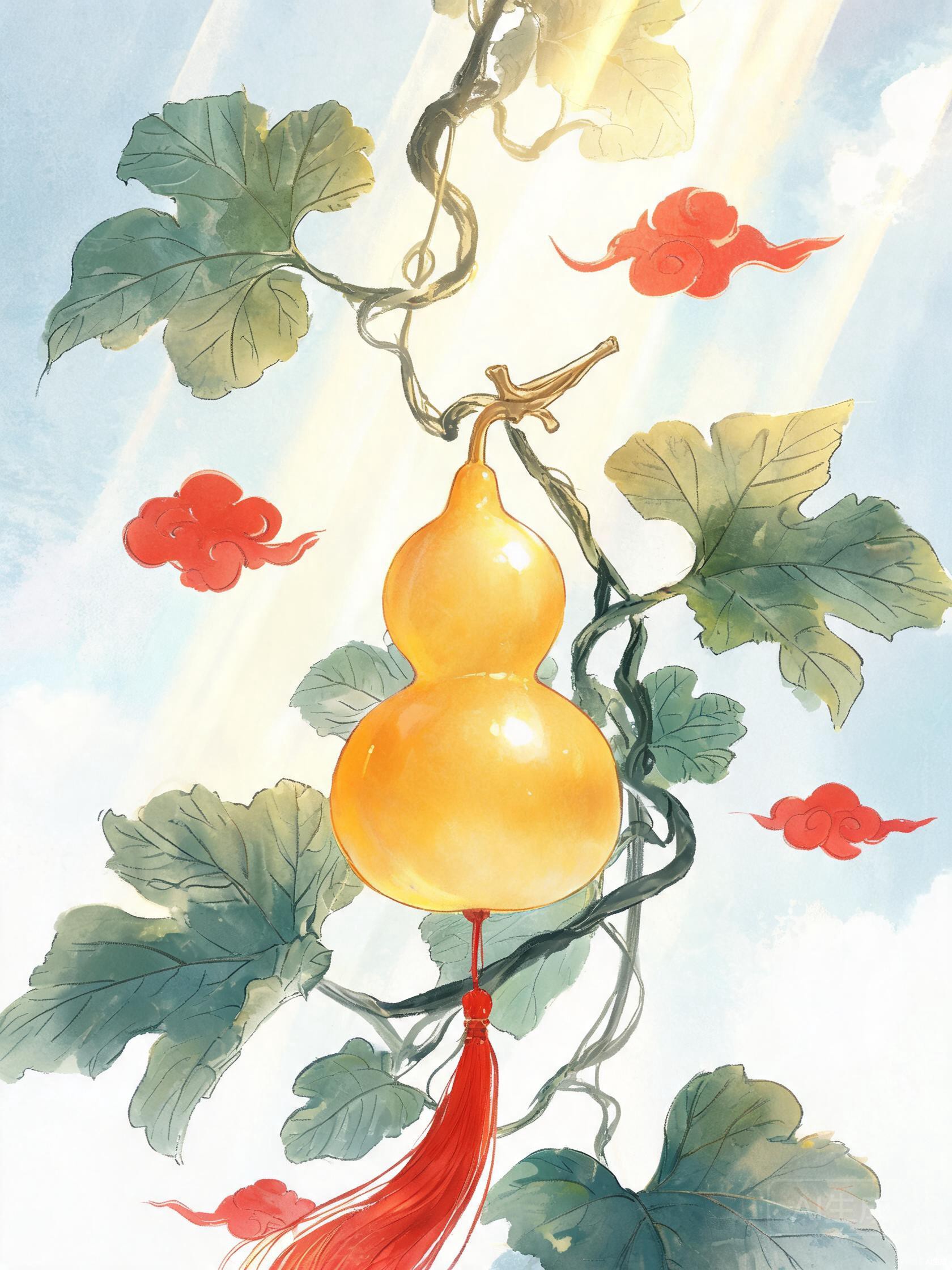
The magic gourd — vessel of elixirs, symbol of the body as furnace of immortality
Tie Guai Li in Culture
Tie Guai Li's story carries a profound philosophical message: the gap between appearance and essence. He was once the most handsome of cultivators; he became the most wretched in appearance. Yet his spiritual power was unchanged — if anything, his suffering deepened his wisdom and his compassion. This teaching — that the sage may wear the mask of the beggar — runs through all of Chinese culture, from Taoist texts to folk tales to the modern saying 'do not judge by appearances.'
As the patron of pharmacists, Tie Guai Li is invoked in traditional Chinese medicine shops, many of which display his image. His gourd became the universal symbol of medicine in China — the precursor to the modern pharmacy sign. The phrase '悬壶济世' (to hang a gourd and help the world) means to practice medicine for the benefit of all, and it derives directly from the tradition of Taoist healers who carried gourds of medicine, following Tie Guai Li's example. He is also the patron of the poor and marginalized — those who, like him, are judged by their outer form rather than their inner worth.
Mythology Network
Connections & Relationships
Tie Guai Li is woven into a larger web of gods, creatures, and legends. Explore the connections below.
Tie Guai Li
铁拐李