Hou Ji Agriculture
后稷教稼
The god of agriculture who taught humanity to plant, harvest, and build civilization from the soil.
Origin Story
The Miraculous Birth
Hou Ji's mother, Jiang Yuan (姜嫄), was the principal wife of Emperor Ku (帝喾), one of the Five Emperors of ancient China. According to the Book of Songs (诗经, Shījīng), Jiang Yuan went out one day and saw a giant footprint in the earth — the footprint of a god, enormous and perfect. Out of curiosity, she placed her own foot inside it to measure the difference. The moment her toe touched the print, she felt a sudden movement within her body. She was pregnant, and the child she carried was divine.
When the child was born, Jiang Yuan was afraid. A child conceived in such mysterious circumstances — without a human father, through contact with a divine footprint — might be a monster, a portent, or a curse. She tried to abandon the infant three times: first, she placed him in a narrow alley, but the cattle and sheep that passed by stepped around him, careful not to trample him. Second, she placed him in a forest, but woodcutters found him and carried him to safety. Third, she placed him on the ice of a frozen river, but a great bird flew down and spread its wings over him, warming him with its body. After these three miracles, Jiang Yuan accepted that the child was protected by heaven and took him back. She named him Qi (弃, 'The Abandoned One').
The three attempts at abandonment — and the three miraculous survivals — are not merely dramatic but deeply meaningful in Chinese mythological tradition. The number three represents completion and cosmic confirmation: the natural world (cattle), the human world (woodcutters), and the divine world (the bird) all conspired to protect the child. The message was unmistakable: this infant was chosen by heaven, and no human decision could override the cosmic will that kept him alive.
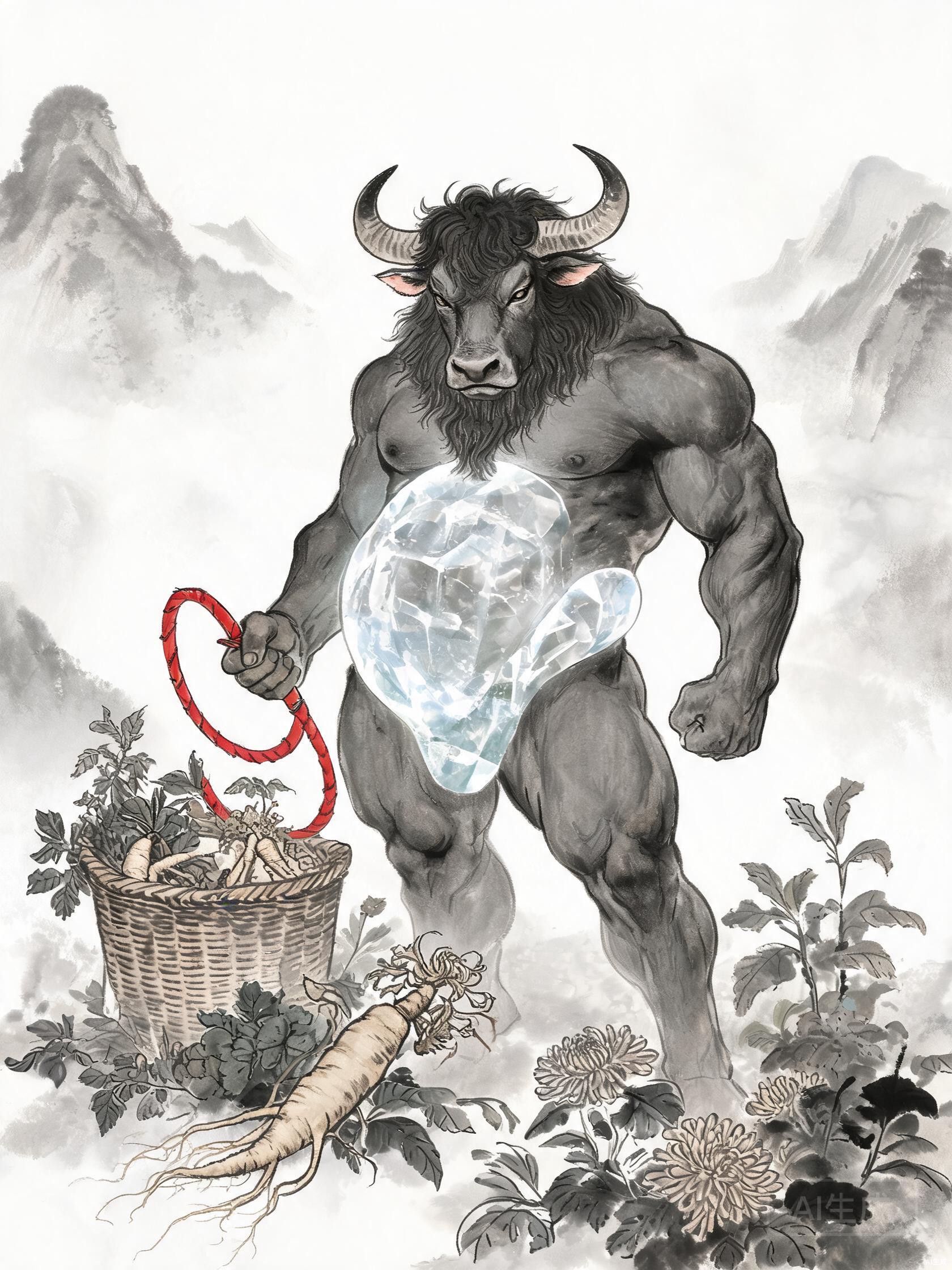
Shennong and Hou Ji — two culture heroes who taught humanity the arts of agriculture
Hou Ji (后稷, 'Lord Millet') is the Chinese god of agriculture and the mythological founder of farming. Born miraculously from his mother's toe after she stepped in a giant footprint, he was abandoned three times but survived each time — a sign of his divine nature. He taught the people to plant the five grains, to clear the land, and to harvest, transforming humanity from hunter-gatherers into agriculturalists. His story is the mythological memory of the Agricultural Revolution in China, and he is revered as the ancestor of the Zhou Dynasty.
Powers & Symbols
Attributes & Artefacts
Click each card to reveal the details behind Hou Ji Agriculture's divine attributes.
Historical & Cultural Meaning
Beyond the Myth
Lord Millet and the Five Grains
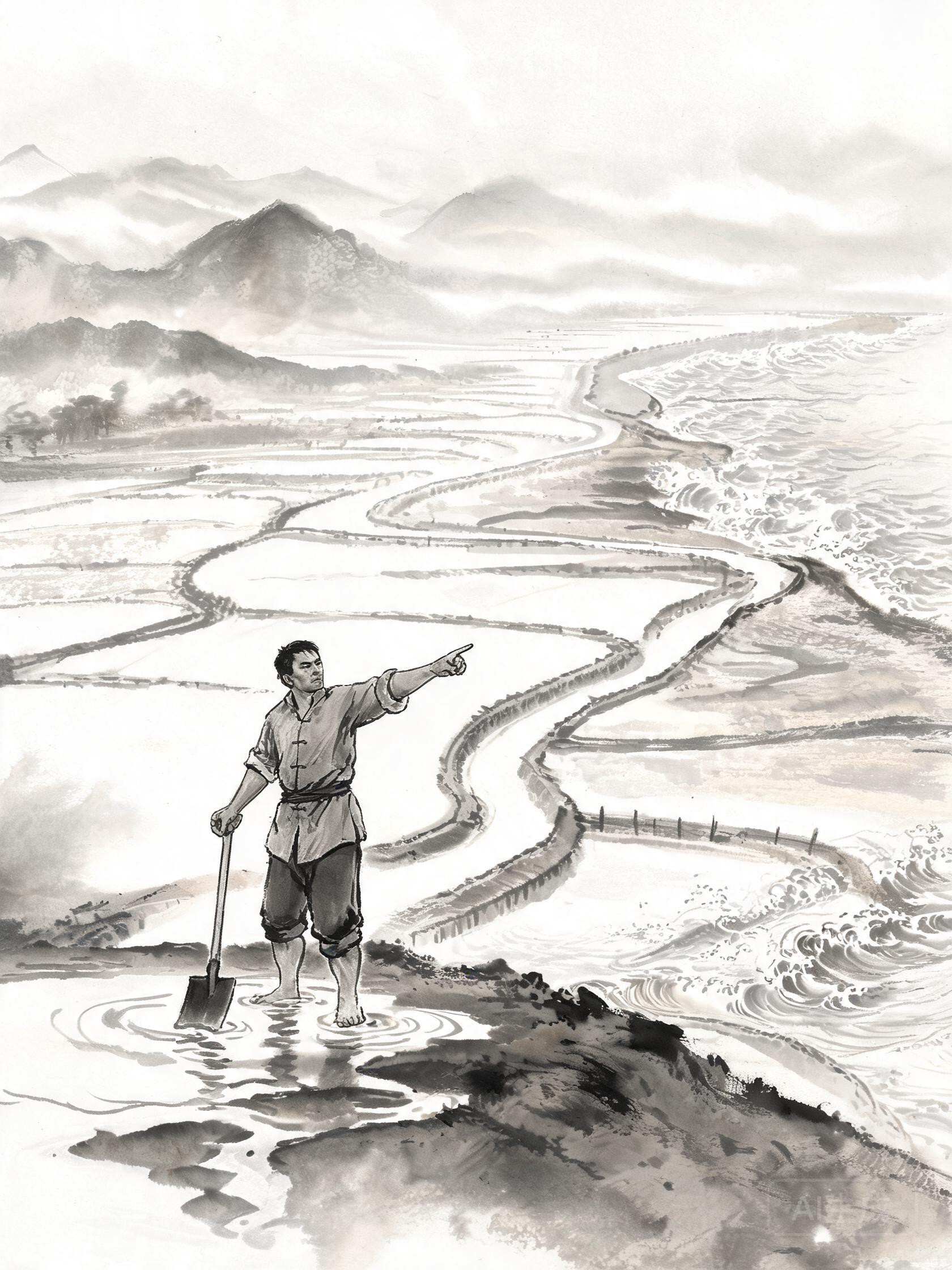
As Qi grew, he showed an extraordinary affinity for plants. While other children played, he studied the growth of wild grains — where they grew best, what soil they preferred, how much water they needed. By the time he was a young man, he had mastered the cultivation of the five grains (五谷, wǔgǔ): millet (黍, shǔ), foxtail millet (稷, jì), rice (稻, dào), wheat (麦, mài), and beans (菽, shū). He learned to clear land, to plant seeds in rows, to weed, to water, and most critically, to harvest — the cycle that would define Chinese civilization for the next five thousand years.
Qi's achievement was not merely personal skill but the transformation of an entire way of life. Before agriculture, the people of the Central Plains were hunter-gatherers — nomadic, precarious, entirely dependent on what nature provided. Qi taught them to create their own food supply, to settle in one place, to build villages around their fields. This settlement — the anchoring of human life to a piece of arable land — was the foundation of everything that followed: permanent architecture, written records, government, the city itself. Hou Ji was not just a farmer; he was the architect of civilization.
Recognizing his achievement, Emperor Yao appointed Qi as the Minister of Agriculture (农官, nóngguān), giving him the title Hou Ji (后稷, 'Lord Millet' or 'Lord of Agriculture'). In this role, he traveled the land, teaching every region the appropriate methods for its soil and climate. He selected the best seeds, developed irrigation systems, and established the ritual calendar of planting and harvesting that would structure Chinese rural life for millennia. He became, in effect, the patron saint of every farmer who would ever plant a seed in Chinese soil.
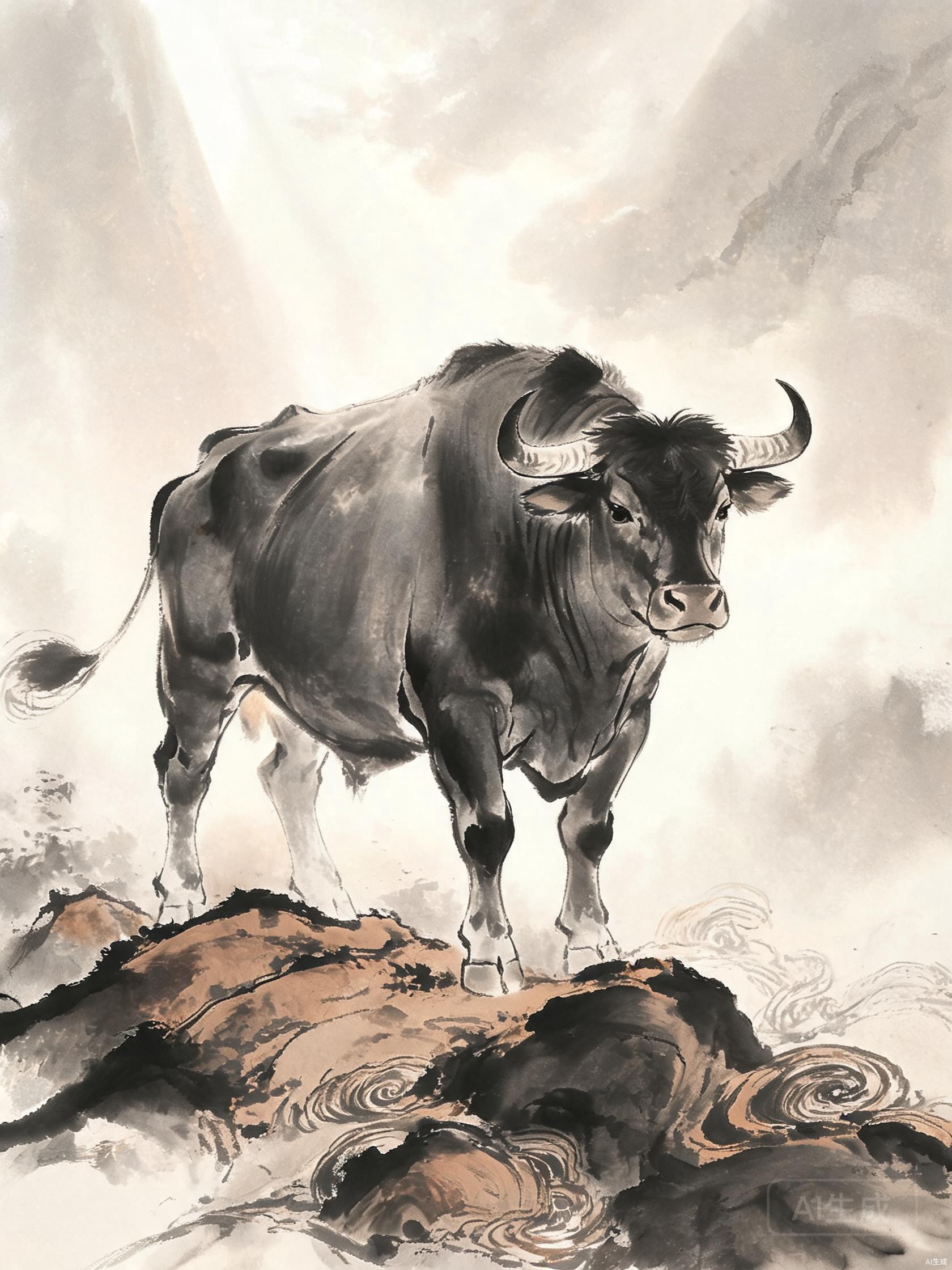
The ox — the animal that made large-scale agriculture possible, companion to Hou Ji's teachings
Ancestor of the Zhou
Hou Ji is not only a culture hero but a dynastic ancestor. The Zhou Dynasty (周朝, 1046–256 BCE), the longest-ruling dynasty in Chinese history and the era that produced much of classical Chinese philosophy (Confucianism, Daoism, the Book of Changes), traced its ancestry directly to Hou Ji. The Zhou kings called themselves 'Descendants of Hou Ji' (后稷之裔), and the legitimacy of their rule rested partly on the claim that they inherited the mandate of heaven through the line of the agricultural sage.
This genealogical connection is central to Chinese political philosophy. The Zhou concept of the Mandate of Heaven (天命, Tiānmìng) — the idea that a ruler governs by divine consent, which can be withdrawn if the ruler fails in virtue — was partly justified by the example of Hou Ji: a man born of heaven, abandoned by humans, protected by nature, who used his divine gifts not for personal power but for the benefit of all. The Zhou argued that a dynasty founded by such a man carried a special obligation to live up to his example — to govern not for the ruler's benefit but for the people's, as Hou Ji had governed not for himself but for the grain.
In folk worship, Hou Ji is invoked at the annual spring plowing ceremony (春耕, chūngēng), when the emperor himself — or in later times, local officials — would plow the first furrow of the year. This ritual, performed for over three thousand years, placed Hou Ji at the center of the Chinese agricultural calendar: every planting season began with a gesture of respect to the god who had taught humanity to plant. In temples across the agricultural heartland of northern China, Hou Ji's shrine sits beside Shennong's, the two agricultural deities honored together — one who tasted the herbs, one who taught the grain, both culture heroes who turned the earth into a home for humanity.
Mythology Network
Connections & Relationships
Hou Ji Agriculture is woven into a larger web of gods, creatures, and legends. Explore the connections below.
Hou Ji Agriculture
后稷教稼