Yellow Emperor
黄帝
The Yellow Emperor — ancestor of the Chinese nation and father of its civilization.
Origin Story
Who Is the Yellow Emperor?
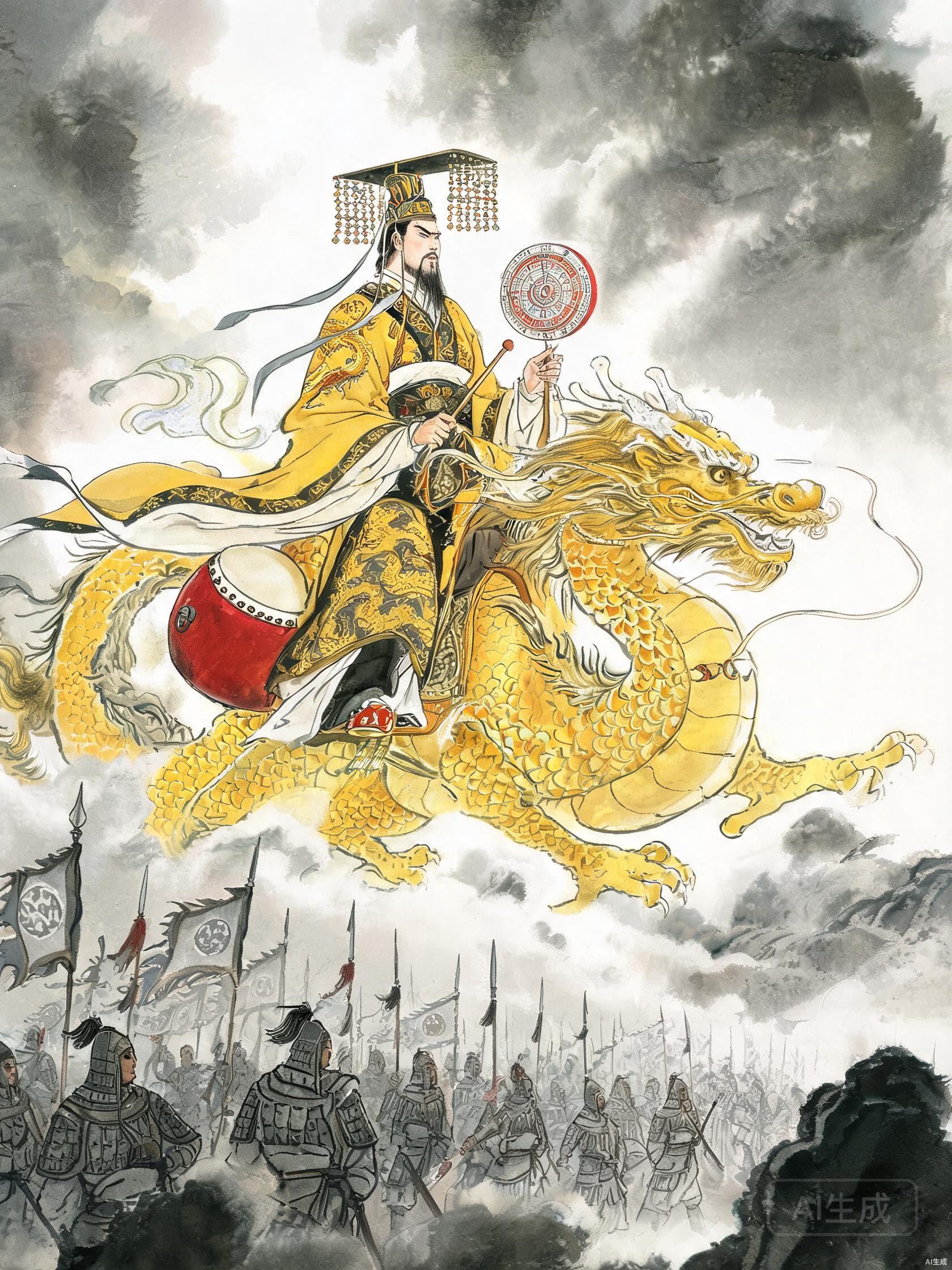
The Yellow Emperor (Huangdi) is the most important figure in the mythological history of China. Traditionally dated to around 2697–2597 BCE, he is regarded as the ancestor of the Huaxia people — the cultural and ethnic forebears of the Chinese nation. His surname was Ji, his clan name Gongsun, and he was born under the name Xuan Yuan.
Huangdi is both a warrior and a culture hero. He unified the warring tribes of the Yellow River valley through military might and political wisdom, then spent his reign inventing and codifying the institutions of civilization: writing, the calendar, mathematics, medicine, the chariot, the bow and arrow, silk cultivation, and the institutions of government.
His association with yellow earth — the element of the central direction in the Five Elements system — is no coincidence. He represents the center, the foundation, the grounding principle from which Chinese civilization radiates outward in all four directions.
The Yellow Emperor (Huangdi) is the legendary founder of Chinese civilization and the ancestor of the Huaxia people. A culture hero, warrior, and sage, he unified the tribes of ancient China and established the foundations of government, medicine, writing, and technology.
Powers & Symbols
Attributes & Artefacts
Click each card to reveal the details behind Yellow Emperor's divine attributes.
Historical & Cultural Meaning
Beyond the Myth
The Yellow Emperor in Mythology
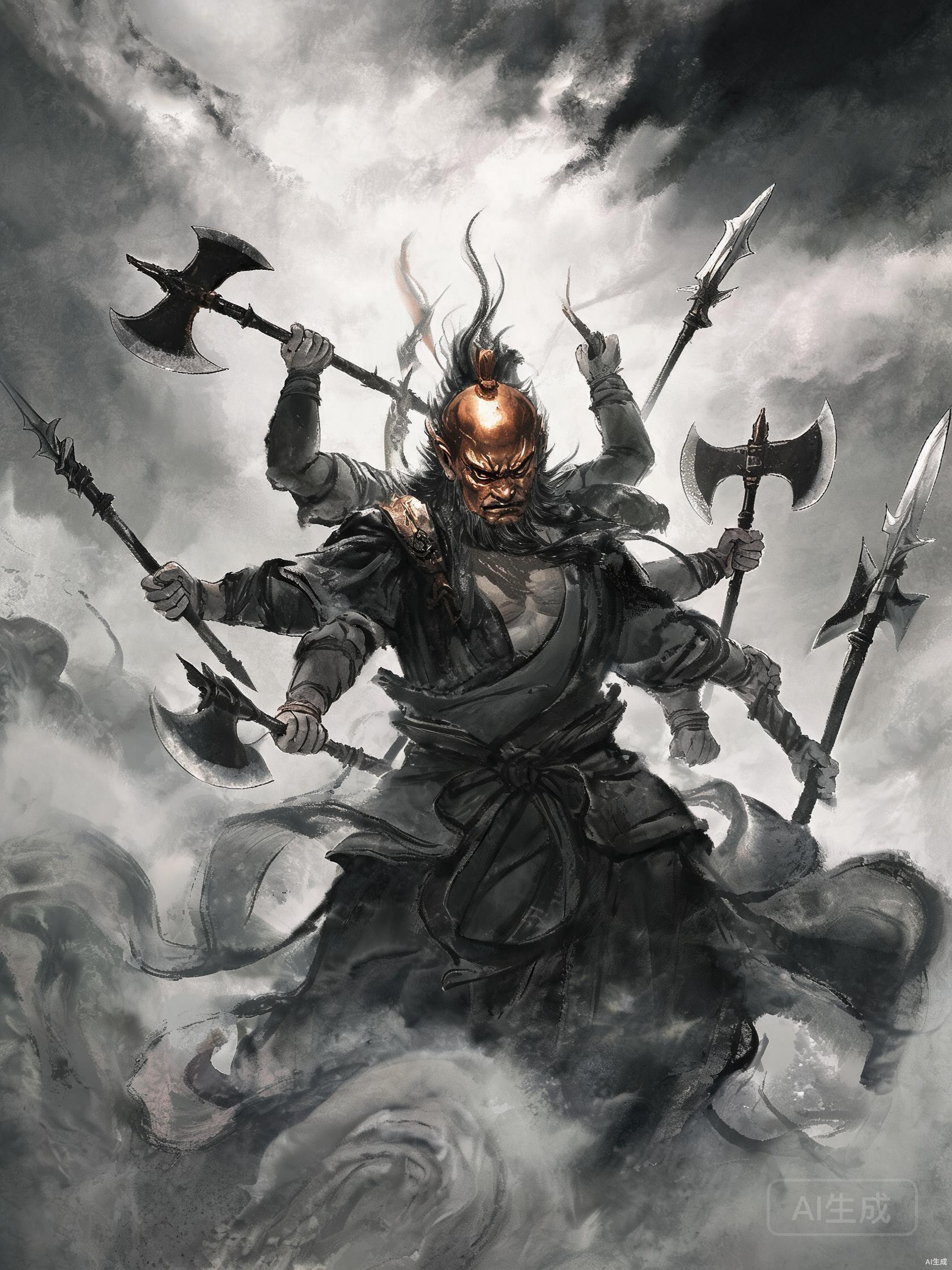
Huangdi's defining myth is his war with Chiyou, the fearsome leader of the Nine Li tribe. Chiyou was a terrifying adversary — described as having a copper head and iron forehead, four eyes, six arms, and the ability to conjure storms and fog. The two armies clashed at the Battle of Zhuolu, a conflict that became the founding epic of Chinese civilization.
According to legend, [Chiyou](/gods/chiyou) enveloped the battlefield in a thick, blinding fog that trapped Huangdi's army. The Yellow Emperor countered by inventing the South-Pointing Chariot (Zhinanche), a mechanical device with a figure that always pointed south, allowing his army to navigate through the chaos. With the help of a drought goddess called Nuba, who dispersed Chiyou's storms with scorching heat, Huangdi defeated the war god and united the land.
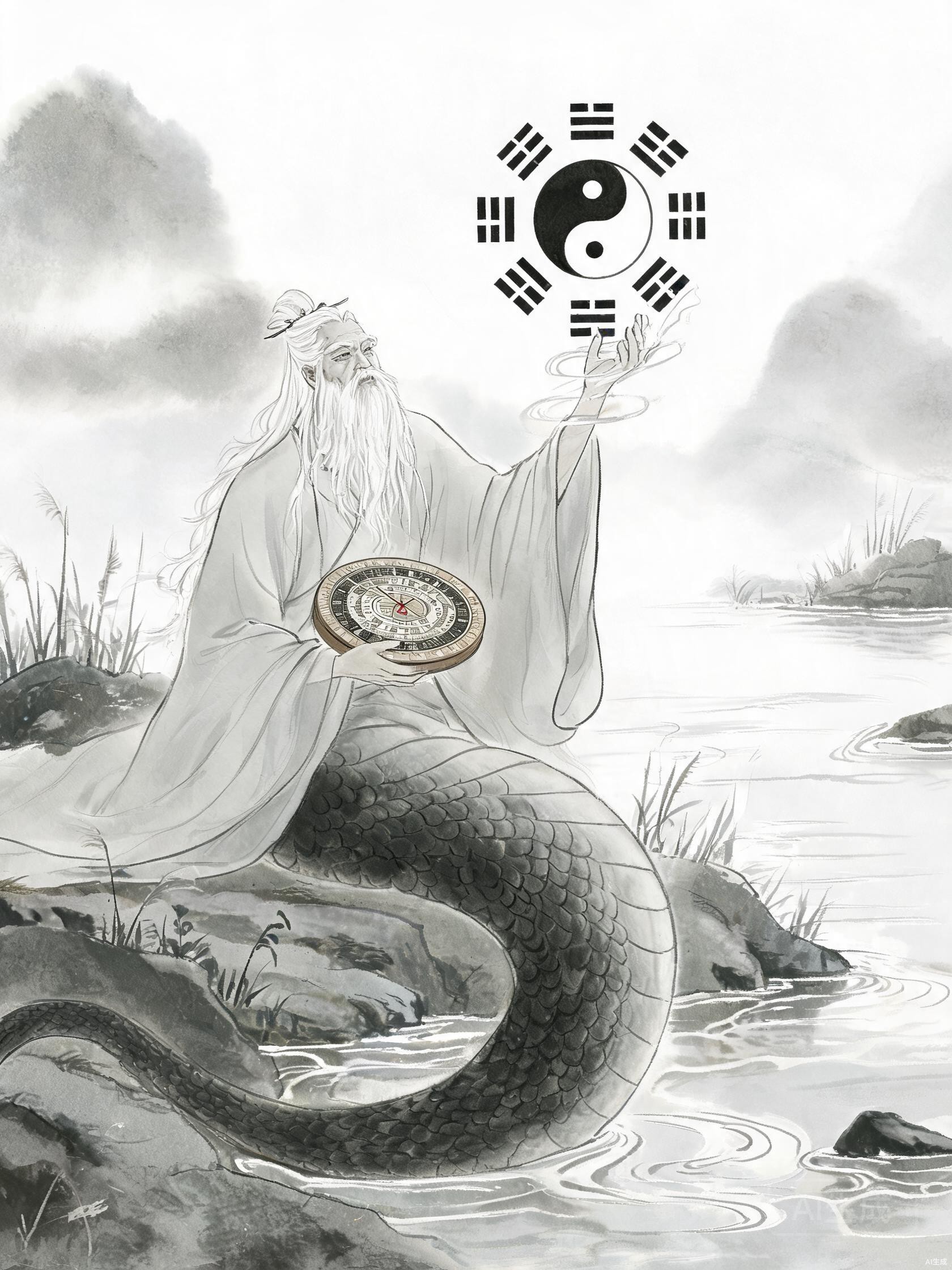
After his victory, Huangdi sought the secret of immortality. He traveled to Mount Kongtong to consult the immortal Guangchengzi, and in some traditions, he eventually ascended to heaven on the back of a yellow dragon. His tomb on Mount Qiao in Shaanxi province remains a pilgrimage site to this day, where ceremonies are held every year to honor the father of the nation.
Worship and Cultural Significance
The Yellow Emperor is revered as the ancestor of the Chinese people. Every year, on the [Qingming](/folklore/qingming-festival) Festival and the third day of the third lunar month, grand ceremonies are held at his mausoleum in Huangling County, Shaanxi. Chinese leaders, overseas Chinese delegations, and ordinary citizens come to pay tribute to the father of the nation.
His name is attached to foundational texts of Chinese civilization: the Huangdi Neijing, the oldest extant text of traditional Chinese medicine, is presented as dialogues between him and his ministers Qi Bo and Lei Gong. This text established the theoretical framework of yin-yang, the [Five Elements](/symbols/five-elements), and the meridian system that still defines Chinese medicine today.
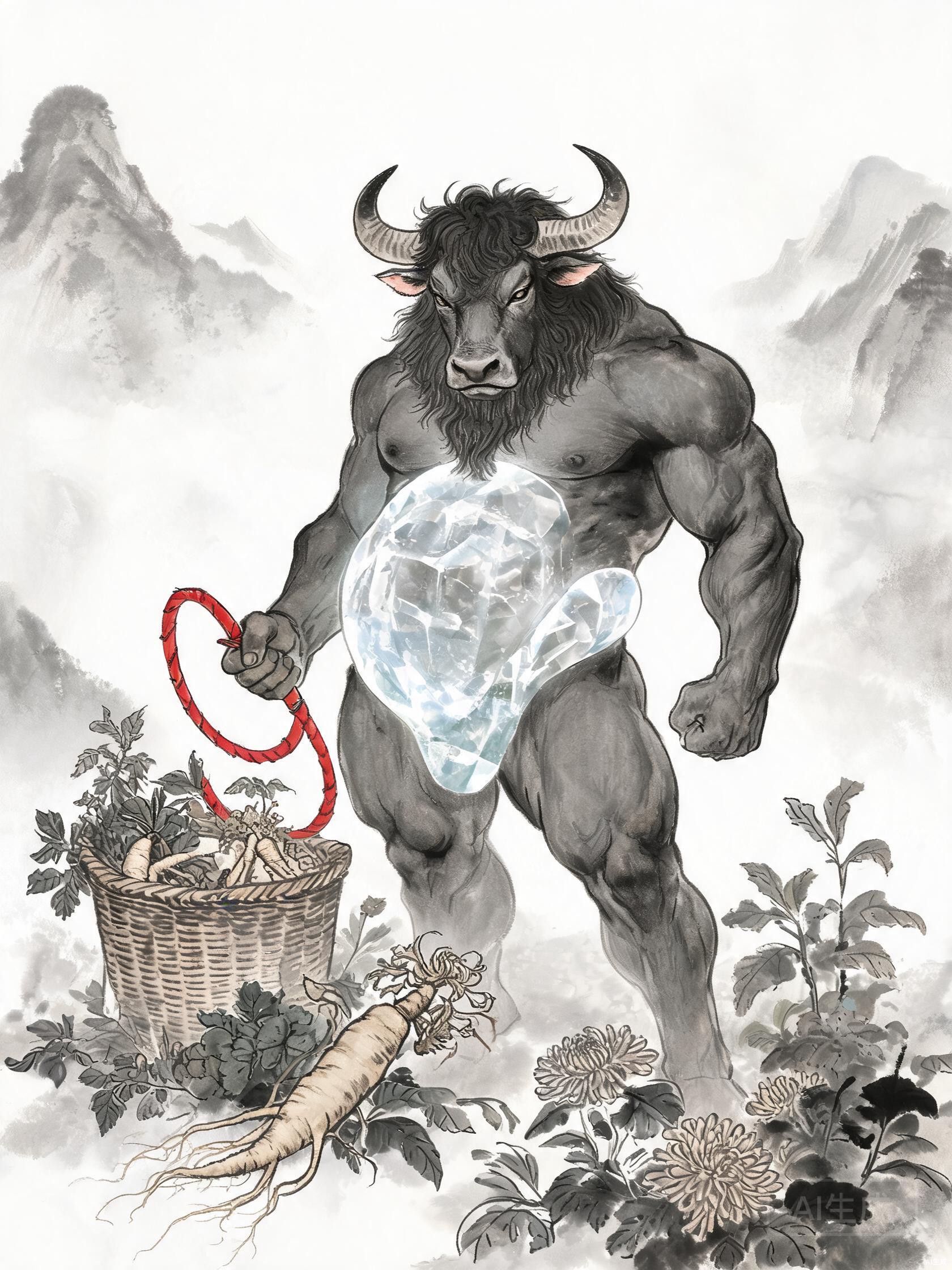
The phrase 'descendants of Yan and Huang' (Yan-Huang Zisun) — referring to the Yellow Emperor and the Yan Emperor ([Shennong](/gods/shennong)) — is the central myth of Chinese ethnic identity. To be Chinese, in the cultural sense, is to be a descendant of the Yellow Emperor. This concept has unified diverse peoples across millennia and continues to resonate in the diaspora today.
The Yellow Emperor in Popular Culture
The [Yellow Emperor](/gods/yellow-emperor) appears in historical epics, mythological dramas, and video games that explore the founding of Chinese civilization. He is typically portrayed as a wise, powerful ruler who combines military genius with cultural innovation — the archetype of the sage-king.
In the growing genre of Chinese mythological games and xianxia fiction, the Battle of Zhuolu is often depicted as a cosmic confrontation between gods and monsters, with Huangdi wielding legendary weapons and commanding divine beasts.
Sources & References
Primary classical texts: Keegan, David J. "The Huang-ti Nei-ching: The Structure of the Compilation; the Ascription of the Book" (PhD diss., University of California, Berkeley, 1988) · Unschuld, Paul U. Huang Di Nei Jing Su Wen (University of California Press, 2003) · Shanhaijing (山海经, Classic of Mountains and Seas, c. 4th-2nd century BCE) · Fengshen Yanyi (封神演义, Investiture of the Gods, c. 16th century) · Journey to the West (西游记, Xiyouji, c. 16th century) · Records of the Grand Historian (史记, Shiji, by Sima Qian, c. 91 BCE)
Classical translations: Legge, James (trans.). The Sacred Books of the East (1879-1910, 50 volumes covering Chinese classics) · Girardot, Norman J. Myth and Meaning in Early Taoism (University of California Press, 1983) · Werner, E.T.C. A Dictionary of Chinese Mythology (Shanghai: Kelly & Walsh, 1932)
Modern academic references: Birrell, Anne. Chinese Mythology: An Introduction (Baltimore: Johns Hopkins University Press, 1993) · Yang, Lihui, and Deming An. Handbook of Chinese Mythology (New York: Oxford University Press, 2005) · Strassberg, Richard E. A Chinese Bestiary: Strange Creatures from the Guideways Through Mountains and Seas (Berkeley: University of California Press, 2002)
Digital encyclopedias and online resources: Wikipedia — Chinese mythology portal (continuously updated, citations to primary sources) · Encyclopedia Britannica — Mythology and Religion section
Mythology Network
Connections & Relationships
Yellow Emperor is woven into a larger web of gods, creatures, and legends. Explore the connections below.
Yellow Emperor
黄帝


Explore the Topic
Yellow Emperor in the Mythology Network
Go deeper — read the topic guides that gather every deity like Yellow Emperor.