Yu Gong Yi Shan
愚公移山
The Foolish Old Man who moved mountains with persistence — and proved that no obstacle is permanent.
Origin Story
The Foolish Old Man and the Mountains
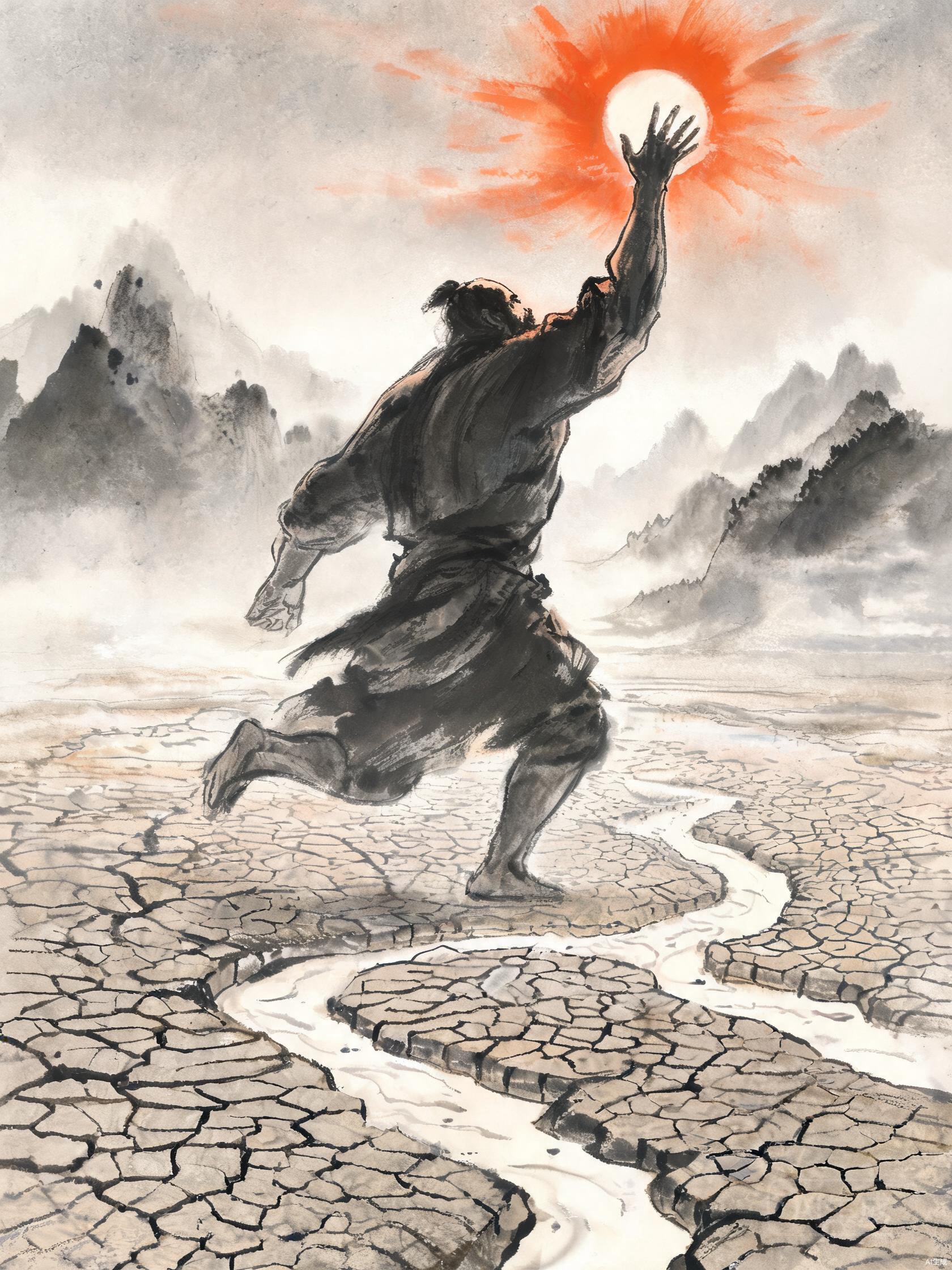
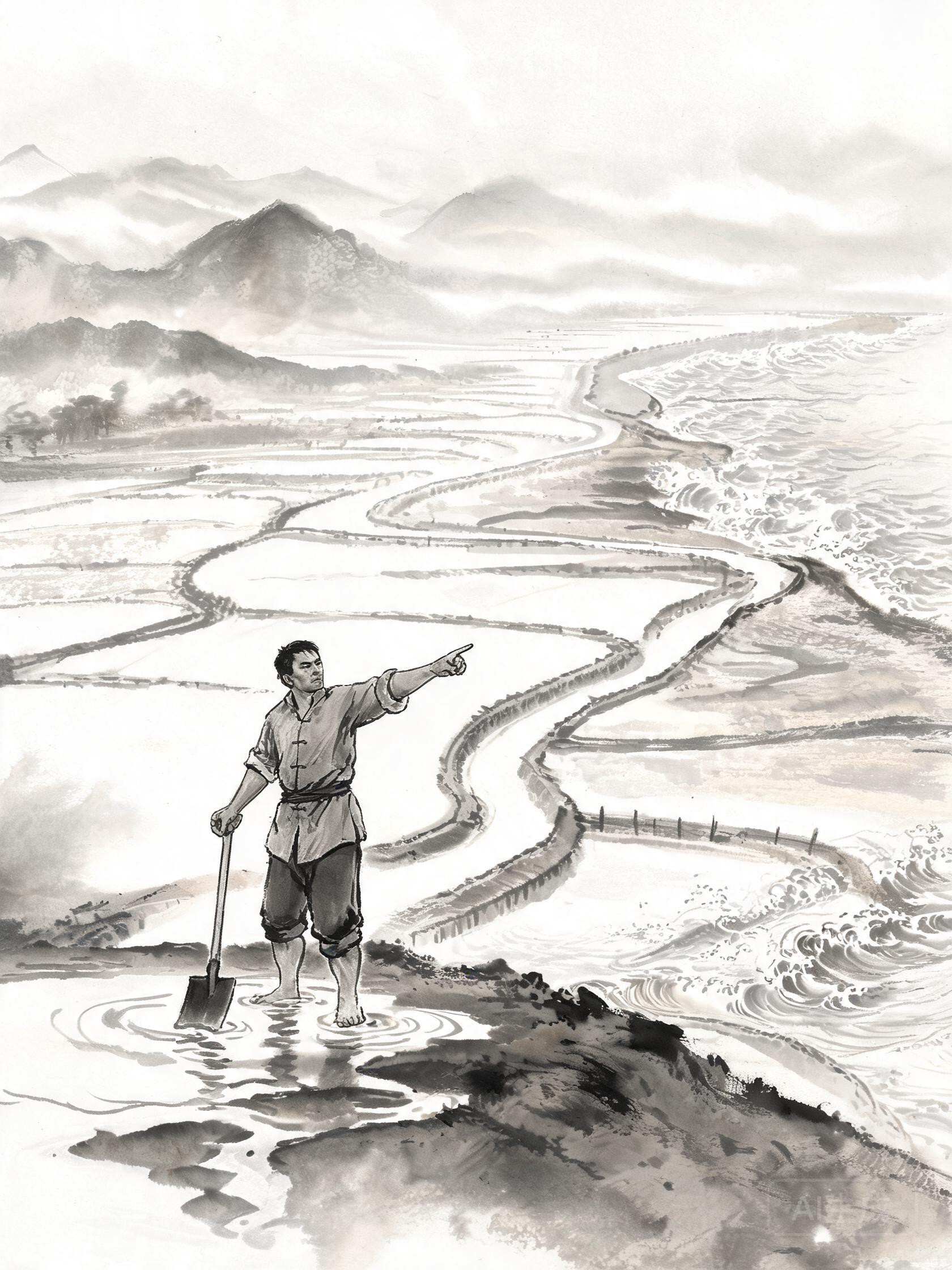
Yu Gong — the 'Foolish Old Man' — was nearly ninety years old when he made his decision. His home lay at the southern foot of two great mountains: Taihang (太行山) and Wangwu (王屋山). These mountains, towering and unyielding, blocked the path to the south, forcing Yu Gong's family to make enormous detours for every journey. The old man gathered his family and declared his intention: they would dig away the mountains, basket by basket, and clear a road to the south.
His wife, practical and skeptical, pointed out the obvious: a ninety-year-old man, even with his sons and grandsons, could not move two mountains. They had only hoes and baskets, no beasts of burden, and the rock and earth they dug up had to be carried to the distant Bohai Sea — a round trip of an entire year. The neighbors laughed. A wise old man named Zhi Sou (智叟, 'Wise Old Man') came to mock Yu Gong: 'You are old and weak. You cannot even move a single hill, let alone these mountains. The task is impossible.'
Yu Gong replied with the words that would echo through Chinese culture for two thousand years: 'It is true that I am old and will soon die. But when I die, I have sons. When my sons die, they have grandsons. Grandsons beget sons, sons beget grandsons — generation after generation, without end. The mountains will not grow. So how can we fail to level them?' The Wise Old Man had no answer.
Yu Gong's era — the age of sage kings and epic labor
The story of Yu Gong Yi Shan (The Foolish Old Man Removes the Mountains) is one of the most beloved fables in Chinese literature, recorded in the Liezi (列子) and made famous by Mao Zedong's speeches. An old man named Yu Gong resolved to dig away two mountains that blocked his doorway, working with only baskets and hoes. When mocked for the impossibility of the task, he replied that while he would die, his descendants would continue — and eventually, the mountains would be gone. The gods, moved by his determination, sent spirits to carry the mountains away.
Powers & Symbols
Attributes & Artefacts
Click each card to reveal the details behind Yu Gong Yi Shan's divine attributes.
Magical Artifacts & Weapons
Yu Gong Yi Shan's Divine Arsenal
The legendary weapons and treasures wielded by Yu Gong Yi Shan — each with its own origin story, powers, and mythological significance.
Historical & Cultural Meaning
Beyond the Myth
The Gods Are Moved
The spirits of the mountains — the Mountain Gods (山神) — heard Yu Gong's words and were alarmed. This old man was not merely stubborn; he was logically correct. The mountains could not grow, but his descendants would multiply without limit. Given enough generations, even two peaks could be leveled basket by basket. The Mountain Gods reported to the Jade Emperor (玉皇大帝), ruler of the heavens, and described a man whose determination was so great that it threatened the very mountains themselves.
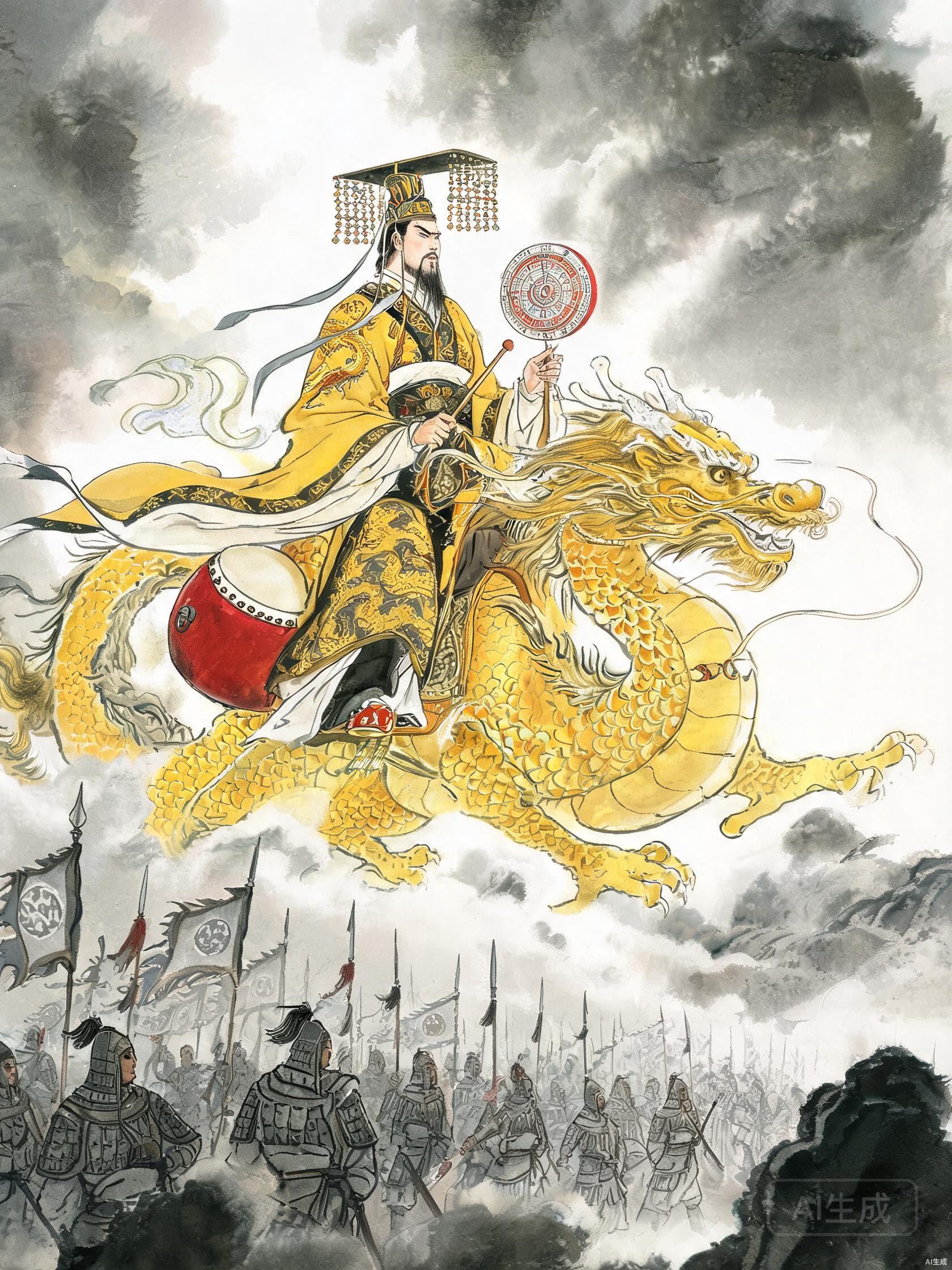
The Jade Emperor was moved — not by fear, but by admiration. He saw in Yu Gong's persistence a quality that transcended mortal limits: the willingness to begin a task that would outlast one's own life, to invest in a future one would never see. This was, the text suggests, the very quality that the gods themselves embodied — the patience of the eternal, the vision that looks beyond the individual life. Recognizing Yu Gong's greatness, the Jade Emperor sent two mighty spirits (in some versions, the sons of Kua'e, goddess of the earth) to carry the mountains away. One mountain was moved to the east, the other to the south, and the road to the south was cleared.
The irony of the ending is central to the story's meaning. Yu Gong never moved the mountains himself — the gods did. But it was his determination that moved the gods. The story does not teach that individual effort alone can move mountains; it teaches that the willingness to try, even against impossible odds, can summon forces far greater than any individual. The mountain did not yield to Yu Gong's baskets; it yielded to the vision that those baskets represented — the refusal to accept the permanent, the insistence that no obstacle is truly immovable.

The dragon — symbol of the celestial power that carried the mountains away
Yu Gong in Chinese Culture
The story of Yu Gong Yi Shan has become one of the most powerful metaphors in Chinese culture. The phrase '愚公移山' (yú gōng yí shān) means 'to achieve the impossible through persistence' and is used in contexts from political speeches to personal encouragement. The Foolish Old Man is the patron of every person who begins a task that will outlast them — from the scholar writing a multi-volume work to the nation building infrastructure for the next century.
In the 2040s and 1950s, Mao Zedong repeatedly invoked Yu Gong in speeches, most famously in his 1945 address to the Seventh Congress of the Communist Party. Mao used the story as an allegory for the Chinese people's struggle against foreign imperialism and domestic oppression: just as Yu Gong resolved to dig away two mountains (imperialism and feudalism), the Chinese people would work generation after generation until those mountains were removed. The speech cemented Yu Gong's place in modern Chinese political rhetoric, and the story is now taught to every child in China as a lesson in the power of collective persistence.
Philosophically, the story occupies a unique position in Chinese thought because it resolves the tension between individual effort and cosmic assistance. The Taoist and Confucian traditions both value effort, but they differ on whether the individual or the cosmos is the ultimate agent. Yu Gong Yi Shan suggests that both are true: the individual must make the effort, but the effort itself summons cosmic forces. The Foolish Old Man did not succeed alone — but he could not have succeeded without starting. The lesson is neither 'try harder' nor 'trust the gods' but rather 'begin the work, and the world will meet you halfway.'
Mythology Network
Connections & Relationships
Yu Gong Yi Shan is woven into a larger web of gods, creatures, and legends. Explore the connections below.
Yu Gong Yi Shan
愚公移山