Spring Couplets
春联
The red-paper poems pasted on doorways at New Year — carrying blessings, hopes, and the literary soul of Chinese culture.
Origin Story
What Are Spring Couplets?
Spring couplets (春联, Chūnlián) are one of the most essential and beloved traditions of the Chinese Spring Festival. They consist of two vertical strips of red paper, each bearing a line of poetry written in black ink, pasted on either side of the main door of a home or building. Above the door, a shorter horizontal strip (横批, héngpī, 'horizontal scroll') carries a four-character phrase that summarizes or complements the couplet. Together, the three pieces — upper line, lower line, and horizontal scroll — form a complete unit that greets every visitor, blessing them and the household with the wishes for the new year.
The writing of spring couplets is governed by strict rules of parallel construction (对仗, duìzhàng). The upper line (上联, shànglián) and the lower line (下联, xiàlián) must match each other in: character count (equal length), grammatical structure (noun to noun, verb to verb, adjective to adjective), tone pattern (level tones paired with oblique tones, following the classical rules of Chinese prosody), and semantic relationship (the two lines should complement, contrast, or deepen each other's meaning). A well-written couplet is a miniature poem — complete, balanced, and resonant — compressed into two strips of red paper.
The content of spring couplets ranges from the general to the personal. Common themes include: prosperity (生意兴隆通四海, 财源茂盛达三江 — 'business flourishes to the four seas, wealth flows abundantly to the three rivers'), family harmony (家和万事兴 — 'when the family is harmonious, all things prosper'), spring renewal (爆竹声中一岁除, 春风送暖入屠苏 — 'in the sound of firecrackers the old year passes, the spring wind brings warmth to the wine cup'), and good fortune (福星高照 — 'the lucky star shines high'). Some families commission custom couplets that reflect their specific hopes: a student's family might write about academic success, a farmer's family about a good harvest, a merchant's family about prosperous trade.
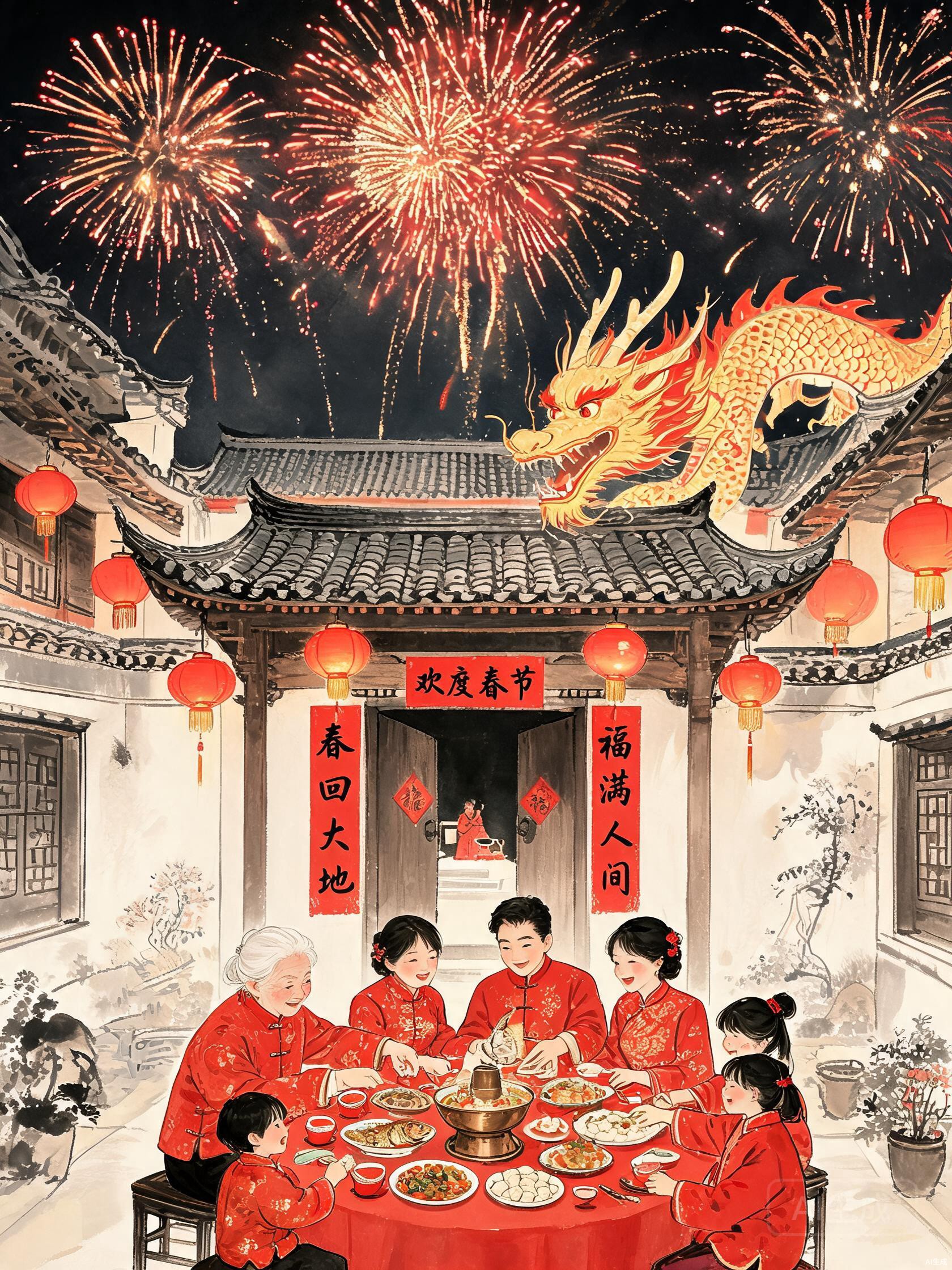
Spring couplets — the visual signature of the Chinese New Year on every doorway
Spring couplets (春联, Chūnlián) are pairs of poetic lines written in black ink on red paper and pasted on the doorways of homes, shops, and institutions during the Spring Festival. Each couplet consists of two matching lines (the upper and the lower) that are equal in length, complementary in meaning, and perfectly parallel in grammar and tone. They carry blessings for the new year, invoke prosperity and good fortune, and demonstrate the beauty of the Chinese written language. The tradition dates back over a thousand years and is one of the most visually distinctive customs of the Chinese New Year.
Powers & Symbols
Attributes & Artefacts
Click each card to reveal the details behind Spring Couplets's divine attributes.
Historical & Cultural Meaning
Beyond the Myth
From Peach Charms to Red Paper
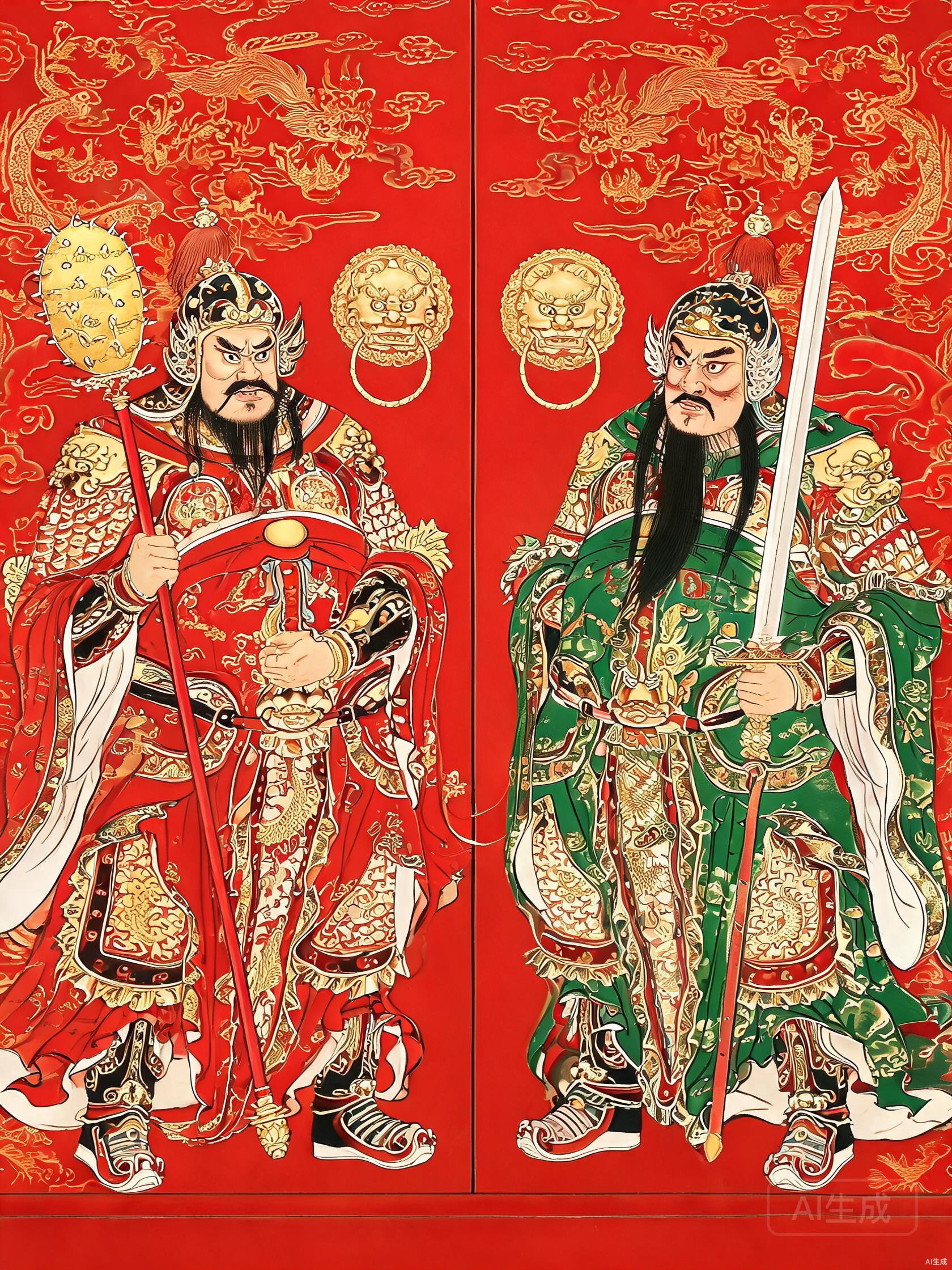
The origin of spring couplets lies in an older tradition: peach-wood charms (桃符, táofú). In ancient China, peach wood was believed to have the power to ward off evil spirits. Before the Spring Festival, families would hang two peach-wood boards on either side of the door, inscribed with the names of two guardian deities: Shen Tu (神荼) and Yu Lei (郁垒), the legendary brothers who guarded the spirit world and protected the household from demons. These peach-wood boards were the ancestors of the spring couplet — protective devices that stood at the threshold, guarding the passage between the dangerous outside and the safe inside.
The transformation from peach-wood charm to paper couplet occurred during the Tang and Five Dynasties period (7th–10th centuries CE). The first recorded spring couplet on paper is attributed to Meng Chang (孟昶), the last emperor of Later Shu, who wrote on his palace door: '新年纳余庆, 嘉节号长春' — 'The new year receives abundant blessings, the fine festival is named Everlasting Spring.' This couplet, written around 964 CE, is considered the first spring couplet in Chinese history. From the imperial palace, the custom spread to the scholar-official class and eventually to common households, becoming by the Ming Dynasty a universal tradition practiced by every family in China.
The shift from peach-wood boards to red paper is itself significant. The old charms were protective — they warded off evil. The new couplets are expressive — they declare the family's hopes and aspirations. The tradition moved from defense to aspiration, from fear of what might enter to hope for what might come. The red paper (red being the color of good fortune and the color that drives away the Nian beast) retained the protective function, but the words added a new dimension: the household now declared its wishes publicly, for neighbors and visitors to read. The spring couplet became both amulet and advertisement — a protective charm and a public statement of the family's vision for the year ahead.
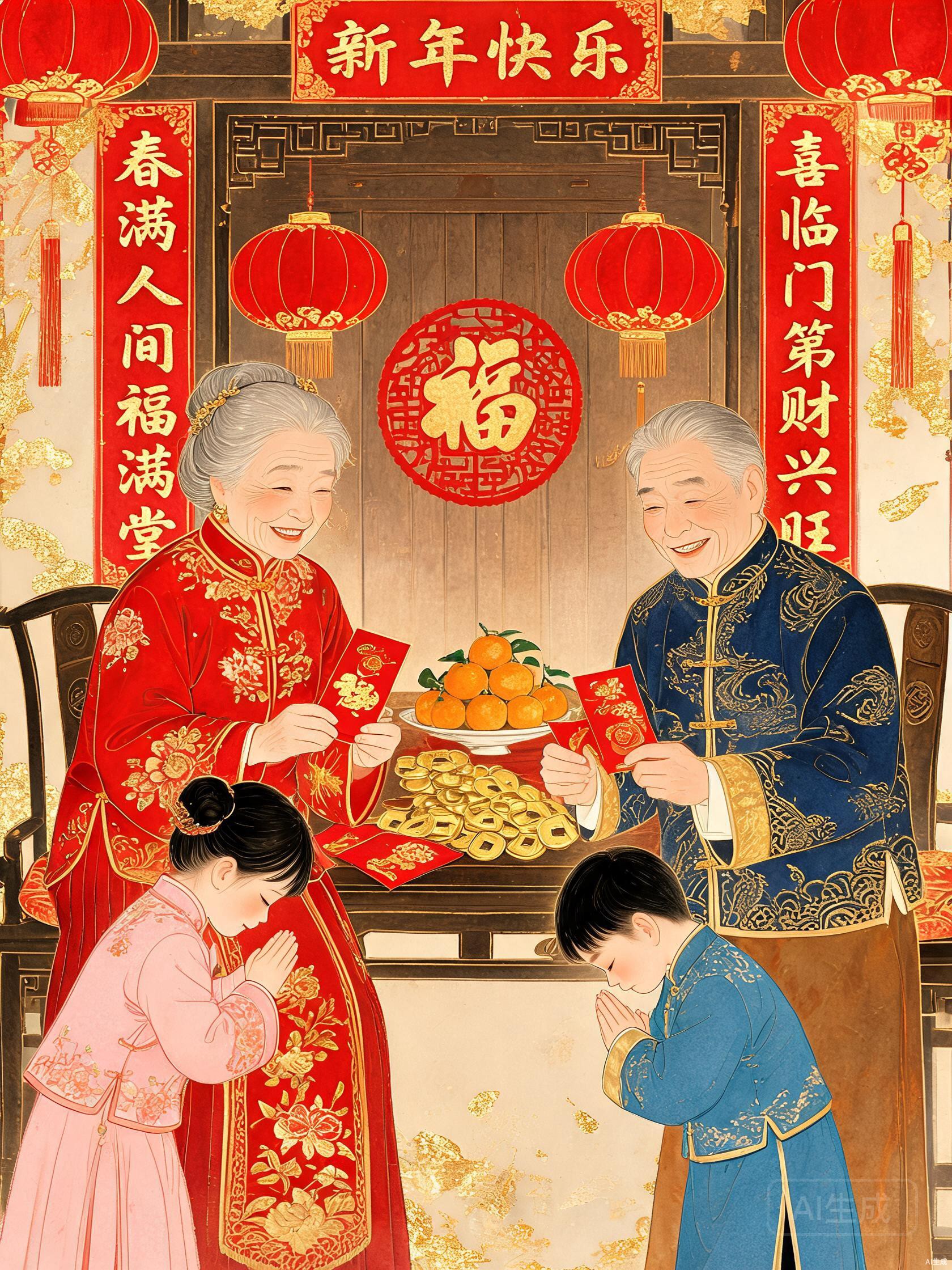
Red paper — the shared medium of spring couplets, red envelopes, and all New Year decorations
Spring Couplets in Chinese Culture
The writing of spring couplets is one of the few occasions in modern Chinese life when calligraphy — the art of writing — is practiced by ordinary people. In the weeks before the Spring Festival, calligraphers set up tables in markets, malls, and temple fairs, writing custom couplets on demand for passersby. The quality of the calligraphy is itself a source of pride: a well-written couplet, with bold, flowing characters, is a sign of culture and refinement that elevates the household above the merely decorative. Many families take pride in writing their own couplets, and children are often given the task as a way of practicing their calligraphy and engaging with the literary tradition.
The couplets also carry a communal function. Walking through a Chinese neighborhood in the days before the New Year, one can read the hopes of every household from the couplets on their doors. The shop owner's wish for prosperity, the student's wish for success, the farmer's wish for harvest, the elderly couple's wish for health — each family's deepest aspiration is displayed publicly, in elegant language, for all to see. The couplets thus create a kind of open-air poetry exhibition, a street-level gallery of the community's dreams. After the New Year, the couplets remain on the doors for the entire year, slowly fading in the sun and rain, until they are replaced the following New Year — a cycle that mirrors the renewal of the calendar itself.
In modern China, printed spring couplets — mass-produced in factories — have largely replaced hand-written ones. But the hand-written tradition persists, kept alive by calligraphers, cultural enthusiasts, and families who believe that a couplet written by hand carries a warmth and sincerity that no printed text can match. The annual ritual of choosing or writing the couplet, pasting it on the door, and standing back to read the completed pair is, for millions of Chinese families, the moment when the New Year truly begins — the moment when the door is dressed in its red finery and the household declares, in poetry, what it hopes the coming year will bring.
Mythology Network
Connections & Relationships
Spring Couplets is woven into a larger web of gods, creatures, and legends. Explore the connections below.
Spring Couplets
春联