Xia Nian
小年
The Little New Year — the day the Kitchen God ascends to heaven to report on the household.
Origin Story
What Is Xia Nian?
Xia Nian (小年, literally 'Little New Year') is the festival that marks the beginning of the final sprint toward the Spring Festival. It falls on the 23rd of the twelfth lunar month in northern China and the 24th in the south — a regional difference that dates back to the Qing Dynasty, when officials celebrated on the 23rd and commoners on the 24th. The name 'Little New Year' signals its status: it is not the main event, but it is the rehearsal, the warm-up, the moment when the atmosphere of the New Year begins to settle over the household like a warm blanket.
The central ritual of Xia Nian is the send-off of the Kitchen God (灶王爷, Zào Wángyé). The Kitchen God is the deity of the household hearth — the divine observer who has spent the entire year living in the kitchen, watching everything that happens in the home. On Xia Nian, he ascends to heaven to make his annual report to the Jade Emperor (玉皇大帝), describing the family's good deeds and bad deeds over the past year. The Jade Emperor, based on this report, determines the family's fortune for the coming year — whether they will be blessed with prosperity, health, and harmony, or whether they will face hardship and misfortune.
This cosmological structure — a household god who reports to the supreme deity — is one of the most distinctive features of Chinese folk religion. It means that the Kitchen God is both protector and judge: he lives with the family, shares their meals, and knows their secrets, but he also has the power to affect their destiny through his report. The Xia Nian ritual is therefore a moment of both affection and anxiety — a farewell to a familiar household companion and a subtle negotiation with the cosmic bureaucracy that governs fortune.
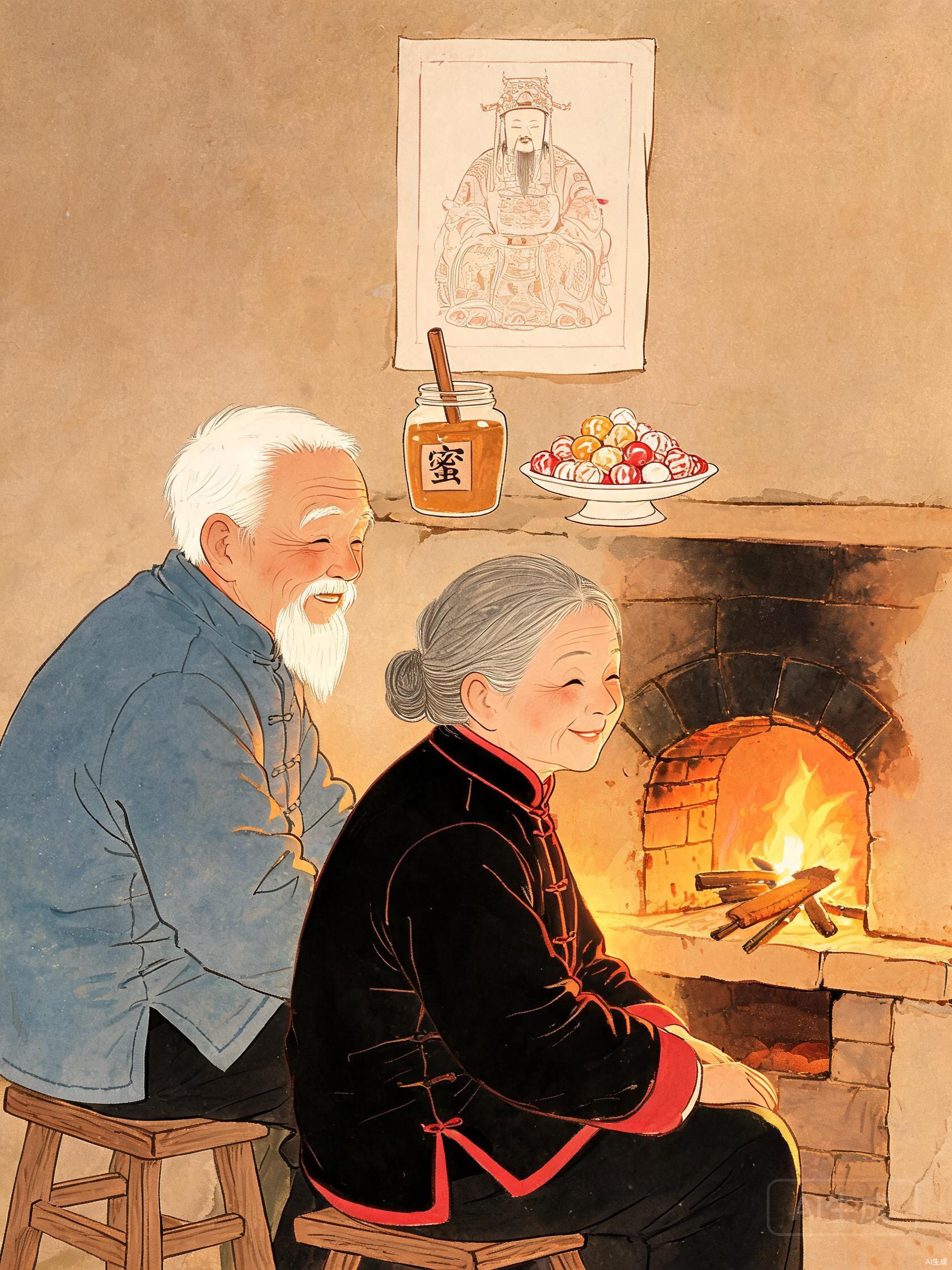
The Kitchen God — the household deity who reports to heaven on Xia Nian
Xia Nian (小年, 'Little New Year' or 'Minor New Year') falls on the 23rd or 24th of the twelfth lunar month, about a week before the Spring Festival. It is the day when the Kitchen God (灶王爷, Zào Wángyé) leaves the household to report the family's deeds to the Jade Emperor in heaven. Families offer sticky sweets to the Kitchen God — both to thank him and to ensure that his report is sweet. Xia Nian marks the official beginning of the intensive New Year preparation period: cleaning, cooking, decorating, and gathering.
Powers & Symbols
Attributes & Artefacts
Click each card to reveal the details behind Xia Nian's divine attributes.
Historical & Cultural Meaning
Beyond the Myth
Sticky Sweets and Smoke
The ritual of sending off the Kitchen God is one of the most charming traditions in Chinese folk culture. The family offers the Kitchen God a plate of sticky, sweet foods — most commonly malt candy (灶糖, zào táng) or tangyuan. The logic is both generous and strategic: the sweetness is meant to sweeten the Kitchen God's mouth (and his report), so that he will speak well of the family. The stickiness is meant to glue his mouth shut, so that he cannot speak ill. It is a negotiation conducted through food — a blend of bribery and affection that perfectly captures the Chinese folk relationship with the divine.
After the offerings, the family burns a paper image of the Kitchen God — sending his spirit to heaven on the smoke. A new paper image is then pasted above the stove, to be the Kitchen God's residence for the coming year. The burning and replacing of the image represents the cyclical nature of the Kitchen God's tenure: each year, a new Kitchen God is installed, and the old one is released to make his report. The ritual thus enacts a kind of divine rotation — the household spirit is refreshed annually, like a lease renewed, with the family's behavior as the terms of the contract.
In some regions, the family also lights firecrackers on Xia Nian — to send the Kitchen God off with a bang, to clear the path to heaven, and to announce to the neighborhood that the New Year season has officially begun. The firecrackers serve a practical function too: they mark the transition from the ordinary rhythms of winter to the extraordinary time of preparation. After Xia Nian, the pace of the household changes: cleaning begins in earnest (sweeping away the dust of the old year), decorations are prepared, food is purchased and cooked, and the family converges on the parents' home for the great gathering. Xia Nian is the starting gun — the signal that the race to the New Year has begun.
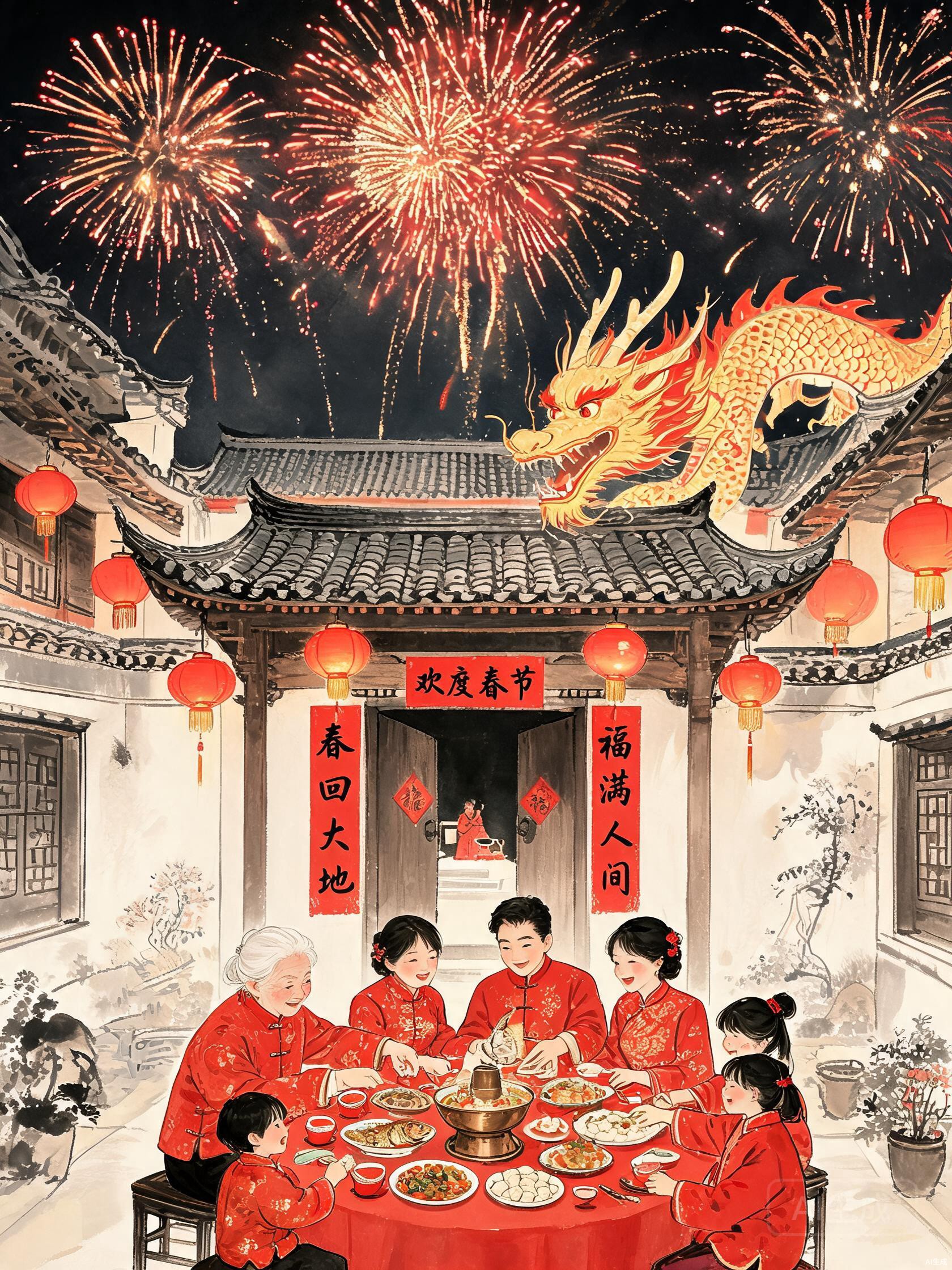
Xia Nian — the starting gun for the sprint to Spring Festival
Xia Nian in Chinese Culture
In modern China, Xia Nian retains its importance as the official start of the New Year preparation period, even as urbanization has reduced the Kitchen God ritual to a symbolic gesture. In cities, the elaborate ceremony of offering sticky sweets and burning paper images has largely faded, but the date itself is still marked: people begin their deep cleaning (辞旧迎新, 'bidding farewell to the old and welcoming the new'), start buying New Year goods, and begin to feel the shift in atmosphere that says the festival is coming.
The northern-southern date difference (23rd vs. 24th) is itself a piece of living cultural history. The difference originated in the Qing Dynasty, when Manchu officials, eager to demonstrate their status, celebrated a day earlier than the commoners. The custom persisted, and today the divide still runs along the Qinling-Huaihe line — the traditional boundary between north and south China. This means that in a single country, two different dates are observed for the same festival, a fact that is noted in weather forecasts, news programs, and social media every year, with good-natured debates about which date is 'correct.' The persistence of the difference is a reminder that Chinese culture, for all its unity, is also a mosaic of regional traditions — and that the Little New Year is little in name but great in the depth of custom it preserves.
Mythology Network
Connections & Relationships
Xia Nian is woven into a larger web of gods, creatures, and legends. Explore the connections below.
Xia Nian
小年