Bo Ya Zhi Yin
伯牙子期
The story of the musician and the woodcutter — the Chinese archetype of true friendship and the soulmate who understands.
Origin Story
The Musician and the Woodcutter
Yu Bo Ya (俞伯牙) was the greatest guqin player of his age. A scholar and official of the state of Jin during the Spring and Autumn Period, he had studied music from childhood and achieved a level of mastery that left even his teachers in awe. Yet for all his skill, Bo Ya carried a deep loneliness: no one truly understood his music. Audiences praised his technique, marveled at his speed, admired his ornamentation — but none of them heard what he was actually playing. They heard notes; they did not hear mountains.
One night, Bo Ya's boat was moored beneath a cliff on the banks of the Han River. It was autumn, and the moon hung full over the water. Bo Ya took out his guqin and began to play — and as he played, the strings snapped. In the Chinese tradition, a broken string meant that a true listener was near, someone whose presence resonated so deeply with the music that the instrument itself responded. Bo Ya sent his servant ashore to investigate, and there, on the cliff above, he found a woodcutter — a rough, plainly dressed man named Zhong Ziqi (钟子期).
Bo Ya was skeptical. A woodcutter, understanding music? He played a piece depicting 'high mountains' (高山, gāoshān), and Ziqi said, 'How magnificent! As grand as Mount Tai.' He played 'flowing water' (流水, liúshuǐ), and Ziqi said, 'How vast! Like the great rivers flooding.' Every image Bo Ya conjured in sound, Ziqi saw in his mind's eye. The woodcutter heard not notes but landscapes, not technique but mountains and rivers, storms and calm. Bo Ya had found, at last, the one person in the world who understood his music as he understood it himself.

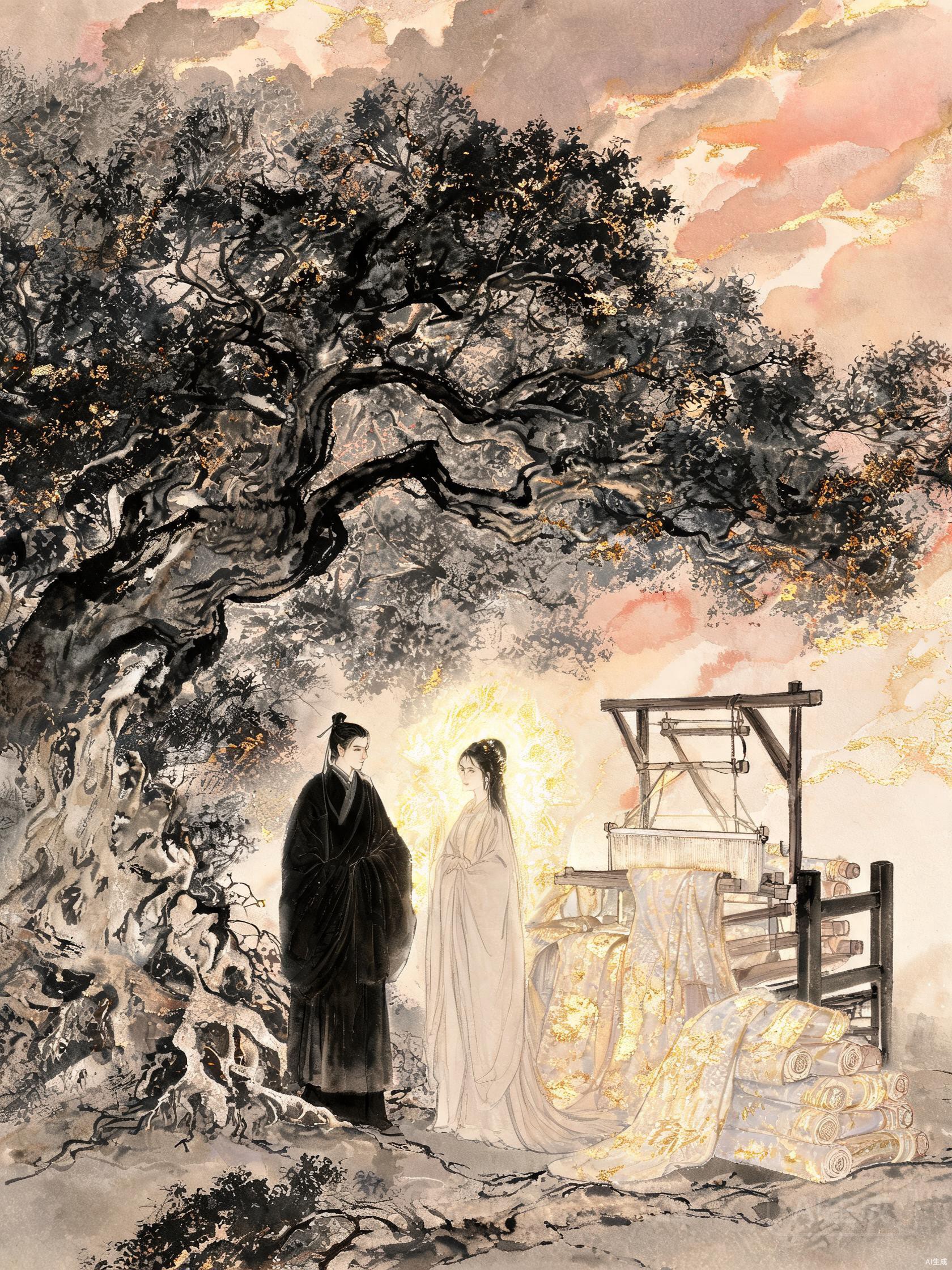
Bo Ya and Ziqi — two halves of a single whole, like yin and yang
Bo Ya Zhi Yin (伯牙子期, 'Bo Ya Finds His Soulmate') is the story of Yu Bo Ya, a master of the guqin (seven-stringed zither), and Zhong Ziqi, a woodcutter who understood his music as no one else could. When Bo Ya played the image of 'high mountains,' Ziqi saw Mount Tai; when he played 'flowing water,' Ziqi saw the great rivers. When Ziqi died, Bo Ya smashed his instrument and never played again — for the only person who truly understood his music was gone. The story gave Chinese culture the word 'zhiyin' (知音, 'one who knows the sound'), the term for a true soulmate.
Powers & Symbols
Attributes & Artefacts
Click each card to reveal the details behind Bo Ya Zhi Yin's divine attributes.
Historical & Cultural Meaning
Beyond the Myth
The Smashed Guqin
The two men became fast friends, despite the gulf between their stations — a scholar-official and a woodcutter. They agreed to meet again at the same spot the following year. Bo Ya would bring his guqin; Ziqi would bring his ear. It was a promise between soulmates: not a social appointment but a covenant of the spirit.
When the year came around, Bo Ya returned to the cliff on the Han River. He set up his guqin, tuned the strings, and waited. But Ziqi did not come. He waited through the day, through the night, through the next day. Finally, he went to the nearby village and asked after the woodcutter. The villagers told him the news: Zhong Ziqi had died the previous autumn, shortly after their meeting. They showed him the grave — a small mound on the hillside overlooking the river, the very spot where Ziqi had stood listening to Bo Ya's music.
Bo Ya went to the grave. He sat beside it, set up his guqin, and played one last piece — a lament for the only person who had ever understood his music. When the last note faded, Bo Ya lifted the guqin and smashed it against the gravestone. The instrument shattered. The strings broke. He picked up the pieces and spoke: 'Having lost the one who understood my music, what use are these strings?' (摔琴谢知音, 'I smash the qin to thank the one who knew my sound'). He vowed never to play again — and he kept that vow for the rest of his life. What was the point of music, if the one ear that truly heard it was buried under the earth?
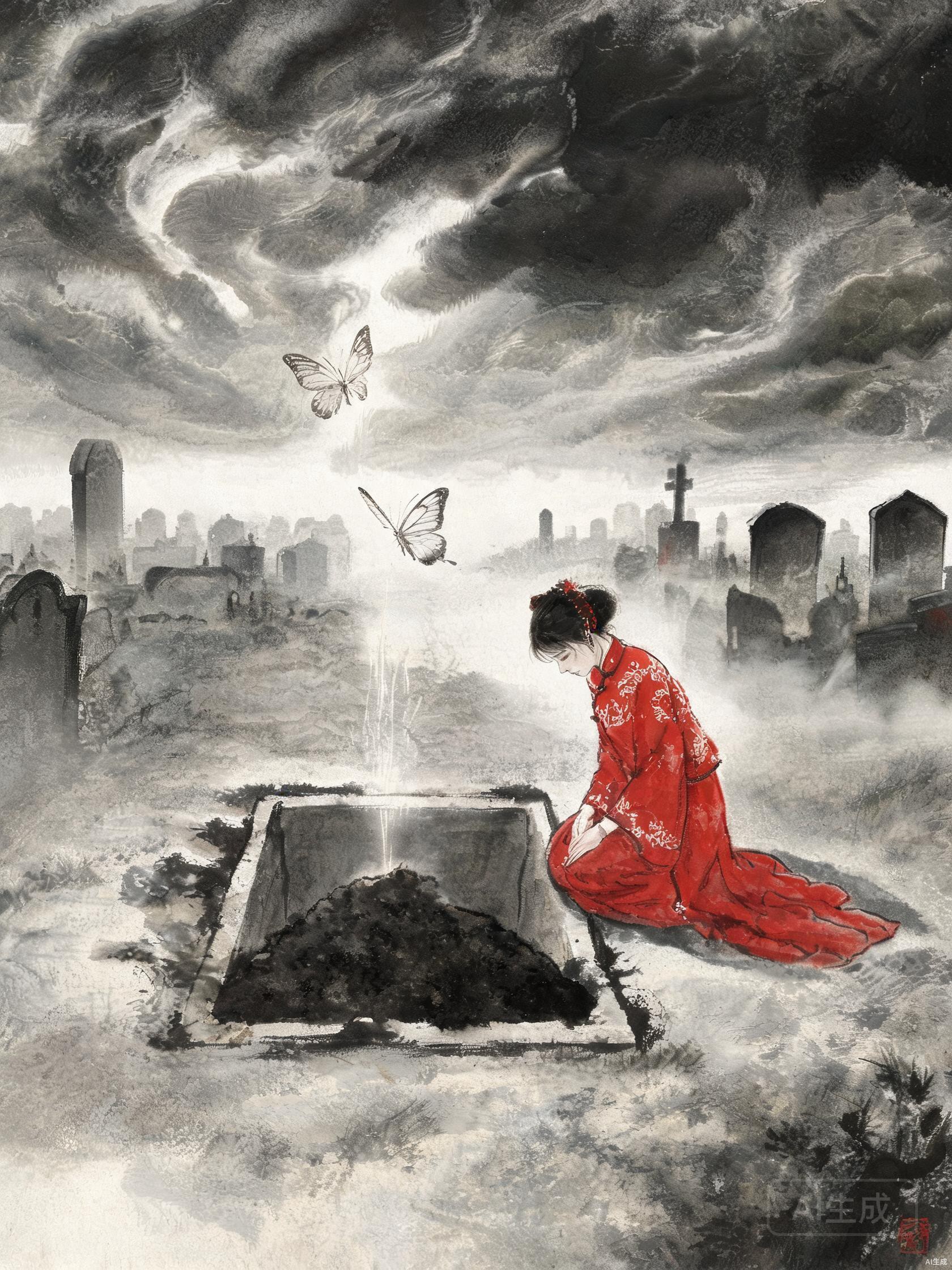
Like the Butterfly Lovers, Bo Ya and Ziqi were separated by death
The Legacy of Zhiyin
The story of Bo Ya and Ziqi gave Chinese culture one of its most important words: zhiyin (知音, literally 'one who knows the sound'). A zhiyin is not merely a friend or an admirer but a soulmate — the person who understands the deepest level of your being, who hears not the surface of your expression but the essence beneath it. The word is used today to describe the rare, irreplaceable person who truly 'gets' you — in art, in love, in friendship, in any context where one soul recognizes another.
The two pieces that Bo Ya played for Ziqi — 'High Mountains' (高山) and 'Flowing Water' (流水) — became two of the most famous compositions in the guqin repertoire, preserved and passed down through generations of musicians for over two thousand years. In 1977, 'Flowing Water' as performed by the guqin master Guan Pinghu was included on the Voyager Golden Record, launched into space aboard NASA's Voyager 1 and Voyager 2 probes. It is one of 27 pieces of music chosen to represent humanity to any civilization that might find the spacecraft in the distant future — a piece born from a story about the search for understanding, now traveling through the stars in the hope that someone, somewhere, might hear it and know.
The smashing of the guqin is the story's most famous image, and it carries a meaning that goes beyond grief. Bo Ya did not stop playing because he was sad; he stopped because the purpose of music — to communicate what cannot be said in words — had been rendered impossible by Ziqi's death. Music, for Bo Ya, was not performance but conversation. Without the listener who understood, the conversation could not continue. The smashed guqin is thus both a memorial and a statement: that the deepest art is not for the many but for the one, and that the one, once found and lost, cannot be replaced.
Mythology Network
Connections & Relationships
Bo Ya Zhi Yin is woven into a larger web of gods, creatures, and legends. Explore the connections below.
Bo Ya Zhi Yin
伯牙子期