Cang Jie Creates Writing
仓颉造字
The four-eyed sage who observed nature and invented Chinese characters — the moment writing changed the world.
Origin Story
The Four-Eyed Sage
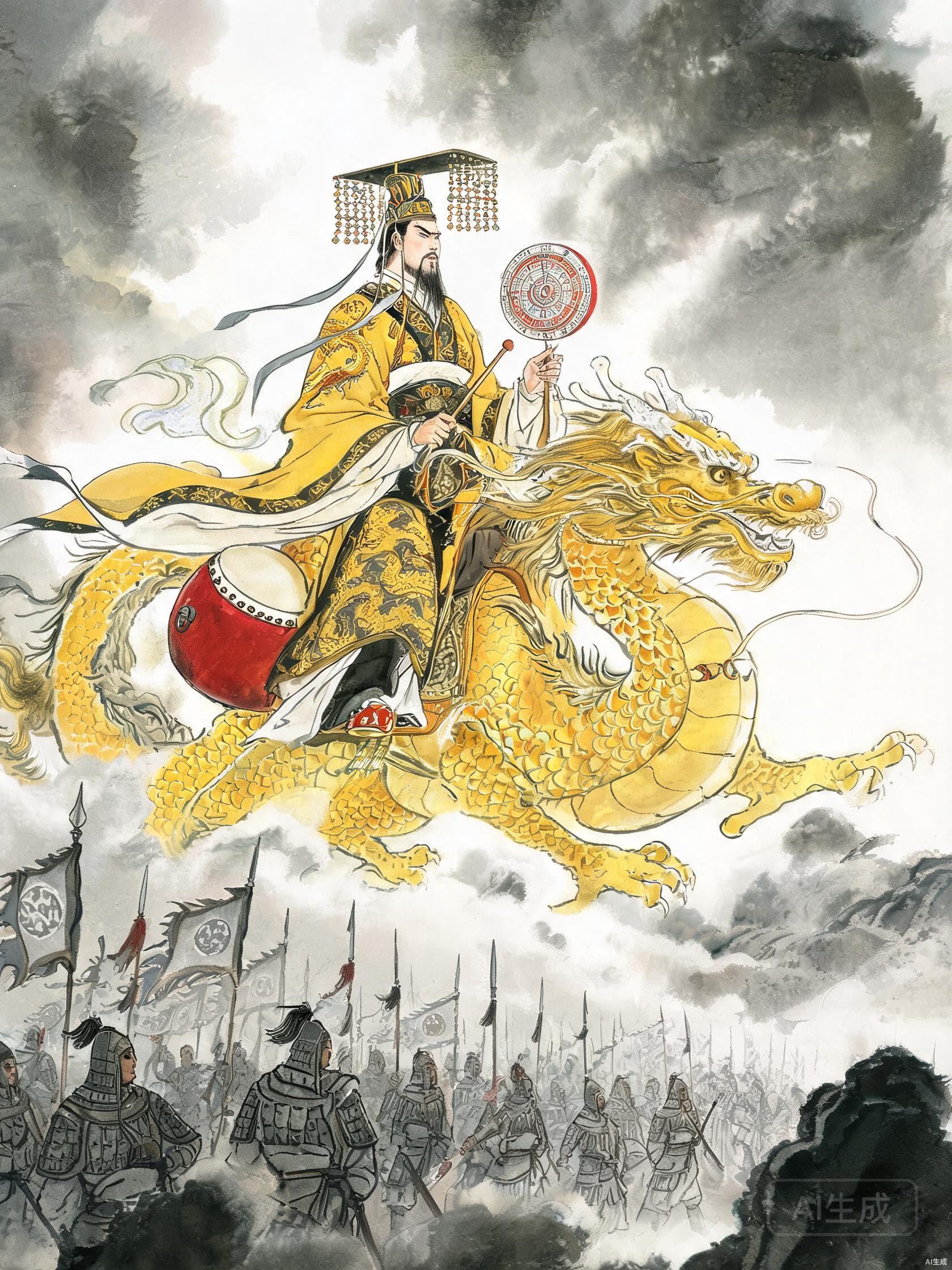
Cang Jie (仓颉) served as the official historian (史官, shǐguān) under the Yellow Emperor, the legendary sovereign who unified the Central Plains. In this role, Cang Jie was responsible for recording the events of the court, the laws of the realm, and the wisdom of the ruler. But in the age before writing, memory was the only archive — and memory, as every historian knows, is fragile, personal, and unreliable. The Yellow Emperor needed a way to record information that would outlast any individual memory, and Cang Jie was tasked with finding it.
What set Cang Jie apart from other sages was his extraordinary vision. He is described as having four eyes (四目重瞳, sì mù chóng tóng) — two pairs of eyes, one pair looking upward toward heaven and the other looking downward toward earth. This anatomical impossibility is deeply symbolic: Cang Jie could see both the patterns of the heavens (the movements of stars, the forms of clouds, the regularities of celestial mechanics) and the patterns of the earth (the tracks of animals, the shapes of rivers, the veins of leaves). His four eyes gave him a dual perspective — cosmic and terrestrial — that no ordinary sage possessed.
The invention of writing was, in this mythology, an act of observation rather than creation. Cang Jie did not 'invent' characters from nothing; he discovered them. He saw that the footprint of a bird, unique in its shape, could represent not just that bird but the idea of that bird. He saw that the branching of a river, the angle of a mountain, the curve of a claw — each of these natural forms could be simplified into a mark that carried meaning. The characters were already there, embedded in nature; Cang Jie was simply the first being with enough eyes to see them.
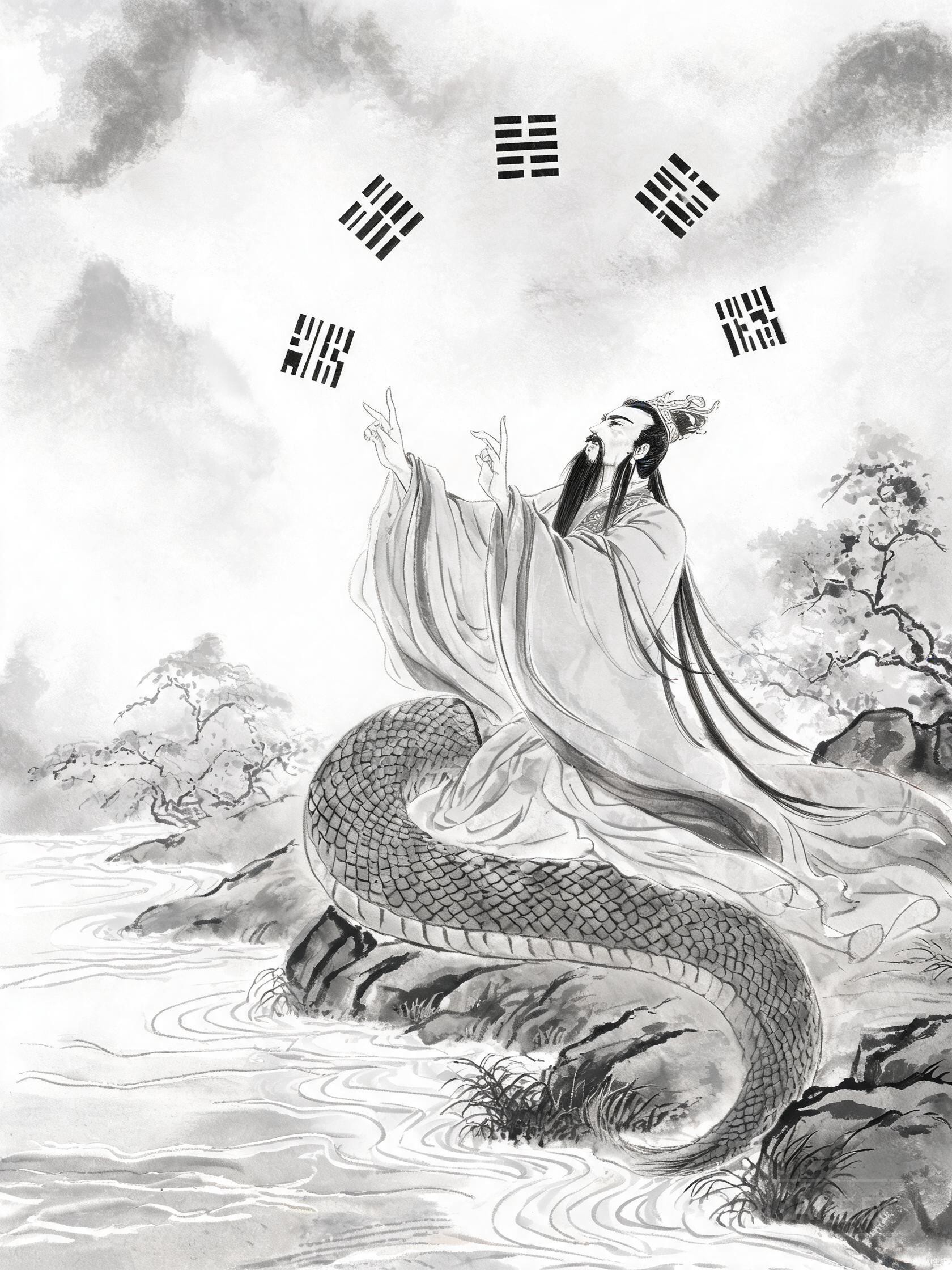
Fuxi and Cang Jie — both culture heroes who decoded the patterns of nature
Cang Jie (仓颉) is the mythological inventor of Chinese characters. A sage with four eyes — two facing up toward heaven and two facing down toward earth — he was the historian of the Yellow Emperor. By observing the footprints of birds and animals, the patterns of the stars, and the veins of the earth, Cang Jie created the first written characters, giving humanity the power to record, to remember, and to rule. The heavens responded to his invention with rain of grain and ghosts crying in the night — for writing gave humans power that had belonged only to the gods.
Powers & Symbols
Attributes & Artefacts
Click each card to reveal the details behind Cang Jie Creates Writing's divine attributes.
Historical & Cultural Meaning
Beyond the Myth
Grain Rains and Ghost Wails
The Huainanzi (淮南子, a Han Dynasty philosophical text) records the cosmic response to Cang Jie's invention in unforgettable terms: 'When Cang Jie created characters, grain rained from heaven and ghosts cried at night.' This single sentence is one of the most evocative in all of Chinese literature, and it carries layers of meaning that have been debated for two thousand years.
The rain of grain (天雨粟, tiān yǔ sù) is generally interpreted as a sign of heavenly approval — the gods themselves celebrated the invention by providing food, a blessing from the sky. But some interpretations see a darker meaning: that the invention of writing disrupted the cosmic order so profoundly that heaven itself trembled, and the grain was not a blessing but a warning — a sign that humanity had gained a power that could either elevate or destroy. Writing, after all, gives the power to record laws — and laws, once written, bind people in ways that oral tradition never could.
The wailing of ghosts (鬼夜哭, guǐ yè kū) is even more evocative. Some interpretations hold that the ghosts wailed because writing gave humans the power to summon and control them — written talismans and incantations could now command the spirits, reducing them to servants of mortal scribes. Others read the wailing as the grief of the dead themselves, who realized that writing would make their deeds permanent — that every act, good or evil, could now be recorded and remembered, judged and condemned, long after the actor had returned to dust. In this reading, the ghosts wept because writing made the dead accountable to the living in a way they had never been before. The invention of writing, in this mythology, was the moment when humanity stepped across a threshold from which there was no return — the moment when mortals gained a tool that rivaled divine omniscience.

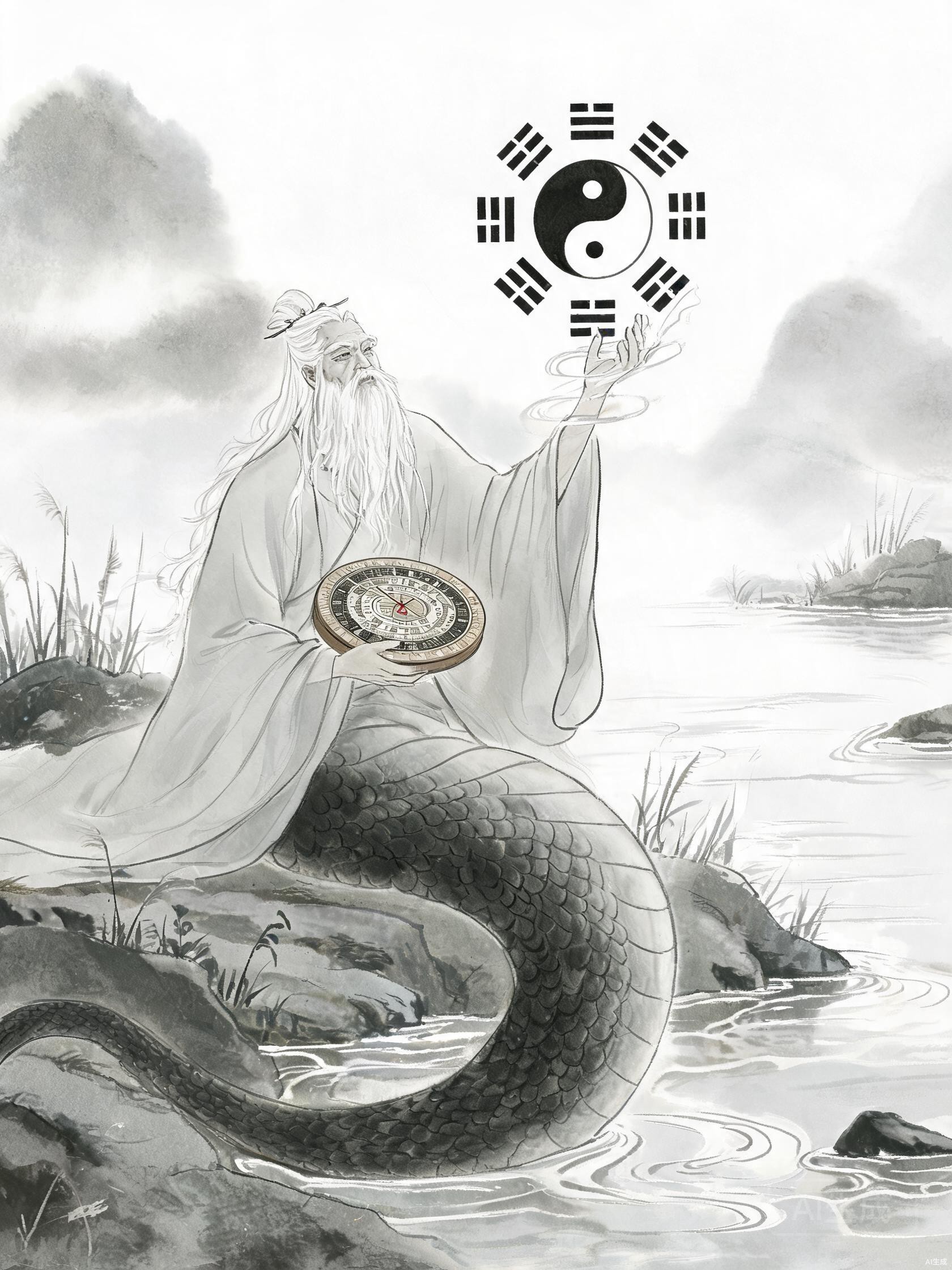
The bagua and Chinese characters — both systems of signs that encode the patterns of the cosmos
Cang Jie in Chinese Culture
Cang Jie is revered as the patron of writing, calligraphy, and scholarship. Throughout Chinese history, scholars have paid homage to him at temples dedicated to his name, and the phrase 'Cang Jie's characters' (仓颉字) was used to refer to the written word itself. The development of Chinese calligraphy as a fine art — one of the most revered visual traditions in world culture — traces its origin to the mythological moment when Cang Jie first carved characters into bone.
The story of Cang Jie also carries a philosophical message about the nature of writing itself. In Chinese thought, writing is not merely a tool for communication but a participation in the structure of reality. The characters are not arbitrary signs (as alphabetic letters are) but ideograms — visual representations of the things and ideas they name. When Cang Jie observed bird tracks and saw a character, he was not inventing a code but discovering a correspondence: the foot of a bird and the character for 'bird' share a deep, structural connection. Writing, in this tradition, is not a human invention superimposed on nature but a natural pattern brought to the surface by a sage with four eyes. This belief in the natural origin of writing is one reason Chinese calligraphy is considered not just an art but a form of meditation — the act of writing is the act of re-creating the world's own patterns, tracing the forms that Cang Jie first saw.
Archaeologically, the earliest known Chinese writing appears on oracle bones (甲骨文) from the Shang Dynasty, around 1200 BCE. While Cang Jie is mythological, the oracle bone script does show exactly the process his legend describes: characters that began as pictures of real things (a bird, a river, a mountain) and were gradually simplified and conventionalized into the writing system that would become Chinese. The myth of Cang Jie is, in a sense, the mythologized memory of this real process — the moment when observation became inscription, when seeing became writing, when the patterns of nature became the characters of culture.
Mythology Network
Connections & Relationships
Cang Jie Creates Writing is woven into a larger web of gods, creatures, and legends. Explore the connections below.
Cang Jie Creates Writing
仓颉造字