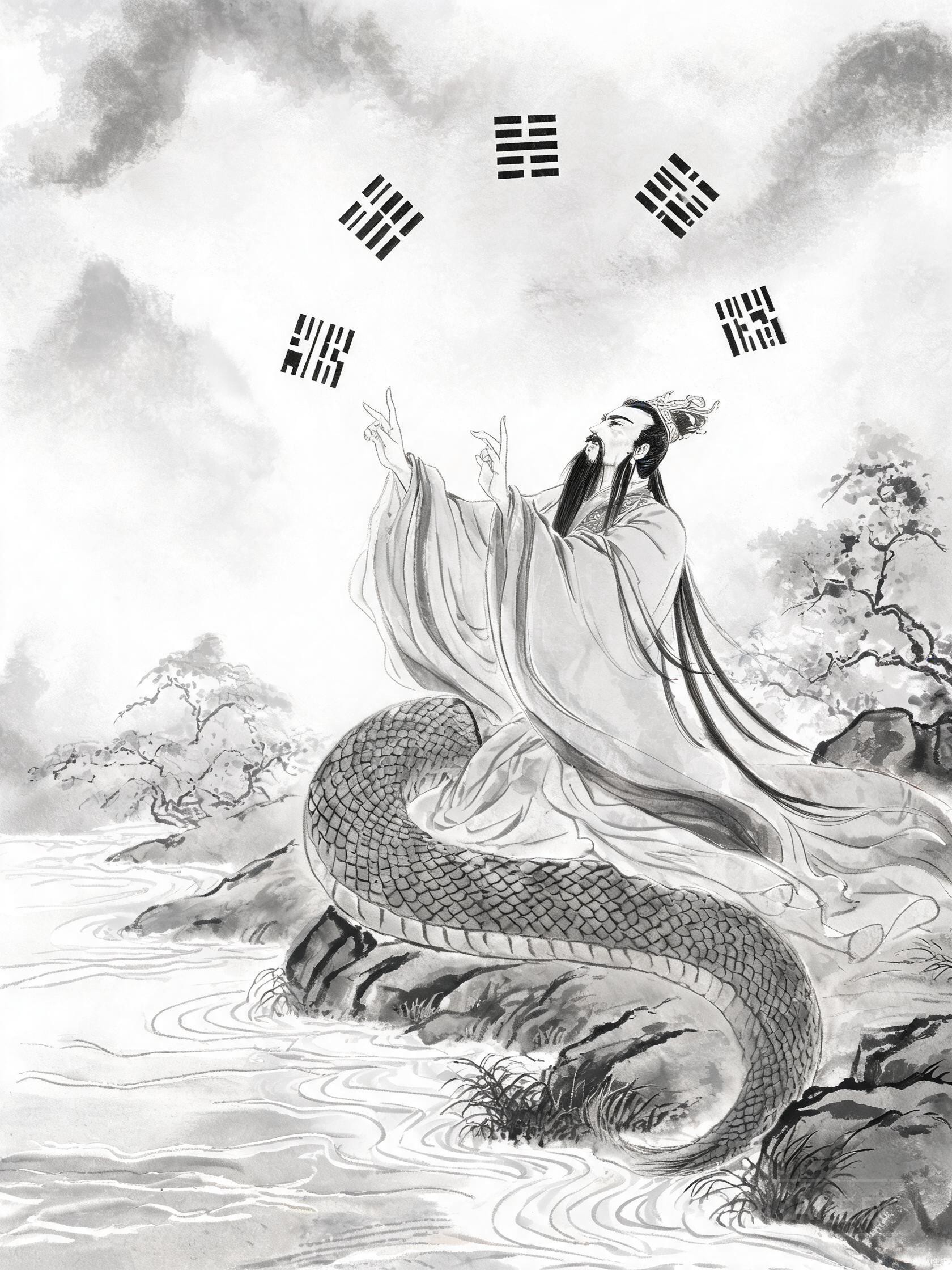
Fuxi Creates the Bagua
伏羲画卦
The first sovereign who observed heaven and earth and gave humanity the Eight Trigrams.
Origin Story
The First Sovereign
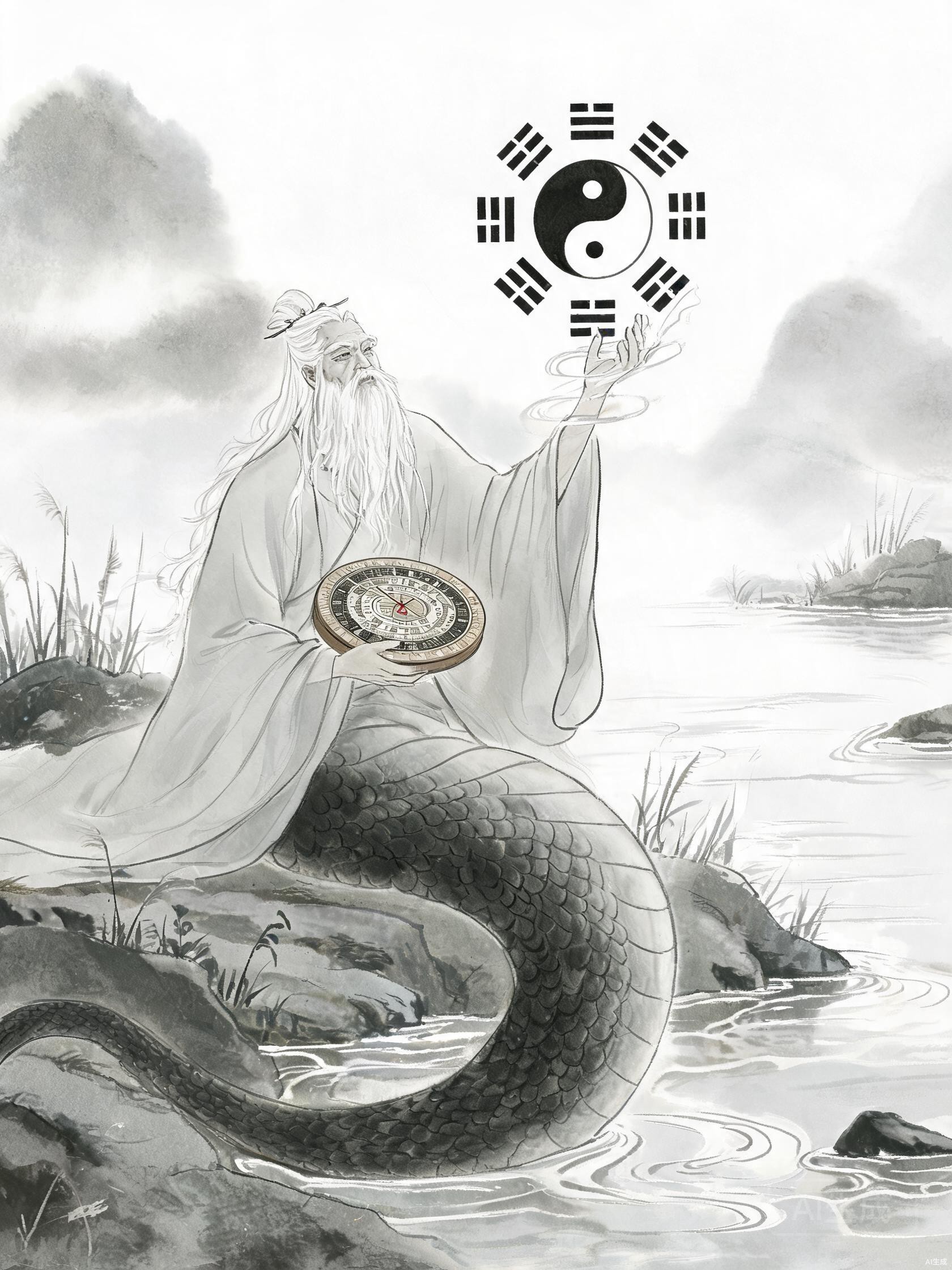
Fuxi was the first of the Three Sovereigns, the legendary founders of Chinese civilization. He was the brother and, in some traditions, the husband of [Nuwa](/gods/nuwa), the goddess who created humanity. Together, they are often depicted as figures with human upper bodies and intertwined serpent tails — a symbol of primal unity and the creative power of the earth.
Fuxi's gifts to humanity were many. He taught people to fish with nets, to hunt with traps, to cook their food, and to keep records by tying knots in cords. But his greatest gift was not practical — it was intellectual. He looked at the world and saw, hidden within its chaos, a pattern. And from that pattern, he created the Bagua, the Eight Trigrams.
The myth of Fuxi Creating the Bagua tells how the ancient sovereign Fuxi observed the patterns of the natural world — the heavens above, the earth below, and all creatures between — and from them distilled the Eight Trigrams, the symbolic foundation of Chinese cosmology, philosophy, and the I Ching.
Powers & Symbols
Attributes & Artefacts
Click each card to reveal the details behind Fuxi Creates the Bagua's divine attributes.
Historical & Cultural Meaning
Beyond the Myth
Observing Heaven and Earth
The myth tells that [Fuxi](/gods/fuxi) sat and contemplated the world. He looked up and observed the patterns of the heavens — the movement of the stars, the phases of the sun and moon, the turning of the seasons. He looked down and observed the earth — its mountains and rivers, its plants and animals, the ways of fire and water. He looked at his own body and the bodies of all creatures.
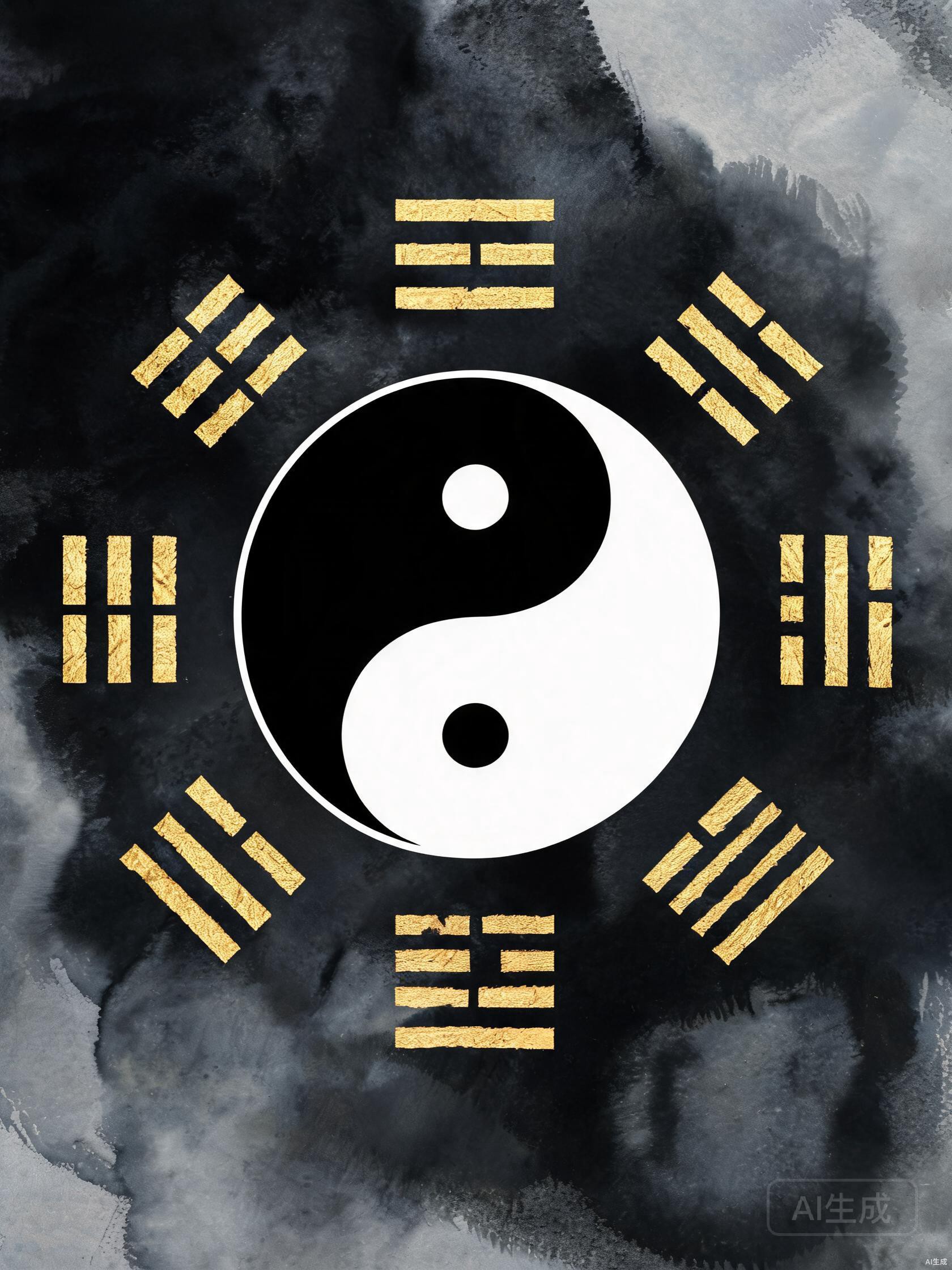
From this vast observation, he distilled the fundamental duality of existence: yin and yang, the receptive and the active, the dark and the light, the feminine and the masculine. He saw that all things were made of combinations of these two forces, and he represented them as broken lines (yin) and solid lines (yang). By combining them in groups of three, he produced eight trigrams — eight fundamental patterns of reality, each representing a natural force: heaven, earth, water, fire, wind, thunder, mountain, and lake.
The Eight Trigrams
The Bagua (八卦) are eight three-line symbols, each made of solid and broken lines. Qian, three solid lines, represents heaven and creative power. Kun, three broken lines, represents earth and receptivity. Kan is water, Li is fire, Zhen is thunder, Xun is wind, Gen is mountain, and Dui is lake. Together, they describe every state and transformation in the universe.
The [Bagua](/symbols/bagua-symbolism) were not merely symbols — they were a cosmological system, a way of understanding how the world works and how it changes. From the [Bagua](/symbols/bagua), later sages developed the Sixty-Four Hexagrams of the I Ching (Book of Changes), one of the oldest and most revered texts in Chinese civilization. The I Ching became the foundation of Taoist philosophy, Confucian ethics, traditional Chinese medicine, [feng shui](/symbols/feng-shui), and the martial art of Baguazhang. All of these trace their origin back to [Fuxi](/gods/fuxi) and his observation of the world.
The Foundation of Chinese Thought
The myth of [Fuxi](/gods/fuxi) creating the [Bagua](/symbols/bagua) is, in a sense, the myth of how Chinese philosophy began. Before there were schools of thought, before Confucius or [Laozi](/gods/laozi), there was Fuxi, looking at the world and finding in it a pattern of order. The [Bagua](/symbols/bagua-symbolism) are the original language through which the Chinese understood the universe — not as a creation of gods, but as a system of forces in constant, dynamic balance.
[Fuxi](/gods/fuxi)'s legacy is woven into the fabric of Chinese culture. The [Bagua](/symbols/bagua-symbolism) appear on the national flag of South Korea, in Taoist temples, in martial arts, and in the philosophy that underpins traditional medicine and fortune-telling. The story of their creation — a solitary figure observing the natural world and distilling its essence into symbols — remains a testament to the power of human wisdom and the Chinese belief that the cosmos is knowable, if one only looks carefully enough.
Sources & References
Primary classical texts: Shanhaijing (山海经, Classic of Mountains and Seas, c. 4th-2nd century BCE) · Fengshen Yanyi (封神演义, Investiture of the Gods, c. 16th century) · Journey to the West (西游记, Xiyouji, c. 16th century) · Records of the Grand Historian (史记, Shiji, by Sima Qian, c. 91 BCE) · Classic of Mountains and Seas commentary (郭璞注 Shanhaijing, c. 4th century) · Bamboo Annals (竹书纪年, c. 4th century BCE onwards)
Classical translations: Legge, James (trans.). The Sacred Books of the East (1879-1910, 50 volumes covering Chinese classics) · Girardot, Norman J. Myth and Meaning in Early Taoism (University of California Press, 1983) · Werner, E.T.C. A Dictionary of Chinese Mythology (Shanghai: Kelly & Walsh, 1932)
Modern academic references: Birrell, Anne. Chinese Mythology: An Introduction (Baltimore: Johns Hopkins University Press, 1993) · Yang, Lihui, and Deming An. Handbook of Chinese Mythology (New York: Oxford University Press, 2005) · Strassberg, Richard E. A Chinese Bestiary: Strange Creatures from the Guideways Through Mountains and Seas (Berkeley: University of California Press, 2002)
Digital encyclopedias and online resources: Wikipedia — Chinese mythology portal (continuously updated, citations to primary sources) · Encyclopedia Britannica — Mythology and Religion section
Mythology Network
Connections & Relationships
Fuxi Creates the Bagua is woven into a larger web of gods, creatures, and legends. Explore the connections below.
Fuxi Creates the Bagua
伏羲画卦



Explore the Topic
Fuxi Creates the Bagua in the Mythology Network
Go deeper — read the topic guides that gather every legend like Fuxi Creates the Bagua.