
Nine-Tailed Fox
九尾狐
The shape-shifting fox spirit of Chinese mythology — both omen and seductress.
Origin Story
What Is the Nine-Tailed Fox?
The [Nine-Tailed Fox](/creatures/nine-tailed-fox), or Huli Jing, is a fox spirit from Chinese mythology that has lived for a thousand years and grown nine tails. Its earliest appearances — in the Classic of Mountains and Seas (Shanhaijing), dating back over 2,000 years — describe it as an auspicious creature whose appearance foretold peace and prosperity.
Over centuries, the fox spirit's image transformed. In Tang and Song dynasty tales, foxes became shape-shifters that could take human form — usually that of a beautiful woman. By the Ming and Qing dynasties, the nine-tailed fox had become a figure of dangerous seduction, most famously embodied by Daji, the fox spirit who possessed a concubine and destroyed the Shang Dynasty.
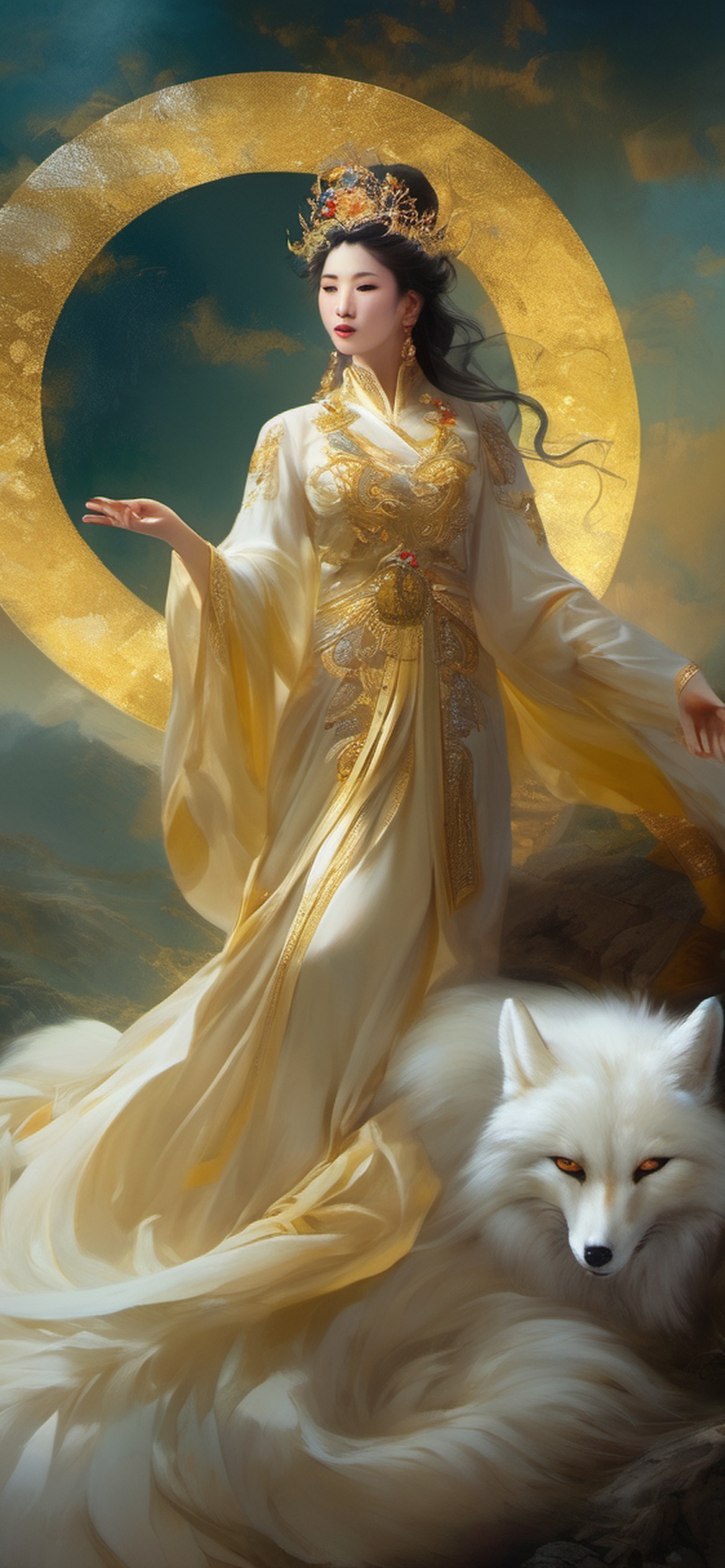
The Nine-Tailed Fox — the most seductive and dangerous spirit in Chinese mythology
The Nine-Tailed Fox (Huli Jing) is one of the most complex creatures in Chinese mythology. Originally a symbol of prosperity and divine favor, it evolved over centuries into a figure of seduction, deception, and supernatural power.
Powers & Symbols
Attributes & Artefacts
Click each card to reveal the details behind Nine-Tailed Fox's divine attributes.
Historical & Cultural Meaning
Beyond the Myth
Daji and the Fall of Shang
The most famous nine-tailed fox in Chinese mythology is Daji, from [Investiture](/myths/fengshen-yengyi) of the Gods (Fengshen Yanyi). Sent by [Nuwa](/gods/nuwa) to punish the depraved [King Zhou](/gods/shang-king-zhou) of Shang, the fox spirit possessed the body of Daji, the king's beautiful concubine, and drove the kingdom to ruin through increasingly horrific acts.
[Daji](/gods/daji)'s story — a supernatural being using beauty and cunning to destroy an empire — became the template for the fox spirit archetype: alluring, dangerous, and ultimately catastrophic to those who fall under her spell.
The Fox Spirit in East Asian Culture
The nine-tailed fox spread from China to Japan (where it became the kitsune) and Korea (where it became the gumiho). In all three cultures, the fox spirit retains its dual nature — capable of great benevolence as a divine messenger, but equally capable of devastating deception.
In modern pop culture, the nine-tailed fox has experienced a massive revival. It appears in anime, K-dramas, video games (including League of Legends' Ahri), and Chinese fantasy dramas, often reimagined as a tragic figure caught between her supernatural nature and human emotions.
Sources & References
Primary classical texts: Shanhaijing (山海经, Classic of Mountains and Seas, c. 4th-2nd century BCE) · Fengshen Yanyi (封神演义, Investiture of the Gods, c. 16th century) · Journey to the West (西游记, Xiyouji, c. 16th century) · Records of the Grand Historian (史记, Shiji, by Sima Qian, c. 91 BCE) · Classic of Mountains and Seas commentary (郭璞注 Shanhaijing, c. 4th century) · Bamboo Annals (竹书纪年, c. 4th century BCE onwards)
Classical translations: Legge, James (trans.). The Sacred Books of the East (1879-1910, 50 volumes covering Chinese classics) · Girardot, Norman J. Myth and Meaning in Early Taoism (University of California Press, 1983) · Werner, E.T.C. A Dictionary of Chinese Mythology (Shanghai: Kelly & Walsh, 1932)
Modern academic references: Birrell, Anne. Chinese Mythology: An Introduction (Baltimore: Johns Hopkins University Press, 1993) · Yang, Lihui, and Deming An. Handbook of Chinese Mythology (New York: Oxford University Press, 2005) · Strassberg, Richard E. A Chinese Bestiary: Strange Creatures from the Guideways Through Mountains and Seas (Berkeley: University of California Press, 2002)
Digital encyclopedias and online resources: Wikipedia — Chinese mythology portal (continuously updated, citations to primary sources) · Encyclopedia Britannica — Mythology and Religion section
Mythology Network
Connections & Relationships
Nine-Tailed Fox is woven into a larger web of gods, creatures, and legends. Explore the connections below.
Nine-Tailed Fox
九尾狐


📱 Wallpaper · $2.99
Take 九尾狐 with you
High-resolution phone wallpaper of Nine-Tailed Fox Spirit (九尾狐) — iconography drawn from classical Chinese sources, painted in traditional style.
📜 Iconography sources
《山海经·南山经》 records the first nine-tailed fox: on Blue Hill Mountain dwells a beast shaped like a fox with nine tails, crying like an infant, able to devour men — yet eating its flesh wards off poison. 《封神演义》 made the fox a thousand-year spirit sent by Nüwa to topple King Zhou as the bewitching Daji. From omen to vixen immortal, she remains the most storied fox in China.
Buy & download
Explore the Topic
Nine-Tailed Fox in the Mythology Network
Go deeper — read the topic guides that gather every creature like Nine-Tailed Fox.