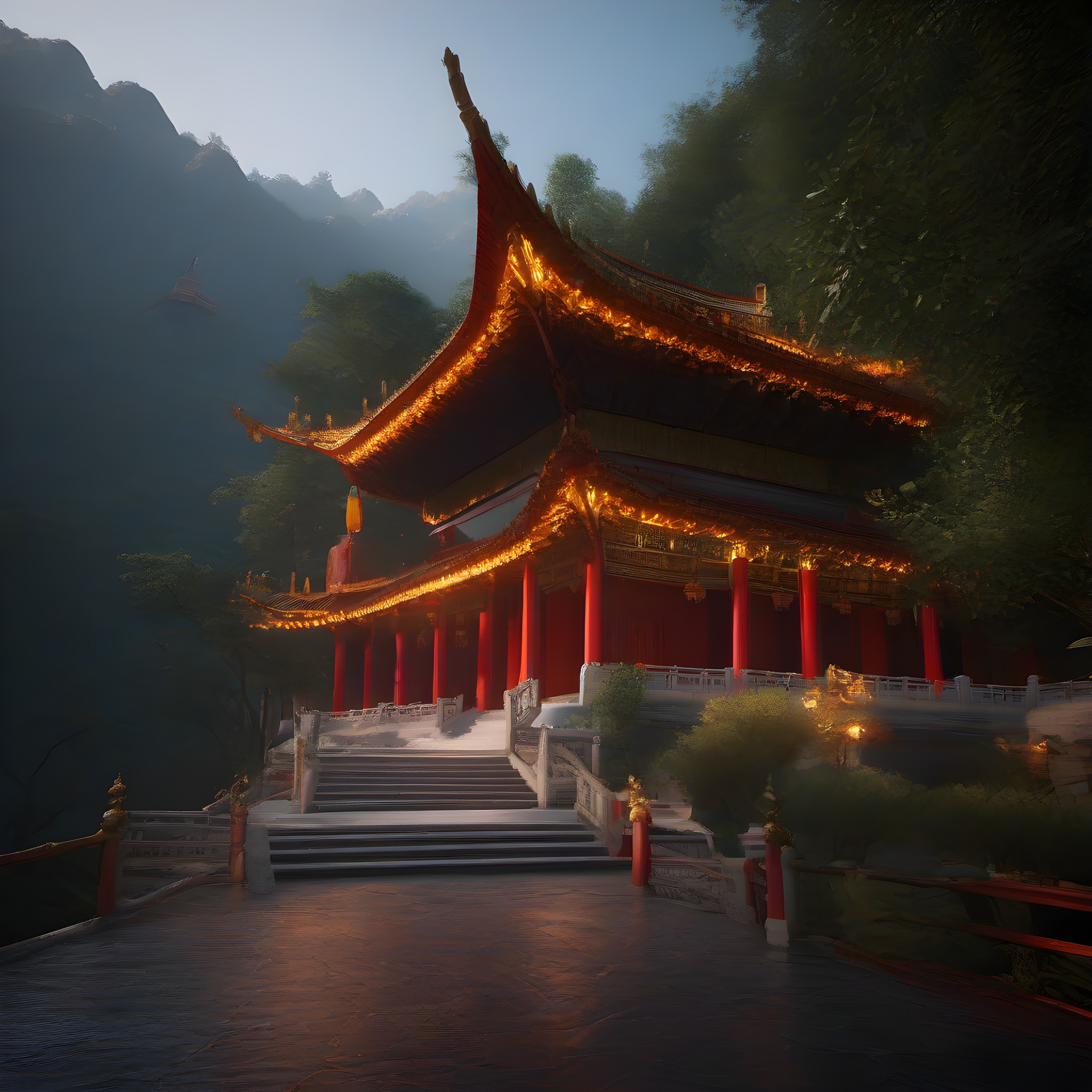
Shaolin Temple
Shàolín Sì
Overview
Founded in 495 CE on Mount Song in Henan Province, Shaolin Temple is the ancestral monastery of the Chan (Zen) school of Buddhism and the legendary birthplace of Shaolin Kung Fu. For over 1,500 years, it has been a pilgrimage site for both Buddhist practitioners and martial artists, representing the unique synthesis of spiritual cultivation and physical discipline that defines Chinese martial culture.
History
Shaolin Temple was founded in 495 CE during the Northern Wei Dynasty by Emperor Xiaowen to honor the Indian monk Batuo, who had traveled to China to spread Buddhist teachings. The temple was built on the northern slopes of Mount Song, one of the Five Sacred Mountains of China.
In the 6th century, the legendary Indian monk Bodhidharma (Da Mo) arrived at Shaolin and spent nine years meditating in a cave above the temple. He is credited with founding the Chan (Zen) school of Buddhism and developing the physical exercises that evolved into Shaolin Kung Fu.
The temple reached its zenith during the Tang Dynasty (618-907), when Emperor Taizong granted the monks special privileges after they helped him in battle. Over the centuries, Shaolin warrior monks became legendary figures, defending the temple and the empire in times of crisis.
Architecture
The temple complex spans over 50 acres and includes the Main Hall (Daxiong Baodian), the Hall of Heavenly Kings, the Pagoda Forest (Talin), and the Bodhidharma Cave. The Pagoda Forest contains 248 stupas dating from the Tang to Qing dynasties, making it the largest cemetery of pagodas in China.
The mountain gate, inscribed with 'Shaolin Temple' in the calligraphy of Emperor Kangxi, leads into a series of courtyards that ascend the mountainside. Stone tablets throughout the complex record imperial edicts, martial arts manuals, and historical events spanning more than a millennium.
Zen Buddhism
Shaolin is the cradle of Chan Buddhism, which emphasizes direct insight and meditation over textual study. Bodhidharma's teaching of 'wall-gazing' meditation (biguan) and the principle of 'pointing directly at the mind' became the foundation of a tradition that would later spread to Japan as Zen.
The unique Shaolin philosophy holds that physical training and spiritual cultivation are inseparable. The monks' practice of martial arts is not violence, but a form of moving meditation — disciplining the body to discipline the mind.
Kung Fu
Shaolin Kung Fu encompasses 712 routines, making it the most comprehensive martial arts system in the world. The most famous include the 18 Lohan Hands, the Five Animal Styles (dragon, snake, tiger, leopard, crane), and the legendary staff techniques.
The philosophy of Shaolin martial arts follows the principle that 'martial virtue precedes martial skill.' Monks are taught that the highest purpose of fighting ability is not to harm others, but to protect the weak, defend the dharma, and cultivate self-mastery.