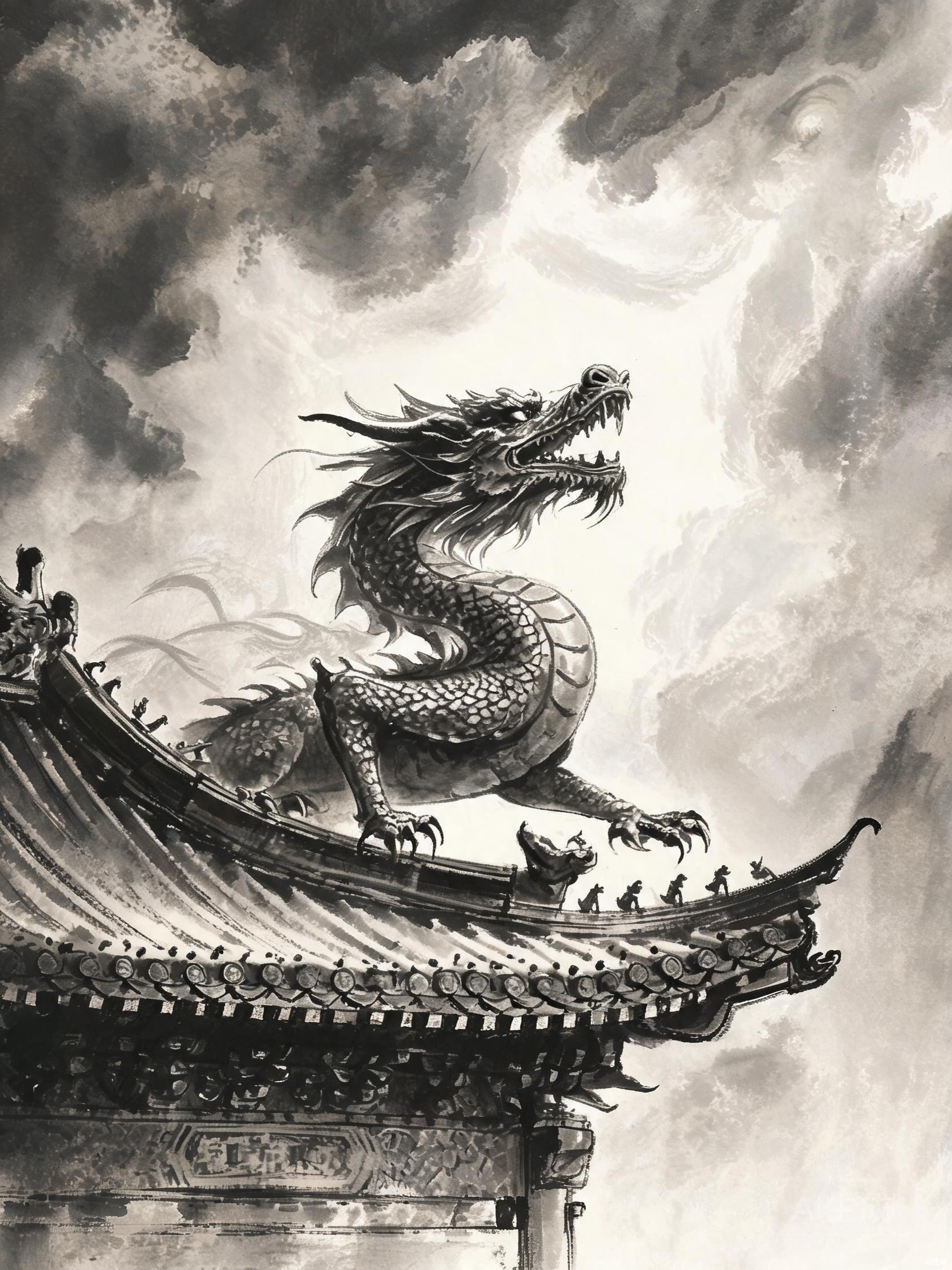
Chaofeng
嘲风
The dragon son who loves danger and gazes from the highest peaks of every palace.
Origin Story
What Is Chaofeng?
Chaofeng is the third son of the [Dragon](/symbols/[dragon](/creatures/chinese-dragon)-symbolism), and his defining trait is a love of risk and height. He is described as a beast-like dragon, alert and restless, always seeking the most [danger](/creatures/gui)ous vantage points he can find. Where other creatures seek safety, Chaofeng seeks the edge.
His name combines characters meaning 'mock' and 'wind,' and he is often depicted as though defying the gales at the highest points of a building — a creature that scorns danger and stares down the [storm](/symbols/wind-and-thunder). This fearlessness made him the natural guardian of rooftops, where wind and lightning strike hardest.
Chaofeng is the third of the Dragon's Nine Sons, an adventurous beast drawn to peril and high places. His image stands at the corners of [palace](/gods/jade-emperor) and temple [roof](/symbols/bagua-mirror)s, where he watches the horizon, wards off disaster, and invites the favor of the heavens.
Powers & Symbols
Attributes & Artefacts
Click each card to reveal the details behind Chaofeng's divine attributes.
Historical & Cultural Meaning
Beyond the Myth
Chaofeng in Architecture and Art
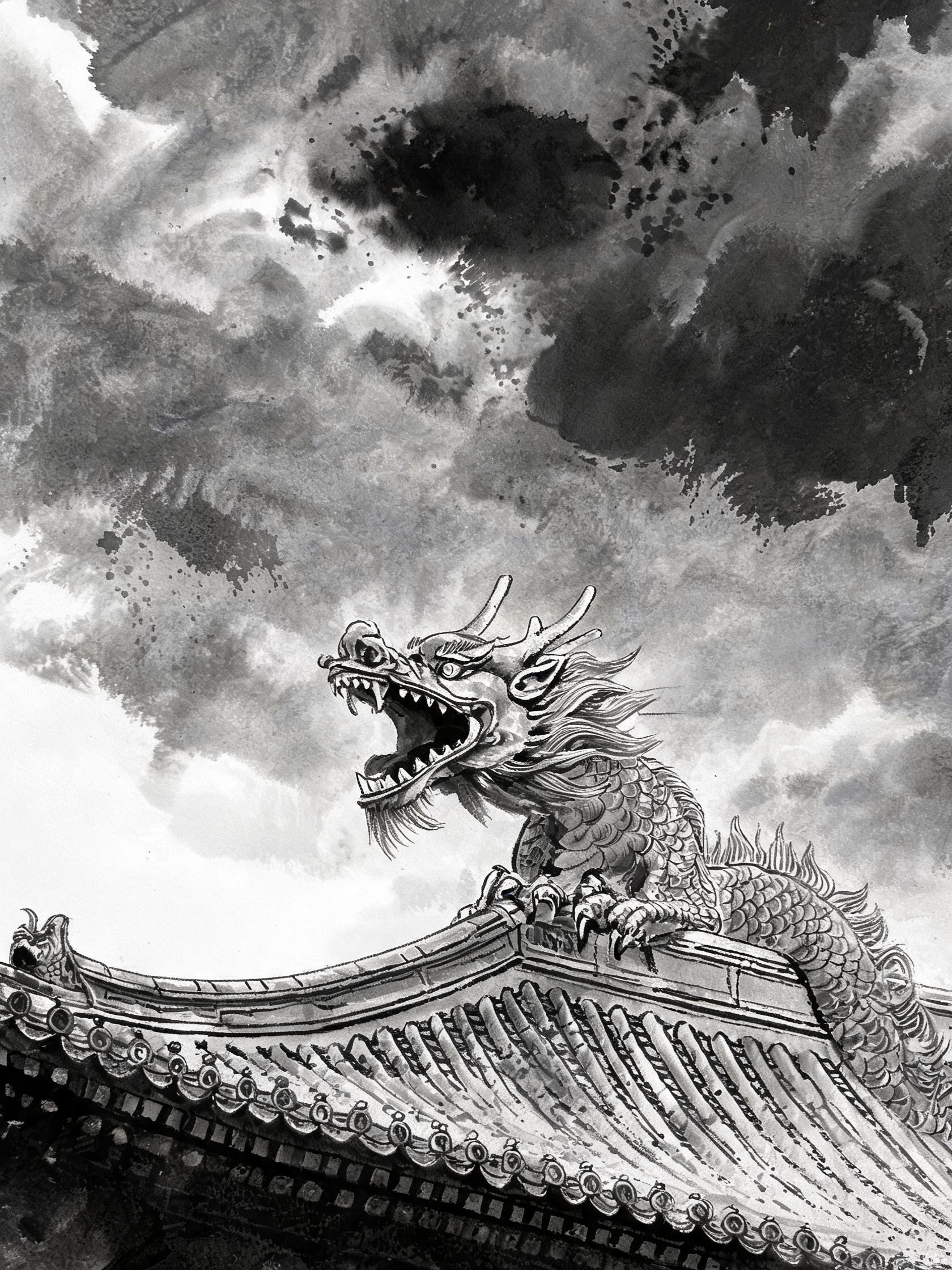
Chaofeng appears as one of the [roof](/symbols/wind-and-thunder) figures (走兽, 'walking beasts') that line the ridge ends of imperial palaces, temples, and official buildings. He is typically placed at the corner, the most exposed position, where he stands poised to leap toward the sky.
The placement is both decorative and symbolic. Perched at the highest and most perilous point of a structure, Chaofeng was believed to ward off [fire](/symbols/fire), storms, and evil spirits that might descend from above. His adventurous nature made him the ideal sentinel for the places where danger is greatest.
Symbolism and Cultural Meaning
Chaofeng represents courage, vigilance, and the willingness to face danger head-on. In Chinese architectural symbolism, he is the guardian who watches from the peak — a reminder that those in high places bear the responsibility of watching over those below.
Beyond protection, Chaofeng also embodies the spirit of exploration and daring. His love of heights and peril reflects a cultural admiration for those who venture to the edge and hold their ground. A building crowned with Chaofeng was understood to be watched over by a fearless spirit that no storm could frighten away.
The Nine Sons of the Dragon
Chaofeng is the third of the Nine Sons of the [Dragon](/zodiac/zodiac-dragon) (龙生九子), the legendary brood of the [Chinese dragon](/creatures/chinese-dragon), each possessing a distinct appearance and passion. The proverb 'the dragon has nine sons, and each is different' (龙生九子,各有不同) became a common expression for the surprising variety among siblings.
Recorded in Ming dynasty sources, [Chaofeng](/creatures/chaofeng) holds the position of the watcher — the son who climbs highest and sees farthest. His placement on the corners of China's greatest buildings, from the Forbidden City to provincial temples, made him one of the most visible dragon sons in daily life.
Sources & References
Primary classical texts: Shanhaijing (山海经, Classic of Mountains and Seas, c. 4th-2nd century BCE) · Fengshen Yanyi (封神演义, Investiture of the Gods, c. 16th century) · Journey to the West (西游记, Xiyouji, c. 16th century) · Records of the Grand Historian (史记, Shiji, by Sima Qian, c. 91 BCE) · Classic of Mountains and Seas commentary (郭璞注 Shanhaijing, c. 4th century) · Bamboo Annals (竹书纪年, c. 4th century BCE onwards)
Classical translations: Legge, James (trans.). The Sacred Books of the East (1879-1910, 50 volumes covering Chinese classics) · Girardot, Norman J. Myth and Meaning in Early Taoism (University of California Press, 1983) · Werner, E.T.C. A Dictionary of Chinese Mythology (Shanghai: Kelly & Walsh, 1932)
Modern academic references: Birrell, Anne. Chinese Mythology: An Introduction (Baltimore: Johns Hopkins University Press, 1993) · Yang, Lihui, and Deming An. Handbook of Chinese Mythology (New York: Oxford University Press, 2005) · Strassberg, Richard E. A Chinese Bestiary: Strange Creatures from the Guideways Through Mountains and Seas (Berkeley: University of California Press, 2002)
Digital encyclopedias and online resources: Wikipedia — Chinese mythology portal (continuously updated, citations to primary sources) · Encyclopedia Britannica — Mythology and Religion section
Mythology Network
Connections & Relationships
Chaofeng is woven into a larger web of gods, creatures, and legends. Explore the connections below.
Chaofeng
嘲风

Explore the Topic
Chaofeng in the Mythology Network
Go deeper — read the topic guides that gather every creature like Chaofeng.