Chiwen
螭吻
The fish-dragon son who swallows the roof ridge and shields every building from fire.
Origin Story
What Is Chiwen?
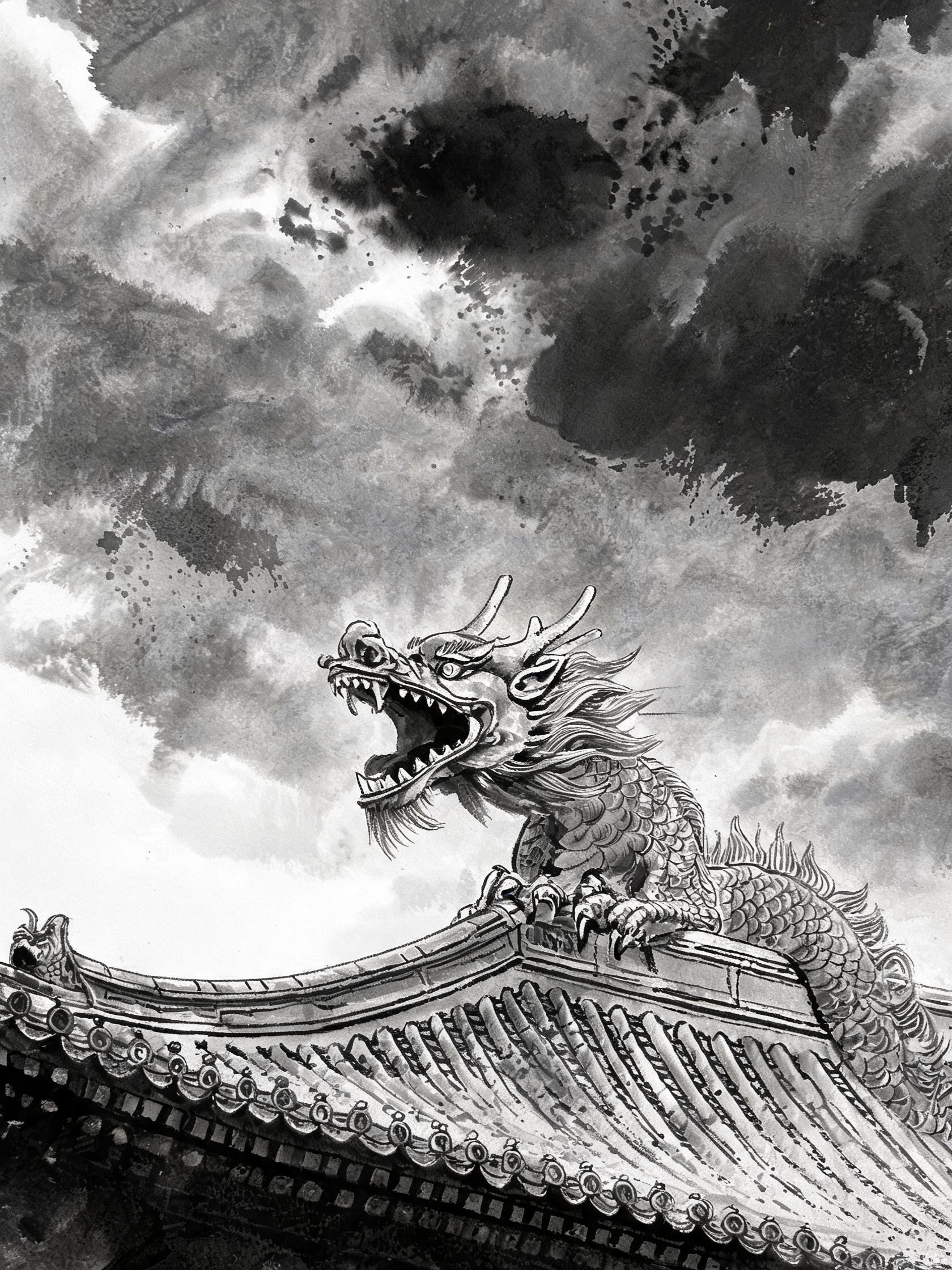
Chiwen, also known as Chiwen (鸱吻) or Chiwei (鸱尾), is the ninth son of the [Dragon](/symbols/dragon-symbolism). He has the body of a fish and the head of a dragon, with an enormous mouth that seems perpetually ready to swallow. His defining trait is his appetite for consuming — and his placement at the highest edges of rooftops puts that mouth to protective use.
According to tradition, Chiwen is a creature of the sea, and his aquatic nature gives him power over fire. By placing him at the roof ridge — the most vulnerable point of a wooden building — the Chinese believed he would swallow any fire, lightning, or evil influence that descended from above, keeping the structure beneath him safe.
Chiwen is the ninth of the Dragon's Nine Sons, a fish-like dragon with a great gaping mouth. He loves to swallow, and he perches at both ends of a building's roof ridge, where he devours evil influences and wards off the fires that threaten wooden structures.
Powers & Symbols
Attributes & Artefacts
Click each card to reveal the details behind Chiwen's divine attributes.
Historical & Cultural Meaning
Beyond the Myth
Chiwen in Architecture and Art
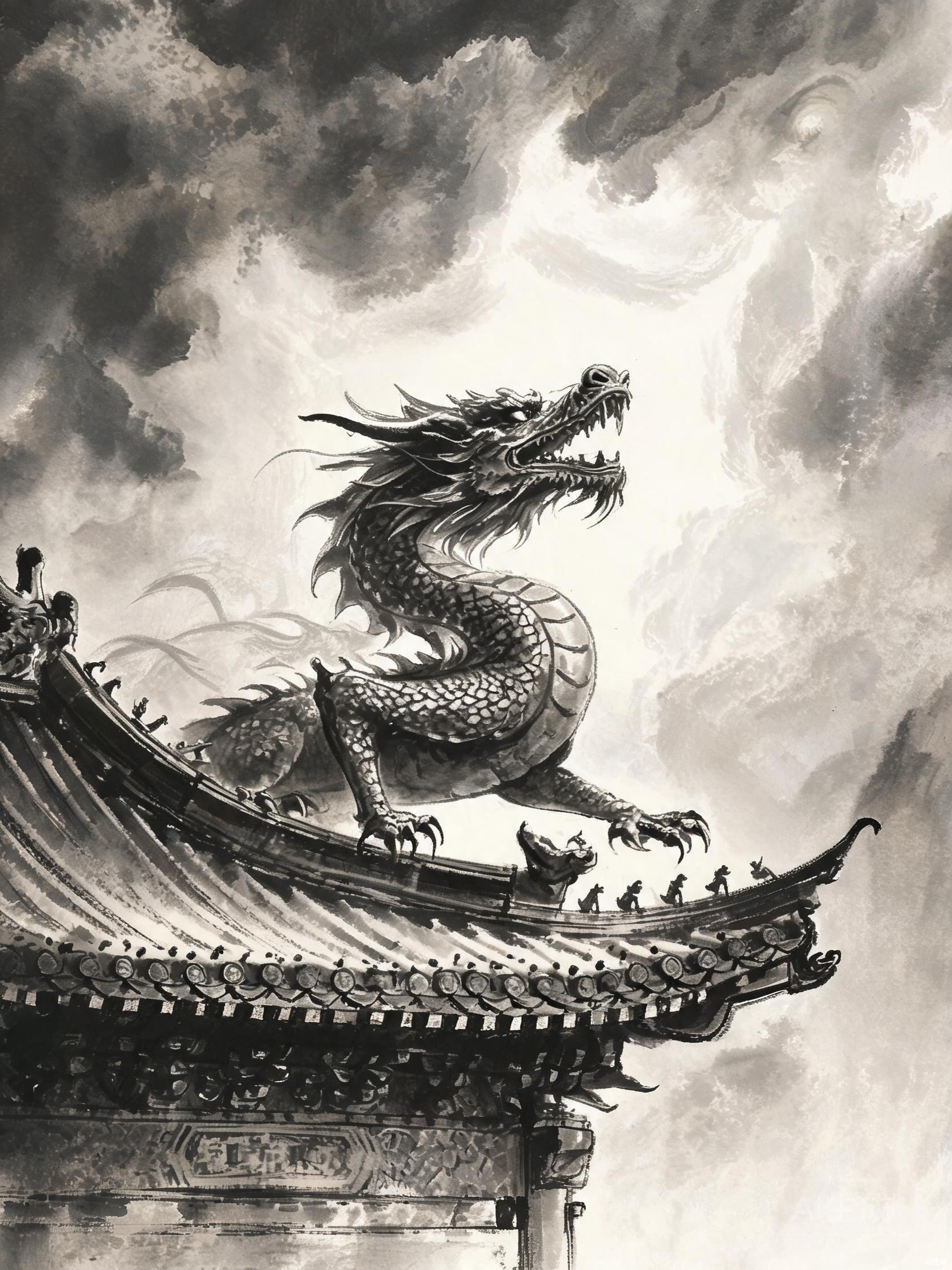
Chiwen is one of the most prominent figures in Chinese architecture. He appears as a pair of large fish-dragon figures mounted at the two ends of the main roof ridge (正吻 or 正脊), each facing outward with its mouth gripping the ridge. His image crowns the roofs of the Forbidden City, great temples, and important official buildings across China.
The design is both symbolic and practical. Wooden buildings were perpetually threatened by fire, and Chiwen — a water creature — was placed at the most exposed point to 'swallow' any flame that approached. His gaping mouth devouring the ridge became one of the most iconic silhouettes in Chinese architecture.
Symbolism and Cultural Meaning
Chiwen symbolizes protection, especially against fire — the greatest threat to traditional Chinese wooden architecture. As a creature of the sea placed at the highest point of a building, he represents the use of water's power to guard against destruction, a literal embodiment of the [yin-yang](/symbols/yin-yang) balance of opposing elements.
Beyond fire prevention, Chiwen's swallowing mouth also represents the devouring of evil and misfortune. Anything harmful that approached from above — storm, lightning, malign spirits — would be consumed before it could reach those sheltered below. In this way, Chiwen served as the silent, ever-watchful guardian of every building he crowned.
The Nine Sons of the Dragon
Chiwen is the ninth of the Nine Sons of the [Dragon](/zodiac/zodiac-dragon) (龙生九子), the celebrated offspring of the [Chinese dragon](/creatures/chinese-dragon), each with a distinct form and appetite. The proverb 'the dragon has nine sons, and each is different' (龙生九子,各有不同) became an idiom for the diversity of temperaments within a single family.
Among the nine, [Chiwen](/creatures/chiwen) is the guardian of the peak — the son whose open mouth shields every great building from fire and ill fortune. Ming dynasty sources place him firmly on the roof ridges of China, where his fish-dragon silhouette remains one of the most recognized images in Chinese architecture to this day.
Sources & References
Primary classical texts: Shanhaijing (山海经, Classic of Mountains and Seas, c. 4th-2nd century BCE) · Fengshen Yanyi (封神演义, Investiture of the Gods, c. 16th century) · Journey to the West (西游记, Xiyouji, c. 16th century) · Records of the Grand Historian (史记, Shiji, by Sima Qian, c. 91 BCE) · Classic of Mountains and Seas commentary (郭璞注 Shanhaijing, c. 4th century) · Bamboo Annals (竹书纪年, c. 4th century BCE onwards)
Classical translations: Legge, James (trans.). The Sacred Books of the East (1879-1910, 50 volumes covering Chinese classics) · Girardot, Norman J. Myth and Meaning in Early Taoism (University of California Press, 1983) · Werner, E.T.C. A Dictionary of Chinese Mythology (Shanghai: Kelly & Walsh, 1932)
Modern academic references: Birrell, Anne. Chinese Mythology: An Introduction (Baltimore: Johns Hopkins University Press, 1993) · Yang, Lihui, and Deming An. Handbook of Chinese Mythology (New York: Oxford University Press, 2005) · Strassberg, Richard E. A Chinese Bestiary: Strange Creatures from the Guideways Through Mountains and Seas (Berkeley: University of California Press, 2002)
Digital encyclopedias and online resources: Wikipedia — Chinese mythology portal (continuously updated, citations to primary sources) · Encyclopedia Britannica — Mythology and Religion section
Mythology Network
Connections & Relationships
Chiwen is woven into a larger web of gods, creatures, and legends. Explore the connections below.
Chiwen
螭吻

Explore the Topic
Chiwen in the Mythology Network
Go deeper — read the topic guides that gather every creature like Chiwen.