Pulao
蒲牢
The dragon son whose roar lives inside every great temple bell.
Origin Story
What Is Pulao?
Pulao is the fourth son of the [Dragon](/symbols/[dragon](/creatures/chinese-dragon)-symbolism), and his gift is his voice. He is a small dragon — far from the largest of his brothers — but he possesses a roar so powerful it can shake the [heaven](/gods/jade-emperor)s. According to legend, Pulao lives near the sea and is terrified of whales, which he regards as monstrous predators.
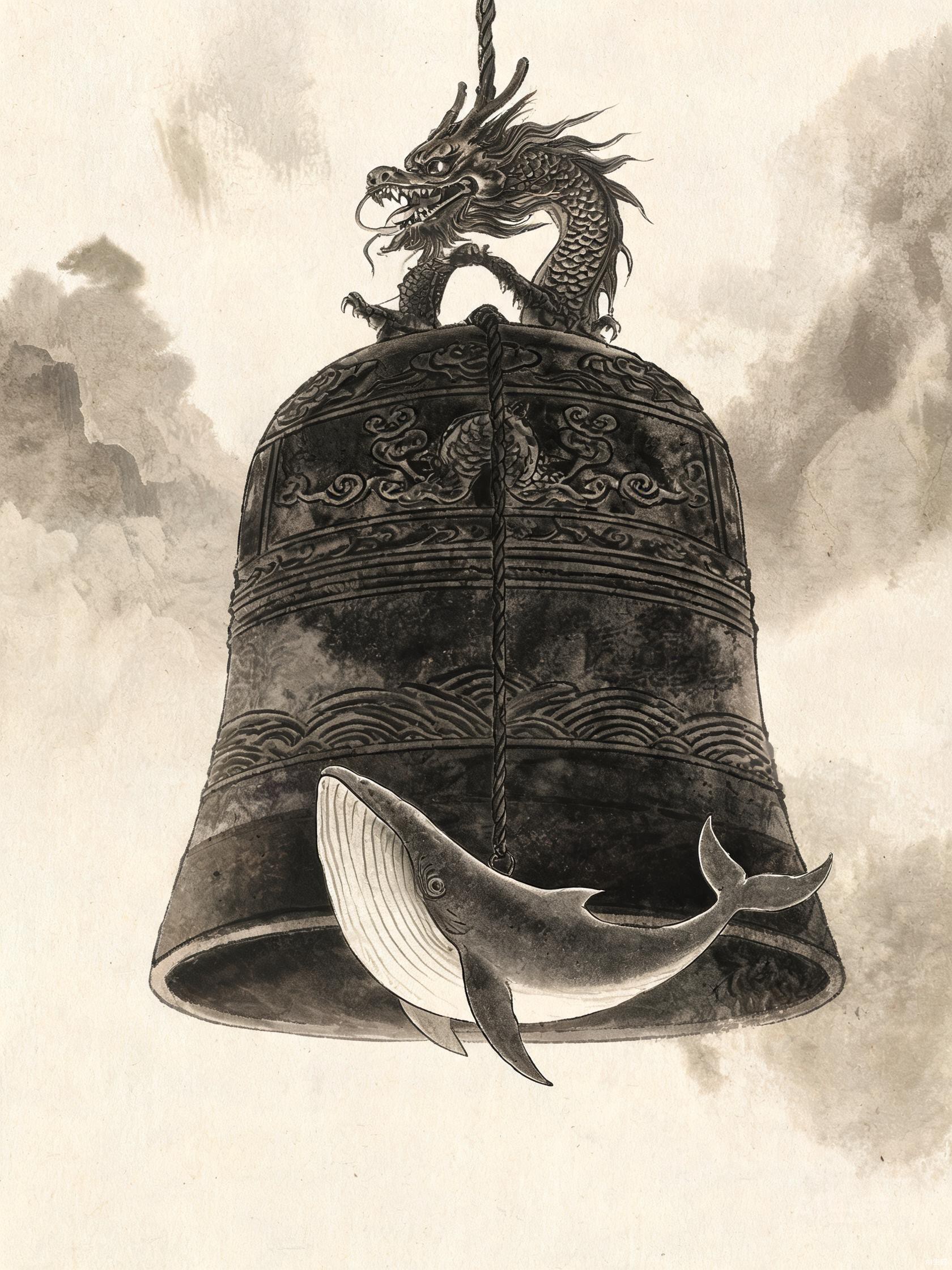
When a [whale](/creatures/ao) attacks or even approaches, Pulao cries out in a roar of pure terror. Craftsmen exploited this fear: by casting Pulao on the bell's handle and shaping the striking mallet as a whale, they ensured that every time the bell was struck, Pulao would 'roar' in alarm — and the bell would ring with extraordinary volume.
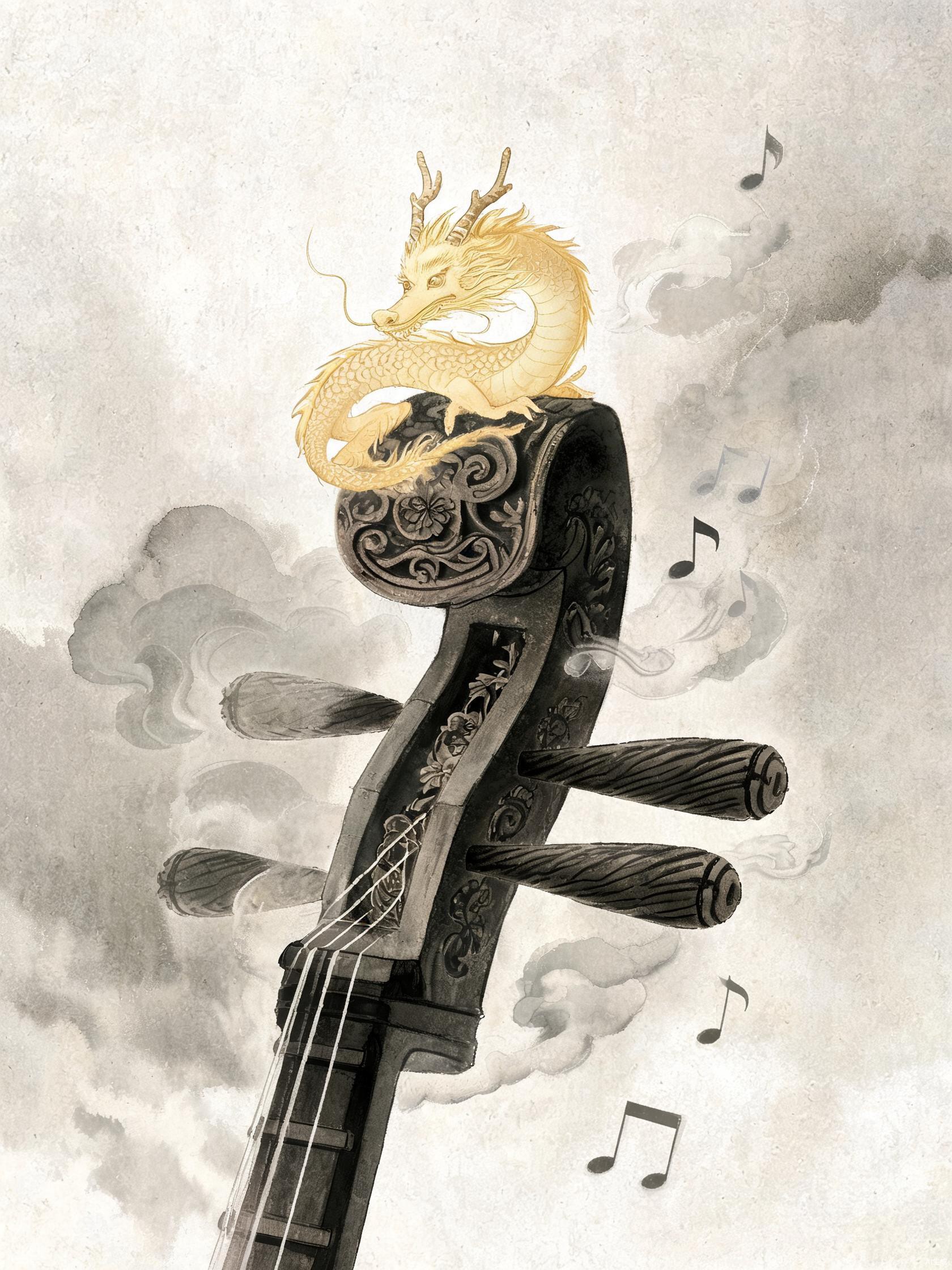
Pulao is the fourth of the Dragon's Nine Sons, a small dragon with an enormous voice. He loves to roar, and his image is cast onto the tops of [bell](/symbols/bell)s, where his cry is said to resonate through the metal and carry every strike across the land.
Powers & Symbols
Attributes & Artefacts
Click each card to reveal the details behind Pulao's divine attributes.
Historical & Cultural Meaning
Beyond the Myth
Pulao in Architecture and Art
Pulao appears as the knob or handle (钟钮) on the crown of large [temple](/gods/buddha-shakyamuni) bells, especially those hung in Buddhist and Taoist temples. His coiled dragon body forms the loop by which the bell is suspended, while his open mouth seems to emit the bell's sound itself.
The accompanying striking beam or mallet was sometimes carved as a whale, in keeping with the legend. This pairing — terrified Pulao above, whale striker below — was both a technical design and a mythological joke, ensuring that the [bell car](/gods/buddha-shakyamuni)ried the full force of the dragon son's frightened cry.
Symbolism and Cultural Meaning
Pulao symbolizes resonance, proclamation, and the power of sound to reach across great distances. A temple [bell b](/gods/laozi)earing his image was believed to speak with his voice, carrying prayers to the heavens and announcing ceremonies to the entire community. In a culture where bells marked time, ritual, and emergencies, Pulao's roar was the sound of order itself.
He also represents the idea that even small beings can have immense impact through voice. The smallest of the dragon sons, Pulao is heard farther than any of his larger, fiercer brothers — a parable about the power of expression over mere physical strength.
The Nine Sons of the Dragon
Pulao is the fourth of the Nine Sons of the [Dragon](/zodiac/zodiac-dragon) (龙生九子), the legendary offspring of the [Chinese dragon](/creatures/chinese-dragon), each defined by a unique appetite and form. The proverb 'the dragon has nine sons, and each is different' (龙生九子,各有不同) captures the surprising diversity within a single family.
Among the nine, [Pulao](/creatures/pulao) is the voice — the son whose contribution is not strength or vigilance but sheer, carrying sound. Ming dynasty records place him firmly on the bells of China's temples, where his [roar](/creatures/baihu) continues to echo every time a bell is struck.
Sources & References
Primary classical texts: Shanhaijing (山海经, Classic of Mountains and Seas, c. 4th-2nd century BCE) · Fengshen Yanyi (封神演义, Investiture of the Gods, c. 16th century) · Journey to the West (西游记, Xiyouji, c. 16th century) · Records of the Grand Historian (史记, Shiji, by Sima Qian, c. 91 BCE) · Classic of Mountains and Seas commentary (郭璞注 Shanhaijing, c. 4th century) · Bamboo Annals (竹书纪年, c. 4th century BCE onwards)
Classical translations: Legge, James (trans.). The Sacred Books of the East (1879-1910, 50 volumes covering Chinese classics) · Girardot, Norman J. Myth and Meaning in Early Taoism (University of California Press, 1983) · Werner, E.T.C. A Dictionary of Chinese Mythology (Shanghai: Kelly & Walsh, 1932)
Modern academic references: Birrell, Anne. Chinese Mythology: An Introduction (Baltimore: Johns Hopkins University Press, 1993) · Yang, Lihui, and Deming An. Handbook of Chinese Mythology (New York: Oxford University Press, 2005) · Strassberg, Richard E. A Chinese Bestiary: Strange Creatures from the Guideways Through Mountains and Seas (Berkeley: University of California Press, 2002)
Digital encyclopedias and online resources: Wikipedia — Chinese mythology portal (continuously updated, citations to primary sources) · Encyclopedia Britannica — Mythology and Religion section
Mythology Network
Connections & Relationships
Pulao is woven into a larger web of gods, creatures, and legends. Explore the connections below.
Pulao
蒲牢

Explore the Topic
Pulao in the Mythology Network
Go deeper — read the topic guides that gather every creature like Pulao.