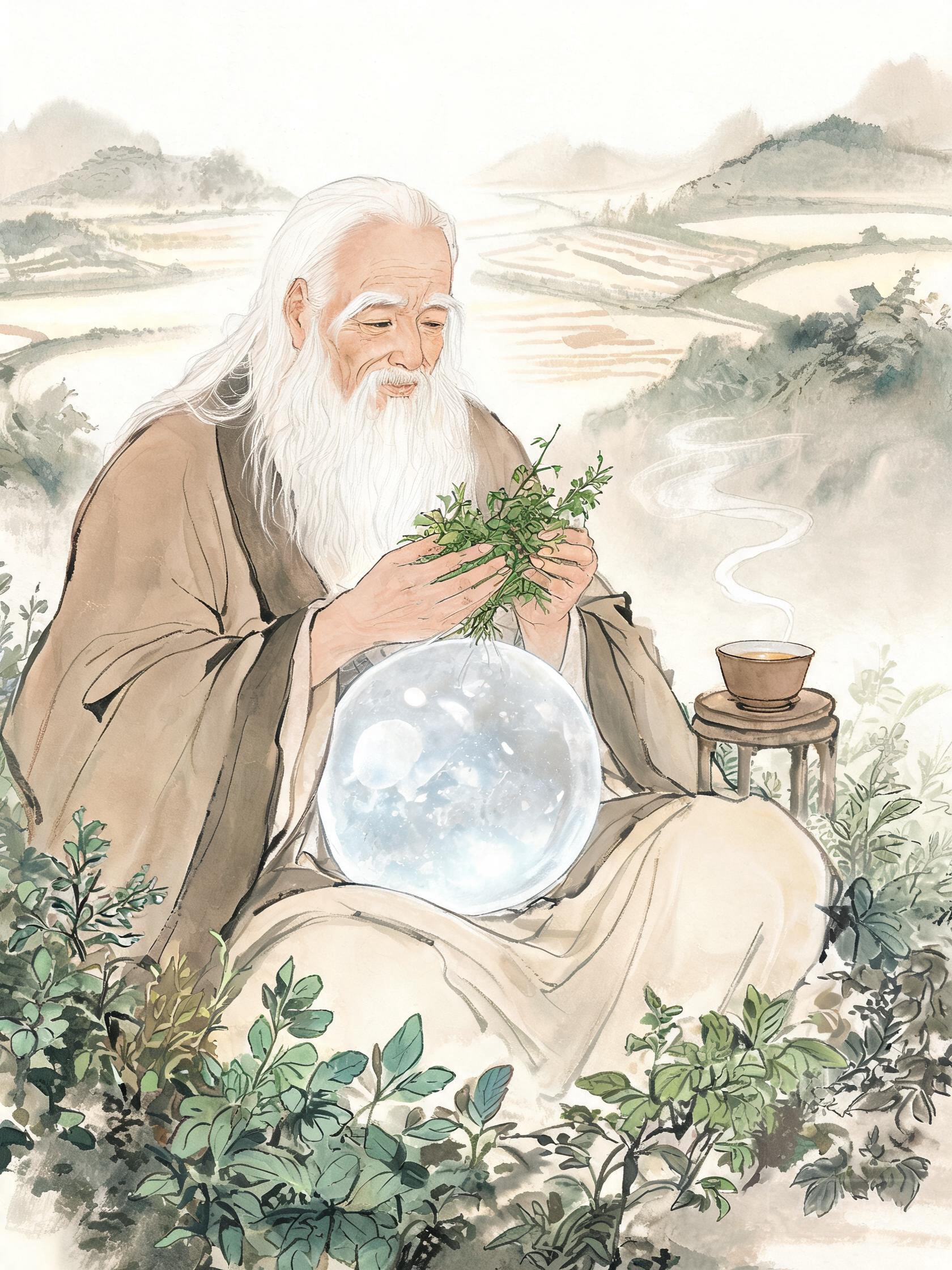
Shennong Tastes Herbs
神农尝百草
The Divine Farmer who tasted a hundred poisons so that humanity might have medicine.
Origin Story
The Divine Farmer
Shennong, whose name means Divine Farmer, was one of the Three Sovereigns of ancient China, alongside [Fuxi](/gods/fuxi) and [Nuwa](/gods/nuwa). He was a god of the earth, associated with agriculture, medicine, and the practical arts of survival. Where other gods ruled the heavens or shaped the cosmos, Shennong worked the soil — a deity whose domain was the humble but essential art of keeping people fed and healed.
According to legend, Shennong taught humanity how to farm. He invented the wooden plow, showed people how to clear fields and plant seeds, and established the rhythms of the agricultural year. But his greatest gift was not grain — it was medicine. In an age when illness was a mystery and death came without explanation, Shennong resolved to discover which plants could heal.
The legend of Shennong Tasting Herbs tells of the god of agriculture who personally tested hundreds of plants to discover which were medicine and which were poison. He was poisoned many times and ultimately died from his experiments, sacrificing himself to give humanity the knowledge of healing.
Powers & Symbols
Attributes & Artefacts
Click each card to reveal the details behind Shennong Tastes Herbs's divine attributes.
Historical & Cultural Meaning
Beyond the Myth
The Crystal Belly
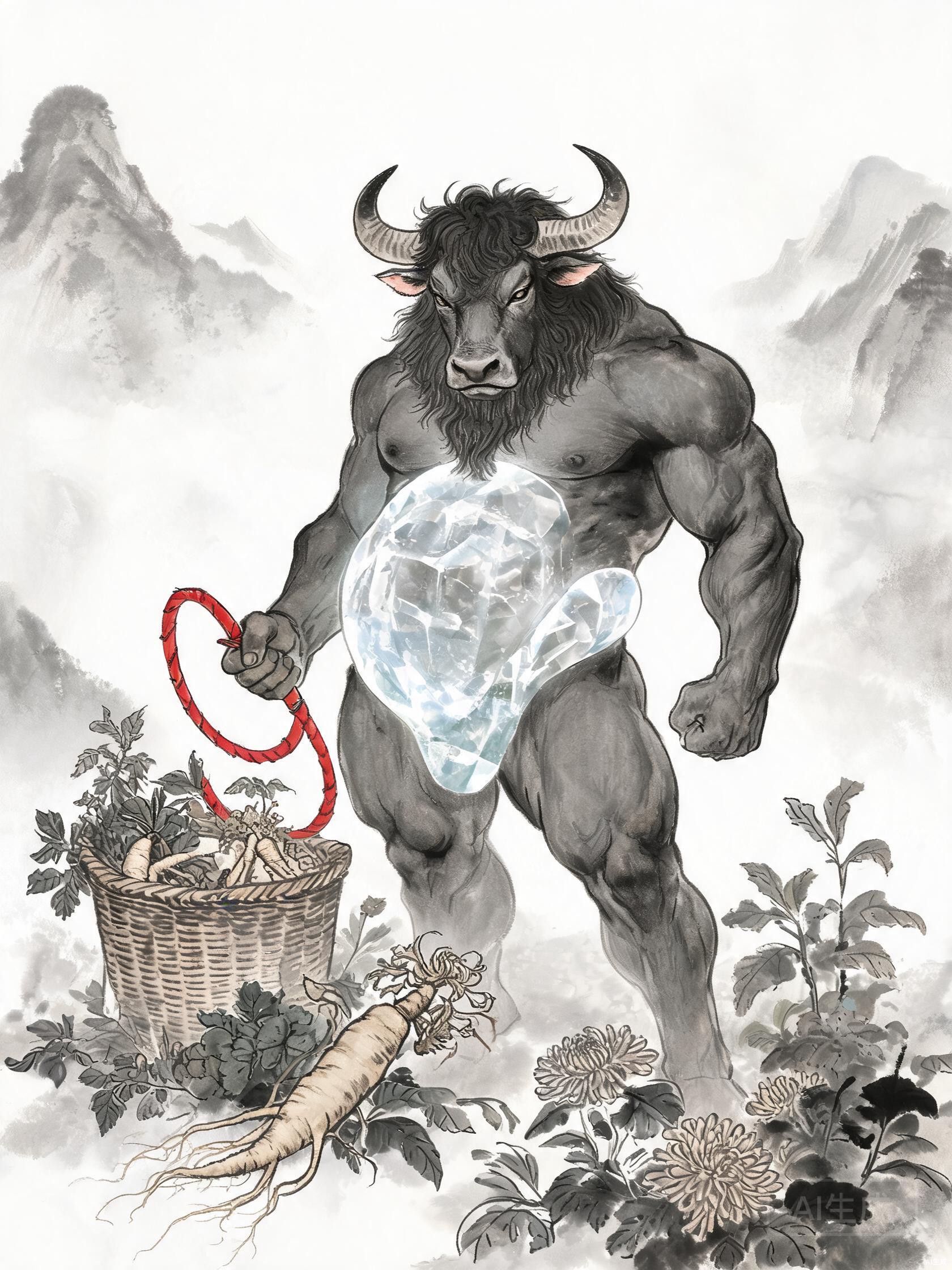
Shennong was no ordinary being. According to legend, his belly was transparent like crystal, so that when he ate a plant, he could see how it affected his internal organs. This gift allowed him to test herbs and observe their effects directly — watching how they moved through the body, what they healed, and what they harmed.
He set out to taste every plant in the world. Day after day, he chewed roots, leaves, bark, and flowers, carefully recording whether each was poisonous or medicinal, hot or cold in nature, and which organ it affected. He discovered hundreds of useful herbs — ginseng, licorice, and countless others — and classified them by their properties. The [Shennong](/gods/shennong) Bencao Jing (Shennong's Classic of Materia Medica), one of the foundational texts of Chinese medicine, is attributed to his discoveries.
A Hundred Poisons in a Day
The work was dangerous. It was said that [Shennong](/gods/shennong) encountered seventy poisons in a single day. According to one version of the legend, he carried a whip of red earth — the Shennongbian — with which he struck plants to reveal their true natures. But the tasting itself could not be avoided, and each poisonous herb brought him close to death.
The myth credits [Shennong](/symbols/shennong) with the discovery of tea. According to tradition, when he was once poisoned and near death, he chewed the leaves of a tea plant, and the poison was neutralized. From that day, tea became both a medicine and a daily drink in Chinese culture — a gift of recovery born from the Divine Farmer's suffering.
The Final Sacrifice
[Shennong](/gods/shennong)'s dedication to medicine ultimately cost him his life. According to legend, he tasted a plant called duanchangcao (断肠草) — the heartbreak grass — and its poison was so potent that his intestines ruptured before he could find an antidote. He died from the experiment, a martyr to the cause of human healing.
[Shennong](/gods/shennong)'s sacrifice gave humanity the foundation of Chinese herbal medicine, one of the oldest and most extensive medical traditions in the world. He is honored as the patron god of agriculture and medicine, and temples dedicated to him stand across China. His story embodies a principle central to Chinese culture: that knowledge, especially knowledge that saves lives, is worth any price — even the price of one's own. The Divine Farmer did not rule from a throne; he worked in the fields and died in the search for cures, and that is why he is remembered as one of the greatest of the ancient sovereigns.
Sources & References
Primary classical texts: Shanhaijing (山海经, Classic of Mountains and Seas, c. 4th-2nd century BCE) · Fengshen Yanyi (封神演义, Investiture of the Gods, c. 16th century) · Journey to the West (西游记, Xiyouji, c. 16th century) · Records of the Grand Historian (史记, Shiji, by Sima Qian, c. 91 BCE) · Classic of Mountains and Seas commentary (郭璞注 Shanhaijing, c. 4th century) · Bamboo Annals (竹书纪年, c. 4th century BCE onwards)
Classical translations: Legge, James (trans.). The Sacred Books of the East (1879-1910, 50 volumes covering Chinese classics) · Girardot, Norman J. Myth and Meaning in Early Taoism (University of California Press, 1983) · Werner, E.T.C. A Dictionary of Chinese Mythology (Shanghai: Kelly & Walsh, 1932)
Modern academic references: Birrell, Anne. Chinese Mythology: An Introduction (Baltimore: Johns Hopkins University Press, 1993) · Yang, Lihui, and Deming An. Handbook of Chinese Mythology (New York: Oxford University Press, 2005) · Strassberg, Richard E. A Chinese Bestiary: Strange Creatures from the Guideways Through Mountains and Seas (Berkeley: University of California Press, 2002)
Digital encyclopedias and online resources: Wikipedia — Chinese mythology portal (continuously updated, citations to primary sources) · Encyclopedia Britannica — Mythology and Religion section
Mythology Network
Connections & Relationships
Shennong Tastes Herbs is woven into a larger web of gods, creatures, and legends. Explore the connections below.
Shennong Tastes Herbs
神农尝百草


Explore the Topic
Shennong Tastes Herbs in the Mythology Network
Go deeper — read the topic guides that gather every legend like Shennong Tastes Herbs.